
Substance abuse behind the wheel kills thousands of Americans every year. At DriverEducators.com, we know that understanding how alcohol and drugs impair your driving is the first step toward staying safe on Florida roads.
This guide covers what you need to know about substance abuse education, the legal consequences you’ll face, and how to make smarter choices.
How Substance Abuse Changes Your Driving
Alcohol’s Immediate Impact on Your Abilities
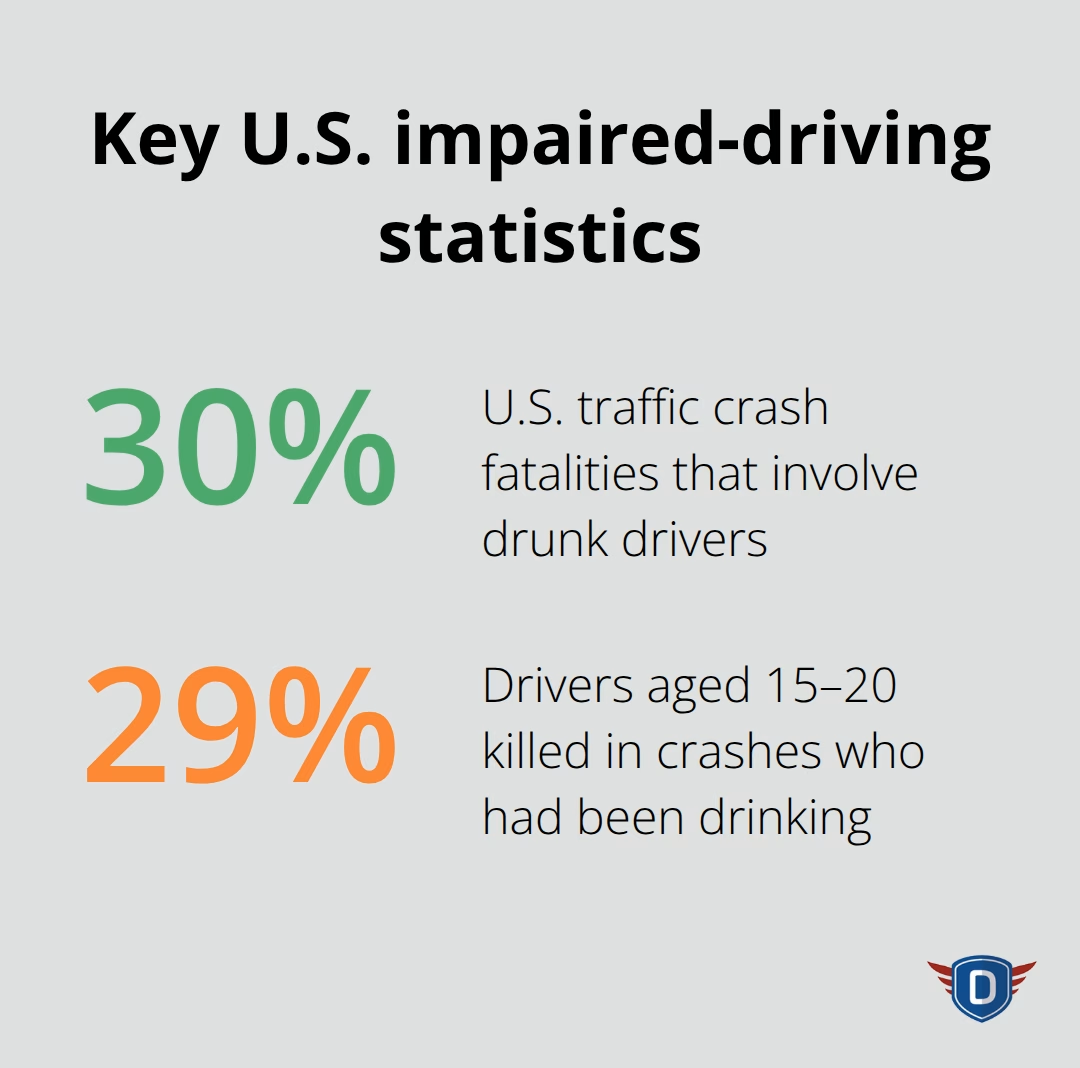
Alcohol hits your system fast, and the damage to your driving happens faster. About 30% of all traffic crash fatalities in the United States involve drunk drivers, and teens experience impairment at lower BAC levels than adults, making them especially vulnerable. Even at 0.05 BAC, alcohol noticeably slows your reaction time, making it harder to steer smoothly and respond to sudden road hazards.
At 0.08 BAC and above, your ability to concentrate drops sharply, your coordination deteriorates, and your judgment becomes dangerously unreliable. You lose the fine motor control needed to brake quickly or adjust your steering in an emergency. The problem intensifies at night, when visibility decreases and your ability to detect hazards becomes critically compromised.
How Different Drugs Impair Driving
Marijuana slows reaction time, reduces coordination, and impairs judgment in ways that don’t always feel obvious to the driver. Prescription opioids and benzodiazepines slow your cognitive processing and make you drowsy, which means you miss visual cues and react too slowly to brake.
Stimulants like methamphetamine create false confidence and aggressive behavior, leading to speeding and risky lane changes. These substances alter your perception of risk and your ability to control the vehicle safely.
The Compounding Danger of Mixing Substances
The real danger emerges when you mix substances. Research shows that combining alcohol and cannabis produces impairment greater than either substance alone, affecting your ability to track moving objects and maintain safe lane position. If you add a third substance, the compounding effects become unpredictable and catastrophic.
Understanding how different drugs impair your driving lets you make informed decisions about whether you should be behind the wheel at all. Substance abuse education emphasizes this knowledge because it directly affects your safety and the safety of others on the road.
Florida Traffic Laws and Substance Abuse Penalties
Immediate Consequences of a DUI Arrest
A DUI arrest in Florida triggers automatic penalties before you ever step into a courtroom. The moment an officer arrests you, license suspension begins immediately-a mandatory minimum of 180 days without driving privileges for a first offense. The Florida Department of Highway Safety and Motor Vehicles enforces this suspension automatically, regardless of conviction status. If you refuse a breathalyzer test, the suspension extends to one year instead.
Financial Penalties and Court Costs
Court fines for a first DUI conviction range from $300 to $1,000+, but this represents only a fraction of your total financial burden. You’ll also pay court costs, mandatory DUI school fees (typically $200 to $400), and increased insurance premiums that can add $1,500 to $3,000 annually for three years or longer. If your BAC was 0.15 or higher, penalties escalate significantly-you face mandatory ignition interlock installation on your vehicle for at least six months, which costs $60 to $100 per month plus installation fees around $100 to $200.
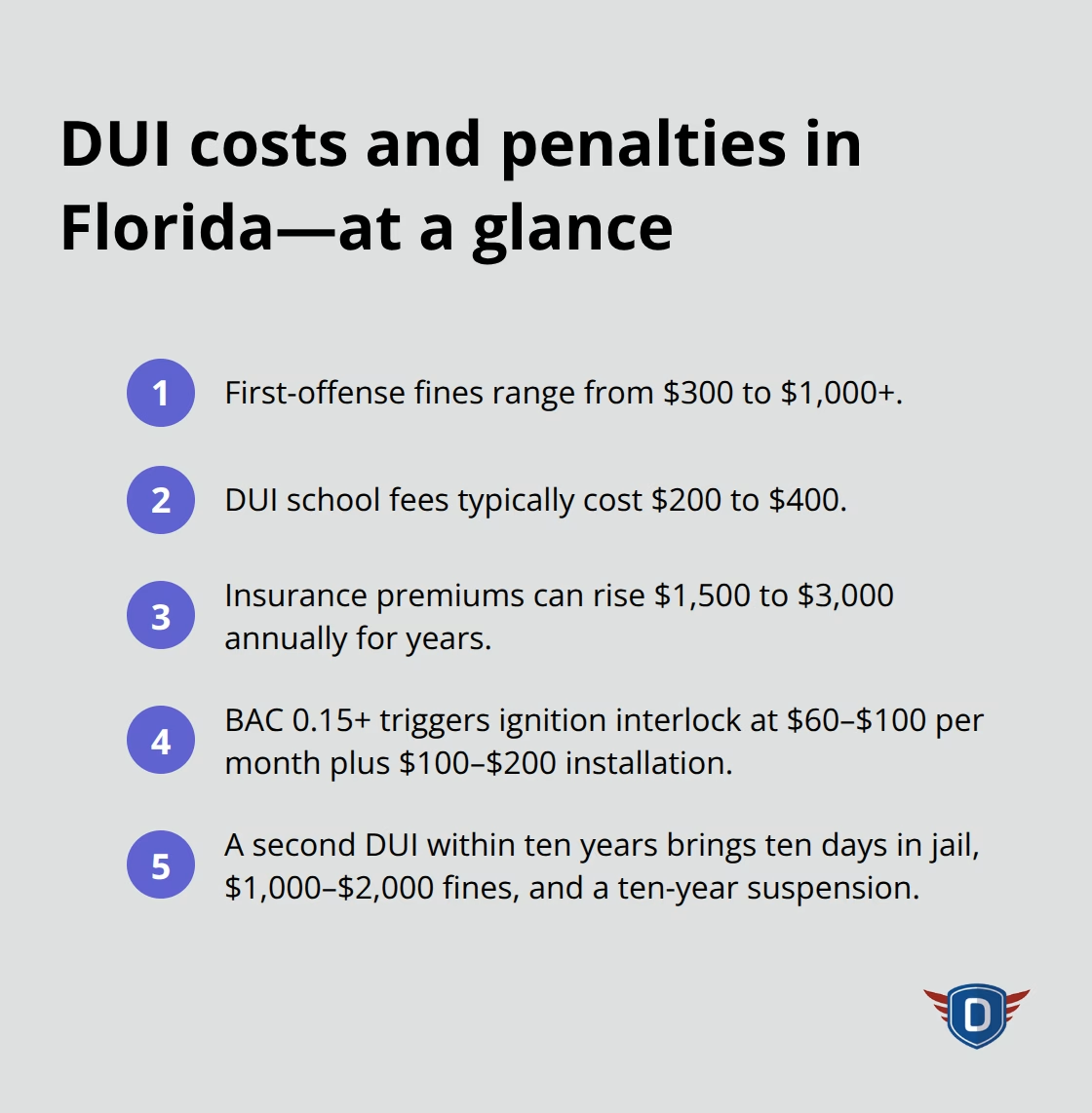
A second DUI within ten years results in a mandatory ten-day jail sentence, fines between $1,000 and $2,000, and a ten-year license suspension. These aren’t theoretical numbers-they’re the actual financial and legal consequences you face in Florida courts today.
Court-Ordered Education Requirements
Florida courts require completion of a 4-hour Traffic Law and Substance Abuse Education course for first-time DUI offenders and more intensive programs for repeat offenders. The FLHSMV automatically reports completion to the court, which means skipping or delaying this requirement extends your suspension and can result in additional charges. Your driving record carries the DUI conviction permanently unless you petition for expungement years later, and every insurance company checks this record.
Long-Term Impact on Insurance and Employment
Insurers classify DUI convictions as high-risk violations, and some companies drop you entirely rather than insure you. If you do find coverage, rates skyrocket-a 25-year-old driver with a DUI pays roughly $4,000 to $6,000 annually compared to $1,200 for a clean record. Employment becomes complicated too; many employers conduct driving record checks, and a DUI conviction can disqualify you from jobs requiring a valid license or affecting your professional reputation.
A DUI remains visible to landlords, loan officers, and background check services for seven to ten years, limiting housing and financial opportunities. These consequences extend far beyond the courtroom and into every aspect of your life. Understanding how to recognize impairment and make safer choices becomes your best defense against facing these penalties.
Recognizing Impairment and Making Safe Choices
Spot the Warning Signs of Impaired Driving
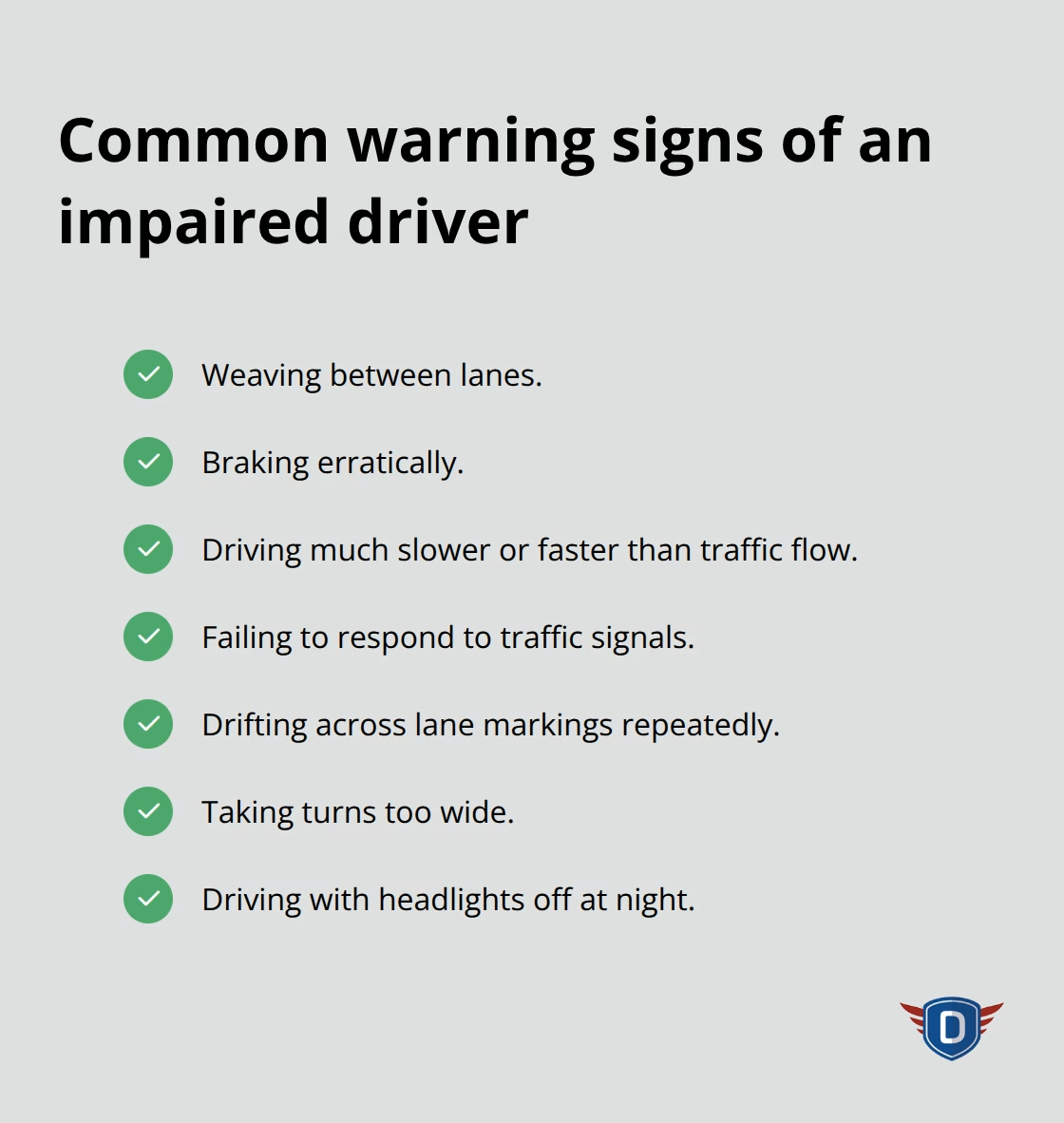
Impaired drivers exhibit patterns that appear on Florida roads every day. The CDC reports that 29% of drivers aged 15–20 killed in crashes had been drinking, and spotting these warning signs in real-time lets you stay away from danger or alert law enforcement. Weaving between lanes, braking erratically, driving significantly slower or faster than traffic flow, and failing to respond to traffic signals stand out immediately. More subtle indicators include a driver who drifts across lane markings repeatedly, takes turns too wide, or operates their vehicle with headlights off at night. If you notice a vehicle exhibiting these patterns, pull over safely and call 911 with the vehicle’s location and description-do not attempt to pass or engage with the driver.
Impaired drivers often appear confident and unaware of their danger, which makes them exponentially more hazardous to everyone around them. Your ability to identify these signs protects you and your passengers from a potentially fatal collision.
Plan Ahead to Avoid Impaired Driving
The real power lies in your decision-making before you ever get behind the wheel. Substance abuse education teaches you to plan ahead, and this planning directly prevents crashes and deaths. If you know you will attend an event where alcohol or drugs are present, arrange a designated driver before you arrive-someone who commits to staying completely sober for the entire duration. This approach works because it removes the moment of poor judgment when you’re already impaired and your decision-making is compromised.
Ride-sharing services like Uber and Lyft operate in Florida 24/7, and using them costs far less than a DUI arrest, court fees, license suspension, or increased insurance premiums. Taxis remain available in most Florida cities as well. These options eliminate the temptation to drive when you shouldn’t.
Medication and Drowsy Driving
Prescription medications alter your ability to drive safely, yet many drivers ignore this risk. Antihistamines can slow your reaction time and make it hard to focus or think clearly, and you must not drive during the period when the medication is active in your system. Check the label or ask your pharmacist about timing and side effects before you take the medication.
This habit of checking before you drive, rather than making a split-second decision when you’re already in the car, transforms your safety and the safety of every person on the road.
Final Thoughts
Substance abuse education isn’t theoretical-it’s the difference between driving home safely and facing a 180-day license suspension, thousands in fines, and years of insurance penalties. Alcohol impairs your reaction time at 0.05 BAC, drugs distort your judgment and motor control, and mixing substances creates unpredictable and dangerous effects. A DUI conviction costs you money, your driving privileges, and your employment opportunities-these aren’t warnings, they’re facts playing out in Florida courtrooms every single day.
You hold the power to change your outcome. You can spot impaired drivers and report them, arrange a designated driver before attending events, use ride-sharing services instead of risking a crash or arrest, and check medication labels before driving. These choices compound over time and protect your future on Florida roads.
At DriverEducators.com, we understand that knowledge alone doesn’t change behavior-action does. Our Florida-approved traffic school programs teach you how substance abuse affects driving and help you build the decision-making habits that keep you safe. Complete your substance abuse education today, make the smart choice before you drive, and commit to the decisions that protect your life and everyone around you.