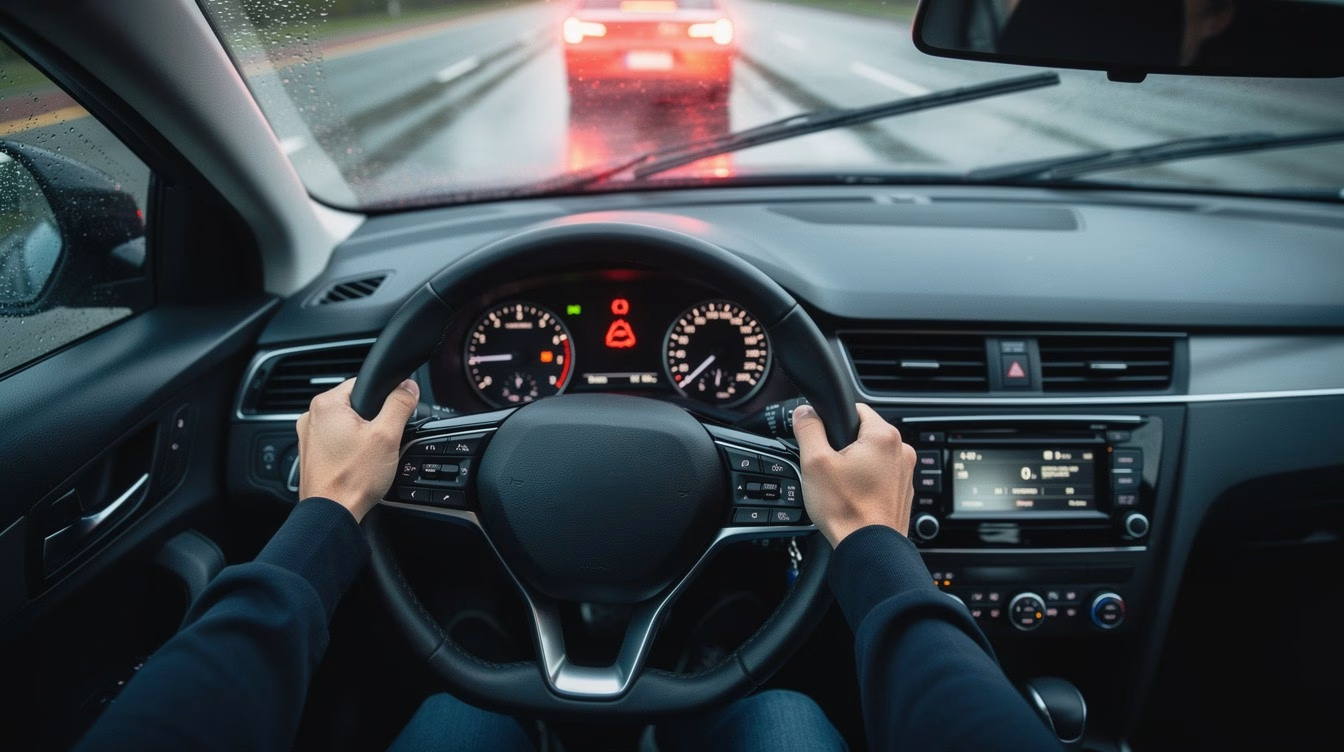
Every second counts when danger appears on the road. At DriverEducators.com, we know that defensive braking techniques separate drivers who walk away safely from those who don’t.
This guide walks you through recognizing hazards, executing emergency stops correctly, and recovering safely afterward. Master these skills and you’ll handle the unexpected with confidence.
Spot Hazards Before They Force Your Brakes
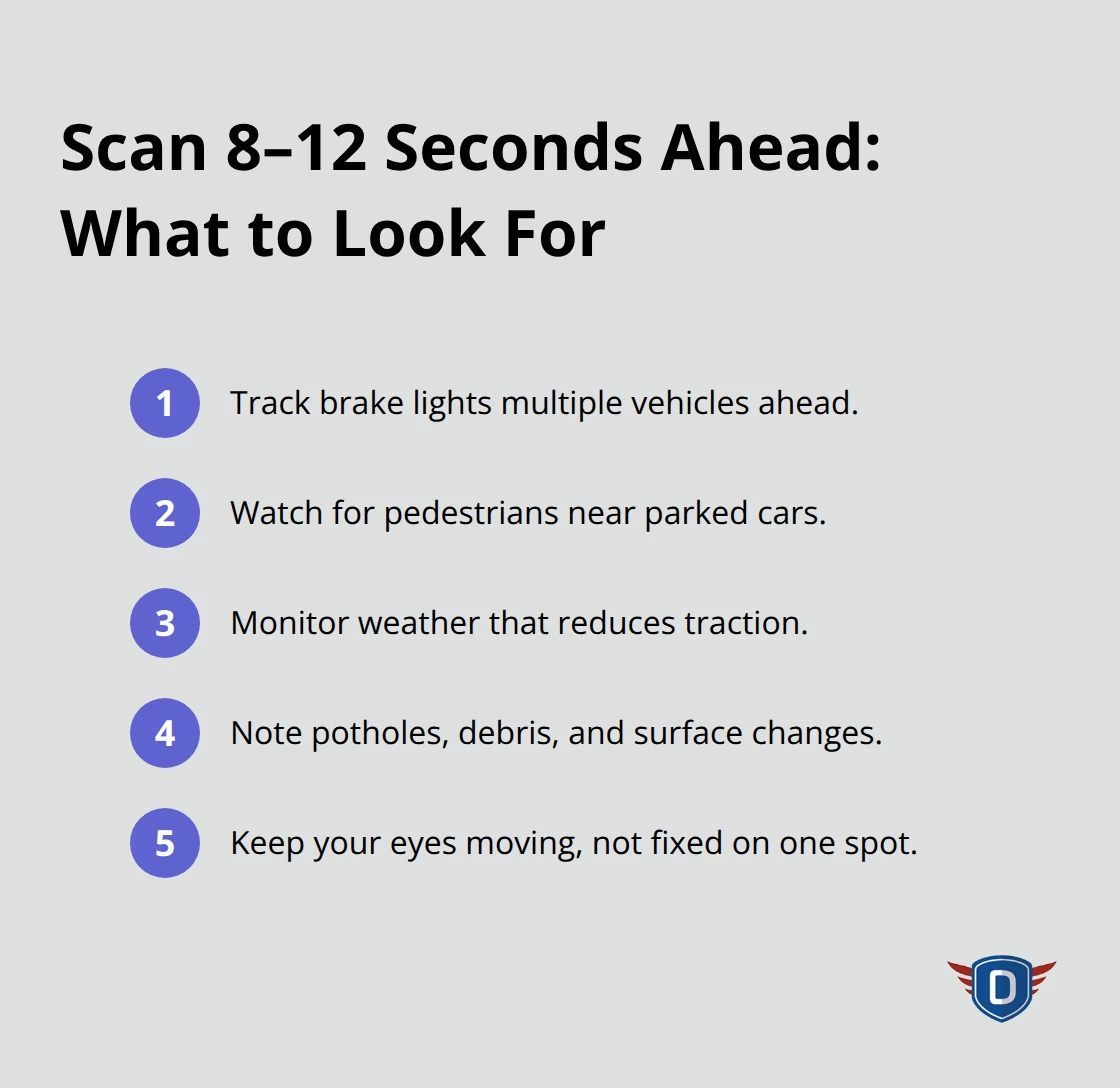
Scan the Road 8–12 Seconds Ahead
Hazards appear without warning, and your ability to identify them determines whether you’ll stop safely. The World Health Organization reports that road traffic crashes kill about 1.16 million people annually, with emergency stopping failures playing a significant role in many collisions. Most drivers react too late because they fail to actively scan the road ahead. You need to look 8–12 seconds down the road-roughly a quarter-mile at highway speeds-to spot dangers early enough to brake smoothly rather than panic-brake.
This means constantly monitoring brake lights from vehicles ahead, watching for pedestrians stepping between parked cars, observing weather changes that reduce traction, and noting road surface changes like potholes or debris. Your eyes must move continuously across the road, not fix on one spot.
Recognize Common Sudden Hazards
Sudden hazards take many forms: a child running into traffic, a vehicle swerving into your lane, an animal crossing ahead, a traffic light changing unexpectedly, or a vehicle stopping abruptly. Each requires immediate recognition and a split-second decision to brake or swerve.
Distracted driving remained a major factor in crashes. Drivers who use phones during critical moments cannot scan effectively and miss hazards entirely. Your mental skills-hazard awareness, rapid decision-making, and evasive thinking-deteriorate the moment you glance away from the road.
Make Your Decision in One Second
Quick decision-making separates safe stops from crashes. When you spot a hazard, you have roughly one second to recognize it, decide whether to brake or swerve, and execute the action. This means you must make your decision before your foot reaches the brake pedal, not after.
Drivers who hesitate or second-guess themselves often brake too late or brake too hard, losing control. Poor road conditions and low visibility extend stopping distances dramatically; in rain, snow, or fog, you need significantly more space to decelerate safely. Aggressive driving and road rage also impair judgment, slowing reaction time when you need it most.
Use Lights and Distance to Communicate
Communicating your braking intentions to other drivers using indicators and headlights reduces the risk of being rear-ended during an emergency stop. A safe following distance provides the buffer you need to decelerate gradually and avoid a collision. Most drivers maintain inadequate spacing and cannot react fast enough when the vehicle ahead stops suddenly.
Your decision to brake must happen the instant you recognize danger, not after analyzing it or hoping the hazard resolves itself. This mental preparation-combined with proper vehicle maintenance and attention to road conditions-sets the foundation for executing an emergency stop correctly.
Execute Maximum Braking Force Correctly
Press the Brake Pedal with Full Force
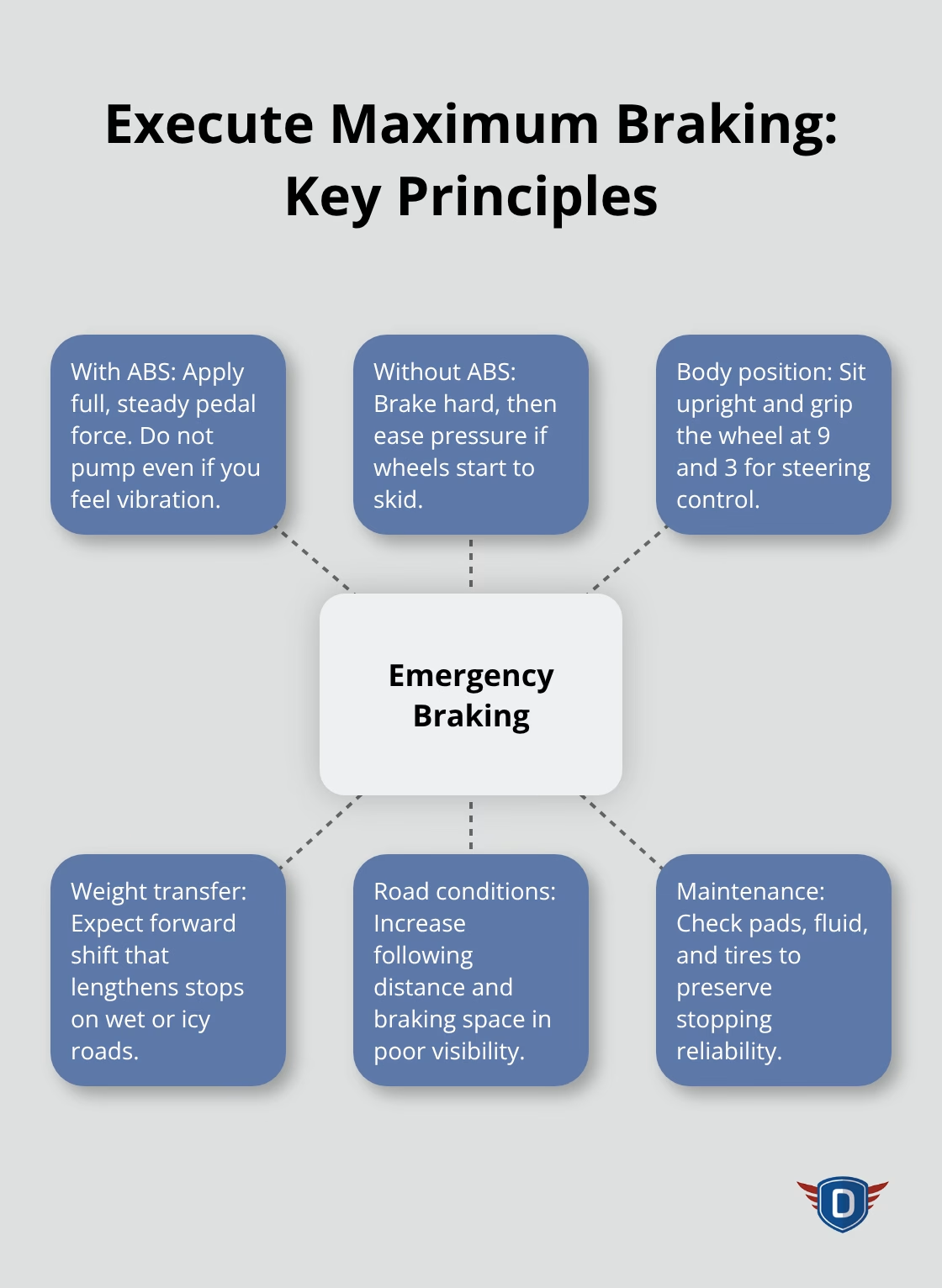
When danger appears, your instinct to slam the brake pedal is correct. Modern vehicles equipped with anti-lock braking systems (ABS) allow you to apply maximum force without locking your wheels and skidding across the pavement. The moment your wheels lock, you lose steering control entirely and your stopping distance increases dramatically.
ABS pulses brake pressure automatically many times per second, keeping your wheels rotating just enough to maintain grip on the road surface. Press the brake pedal with full force and hold it steady without pumping, even if you feel vibration under your foot-that vibration means ABS is working correctly.
Understand ABS and Non-ABS Braking
Vehicles without ABS require a different approach: you must brake hard but ease off pressure if you feel the wheels beginning to skid. Most drivers cannot judge this precisely in a panic, which is why ABS provides a significant safety advantage. The system handles the pressure modulation for you, eliminating the guesswork that leads to loss of control.
If your vehicle lacks ABS, practice recognizing the feel of impending wheel lock during low-speed stops in empty parking lots. This familiarity helps you respond correctly when an emergency occurs on the road.
Position Your Body for Maximum Control
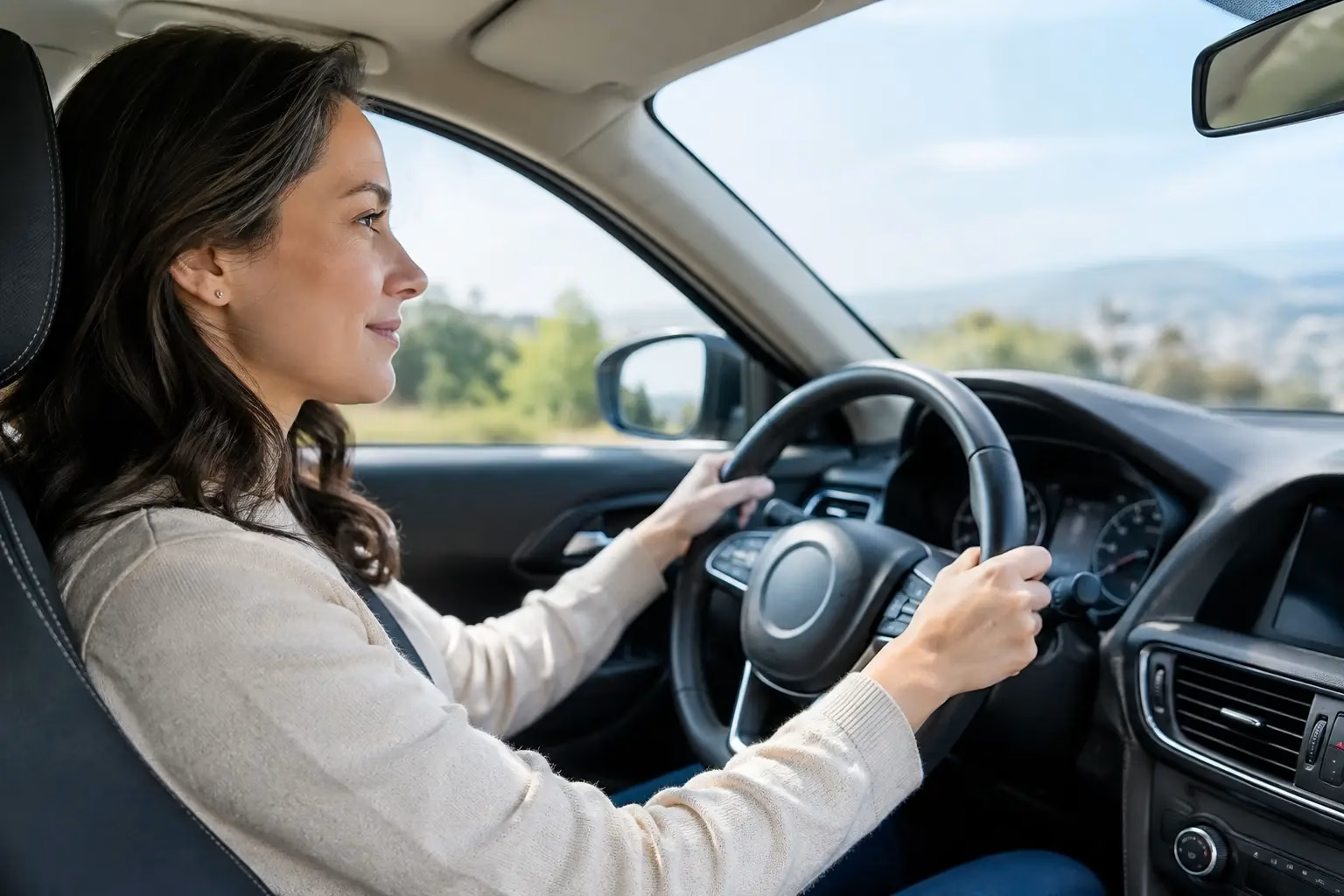
Your body position during hard braking determines whether you maintain steering control. Sit upright in your seat with your back firmly against the backrest, not slouched or leaning forward. Grip the steering wheel at 9 and 3 o’clock, not at the top, because this position gives you maximum control if you need to steer around an obstacle while braking.
Keep your foot flat on the brake pedal and your other foot ready to shift to the accelerator if the hazard clears suddenly. This positioning allows you to react instantly to changing conditions.
Account for Weight Transfer and Road Conditions
During hard braking, your vehicle’s weight transfers forward, causing the front tires to press harder into the road and the rear tires to lighten. This weight shift reduces your rear tire grip, making the vehicle more prone to skidding if road conditions are poor. On wet or icy roads, this effect becomes severe, which is why braking distances increase substantially in adverse weather.
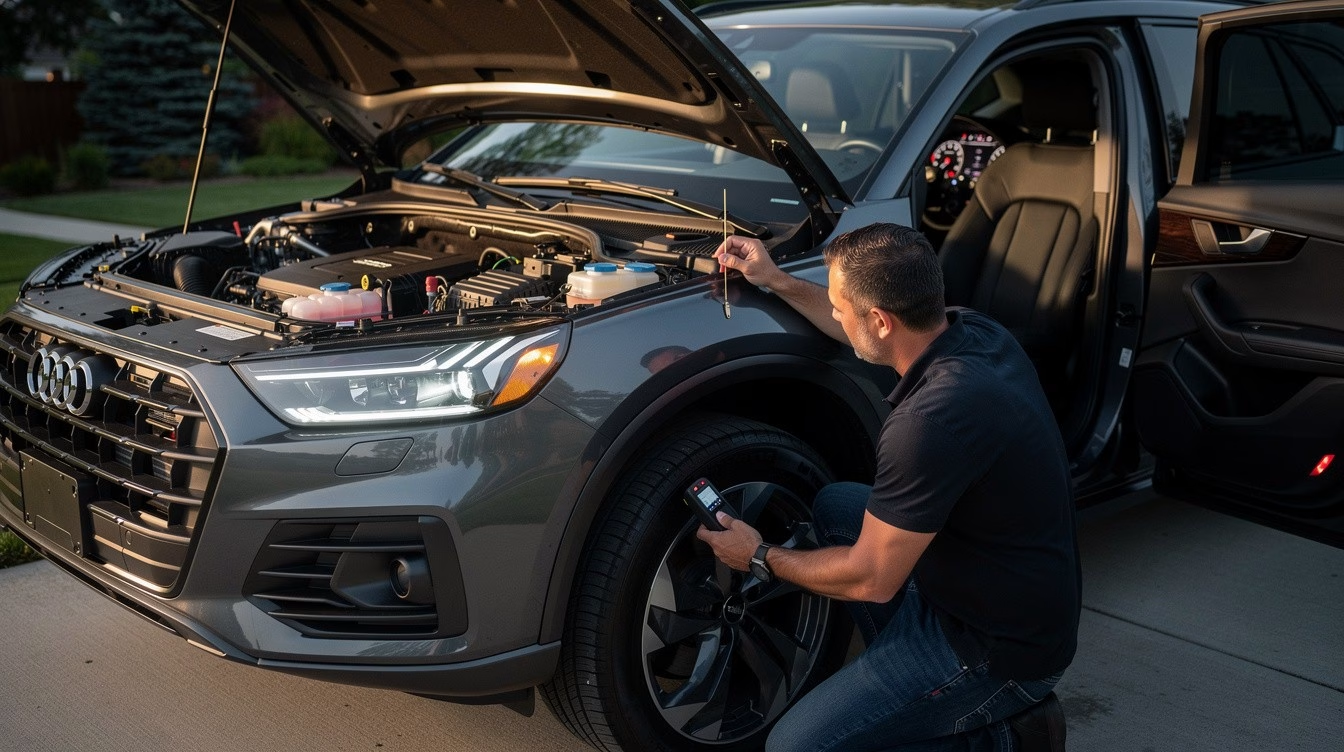
Regular vehicle maintenance preserves reliable braking performance and prevents unexpected failures. Check your brake pads, brake fluid, and tire condition regularly to maintain stopping reliability. A vehicle in poor mechanical condition transforms an emergency stop into a potential crash.
Your ability to brake safely depends on both technique and preparation. Once you press the brake pedal and your vehicle begins to decelerate, the next critical phase begins: regaining control and assessing what happens next.
What to Do Immediately After the Emergency Stop
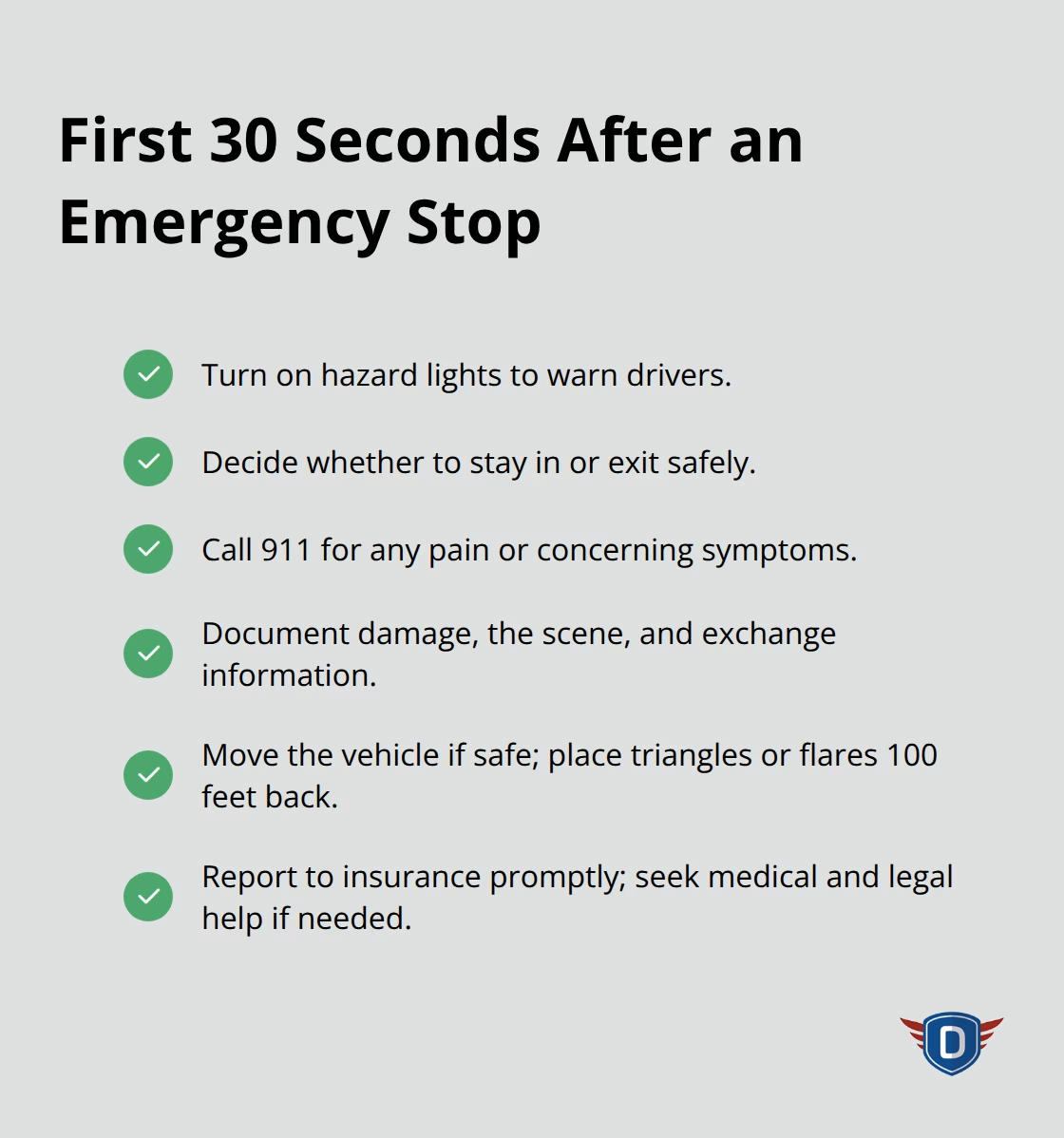
Your vehicle has stopped, but the danger is far from over. The first 30 seconds after an emergency stop determine whether you escape uninjured or face additional hazards. Shift into Park and turn off the engine to prevent accidental movement. If you struck another vehicle or an object, do not leave the scene, as fleeing constitutes a crime in Florida. Turn on your hazard lights so other drivers recognize that your vehicle is stopped ahead, reducing the risk of being rear-ended. If you stopped on a highway or in traffic, assess whether your vehicle blocks lanes or creates additional danger for approaching traffic.
Decide Whether to Stay in Your Vehicle
Your next action depends on whether you and your passengers can safely remain in the vehicle. If you stopped in a protected location like a parking lot or residential street, stay inside with doors locked and windows up until you confirm no ongoing threat exists. If you stopped on a busy roadway, the decision becomes more urgent: staying inside a vehicle that blocks traffic exposes you to rear-end collisions, while exiting puts you in the path of oncoming traffic.
Florida law allows you to remain in your vehicle if it is reasonably safe to do so, but if traffic is heavy or your vehicle is struck, exit only after checking both directions carefully. Move at least 10 feet away from the roadway edge and toward a safe area like the shoulder, median, or nearby building. Never stand between your vehicle and oncoming traffic, as drivers may not see you or may lose control approaching your stopped vehicle.
Check for Injuries and Seek Help
Check yourself and all passengers for injuries immediately. Many injuries from crashes are not immediately obvious-internal injuries, spinal damage, or head trauma may develop symptoms minutes or hours after impact. If anyone reports pain, numbness, tingling, difficulty breathing, or loss of consciousness, call 911 immediately and do not move the injured person unless they are in immediate danger from fire or oncoming traffic.
Proper response to injuries in the first minutes after a crash significantly improves outcomes. If no one appears injured but you experienced a hard impact, call 911 anyway because some injuries manifest later. Do not assume you are fine simply because you feel okay-adrenaline masks pain and shock impairs judgment.
Document the Scene and Exchange Information
Document everything: take photos of vehicle damage, the scene, road conditions, traffic signals, and any visible hazards that caused you to brake. If other vehicles were involved, exchange names, phone numbers, addresses, insurance information, and license plate numbers with all drivers. Obtain the names and contact information of any witnesses who saw the incident, as their statements often determine fault in disputes.
If your vehicle is damaged but no one is injured and the scene is safe, call the Florida Highway Patrol non-emergency line at 407-737-2213 for assistance, or file a report later if the damage is minor and the other driver provided information.
Protect Yourself and Secure the Scene
Move your vehicle out of traffic if possible and safe to do so. If your vehicle will not start or cannot be moved safely, turn on hazard lights and remain inside with doors locked. Place a warning triangle or flares at least 100 feet behind your vehicle if you have them, alerting approaching drivers to slow down. If you must wait for emergency services, stay alert and watch for approaching traffic; do not stand in the roadway or assume drivers will see you.
Once police or emergency services arrive, provide them with your account of events, your insurance information, and any photographs you took. Do not admit fault or apologize for the incident, as such statements can be used against you in liability claims later. Inform police if you believe the other driver was speeding, distracted, or driving recklessly, as these details help establish what caused the emergency stop.
After emergency services have cleared the scene or you have determined no emergency response is needed, contact your insurance company to report the incident. Most insurance policies require prompt notification, and delays can complicate claims. If you sustained any injuries or emotional trauma from the incident, seek medical attention and consider contacting an attorney if the other driver was at fault.
Final Thoughts
Emergency braking skills separate confident drivers from those who panic when danger appears. The techniques covered in this guide-scanning ahead, recognizing hazards, applying maximum braking force, and recovering safely-form the foundation of defensive braking techniques that protect you and everyone sharing Florida’s roads. Your brain and body must practice recognizing hazards, making split-second decisions, and executing proper braking under realistic conditions.
Each time you drive, you have opportunities to scan the road ahead, maintain safe following distances, and mentally rehearse how you would respond if a hazard appeared. Empty parking lots provide safe spaces to practice hard braking, weight transfer, and steering control without risking a collision. Practicing in different weather conditions teaches you how your vehicle responds and builds confidence in your ability to maintain control.
At DriverEducators.com, our defensive driving courses help you develop these critical skills through structured instruction and real-world scenarios. Our Florida-approved programs teach hazard recognition, emergency response techniques, and the decision-making processes that separate safe drivers from those who crash. Safe stopping protects not only your life but the lives of passengers, pedestrians, and other drivers who depend on your ability to respond correctly when danger appears.