A broken taillight or low tire pressure might seem minor, but they’re leading causes of roadside breakdowns and accidents. Vehicle maintenance safety starts before you leave your driveway-not after something goes wrong.
At DriverEducators.com, we’ve seen how five minutes of basic checks prevent costly repairs and dangerous situations. This guide walks you through the inspections that matter most.
Tire Pressure and Tread Are Your First Line of Defense
Tire tread depth directly impacts your stopping distance, especially on wet roads. Tires with tread depth below 4/32 of an inch increase stopping distance on wet pavement compared to new tires. You can measure tread depth using the penny test: insert a penny into the groove with Lincoln’s head facing downward. If you see the top of Lincoln’s head, your tread is too shallow and replacement is necessary.
Most tire shops charge between $100 and $300 per tire for replacements, but worn tires cause accidents that cost far more in insurance claims and medical expenses. Inspect your tires monthly for uneven wear patterns, which signal alignment problems that require professional correction. Bulges or cuts in the sidewall demand immediate replacement-do not attempt to repair them.
Check Tire Pressure When Tires Are Cold
Tire pressure increases as rubber heats up, so check your tires when they are cold (before driving or at least three hours after driving). The correct pressure appears on a sticker inside your driver’s side door jamb, not on the tire sidewall itself. Sidewall numbers show maximum pressure, not recommended pressure.
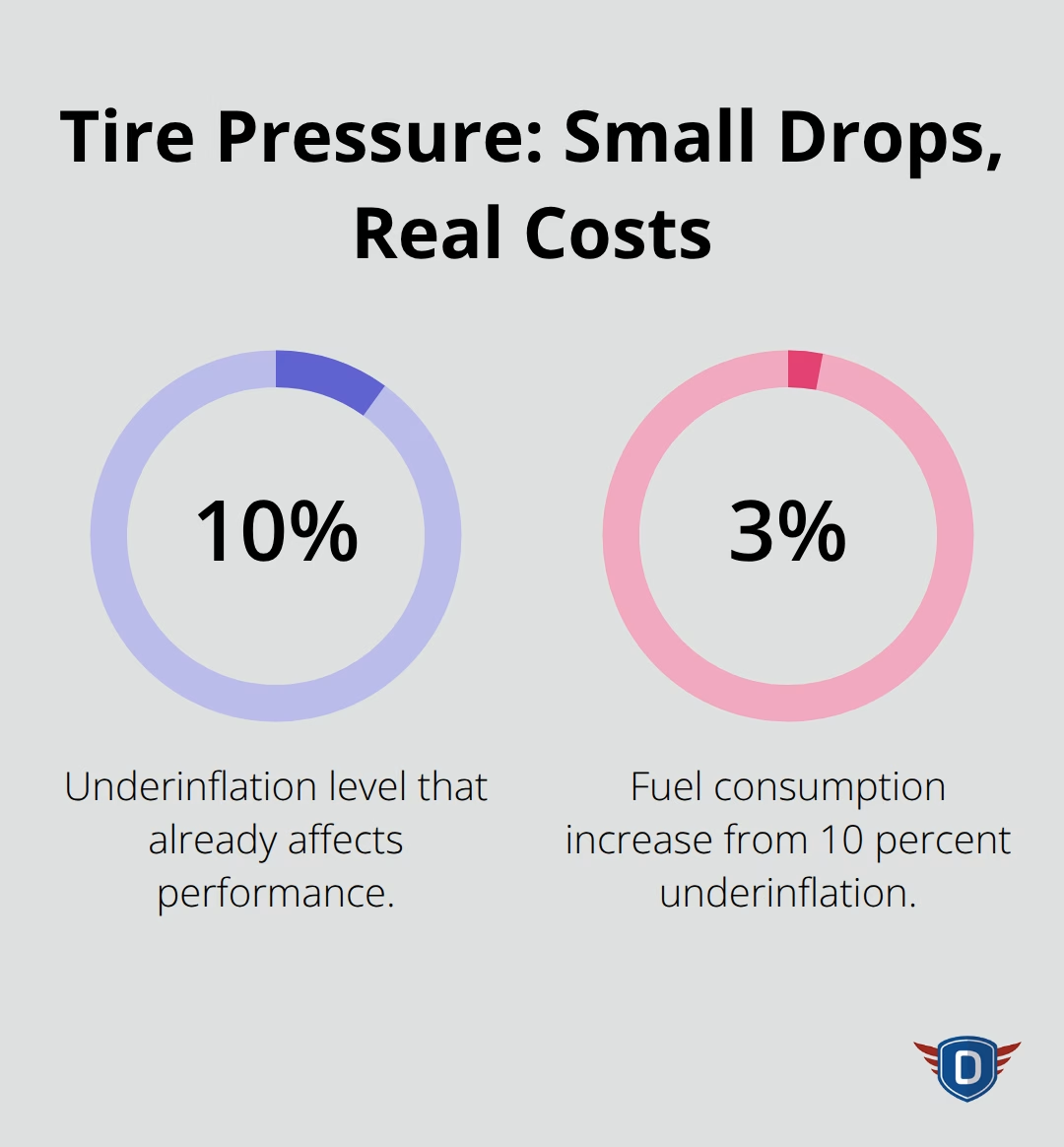
Underinflated tires by just 10 percent increase fuel consumption by 3 percent and accelerate tread wear significantly. A 2021 study from the Tire Industry Association found that approximately one in four vehicles operate with at least one underinflated tire.
Digital tire pressure gauges cost $15 to $40 and provide accuracy within 1 pound per square inch.
Check pressure at least monthly and before long trips. Most gas stations offer free air, though some now charge $0.50 to $1.00 per fill-up.
Identify Visible Damage That Requires Replacement
Cracks in the sidewall, punctures larger than 1/4 inch, or separation between rubber layers require immediate tire replacement rather than repair attempts. Objects embedded in the tread like nails or screws sometimes allow temporary plug repairs, but these temporary fixes should not exceed speeds above 55 miles per hour.
Flat spots on the tire surface indicate suspension problems alongside tire damage. Shaking or vibration while driving suggests either wheel imbalance or alignment issues requiring professional diagnosis. Professional tire shops can rotate your tires every 5,000–8,000 miles to promote even wear.
Tire Rotation Extends Lifespan and Prevents Uneven Wear
Regular tire rotation prevents one set of tires from wearing faster than others (a common problem with front-wheel-drive vehicles). Rotating tires every 5,000–8,000 miles extends tire life and saves money on premature replacements. Most tire shops charge $20 to $50 per rotation, making this one of the cheapest maintenance investments you can make.
Uneven wear patterns reveal deeper problems with your vehicle’s alignment or suspension. Address these issues early to prevent more expensive repairs down the road. With your tires in good condition, you’re ready to move on to the fluids and engine components that keep your vehicle running smoothly.
Engine Oil, Coolant, and Brake Fluid Matter More Than Most Drivers Realize
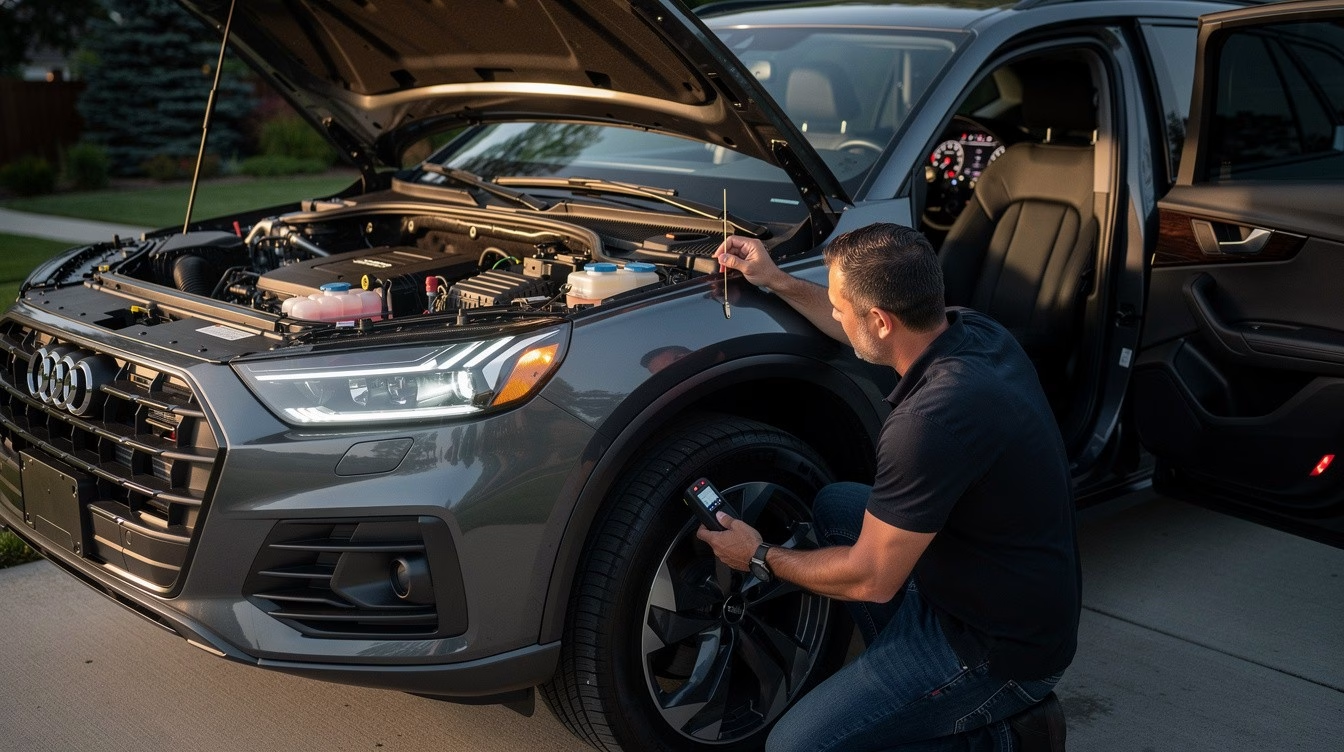
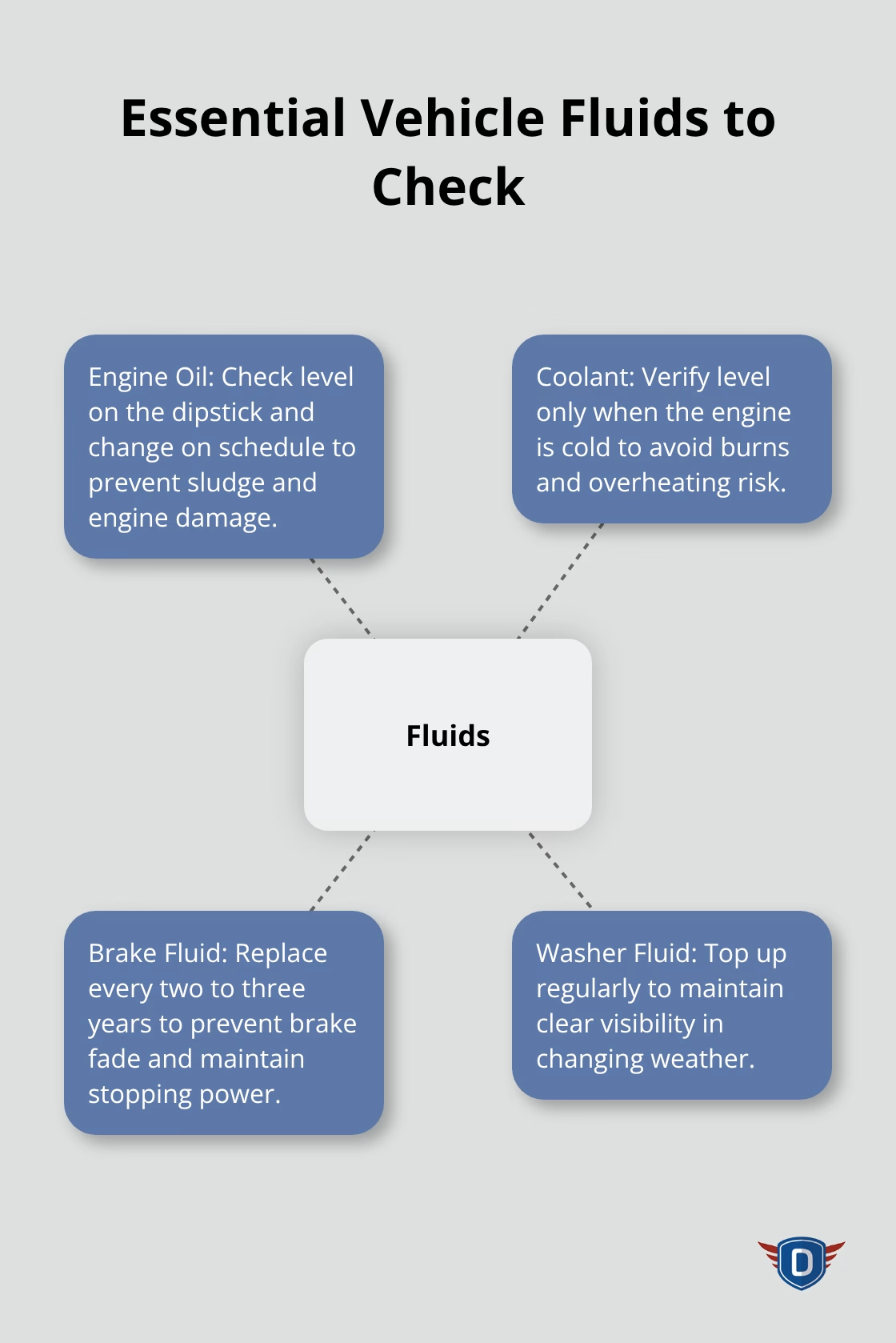
Engine oil breaks down over time, losing its ability to protect your engine from friction and heat. Pull out the dipstick located under the hood, wipe it clean, and reinsert it fully before pulling it out again to read the level. Oil should sit between the minimum and maximum marks on the stick.
Check Oil Condition and Change It on Schedule
Dark, thick oil indicates it’s time for an oil change; fresh oil appears amber or light brown. Most vehicles need an oil change every 5,000 to 7,500 miles, though some modern engines can go 10,000 miles between changes. A quart of oil costs $5 to $15, but skipping oil changes leads to engine sludge buildup that costs $2,000 to $4,000 to repair or replace the engine entirely.
Never drive with an oil warning light illuminated on your dashboard. Top up your oil immediately if it’s low. This simple step prevents catastrophic engine damage that far exceeds the cost of a quart of oil.
Coolant Prevents Overheating and Corrosion
Coolant prevents your engine from overheating and protects against corrosion inside the cooling system. Check coolant level only when the engine is completely cold; opening a hot radiator cap causes severe burns from pressurized steam. The coolant reservoir typically has minimum and maximum lines marked on its side.
If coolant drops consistently between checks, you have a leak requiring professional inspection. Address leaks promptly rather than hoping they resolve on their own. Low coolant levels force your engine to work harder and risk complete failure on the road.
Brake Fluid Requires Regular Replacement
Water lowers the fluid’s boiling point, increasing the risk of brake fade during heavy use. Have a mechanic flush and replace your brake fluid every two to three years as part of routine maintenance. This preventive step costs $100 to $200 but protects your ability to stop safely in emergencies.
Windshield Washer Fluid Keeps Your Vision Clear
Windshield washer fluid is the easiest fluid to top up yourself-locate the washer fluid reservoir under the hood (usually marked with a windshield symbol) and fill it with inexpensive windshield washer solution available at any auto parts store or gas station for $3 to $8 per gallon. Running out of washer fluid mid-drive leaves you unable to clean your windshield, which directly impacts visibility and safety.
Check all fluid levels monthly before long trips. With your fluids topped up and your engine protected, your next priority is verifying that your lights, wipers, and braking system respond correctly when you need them most.
Lights and Wipers Keep You Visible and Safe
Broken headlights, taillights, or brake lights rank among the most common violations police cite during traffic stops and lead to accidents during dawn, dusk, and nighttime driving. The National Highway Traffic Safety Administration reports that visibility-related crashes account for approximately 9,000 deaths annually in the United States. A burned-out bulb takes five minutes to replace and costs $5 to $20, but a single accident from a missing taillight results in injuries, liability claims, and insurance rate increases that last years.
Test All Exterior Lights Before Driving
Test all exterior lights before driving, especially before longer trips or seasonal changes when you encounter low-light conditions more frequently. Walk around your vehicle with the engine running and headlights on, checking that both low-beam and high-beam headlights illuminate clearly. Have someone stand behind your vehicle while you tap the brake pedal to confirm both brake lights glow red.
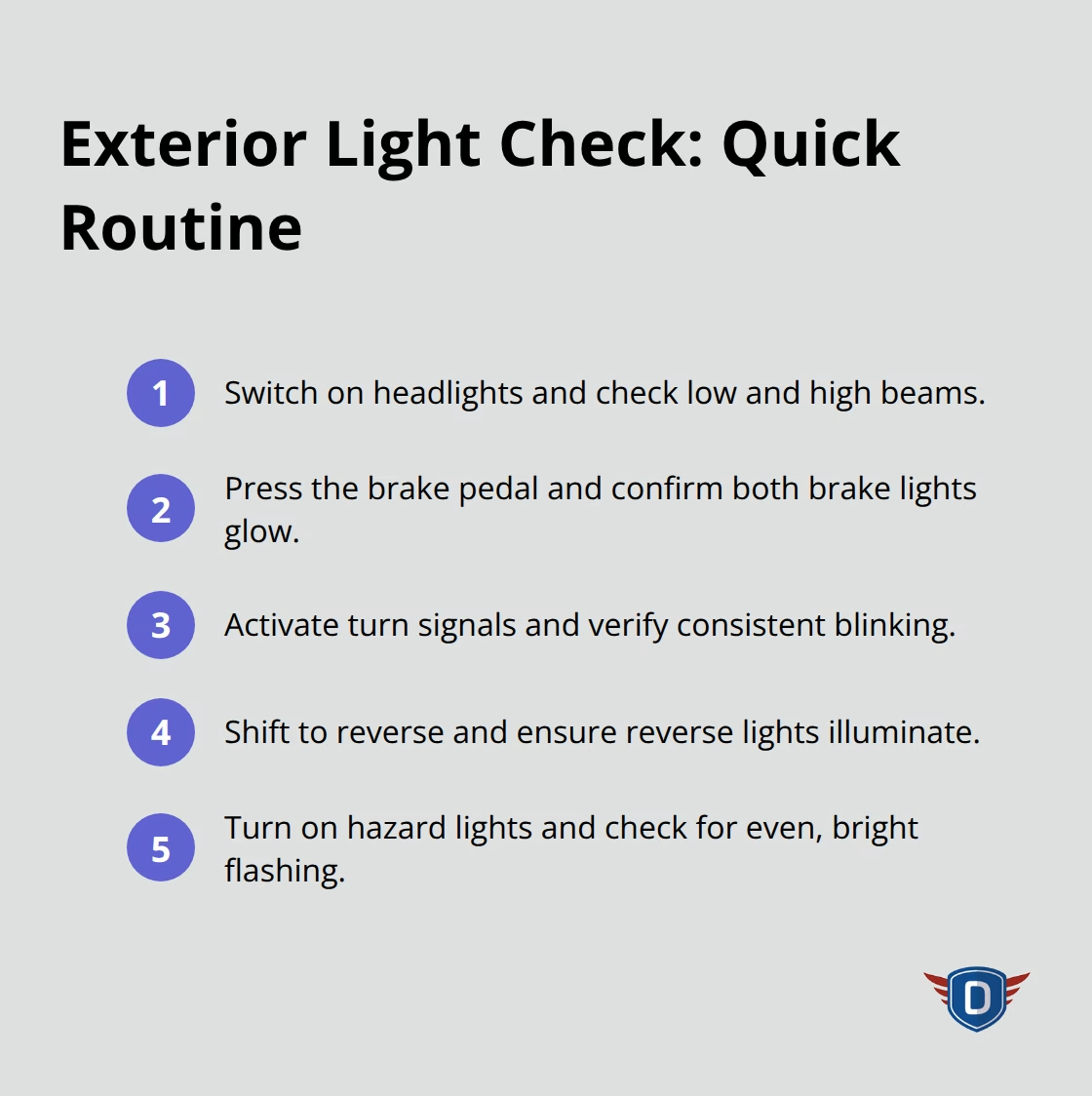
Turn on your turn signals and walk the perimeter to verify all directional lights blink at a consistent rate. A light that blinks slower than others or fails to illuminate needs immediate attention. Reverse lights should also illuminate when you shift into reverse.
Replace Bulbs Quickly and Affordably
Modern vehicles use LED bulbs that last longer than older halogen bulbs, but even LEDs fail suddenly. If you’re uncomfortable replacing bulbs yourself, most auto parts stores offer free installation when you purchase bulbs from them, typically costing $10 to $40 total. This simple investment prevents accidents and traffic citations.
Inspect Wiper Blades for Streak-Free Performance
Windshield wipers deteriorate faster than most drivers realize, and worn blades leave streaks or gaps that reduce visibility during rain or snow. Replace wiper blades every six to twelve months, or immediately if they leave streaks, chatter, or skip across the windshield. Wiper blades cost $15 to $35 per pair and take less than two minutes to install without any tools.
If your wipers fail during heavy rain, you lose critical visibility and must pull over immediately. Before winter arrives, inspect wiper condition and replace them if there’s any doubt about their performance. Test your wipers at low and high speeds during a light rain to verify smooth, streak-free operation.
Verify Your Defroster and Braking System Function Correctly
Verify that your windshield defroster works correctly by turning on heat and selecting the defrost setting, allowing warm air to flow across the windshield and clear condensation or frost. A faulty defroster becomes dangerous in cold weather when visibility drops rapidly.
Test your brakes and steering by driving slowly in an empty parking lot and applying gentle pressure to the brake pedal, listening for squeaking or grinding sounds that indicate worn pads. Steering should feel responsive without excessive play or pulling to one side. Any unusual sounds, vibrations, or handling changes demand professional inspection before you return to highway driving.
Final Thoughts
Five minutes of pre-drive checks prevent accidents, breakdowns, and expensive repairs that you could have avoided with basic maintenance. Vehicle maintenance safety starts with consistency-check your tires monthly, test your lights before long trips, and verify fluid levels before seasonal changes. Worn tires, low fluid levels, and broken lights don’t just inconvenience you; they put you and others at risk on the road.
Keep a simple checklist in your vehicle that covers tire pressure and tread, oil and coolant levels, brake fluid condition, all exterior lights, wiper blade performance, and brake responsiveness (print it out or save it to your phone). Spending five minutes now prevents the stress and expense of roadside emergencies later. Make these checks automatic before every drive, and you’ll catch problems early when they’re cheapest to fix.
At DriverEducators.com, we teach drivers that safety extends beyond following traffic laws-it includes understanding your vehicle and maintaining it properly. Visit DriverEducators.com to learn more about our traffic school courses and how we help drivers develop lifelong safe driving habits.