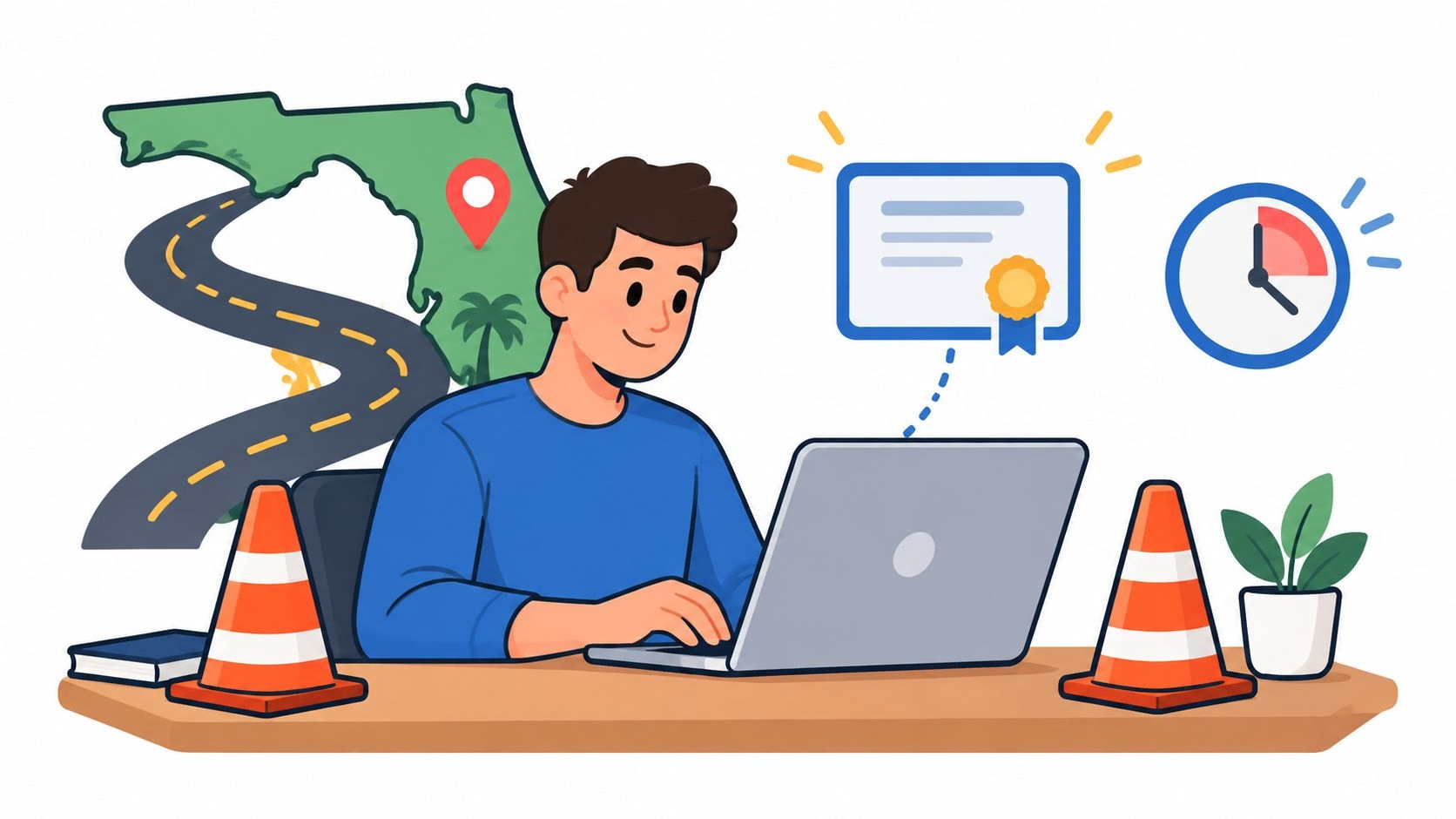

A deadline on a traffic citation or licensing checklist can make online certificate delivery time feel more urgent than the course itself. The good news is that online driver education is designed for convenience, but the right delivery method depends on who needs to receive your completion record: you, a court, the DMV, or an insurance company.
Finishing an approved course is only one part of the process. You also need to know when the provider issues the certificate, whether it reports completion directly, and how long the receiving agency may take to update its records. Understanding those steps before you enroll can help you avoid unnecessary calls, missed deadlines, and duplicate submissions.
What Online Certificate Delivery Time Really Means
Online certificate delivery time is the period between completing a course and having proof of completion available to the person or agency that requires it. That proof may be a downloadable certificate, an emailed document, a mailed paper certificate, or an electronic record sent directly to a state agency or court.
These options do not all move at the same speed. A downloadable certificate may be available shortly after you finish and pass all required course components. Electronic reporting may be transmitted promptly by the course provider, but the DMV, court clerk, or other recipient may need additional time to post it to your file.
For many drivers, the most important question is not simply, “When will I get my certificate?” It is, “When will the agency recognize that I completed the requirement?” Those are often two different timelines.
The Four Stages That Affect Delivery
Your certificate timeline usually has four stages: course completion, provider processing, delivery or reporting, and agency posting. Delays can happen at any stage, so it helps to separate them.
1. Completing Every Required Course Element
Most state-approved and court-approved courses have required instructional time, quizzes, final exams, identity checks, or attendance verification. Completing the final lesson does not always mean the course is officially complete if another required item remains.
Check that you have passed the final exam, completed required surveys or affidavits, and received a confirmation screen or email. If a course has a state-mandated timer, you cannot legally shorten that instructional requirement, even when you work efficiently.
2. Provider Review and Certificate Issuance
Some courses issue a certificate automatically after successful completion. Others require a brief review, especially when identity verification, payment confirmation, or special state reporting rules apply.
A reputable provider should clearly explain its certificate process before purchase. Look for details about whether the certificate is electronic, mailed, or reported directly, along with any processing cutoff times and additional delivery fees.
3. Delivery to You or Electronic Reporting
If you need to submit the certificate yourself, an emailed or downloadable copy is generally the fastest option. Save it immediately in more than one place, such as your phone, computer, and email account. Make sure the name, course title, completion date, and certificate number are accurate before submitting it.
If the provider reports completion directly, you may not need to upload or mail anything. Direct reporting can reduce paperwork, but it does not guarantee an instant update in the receiving agency’s system. Keep your course completion confirmation until the requirement shows as satisfied.
4. Processing by the Court, DMV, or Insurer
Courts and motor vehicle agencies process records on their own schedules. A court may need a clerk to review the record. A DMV may update overnight, on business days, or after a batch of electronic reports is received. Insurance companies may also require you to provide the certificate directly before applying an eligible discount.
Weekends, holidays, high-volume periods, incomplete case information, and mismatched personal details can extend this stage. A certificate delivered promptly by the provider can still take longer to appear in the recipient’s records.
Typical Delivery Methods and What to Expect
The delivery method should match your requirement, not just your preferred speed. A certificate that arrives quickly is useful only if the court, state, or insurer accepts it in that format.
Instant download or email is often best when you must provide proof yourself and the recipient accepts digital records. It gives you immediate access once the certificate is issued, but you are responsible for submitting it correctly and before the deadline.
Electronic reporting is common for courses connected to specific state or court programs. The provider submits your completion information to the authorized recipient. This can be convenient because it reduces manual filing, but you should allow time for the recipient to post the result.
Mail delivery may be required for certain programs or requested when an original paper certificate is needed. Standard mail takes longer and is less predictable than digital delivery. If a deadline is close, confirm whether electronic proof or an expedited option is accepted before relying on mail.
Court filing by the student remains common in some jurisdictions. Even if your course provider sends you the certificate immediately, your obligation may not end until you file it with the correct court division and receive confirmation.
How to Avoid Certificate Delays
The easiest way to protect your deadline is to confirm the process before starting the course. Do not assume that all online driver education courses report to every court or DMV automatically. Approval and reporting procedures are specific to the course type and jurisdiction.
Before enrolling, verify the exact course name required on your citation, court notice, DMV letter, insurance request, or licensing checklist. A Basic Driver Improvement course, a TLSAE course, and a mature driver insurance discount course serve different purposes. Taking the wrong course can cost more time than any delivery delay.
Use the same legal name, date of birth, driver license number, case number, and citation number shown on the official notice. A missing digit or name variation can prevent a record from matching automatically. If you recently changed your name or address, follow the recipient’s instructions for documenting that change.
Finish early whenever possible. Starting a course the night before a court deadline leaves little room for required instructional time, technical issues, payment review, or agency posting. A practical rule is to complete the course several business days before the deadline unless the provider and receiving agency specifically confirm a faster timeline.
After completion, save every confirmation. Keep the certificate, receipt, final score record if provided, and any reporting confirmation. These documents can help customer support, a clerk, or an insurer locate your completion record if a question arises.
When to Contact Support or the Receiving Agency
Contact the course provider first if you cannot access your certificate, your personal information is incorrect, or you are unsure whether the course reports directly. Provide your enrollment email, full name, course name, and completion date so the issue can be located quickly.
Contact the court, DMV, or insurer if the provider confirms reporting was completed but the record has not posted after the stated processing window. Ask what information they need to locate the record, such as your case number, driver license number, or certificate number.
DriverEducators.com helps drivers complete approved education online, but each course has its own reporting rules based on the state and program. Reading the course details before enrollment gives you the clearest expectation for certificate delivery and next steps.
Online Certificate Delivery Time FAQs
How fast can I get an online course certificate?
Some certificates are available immediately or shortly after you complete all required course elements. Processing time depends on the course, identity checks, payment status, and the delivery method.
Does electronic reporting mean the DMV updates instantly?
No. Electronic reporting means the provider sends your completion record electronically. The DMV may need additional business time to receive, match, and post it to your driver record.
Do I need to submit my certificate to court myself?
It depends on the court and course. Some providers report directly, while other courts require you to file the certificate yourself. Review your court notice and course instructions.
What if my deadline is tomorrow?
Complete only a course that meets the stated requirement and confirm the available certificate or reporting process before enrolling. Contact the court immediately to ask whether digital proof is accepted and whether any extension is available.
Why is my certificate not showing in the agency system?
The record may still be processing, or the agency may be unable to match it to your file. Confirm that your name, driver license number, citation number, and completion date are correct.
A course certificate is more than a completion document. It is the record that helps you move forward with a licensing, court, insurance, or driver improvement requirement. Give yourself enough time, keep your documentation, and verify the recipient’s process so your completed work receives the credit it deserves.