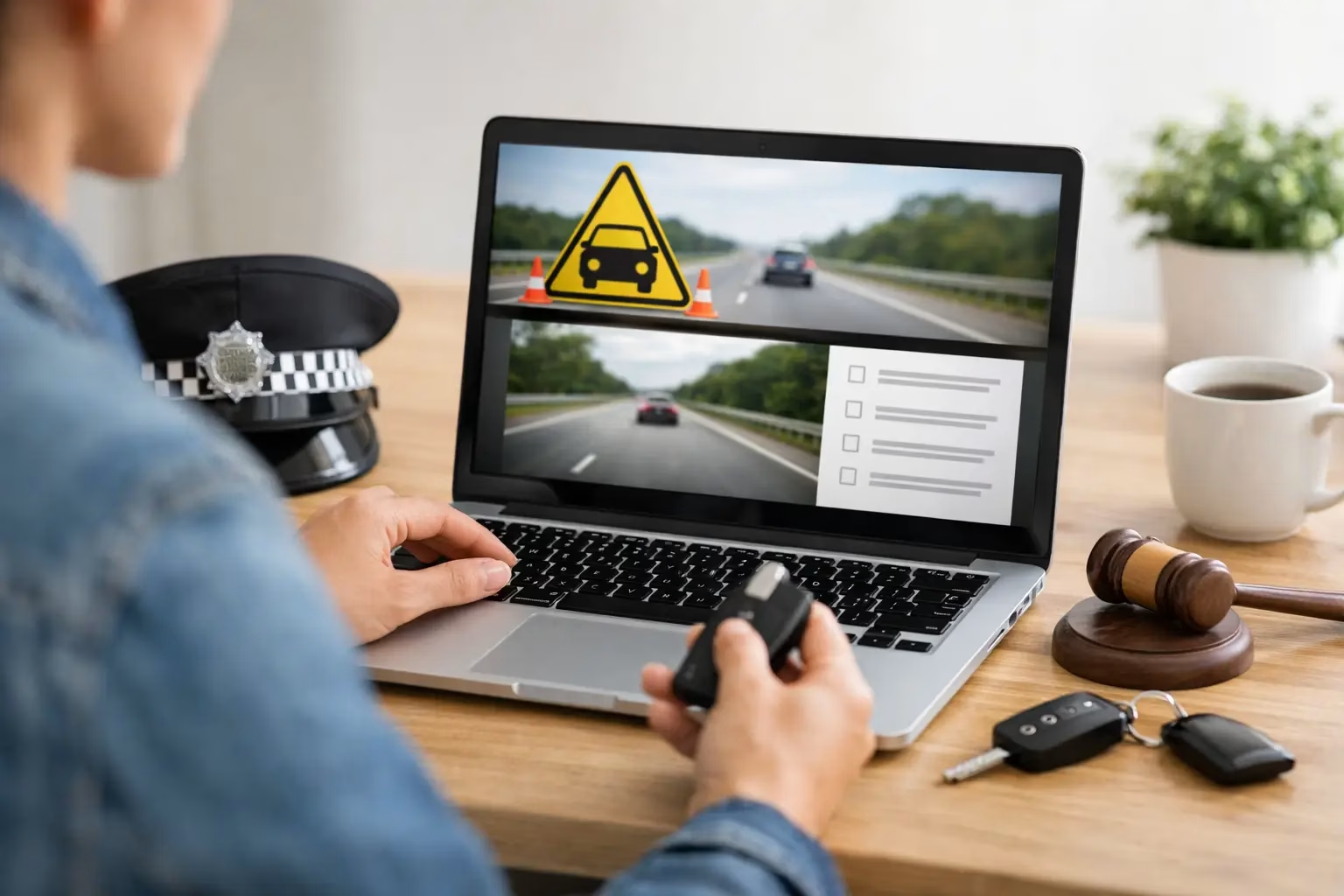
A traffic ticket can come with a short deadline, confusing instructions, and a list of course providers you have never heard of. That makes it reasonable to ask, is online traffic school legitimate before you enroll or enter your payment information. The short answer is yes – legitimate online traffic schools exist and can satisfy court, DMV, licensing, or insurance requirements. The key is choosing a course approved for your specific reason and location.
Online learning is not a shortcut around traffic laws or court rules. A legitimate provider delivers the required curriculum online, tracks your progress, verifies completion as required, and reports or provides your completion record according to the rules that apply to your course.
What Makes an Online Traffic School Legitimate?
Legitimacy is not determined by a polished website, a low price, or a promise that a ticket will disappear. It comes down to authorization and process. A valid course must be approved, licensed, certified, or accepted by the state agency, court, county, insurer, or other organization requiring you to complete it.
Approval requirements vary. One state may approve a basic driver improvement course at the state level, while another allows individual courts or counties to maintain their own provider lists. A course accepted for an insurance discount may not meet a court-ordered traffic school requirement. The course name can sound similar, but the approval purpose may be different.
A legitimate provider should make the course purpose clear before enrollment. You should be able to identify whether the program is for ticket dismissal, point reduction, driver license eligibility, a court requirement, insurance savings, or another specific need. If the provider cannot explain that distinction, pause before registering.
How to Verify an Online Traffic School Before You Enroll
Start with the paperwork from your court, DMV, insurance company, or licensing agency. Look for the exact course name, required completion date, jurisdiction, and any instructions about approved schools. These details matter more than general claims that a school is “state approved.”
Next, confirm the provider through the authority that assigned the course whenever possible. A court clerk, DMV website, case manager, probation officer, or insurance representative can tell you whether a provider is accepted for your situation. If your citation identifies a list of approved schools, use that list as your starting point.
Then review the course provider’s enrollment information. A trustworthy school clearly states the states or jurisdictions it serves, the type of approval it holds, the course length, the total price, and how completion is handled. You should not have to guess whether your certificate will be sent electronically, mailed to you, or reported directly.
Before you pay, make sure you can answer these questions:
- Is this course approved or accepted for my court, DMV, licensing, or insurance requirement?
- Does the course name match the requirement on my paperwork?
- Can I finish before my deadline, including any processing time?
- What is the full price, including certificate delivery or reporting fees?
- How will my completion be reported, and what proof will I receive?
These are practical checks, not unnecessary extra steps. Completing the wrong course can mean paying twice, missing a deadline, or failing to receive credit for work you already finished.
Signs of a Legitimate Online Traffic School
A legitimate online traffic school is transparent. It explains the rules before enrollment rather than revealing important conditions after you have paid. It provides accessible customer support, clear contact information, secure payment processing, and a written policy for refunds or cancellations.
It also has a real course structure. Depending on the program and state rules, that may include timed lessons, knowledge checks, identity verification, final exams, or required breaks. These steps can feel less convenient than simply clicking through a short video, but they often exist because the approving authority requires them.
Look for clear information about access as well. Most reliable online schools let you log in from a computer, tablet, or mobile device and complete self-paced lessons around your schedule. Self-paced does not always mean instant. State rules may require a minimum number of instruction hours, even when you can choose when to complete them.
At DriverEducators.com, course information is designed to help drivers understand the requirement, the approval purpose, and the steps needed to complete training with confidence. That clarity is especially useful when you are trying to meet an agency deadline without taking time off work or attending a classroom course.
Red Flags That Deserve a Second Look
Be careful with any provider that guarantees a legal outcome it cannot control. A traffic school may meet a course requirement, but it cannot promise that a judge will dismiss every ticket, that points will always be removed, or that your insurance rate will never change. Those decisions belong to the court, DMV, or insurer.
Vague approval claims are another warning sign. “Approved everywhere” is not realistic because traffic school rules differ by state and jurisdiction. A provider should be able to tell you exactly where and for what purpose a course is approved.
Watch for incomplete pricing, too. An advertised price may not be the final cost if mandatory processing, certificate, identity-verification, or reporting charges appear later. Read the checkout page before submitting payment and keep a copy of your receipt.
Poor communication is also a concern. If there is no customer support contact, no explanation of how you receive proof of completion, or no way to resolve a technical issue, the course may create problems when your deadline is close. A legitimate provider should give you a reasonable path to get help.
Does Online Traffic School Work for Court Requirements?
Often, yes, but only when the court accepts that specific online provider and you meet all eligibility rules. Courts may limit traffic school to certain violations, require you to request permission first, or set deadlines for enrollment and completion.
Do not assume that enrolling is the same as being approved to attend. Some courts require you to pay a fine, submit a form, appear at a hearing, or obtain authorization before beginning the course. Follow the order on your court documents.
After you complete the program, confirm that the court receives the completion record. Some schools report electronically, while others issue a certificate you must submit yourself. Save your confirmation, certificate, and payment receipt until your case is fully closed.
What About DMV, License, and Insurance Courses?
Online traffic education can also be legitimate for needs outside a ticket. First-time drivers may need online driver education before applying for a license. Drivers in a state-required improvement program may need a basic, intermediate, or aggressive driver course. Mature drivers may complete approved training to qualify for an insurance discount.
Each purpose has separate rules. For example, an insurer may require its own approved mature driver course, and a state licensing agency may require a particular curriculum for new drivers. Select the course based on the requirement, not simply on the shortest title or lowest advertised price.
If you are unsure which program applies, ask the organization that requested it. One quick call can prevent you from enrolling in a course that does not provide the credit you need.
FAQ: Is Online Traffic School Legitimate?
Is online traffic school legitimate in every state?
Online traffic school can be legitimate in many states, but approval is not universal. Verify acceptance for your state, court, county, or insurance provider before enrolling.
Can I take traffic school online for a speeding ticket?
Possibly. Eligibility depends on your violation, driving record, court rules, and whether the court permits an approved online course.
Will online traffic school automatically dismiss my ticket?
No. Completing a course may satisfy a requirement, but ticket dismissal is decided by the court. Follow all court instructions, including fine payments and filing deadlines.
How do I know my completion was reported?
Check your completion confirmation and ask whether reporting is electronic or your responsibility. Keep your certificate and receipt until the court, DMV, or insurer confirms your record is updated.
Are online traffic school certificates valid?
They are valid when issued by a provider approved for your requirement. A certificate from an unapproved course may not be accepted.
The safest choice is rarely the one that makes the biggest promise. It is the provider and course that match your exact requirement, clearly explain the process, and give you reliable proof that you completed the training correctly.