
Your insurance premium doesn’t have to be a fixed cost. Insurance savings through driving are real and measurable-insurers reward safe habits with concrete discounts that add up over months and years.
At DriverEducators.com, we’ve seen drivers cut their premiums by hundreds of dollars annually simply by maintaining clean records and adopting defensive techniques. This guide shows you exactly which habits matter most and how to build them.
How Insurers Price Your Premium Based on Driving Behavior
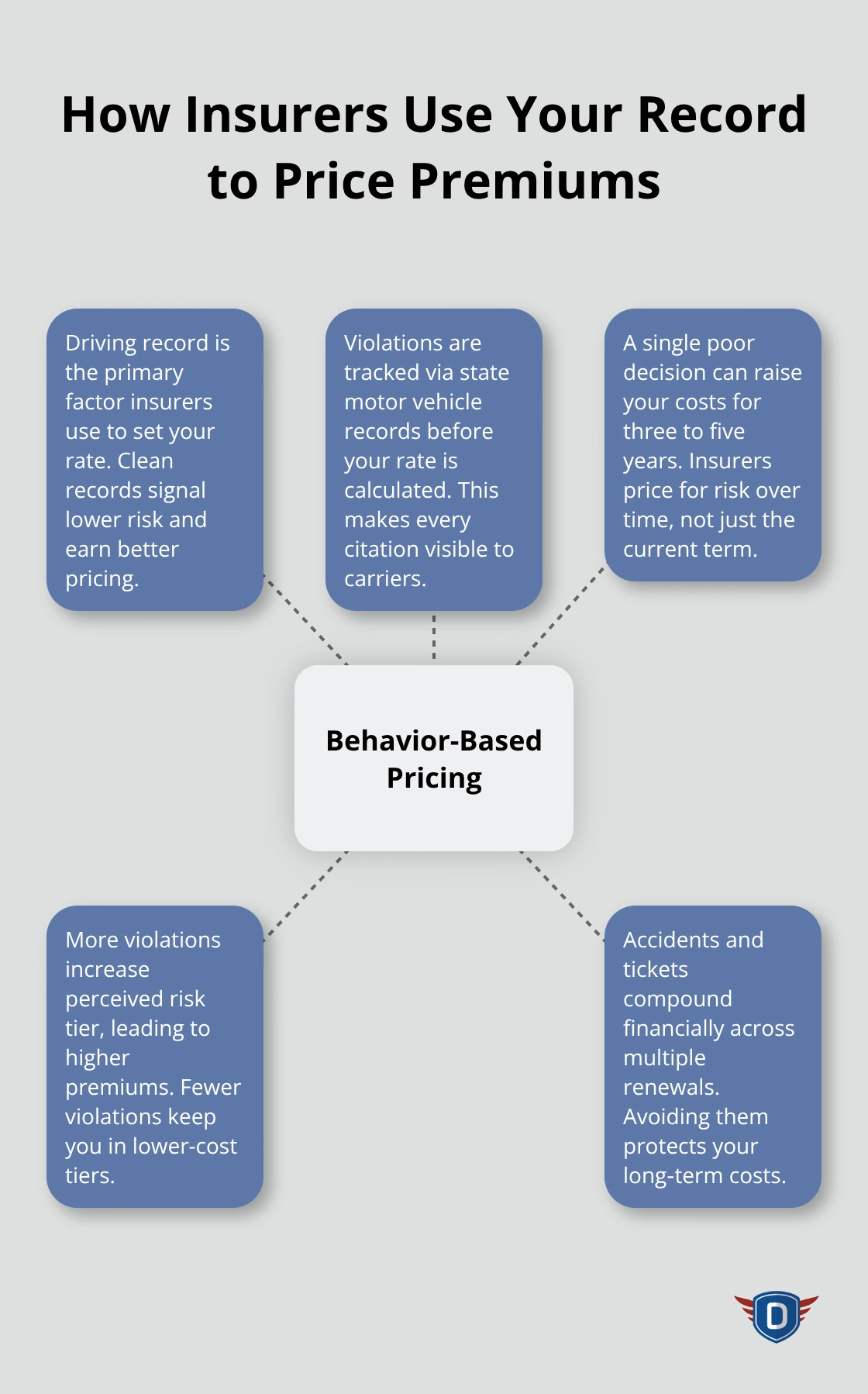
Insurance companies don’t set premiums arbitrarily. They use your driving record as the primary factor determining what you pay, and the data backs this up consistently. A single at-fault accident increases your premium by 25 to 40 percent, while a speeding ticket typically adds 10 to 15 percent to your annual costs. One poor decision on the road costs you hundreds of dollars in additional premiums over the next three to five years. Insurers track violations through state motor vehicle records and access this information before calculating your rate. The worse your record, the higher your perceived risk, and the higher your premium becomes.
What Your Driving Record Actually Contains
Your driving record includes every moving violation, accident, and insurance claim filed in your name. Traffic tickets for speeding, running red lights, reckless driving, and failure to yield all appear on this record. Insurance companies review the past three to five years of your history-not just recent violations. A clean record during this entire period qualifies you for standard rates, while any violation extends the period they consider you high-risk. Some insurers use tiered systems where multiple violations within a short timeframe trigger even steeper increases. Every violation you avoid directly protects your rate from climbing.
How Safe Driving Translates to Lower Costs
Drivers who maintain accident-free, violation-free records access discounts that compound over time. Progressive reports that good driver discounts typically range from 10 to 30 percent off base rates, depending on your insurer and location. Some carriers offer accident forgiveness programs, meaning your first at-fault accident won’t immediately spike your premium. Others reward three to five years of clean driving with loyalty discounts that stack on top of safe driver discounts. Defensive driving skills prevent the violations and accidents that trigger rate increases in the first place. Building these habits early creates long-term financial protection that extends well beyond the current policy year.
Why Specific Violations Hit Your Wallet Hardest
Not all violations carry equal weight. Insurance companies penalize serious infractions far more heavily than minor ones. A DUI conviction can increase your premium by 48 to 87 percent for three to five years. Reckless driving charges produce similar damage to your rates. Even minor violations compound quickly-two speeding tickets within 12 months signal higher risk to insurers than a single ticket. The financial impact accumulates fast, which makes understanding which behaviors matter most essential for protecting your wallet.
Moving Forward to Discounts That Actually Work
Understanding how insurers calculate your premium sets the foundation for taking action. The next section reveals the specific discounts available to safe drivers and how to qualify for them immediately.
Discounts That Reward Safe Driving
Good Driver Discounts: Your Foundation for Savings
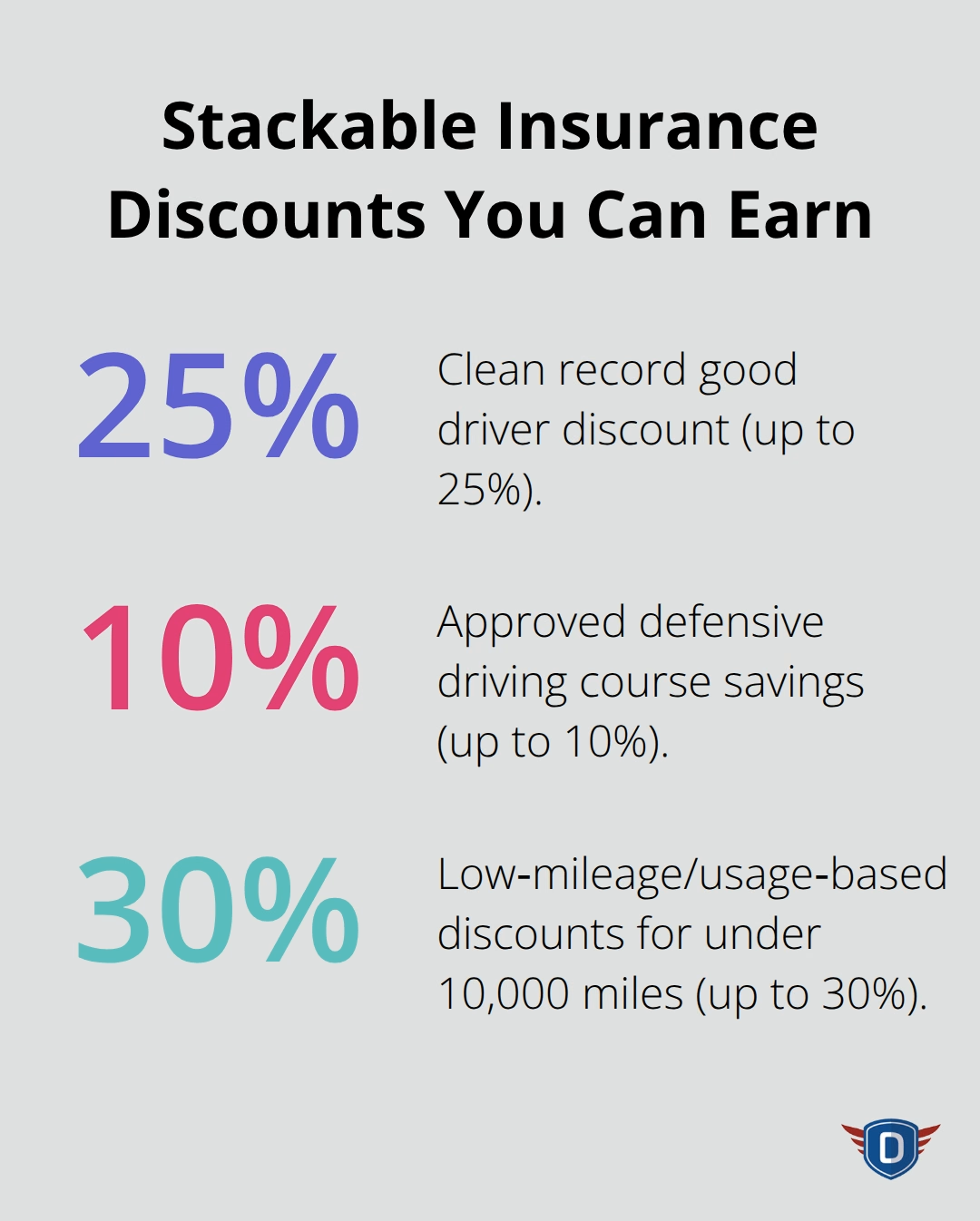
Good driver discounts form the foundation of insurance savings, and the numbers justify prioritizing a clean record. A clean driving record can save you up to 25% on car insurance. State Farm, Allstate, and GEICO all structure their programs similarly: one violation or accident resets your eligibility clock, forcing you to start the clean record period over.
This means a single speeding ticket doesn’t just add 10 to 15 percent to your current premium-it also disqualifies you from the good driver discount, creating a double financial hit. The safest drivers lock in these discounts year after year, compounding savings that reach thousands of dollars over a decade.
Defensive Driving Courses: Stacking Additional Savings
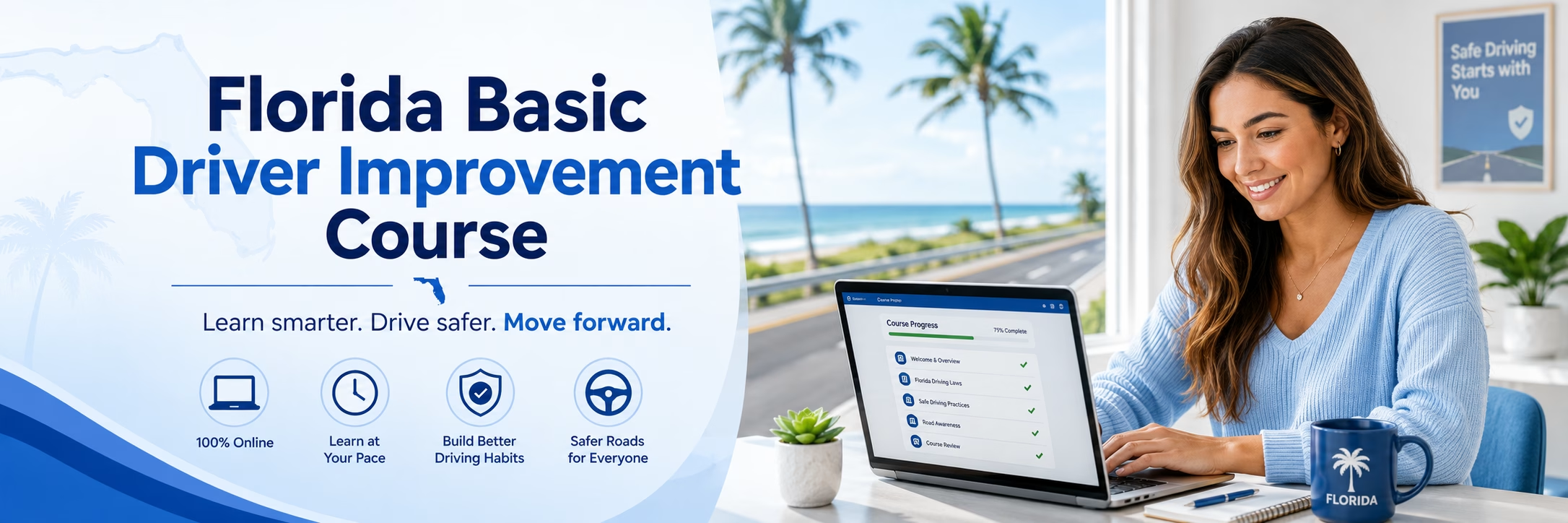
Defensive driving courses unlock a separate discount category that stacks on top of good driver discounts at most insurers. Completing an approved defensive driving course could save you up to 10% on applicable coverages. Florida recognizes this value through its Basic Driver Improvement and Intermediate Driver Improvement programs, which satisfy court requirements while simultaneously qualifying drivers for insurance rate reductions. The discount usually applies for three years, making the one-time investment in a course exceptionally cost-effective. At DriverEducators.com, our Florida-approved traffic school courses help drivers meet these requirements while building the defensive skills that prevent violations in the first place.
Low Mileage and Accident-Free Programs
Low mileage discounts represent another avenue many drivers overlook-carriers like Metromile and usage-based programs reward drivers who log fewer than 10,000 miles annually with discounts up to 30 percent. Accident-free discounts run parallel to good driver discounts but sometimes carry different thresholds; some insurers reward the first three accident-free years more generously than subsequent years. Combining multiple discounts-good driver status, defensive driving completion, and low mileage-can reduce your premium by 40 to 50 percent compared to a driver with violations and no course completion.
How to Maximize Your Discount Potential
Calculating your specific savings requires contacting your insurer directly, as discount structures and eligibility periods vary significantly by carrier and state. The practical reality is that stacking discounts creates substantial financial protection over time. Understanding which discounts apply to your situation positions you to take the next step: building the daily driving habits that maintain these discounts and prevent the violations that would eliminate them.
How to Build Habits That Protect Your Insurance Rates
Knowing which discounts exist means nothing without the daily driving habits that qualify you for them. The gap between understanding safe driving and actually practicing it consistently is where most drivers fail. Your insurance savings depend entirely on what you do behind the wheel every single day, not on good intentions or occasional caution. Building durable habits requires specific, actionable changes that fit into your actual driving routine rather than theoretical ideals that sound good in conversation.
Eliminate Distractions Before They Cost You
Distraction is the primary threat to your driving record and your wallet. The National Highway Traffic Safety Administration reports that distracted driving claims 3,208 lives annually in the United States. Checking your phone, adjusting the radio, eating, or having intense conversations all increase your crash risk substantially.
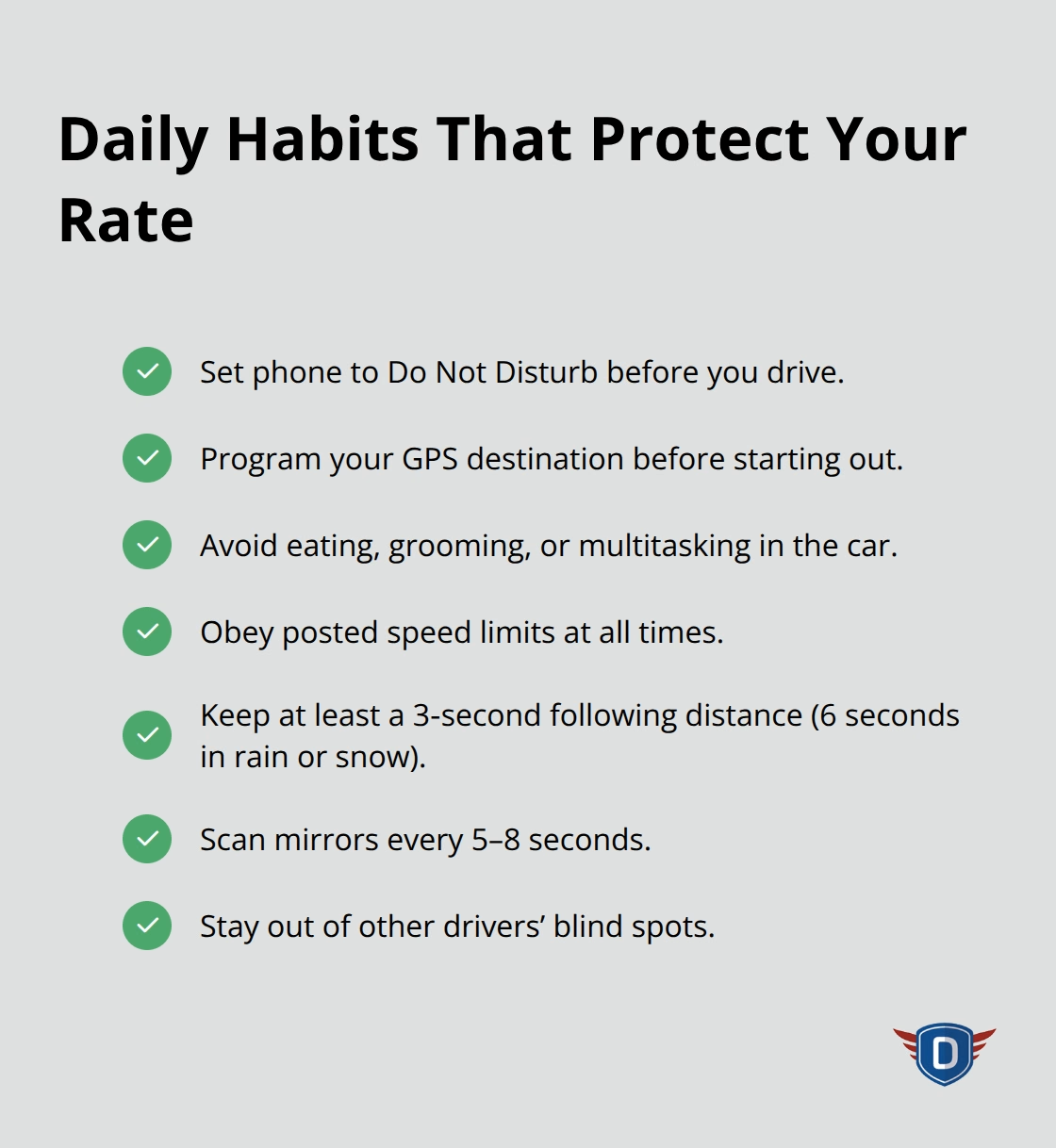
If you want to maintain a clean record and keep your insurance discounts intact, you need a concrete system to eliminate distractions before they start. Set your phone to do-not-disturb mode before starting the engine, program your destination into GPS before driving, and eat or prepare yourself at home rather than in the car. These aren’t suggestions-they’re non-negotiable if you’re serious about protecting your premiums.
Follow Speed Limits as a Legal Requirement
Speed limit violations and traffic law infractions are the second major threat to your discount eligibility. Many drivers treat speed limits as suggestions rather than legal requirements, but insurers see speeding tickets as a direct indicator that you’ll cause an accident. Exceeding the speed limit by even 5 miles per hour increases your stopping distance and reaction time in critical situations.
Your goal should be driving at or below the posted limit consistently, not just when you notice a police car. This habit protects your record while simultaneously building defensive driving skills that prevent accidents altogether.
Master Defensive Driving Techniques
Defensive driving techniques separate drivers who maintain clean records from those who rack up violations and accidents. Defensive driving means anticipating hazards before they develop and positioning your vehicle to avoid them entirely.
Leave at least a 3-second following distance behind other vehicles, which expands to 6 seconds in rain or snow according to the National Safety Council. Scan your mirrors every 5 to 8 seconds to track surrounding traffic, and avoid driving in other vehicles’ blind spots. These specific behaviors create physical distance and reaction time that absorb unexpected situations without requiring emergency maneuvers that trigger violations or accidents.
Completing a defensive driving class can lead to lower insurance premiums and help remove points from your driving record while teaching these exact techniques through real-world scenarios.
Final Thoughts
Your insurance premium reflects the choices you make behind the wheel every single day. The connection between safe driving habits and lower premiums isn’t theoretical-it’s financial reality backed by concrete numbers. A clean driving record qualifies you for discounts that compound year after year, while a single violation costs you hundreds of dollars in increased premiums over the next three to five years.
Insurance savings through driving come from two sources working together: you avoid violations and accidents that trigger rate increases, and you actively stack discounts by completing defensive driving courses and maintaining clean driving habits. Combining these approaches creates savings of 40 to 50 percent compared to drivers with violations on their records. A speeding ticket adds 10 to 15 percent to your premium immediately and disqualifies you from good driver discounts that could save you 25 percent, making that single decision far more costly than the ticket itself.
Building safer driving habits starts with specific, actionable changes rather than vague intentions. Set your phone to do-not-disturb before driving, maintain a 3-second following distance, and scan your mirrors every 5 to 8 seconds-these concrete behaviors prevent the violations and accidents that destroy your insurance rates. Our Florida-approved traffic school courses teach defensive driving techniques that protect both your safety and your wallet while qualifying you for insurance discounts that last for years.