

Most new drivers think practice is just about logging hours behind the wheel. That’s wrong. At DriverEducators.com, we know that behind wheel practice tips focused on repetition and structure are what actually build the automatic responses you need when things go wrong.
Your nervous system needs specific, repeated training to turn emergency maneuvers into instinct. The difference between a safe driver and a dangerous one isn’t talent-it’s deliberate practice.
Start Small, Build Up
Master the Fundamentals First
The foundation of muscle memory is repeating basic tasks until your brain stops thinking about them. Start in parking lots and quiet residential streets where traffic is minimal and distractions are few. Practice smooth acceleration, gentle braking, and steering control without the pressure of other vehicles around you.
Cleveland Clinic research shows that muscle memory develops in three distinct phases: the cognitive phase where you consciously think through each step, the associative phase where practice improves your performance, and the autonomous phase where execution becomes automatic. You need to spend real time in that cognitive phase first, mastering the fundamentals before anything else matters. Once basic vehicle control feels natural-when you’re not thinking about how hard to press the pedal or how much to turn the wheel-you’re ready to progress.
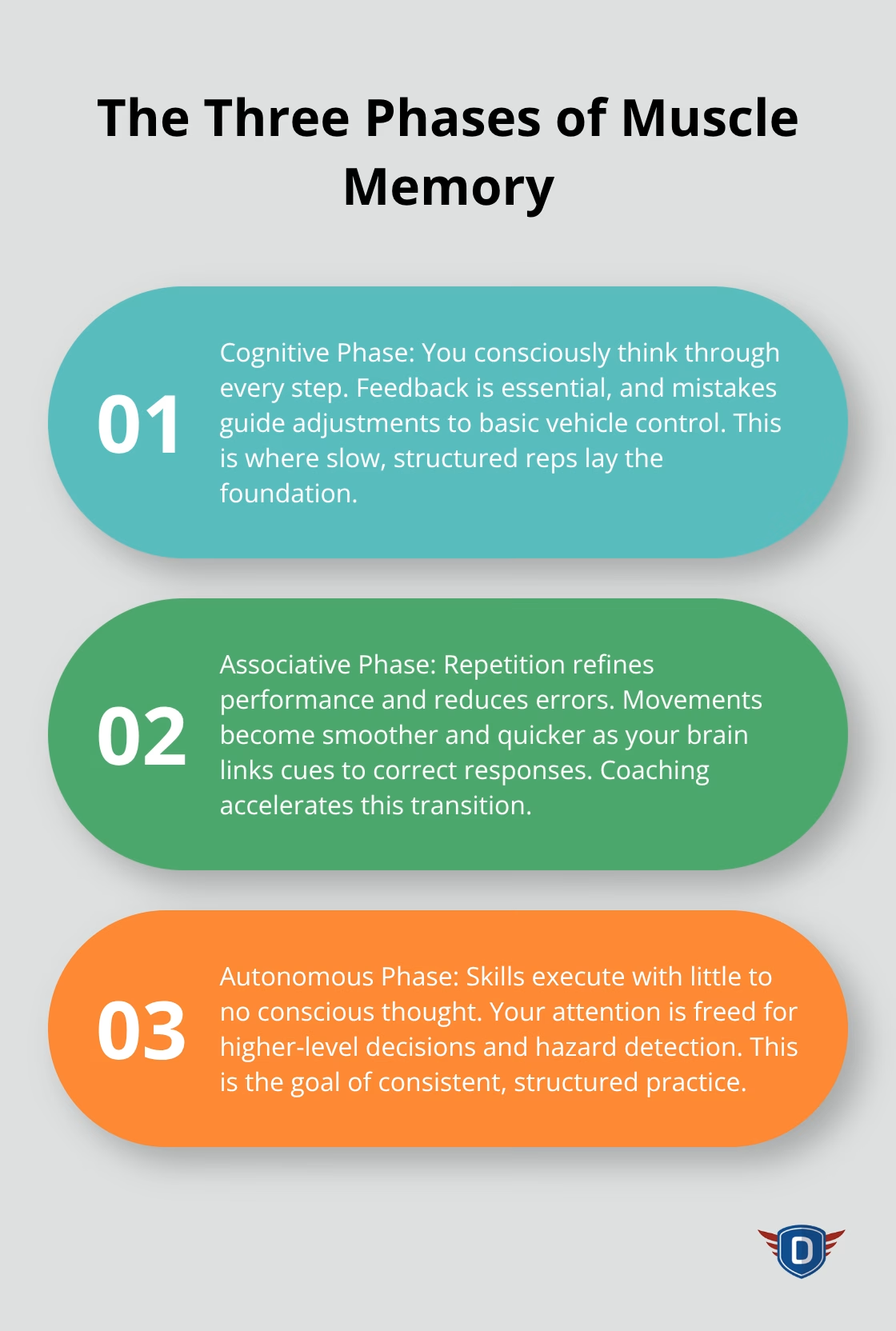
This typically takes focused practice, though it varies based on your prior experience and practice frequency.
Progress Through Increasingly Complex Environments
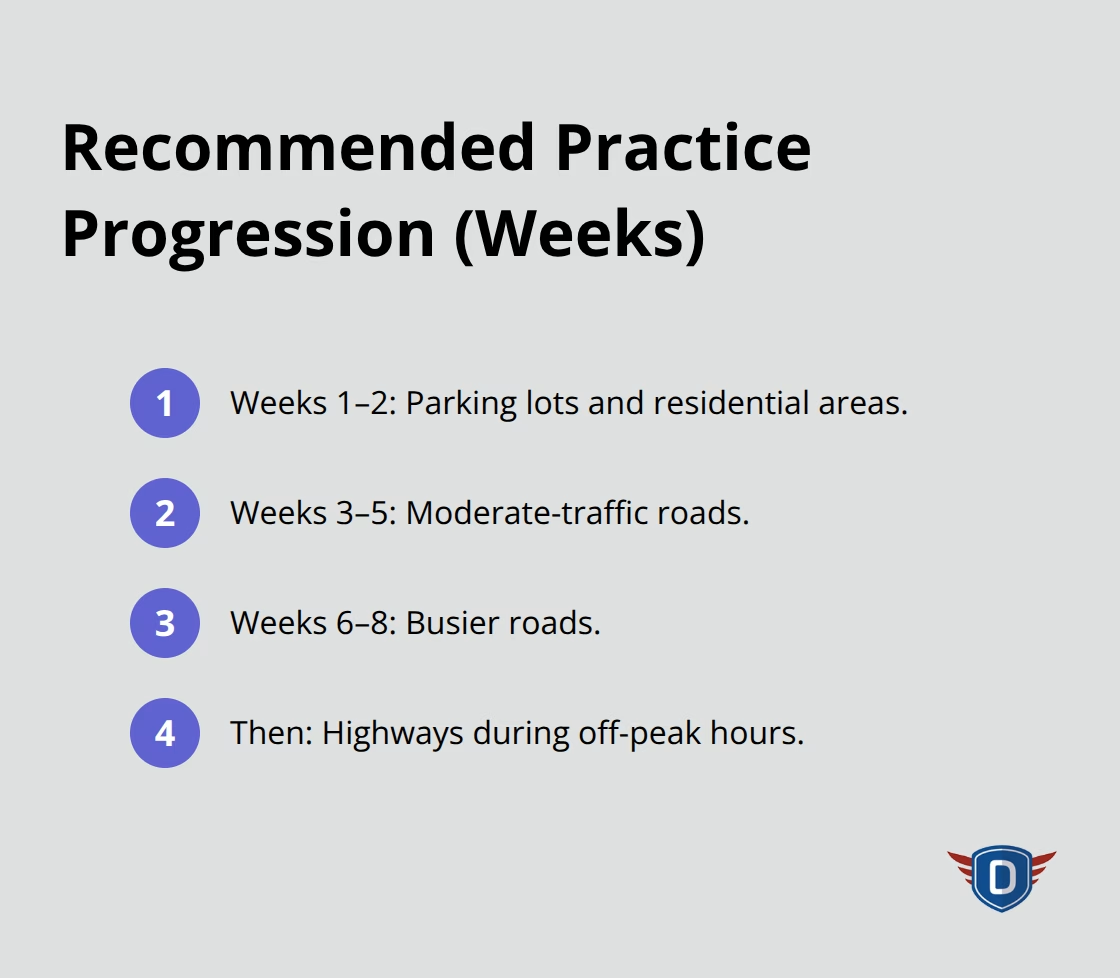
Complexity should increase gradually as your confidence grows. Move from quiet streets to busier roads with moderate traffic, then to highways during off-peak hours, and finally to high-traffic situations. Each environment demands different skills: moderate traffic teaches you to anticipate other drivers’ movements, while highway driving forces you to manage speed and lane positioning simultaneously.
Build Automatic Responses Through Consistent Repetition
Practice specific maneuvers repeatedly in each environment until they feel effortless. Lane changes, merging, and turning should happen multiple times weekly rather than once a month, because spacing out practice sessions weakens the neural pathways you’re building. Research confirms that practice frequency matters more than total hours-consistent weekly practice beats sporadic marathon sessions.
The practical approach is to schedule short 45-minute practice sessions twice per week rather than one long four-hour session monthly. This consistency reinforces the automatic responses your nervous system needs when real emergencies happen on the road. Your next step involves training those emergency responses in controlled environments where mistakes won’t put you or others at risk.
Train Emergency Responses Before You Need Them
Practice Hard Stops in Controlled Spaces
Emergency braking and steering must happen faster than your conscious mind can process them. You cannot think your way through a sudden obstacle or a child running into the street. Your nervous system needs thorough training so your body responds automatically when real emergencies happen on the road.
Start this training in empty parking lots where you can practice hard stops without endangering anyone. Set up cones or markers to create obstacles, then approach them at slow speeds and practice emergency braking with maximum pressure on the pedal. Once that feels controlled, add steering inputs-swerve around the obstacle while braking hard.
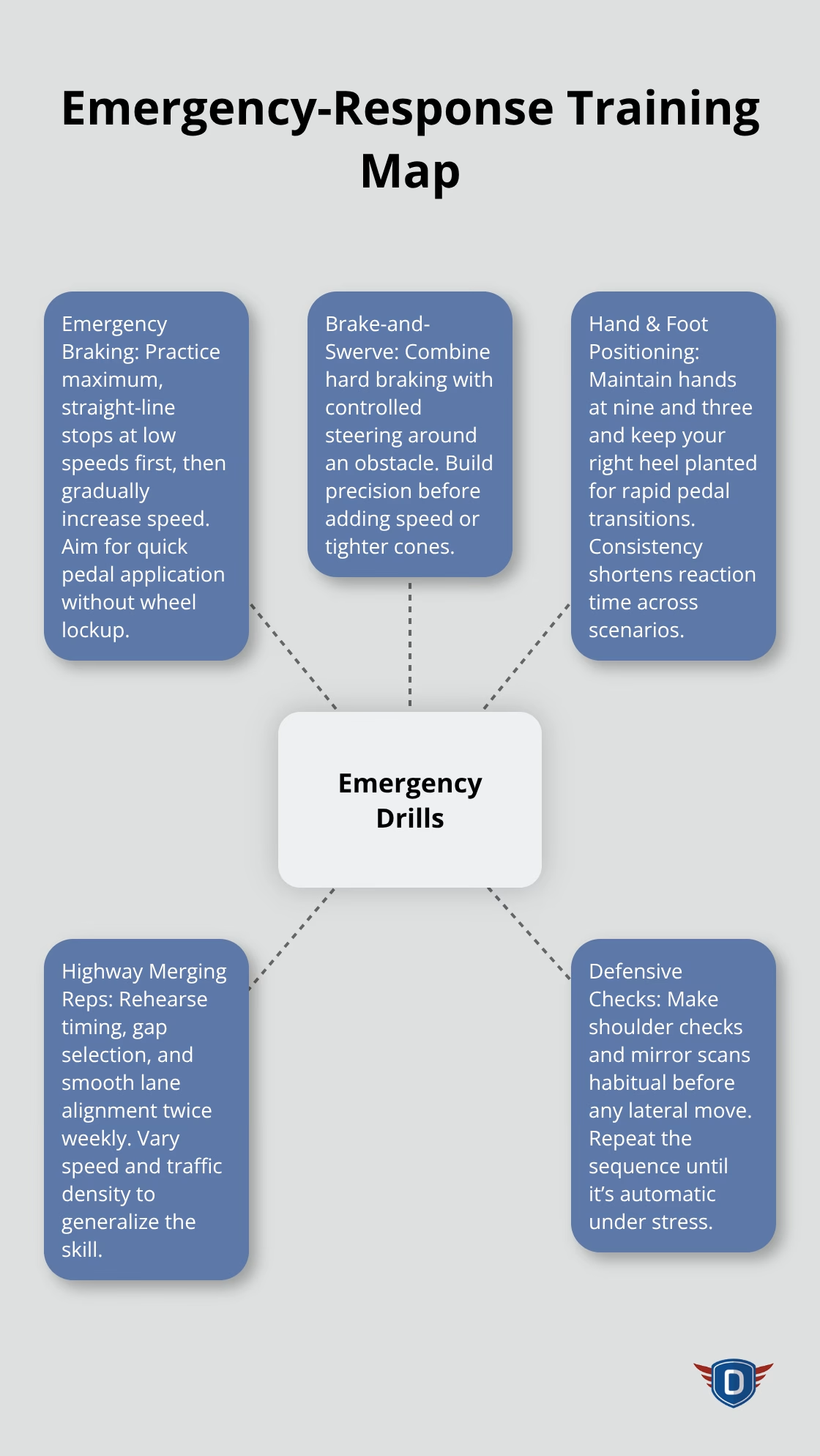
Muscle memory will make you safer, smoother and more confident, and practicing specific emergency responses in safe environments builds the procedural memories in your motor cortex, cerebellum, and striatum that keep you alive when real emergencies occur.
The difference between a driver who panics and one who reacts correctly is not luck. It is deliberate, repeated practice of the exact maneuvers you hope never to use.
Master Consistent Hand and Foot Positioning
Your hand and foot positioning directly affects how quickly you respond to emergencies, which makes consistency non-negotiable. Keep your hands at nine and three o’clock on the wheel, not ten and two where your hands can hit your face during hard braking. Your feet should rest with your right heel on the floor and your right toe ready to move between gas and brake without lifting your heel.
Practice this positioning in every single driving session until it becomes automatic. This muscle memory (stored in your brain’s motor cortex and cerebellum) transfers across all driving situations, from parking lots to highways. When your hands and feet move without conscious thought, you free your mind to focus on the road ahead.
Build Highway Merging Skills Through Frequent Practice
Lane changes and merging demand more frequency than basic vehicle control because highway speeds leave no margin for error. Practice merging at least twice per week, varying your speeds and traffic density each time. One week, merge during moderate traffic on a four-lane road; the next week, practice on a busier six-lane highway.
This variation forces your brain to adapt the same fundamental skill to different scenarios, which creates truly robust muscle memory. After consistent practice, the shoulder check, mirror scan, and smooth lane position adjustment will happen without conscious thought-exactly when you need it most. Your nervous system will have encoded these responses so deeply that they activate automatically under pressure.
The next critical step involves identifying and eliminating the habits that sabotage your progress, even when you practice consistently.
What Sabotages Your Practice Progress
Inconsistent practice schedules destroy muscle memory faster than inactivity does. When you practice hard stops on Monday and then wait three weeks before practicing again, your nervous system forgets most of what it learned. Practice frequency matters more than total hours, which means two 45-minute sessions per week beat one six-hour marathon session monthly. If you can only practice once every two weeks, you’re essentially starting from scratch each time because the neural pathways weaken significantly during gaps.
The solution is straightforward: schedule practice twice weekly, same days if possible, and treat those sessions as non-negotiable appointments. Your brain needs consistent signals that these skills matter, and sporadic practice sends the opposite message.
The Trap of Rushing Progression
Many new drivers push into highway driving and heavy traffic far too early, thinking confidence equals readiness. This kills progress because your motor cortex needs time to encode basic vehicle control before adding complexity. Jumping from quiet streets to rush-hour expressways forces your cognitive system to overload-you cannot build automatic responses when your conscious mind drowns in stimuli.
Follow a strict progression instead: spend two full weeks in parking lots and residential areas, then move to moderate traffic roads for three weeks, then busier roads for another three weeks, and only then approach highways during off-peak hours. This timeline varies based on your prior driving experience, but rushing it guarantees that your emergency responses will remain slow and conscious rather than automatic.
The Defensive Driving Gap
Drivers who skip defensive techniques during practice sessions train their muscles to react dangerously. If you practice lane changes without checking your blind spot repeatedly, your muscle memory will include that dangerous habit. If you practice highway merging without scanning mirrors first, you encode a risky response pattern.
Defensive driving must be part of every single practice session, not something you add later. The shoulder check, mirror scan, and mirror-before-turning sequence must happen so consistently that they become automatic parts of your maneuver, not separate steps you remember to do. Practice these sequences at least three times per session, varying speeds and traffic conditions so your nervous system learns the pattern across different scenarios (parking lots, moderate traffic, busy roads).
Your muscle memory is only as safe as the habits you repeat, which means one sloppy session can reinforce dangerous responses that take weeks to correct.
Final Thoughts
Behind wheel practice tips only work when you commit to consistency. The drivers who pass their tests on the first attempt and stay accident-free aren’t naturally talented-they practiced the same maneuvers repeatedly until their nervous system responded automatically. Muscle memory doesn’t develop from occasional sessions or wishful thinking; it develops from structured repetition that moves your skills from conscious thought to automatic execution.
Your progression matters as much as your frequency. Starting in parking lots, advancing to moderate traffic, then graduating to highways creates the foundation your brain needs to handle real emergencies. Skipping steps or rushing progression guarantees that your responses will remain slow and conscious when speed matters most, so follow the three-phase learning model (cognitive, associative, and autonomous) that your nervous system naturally follows.
Professional instruction accelerates this process significantly. Certified instructors identify bad habits before they become ingrained muscle memory, correct your hand and foot positioning from day one, and structure your practice sessions to maximize learning efficiency-and our instructors at DriverEducators.com focus on building safe driving habits that last a lifetime, not just passing a test.