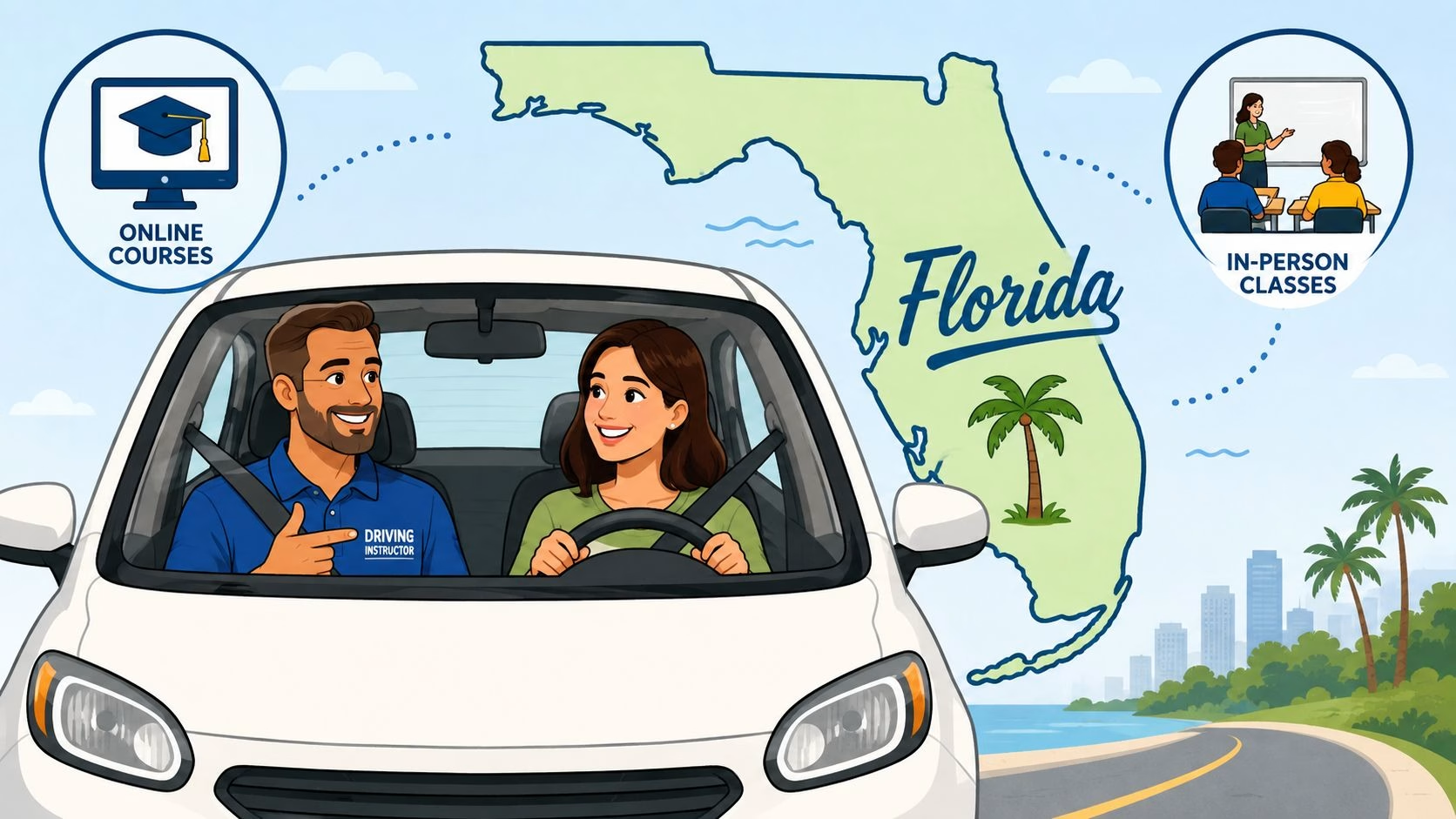
Your first driving lessons in Florida will shape how you handle the road for years to come. We at DriverEducators.com know that stepping behind the wheel for the first time brings both excitement and anxiety.
This guide walks you through what to expect, the laws you need to follow, and how to build real confidence from day one. You’ll learn practical strategies that turn nervous beginners into capable drivers.
What Happens During Your First Lesson
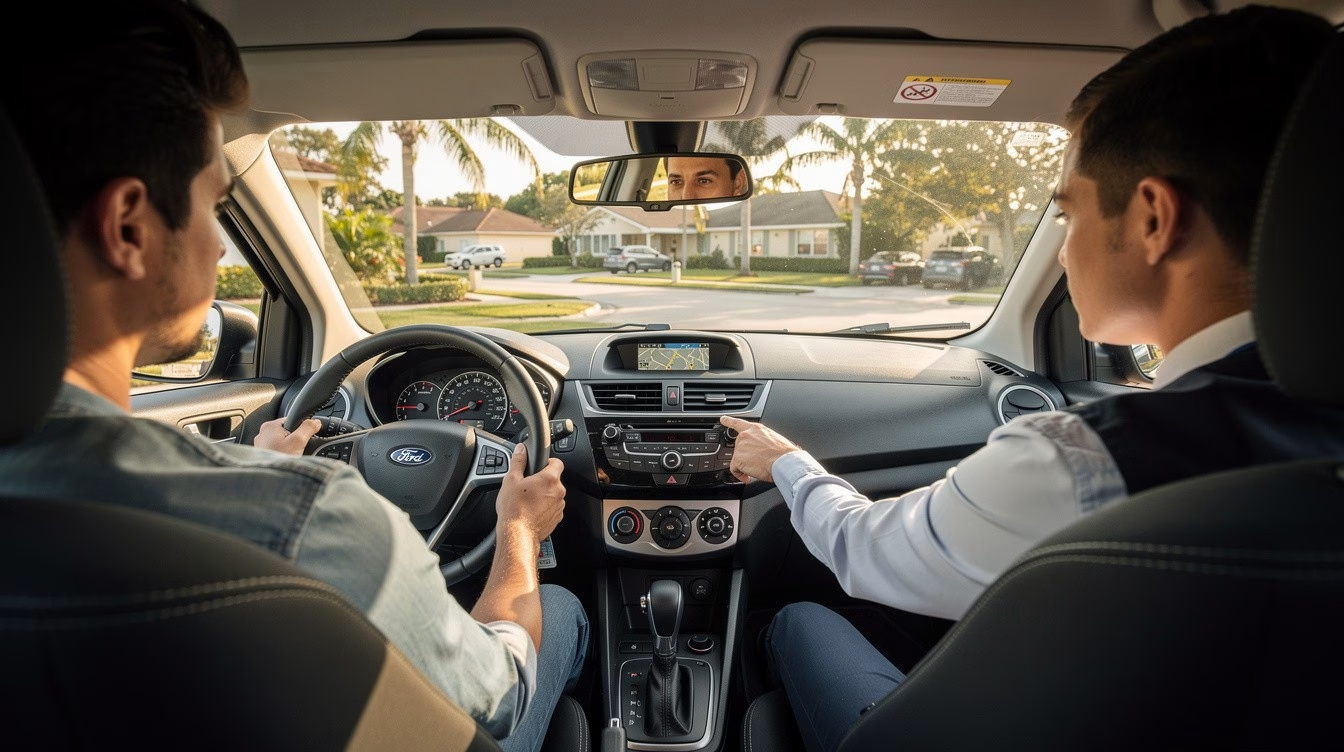
Your first lesson with an instructor will feel different from what you imagined. The instructor won’t immediately hand you the keys and expect you to merge onto a highway. Instead, they’ll spend the first 10 to 15 minutes assessing what you already know, whether from online courses, practice with family, or previous driving experience. This assessment determines the lesson’s pace and focus.
How Instructors Evaluate Your Starting Point
If you’ve completed Florida’s required driver education course through Florida Virtual School or another state-approved provider, your instructor knows you understand traffic laws and basic vehicle operation. What they need to evaluate is how you translate that knowledge into actual driving behavior-your reaction time, situational awareness, and ability to handle the vehicle’s controls under pressure.
Most new drivers overestimate their readiness, so instructors expect some nervousness and gaps in muscle memory. They’ll ask you questions about what you’ve learned, watch how you position yourself in the seat, and observe how you grip the steering wheel. This isn’t a test you can fail; it’s a baseline that shapes your personalized learning path.
Mastering Vehicle Controls in the Parking Lot
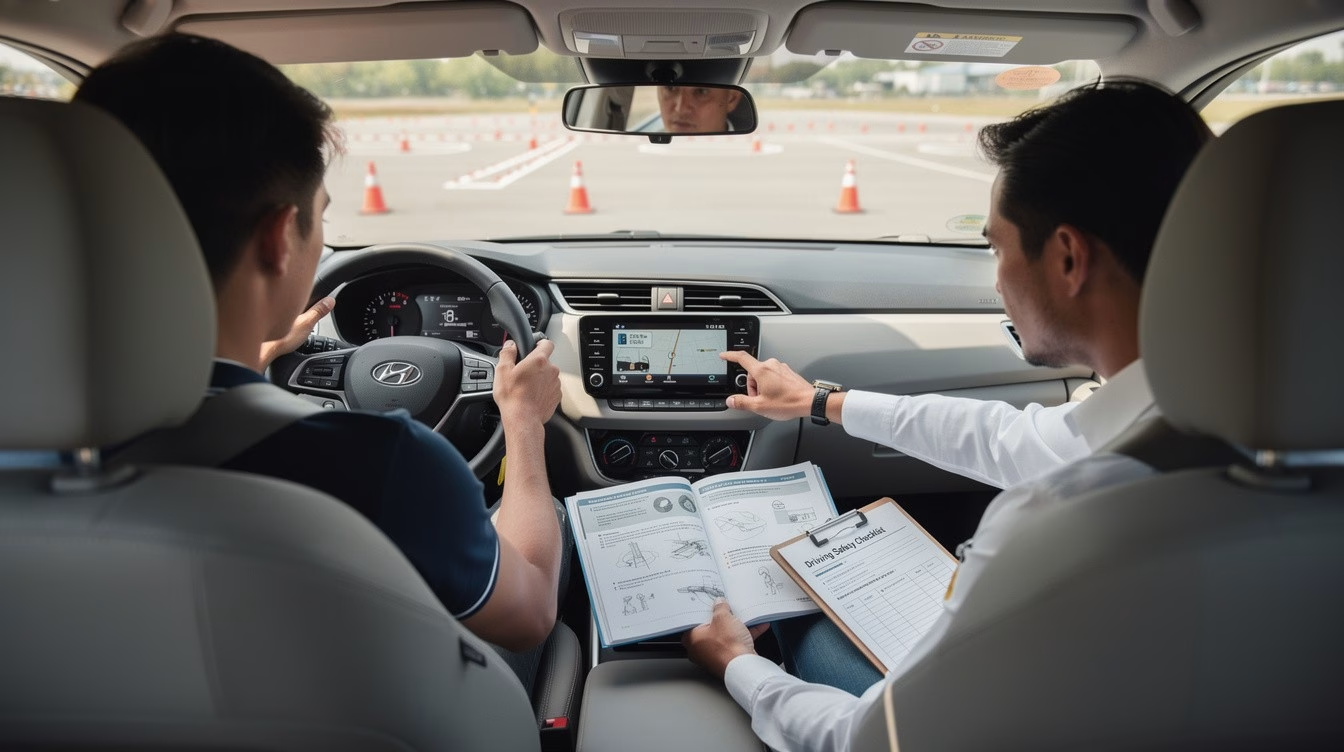
Once the assessment is complete, the instructor will guide you through the vehicle’s controls in the parking lot before moving to the road. You’ll learn where the brake, accelerator, and clutch or automatic transmission lever are positioned. You’ll practice adjusting mirrors and the seat so you can reach all pedals comfortably-this matters more than most new drivers realize.
Your instructor will show you how to start the engine, how the steering feels at different speeds, and how the brakes respond. They’ll explain the differences between parking, reverse, neutral, and drive modes. Improper seat positioning can reduce visibility and affect your control of the vehicle.
You’ll practice smooth acceleration and gradual braking in an empty lot, building muscle memory for these fundamental movements. This phase typically lasts 20 to 30 minutes and is where you’ll feel most comfortable because there’s no traffic pressure. The instructor will correct your grip, your pedal pressure, and your posture without you worrying about other vehicles. This foundation matters because sloppy vehicle control in the parking lot often leads to jerky movements on the road, which startles passengers and signals to other drivers that you’re inexperienced.
Common Mistakes That Derail New Drivers
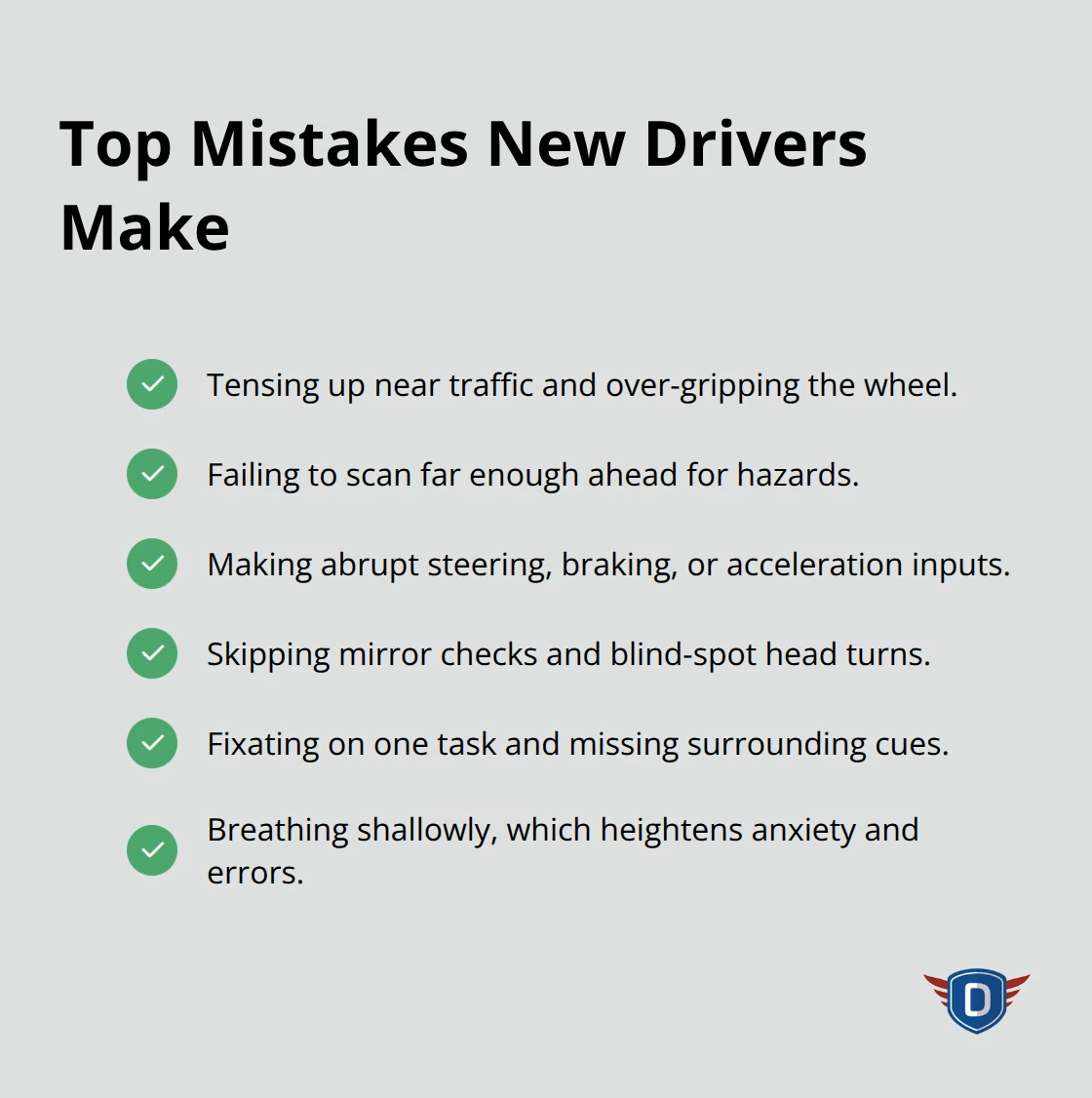
The most common mistake new drivers make is tensing up the moment they approach traffic. You’ll grip the steering wheel so tightly your hands cramp, hold your breath, and focus so hard on one task that you miss everything else. Your instructor has seen this hundreds of times.
The second mistake is failing to look far enough ahead. New drivers watch the car directly in front of them or focus on the road 20 feet away, missing hazards that appear 100 feet ahead. This delayed reaction time creates dangerous situations.
The third mistake is making abrupt movements. You’ll jerk the steering wheel instead of turning smoothly, brake suddenly instead of gradually, or accelerate unpredictably. In 2023, there were 2,148 young drivers who died in traffic crashes and an estimated 180,209 young drivers injured, often due to jerky unpredictable driving from inexperienced drivers.
The fourth mistake is not checking mirrors and blind spots consistently. You’ll forget to glance at the side mirror before changing lanes or fail to turn your head to check your blind spot. Most new drivers know they should do this, but under pressure they skip the step.
Your instructor will correct these mistakes immediately, not to criticize you but because addressing them on day one prevents bad habits from forming. The lesson isn’t about perfection; it’s about identifying where your instincts fail and building better ones. Once you understand how instructors spot these errors and why they matter, you’ll move into the next phase: learning the specific Florida laws and rules that govern every decision you make on the road.
Florida Laws That Shape Every Decision You Make
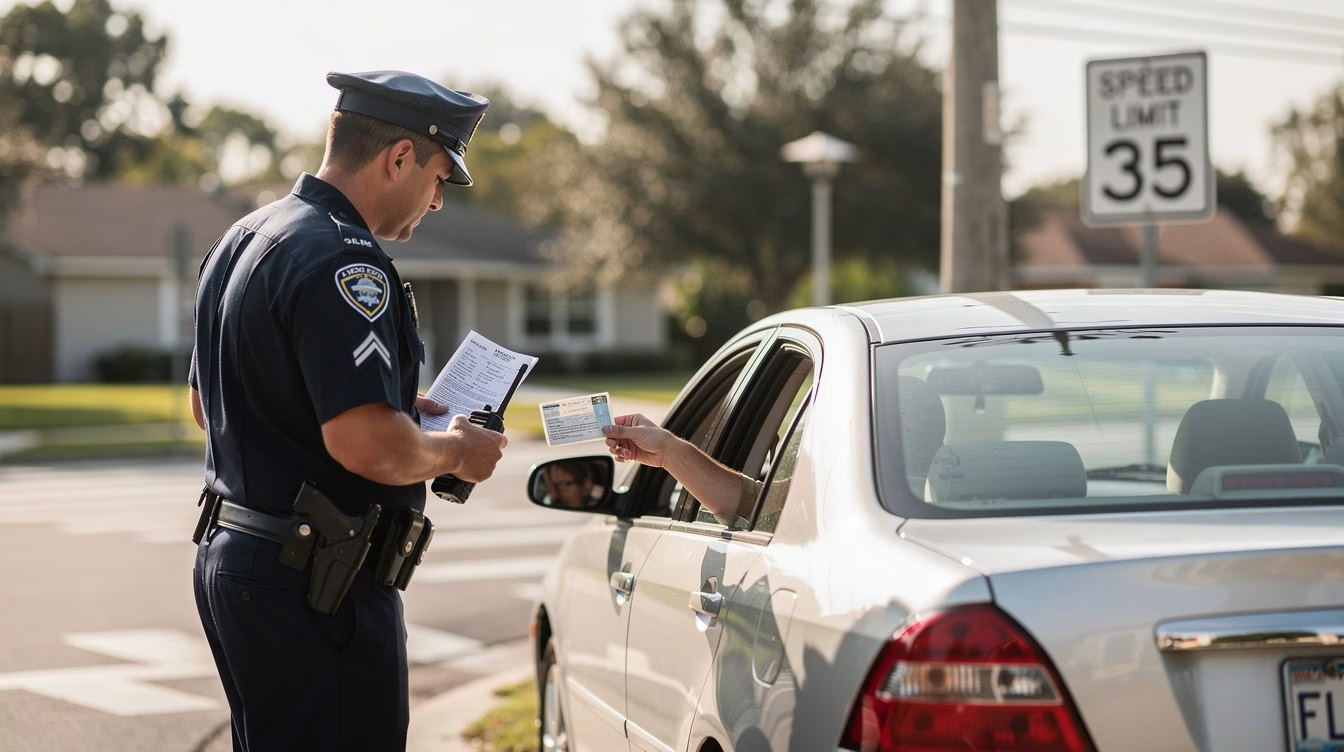
Florida’s traffic laws aren’t suggestions-they’re the framework that determines whether your first driving lessons translate into safe habits or dangerous mistakes. The state enforces speed limits aggressively, with fines starting at $130 for exceeding the limit by 10 miles per hour in a residential zone. On residential streets, the limit is 25 miles per hour, and Florida Highway Patrol officers prioritize enforcement in school zones where the limit drops to 20 miles per hour. Your instructor will drill this into you during lessons because new drivers consistently drive faster than they realize, especially on roads that feel open and empty.
Speed Limits and Why They Matter
Speed is the single largest factor in fatal crashes for drivers under 20, according to the National Highway Traffic Safety Administration. When you’re learning, your instructor will set the pace, but once you’re driving alone, you’ll need to develop the habit of checking your speedometer every 15 to 20 seconds because your sense of speed deteriorates quickly. Most new drivers don’t realize how fast they’re traveling until an instructor points it out.
Traffic Signs and Hazard Recognition
Traffic signs in Florida follow federal standards, so a red octagon always means stop, and a yellow diamond warns of hazards ahead. Your instructor will point out signs you miss and explain why you missed them-usually because you were focused on something else or didn’t scan far enough ahead. Developing the ability to spot signs before you reach them separates safe drivers from those who react too late.
Right-of-Way Rules in Different Situations
Right-of-way rules in Florida are straightforward but frequently misunderstood by new drivers. At a four-way stop, the first vehicle to arrive has the right of way; if two vehicles arrive simultaneously, the one on the right proceeds first. When turning left, you must yield to oncoming traffic and pedestrians crossing in front of you, even if the traffic light is green. This is where many new drivers hesitate because they’re unsure whether to turn or wait, so your instructor will practice left turns repeatedly until the decision becomes automatic.
At a green light with no turn arrow, you have the right to turn left only after yielding to oncoming traffic, which means you may sit in the intersection waiting for a gap. Pedestrians in crosswalks always have the right of way, and Florida law requires drivers to stop completely if a pedestrian is crossing, not just slow down.
Distracted Driving Laws and Phone Restrictions
Distracted driving laws in Florida are strict and have become stricter. As of January 1, 2024, using a handheld wireless device while driving is a primary offense, meaning an officer can pull you over solely for this violation. The first texting offense is a $30 fine with no points; the second is a $60 fine with three points. Using a phone in a school zone or construction zone is a moving violation that adds points to your license.
Florida law allows hands-free devices and voice-activated systems, so if you need to use your phone, mount it on the dashboard and use voice commands. Even a glance at your phone takes your attention away for 5 seconds, and at 55 miles per hour, that’s equivalent to driving the length of a football field blindfolded. New drivers are particularly vulnerable to distraction because they haven’t developed the automaticity that experienced drivers have; experienced drivers maintain lane position and speed without conscious effort, freeing their attention for hazard detection. You cannot do this yet, which is why your instructor will forbid phone use during lessons.
School Bus Laws and the Point System
School bus laws in Florida are unforgiving. If you pass a stopped school bus with its red lights flashing, the fine is $267, plus points on your license, and your license can be suspended for 30 days. You must stop at least 15 feet away from the bus in both directions on any road unless there’s a physical barrier separating you. This is non-negotiable, and your instructor will make certain you understand the urgency.
The point system in Florida means that accumulating points creates real consequences. Four points in 12 months triggers a warning letter from the Department of Highway Safety and Motor Vehicles. Twelve points in 12 months results in a 30-day license suspension.
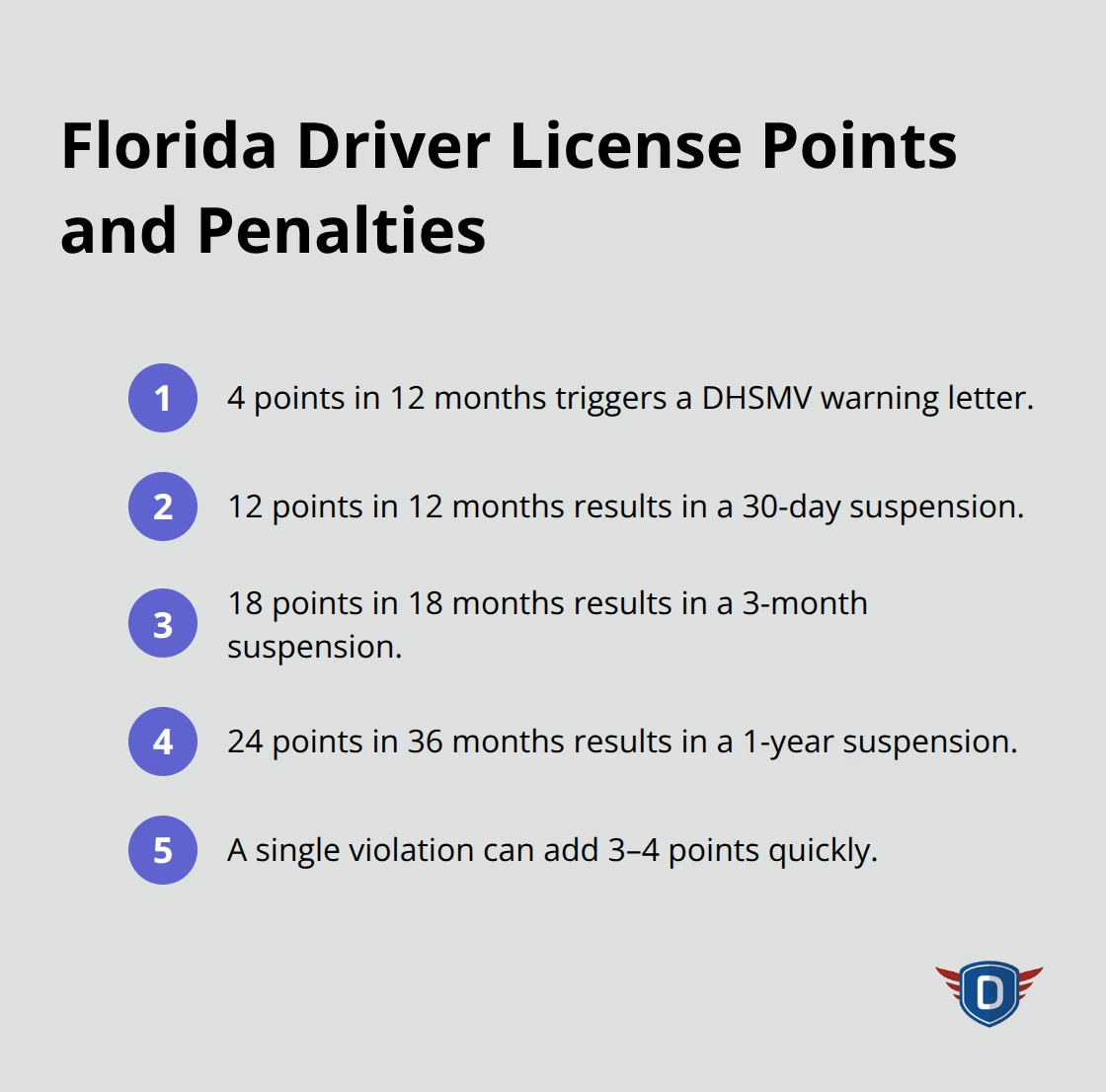
Eighteen points in 18 months results in a three-month suspension. Twenty-four points in 36 months results in a one-year suspension. A single traffic violation for a new driver can add three to four points, so a couple of mistakes can quickly spiral into suspension. Your instructor focuses heavily on the laws during your first lessons-not to frighten you, but to help you understand that compliance protects your driving privileges and your safety. Once you grasp how these laws work in real driving situations, you’ll move into the practical phase of your training: preparing mentally and physically for your first lesson.
Building Real Confidence Before Your First Lesson
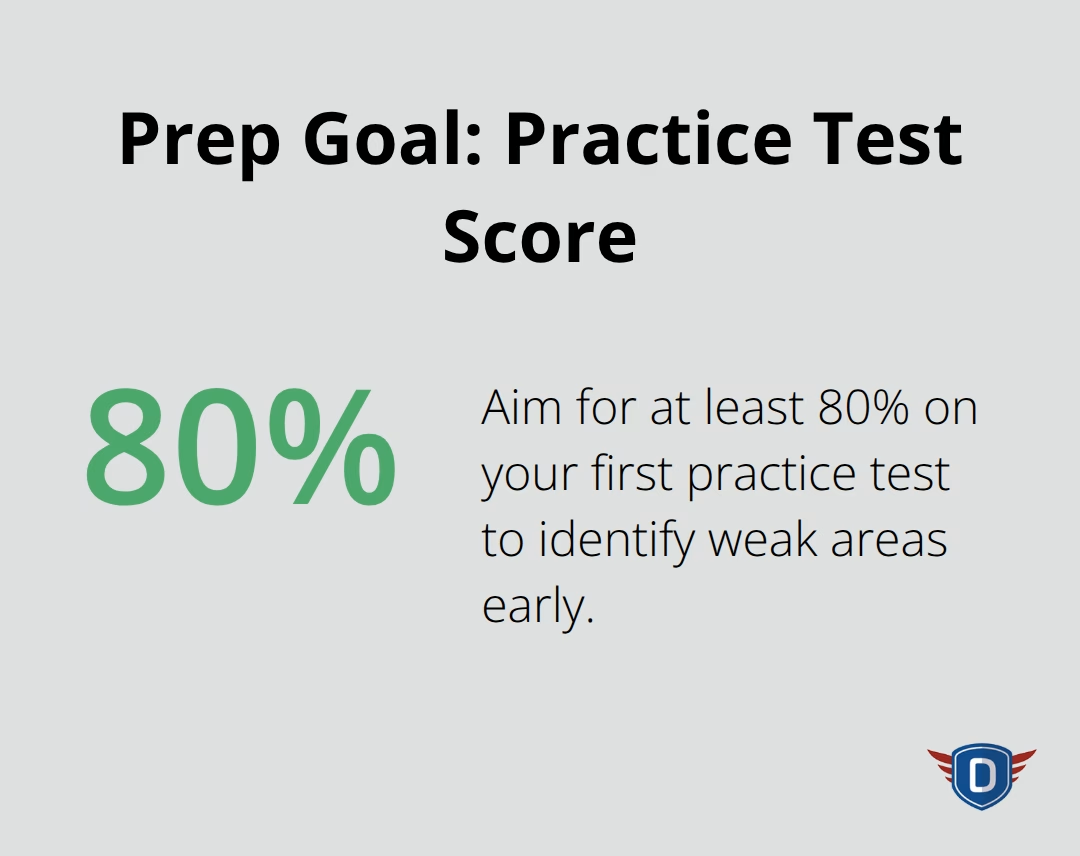
Preparation separates nervous drivers from confident ones, and the difference shows within the first five minutes of your lesson. If you arrive unprepared, your instructor will spend time on basics you should already know, cutting into the practical driving time you need. Start by reviewing the Florida Driver Handbook from FLHSMV at least one week before your lesson. Don’t skim it; read the sections on right-of-way, speed limits, and traffic signs. Take the free practice tests available online and try for at least 80 percent on your first attempt. If you score lower, review the weak areas and retake the test.
Most new drivers skip this step and regret it during their first lesson when the instructor asks basic questions they should have known. Your confidence grows from competence, not from hoping things work out.
What Practice Means Before Day One
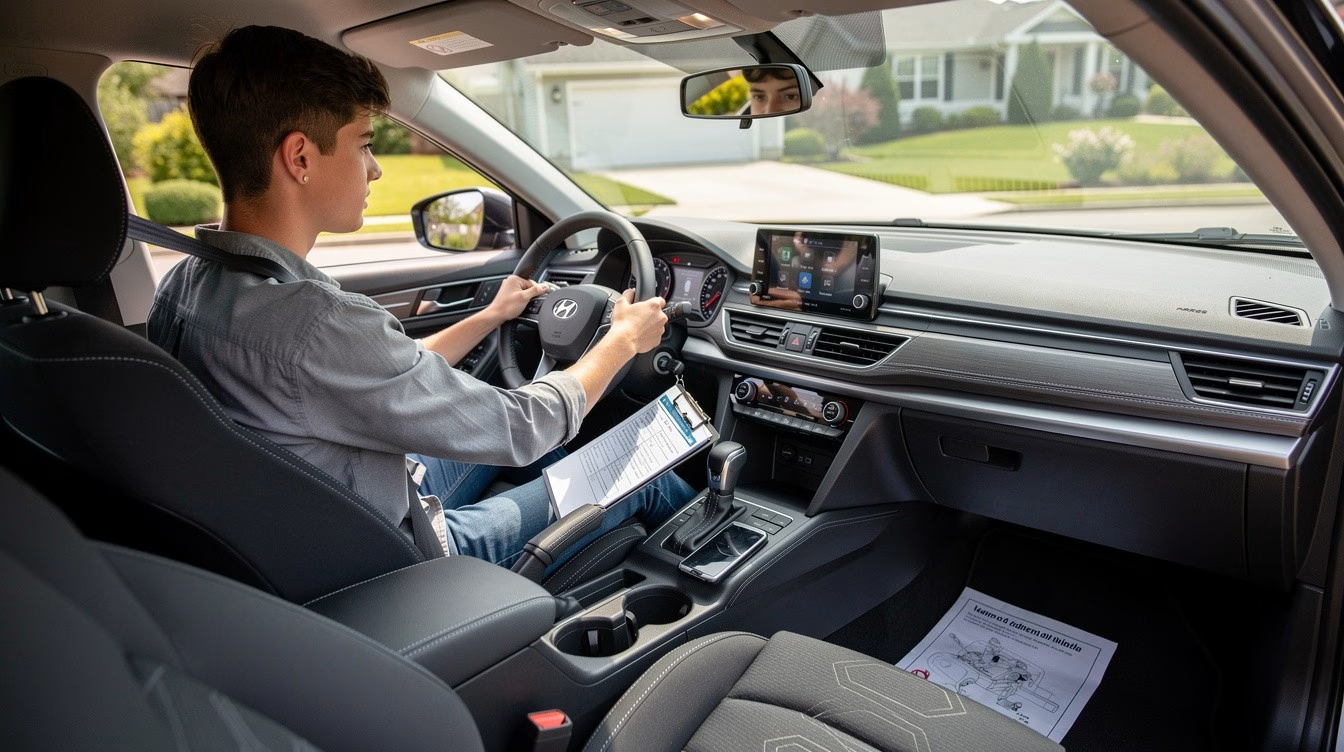
Practice with a parent or guardian in an empty parking lot if possible, but only if they understand what you’re trying to accomplish. Many parents teach bad habits because they’ve driven for years without thinking about their technique. Instead, focus on the vehicle itself: sit in the driver’s seat while parked and locate every control without looking. Find the brake, accelerator, turn signal lever, windshield wiper controls, and headlight switch with your eyes closed. Adjust the seat forward and backward until you can reach the pedals with your leg slightly bent at the knee. Adjust the mirrors so you can see clearly without leaning. Spend 10 to 15 minutes on this task, and you’ll walk into your first lesson already knowing where everything is, which eliminates a major source of anxiety. Watch videos of other new drivers taking their first lessons on YouTube, but choose channels that show real instruction, not just entertainment. Seeing someone else make mistakes and have an instructor correct them normalizes the process and reduces the shock when it happens to you.
Managing Nervousness with Specific Tactics
Anxiety before your first lesson is normal, but unmanaged anxiety impairs your learning because stress narrows your attention and makes you forget information you already know. The night before your lesson, get eight hours of sleep instead of staying up late worrying. Research shows that sleep deprivation reduces reaction time, which is exactly what you don’t need when learning to drive. Eat a normal breakfast on lesson day and avoid excess caffeine, which amplifies anxiety. Arrive 10 to 15 minutes early so you’re not rushing, which increases stress. During the lesson, focus on what the instructor is saying rather than judging your own performance. New drivers constantly criticize themselves while driving, which splits their attention and causes more mistakes. If you make an error, acknowledge it and move forward instead of dwelling on it. Your instructor expects mistakes; that’s why they’re there. Controlled breathing helps more than most people realize: breathe in for four counts, hold for four, and exhale for four. Do this three times before you start driving, and your nervous system will calm noticeably.
What to Bring and How to Dress for Success
Bring your learner’s license or permit, as your instructor will verify it before starting. Bring your phone fully charged but place it in your bag or the back seat, not in your pocket or on the seat beside you. Your instructor will see a phone as a distraction, and they’re right. Wear comfortable clothing that doesn’t restrict movement: avoid baggy clothes that catch on the steering wheel or tight clothes that limit your ability to turn your torso to check blind spots. Wear shoes with thin soles that let you feel the pedals. Many new drivers wear thick-soled sneakers and can’t sense how much pressure they’re applying to the brake, leading to jerky stops. Avoid flip-flops or sandals that can slip off while driving. Leave jewelry at home, particularly bracelets or rings that catch on the steering wheel or distract you. If you wear glasses or contacts, bring them and wear them during the lesson. Your instructor needs you to see clearly, and this is not the time to test your vision. Bring a small notebook if you want to write notes after the lesson, but not during driving. Your instructor will provide feedback verbally, and writing while driving is dangerous and shows you’re not focused on the road.
Final Thoughts
Your first driving lessons in Florida work best when you approach each session with a specific focus rather than hoping to absorb everything at once. Before your lesson, identify one or two skills you want to improve: smooth acceleration, confident lane changes, or accurate mirror checks. This transforms a general lesson into targeted practice that builds measurable progress.
We at DriverEducators.com personalize your learning path by observing how you respond to feedback and adjusting our teaching style to match your needs. Some drivers learn better through explanation; others need to practice repeatedly until the skill becomes automatic. Our instructors recognize this difference within the first 10 minutes and adapt accordingly, tracking your progress across multiple lessons so each session builds on the previous one.
As you progress through your first driving lessons in Florida, your instructor gradually moves you from quiet neighborhoods into real-world traffic, introducing busier roads and challenging conditions like rush-hour driving or highway merging. This progression prevents overwhelm and builds confidence systematically, preparing you for your driving test and the licensed driving that follows. Visit DriverEducators.com to schedule your first lesson and start building safe driving habits that last a lifetime.