
A driver education course is often the first required step toward a license, a court resolution, or an insurance discount. But the best course does more than provide a completion certificate. It gives drivers practical decision-making skills they can use when traffic gets unpredictable, conditions change, or a moment of distraction creates real risk.
For teens and first-time applicants, that foundation supports safer habits before independent driving begins. For adults completing a court-ordered or driver improvement course, it can turn a traffic setback into a useful reset. The right program depends on your state, your reason for enrolling, and the approval requirements attached to your situation.
Driver Education Is More Than Learning Road Signs
Most people already understand that red means stop and that speed limits matter. Safe driving becomes harder when several responsibilities compete at once: monitoring traffic, checking mirrors, judging space, responding to a pedestrian, and resisting the urge to look at a phone.
Quality driver education teaches drivers how to manage those responsibilities in the correct order. It explains traffic laws, but it also connects those laws to everyday choices. A following-distance rule, for example, becomes more meaningful when a driver understands how rain, speed, fatigue, and brake response affect stopping distance.
That practical connection matters because collisions rarely result from one issue alone. They often involve a chain of small decisions, such as driving too fast for conditions, following too closely, or assuming another driver will yield. Education helps drivers recognize the chain early enough to break it.
Know Which Course You Actually Need
“Driver education” is a broad term. Before enrolling, identify the exact requirement you need to meet. Taking the wrong course can delay a license application, court deadline, or insurance benefit.
A first-time driver may need a state-required pre-licensing course, sometimes paired with behind-the-wheel training. A person who received a traffic citation may need a basic driver improvement course for court or DMV purposes. Other drivers may be looking for an insurance discount, a substance abuse and traffic law course, or a specialized program related to aggressive driving or wireless device use.
Approval rules vary by state and sometimes by county, court, insurer, or licensing agency. The course name alone does not guarantee it will meet your requirement. Confirm the required course type, the approved provider rules, and any due date before you begin.
Questions to Answer Before You Enroll
Start with the notice, court order, DMV instruction, insurance request, or licensing checklist you received. It should identify the required course or point you to the agency that can verify it.
Then confirm whether the program must be approved in your state, whether a final exam or identity verification is required, and how completion is reported. Some providers report completion electronically, while other situations require you to submit your certificate yourself. That difference can affect how quickly your record is updated.
What a Useful Course Should Teach
A credible course should use clear, current information and explain why safe driving practices work. The goal is not to make coursework feel harder than necessary. It is to help drivers remember what to do when they are under pressure.
Core topics commonly include:
- Traffic laws, signs, signals, right-of-way rules, and the legal consequences of violations.
- Defensive driving techniques, including visual scanning, space management, and hazard recognition.
- Impaired, distracted, drowsy, and aggressive driving risks.
- Sharing the road with pedestrians, cyclists, motorcycles, school buses, emergency vehicles, and commercial trucks.
- Weather, nighttime driving, work zones, intersections, and other high-risk conditions.
The strongest lessons use realistic situations rather than relying on memorization alone. Consider a left turn at a busy intersection. A driver must check the signal, identify oncoming traffic, watch for a crossing pedestrian, judge the speed of approaching vehicles, and avoid rushing because a driver behind them is impatient. Safe driving is a process of observation and patience.
Defensive Driving Starts With Space and Attention
Defensive driving means planning for the possibility that another road user may make a mistake. It does not mean driving timidly or assuming everyone else is careless. It means leaving enough time and space to respond safely.
Space is one of the most useful safety tools available to any driver. A proper following distance provides time to brake, steer, or slow down when traffic changes. That distance should increase in rain, darkness, heavy traffic, or whenever visibility and traction are reduced.
Attention is equally important. A driver can be physically present behind the wheel but mentally absent because of a text message, a stressful conversation, fatigue, or overconfidence. Good instruction treats distraction as a driving behavior issue, not just a phone issue. Adjusting a playlist, reaching for an item, eating, or looking at navigation for too long can all take attention away from the road.
For new drivers, this is why supervised practice remains valuable even after an online course is completed. Online learning can explain risk and rules efficiently, but real driving practice builds vehicle control, timing, and comfort in actual traffic. Both parts serve different purposes.
Online Learning Can Fit Real Schedules
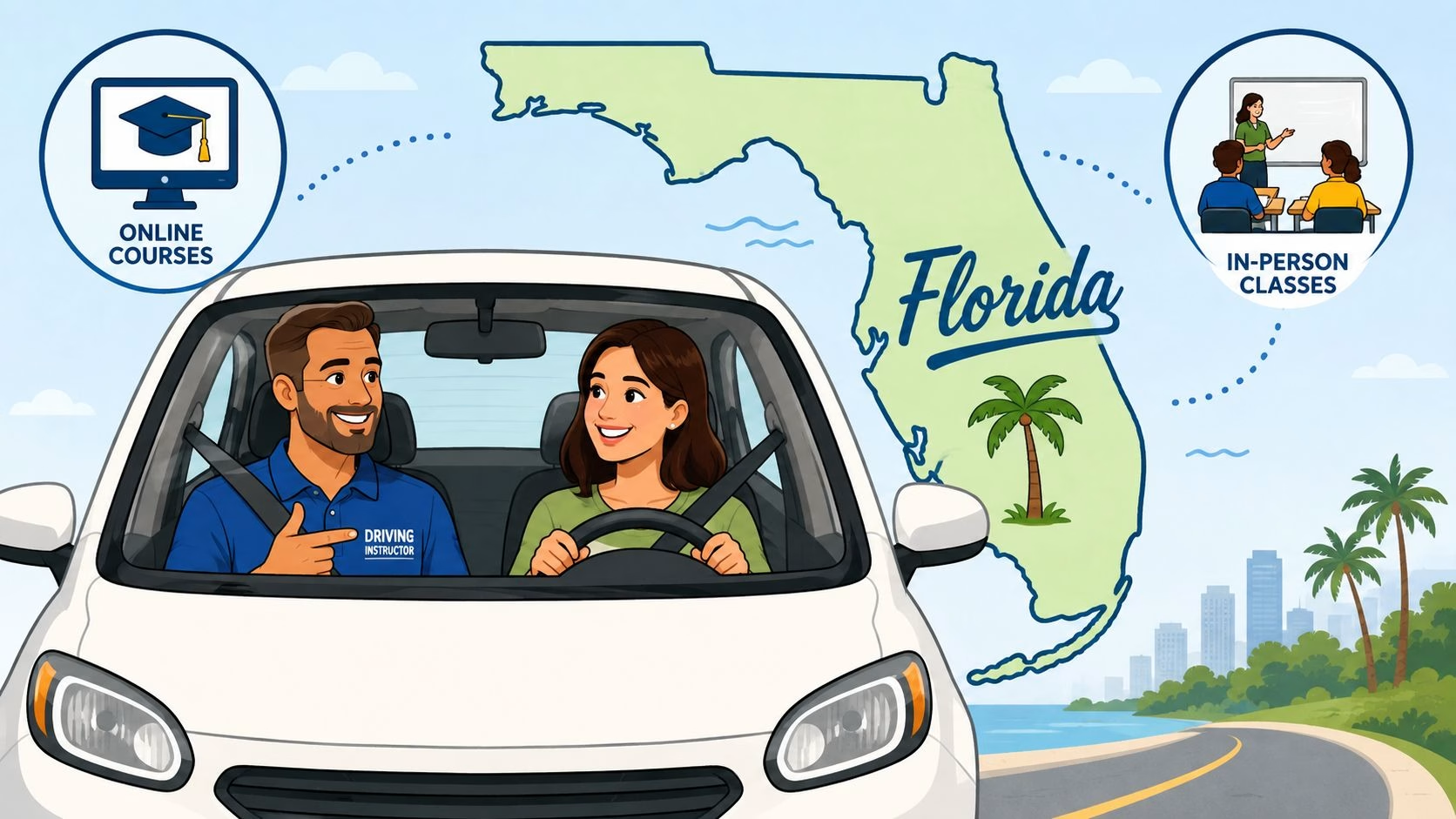
Online driver education is a practical choice for many people because it allows coursework to fit around school, work, family responsibilities, and court deadlines. Mobile access can be especially helpful when progress needs to happen in short, manageable sessions rather than a traditional classroom schedule.
Convenience should not come at the expense of legitimacy. Look for a provider that clearly states the states or programs where its courses are approved, explains all fees before enrollment, and provides accessible support if you have a question about completion or documentation.
Also consider the learning experience. A self-paced course is helpful when you need flexibility, but you still need to give the material focused attention. Rushing through safety content only to finish quickly may satisfy a requirement, yet it reduces the practical value you can carry onto the road.
DriverEducators.com offers online courses designed for drivers who need a convenient way to meet qualifying licensing, traffic safety, court, or insurance-related education requirements. As with any course, confirm the specific approval and completion rules that apply to your situation before enrolling.
Completion Is Not Always the Final Step
Finishing the course is a major milestone, but your responsibility may not end there. Depending on the requirement, you may need to pass a final assessment, download a certificate, provide proof to a court, wait for provider reporting, or complete additional licensing steps.
Save your confirmation details and completion certificate in a place you can access later. If you are working against a deadline, do not wait until the final day to complete the program. Reporting times, agency processing, and technical issues can create avoidable stress.
If your purpose is a license, remember that education requirements may be only one part of the process. You may also need a learner permit, supervised driving hours, a vision screening, a knowledge exam, a road test, or proof-of-identity documents. Your state licensing agency can confirm the full checklist.
Frequently Asked Questions About Driver Education
Is driver education required for every new driver?
No. Requirements vary by state, age, and license type. Many states require education for teen applicants, while adults may have different rules.
Can an online driver education course replace behind-the-wheel training?
Usually, no. Online coursework teaches laws and safety concepts, while behind-the-wheel training develops hands-on driving skills when your state requires it.
How do I know whether a course is approved?
Check the course approval information and compare it with your court, DMV, insurer, or licensing requirement. If the instruction is unclear, verify directly with the agency that set the requirement.
Will a course remove points or dismiss a ticket?
It depends on the court, state, and your driving record. Completing an approved course may qualify you for a benefit, but only the appropriate agency can determine the outcome.
How long does driver education take?
Course length depends on the state-required curriculum and course type. Self-paced online programs let you complete eligible coursework around your schedule, subject to any timing rules.
A course certificate may satisfy an immediate requirement, but its longer value is in the choices you make afterward. Give yourself room to see hazards, slow down before decisions become urgent, and treat every trip as a chance to protect the people sharing the road with you.