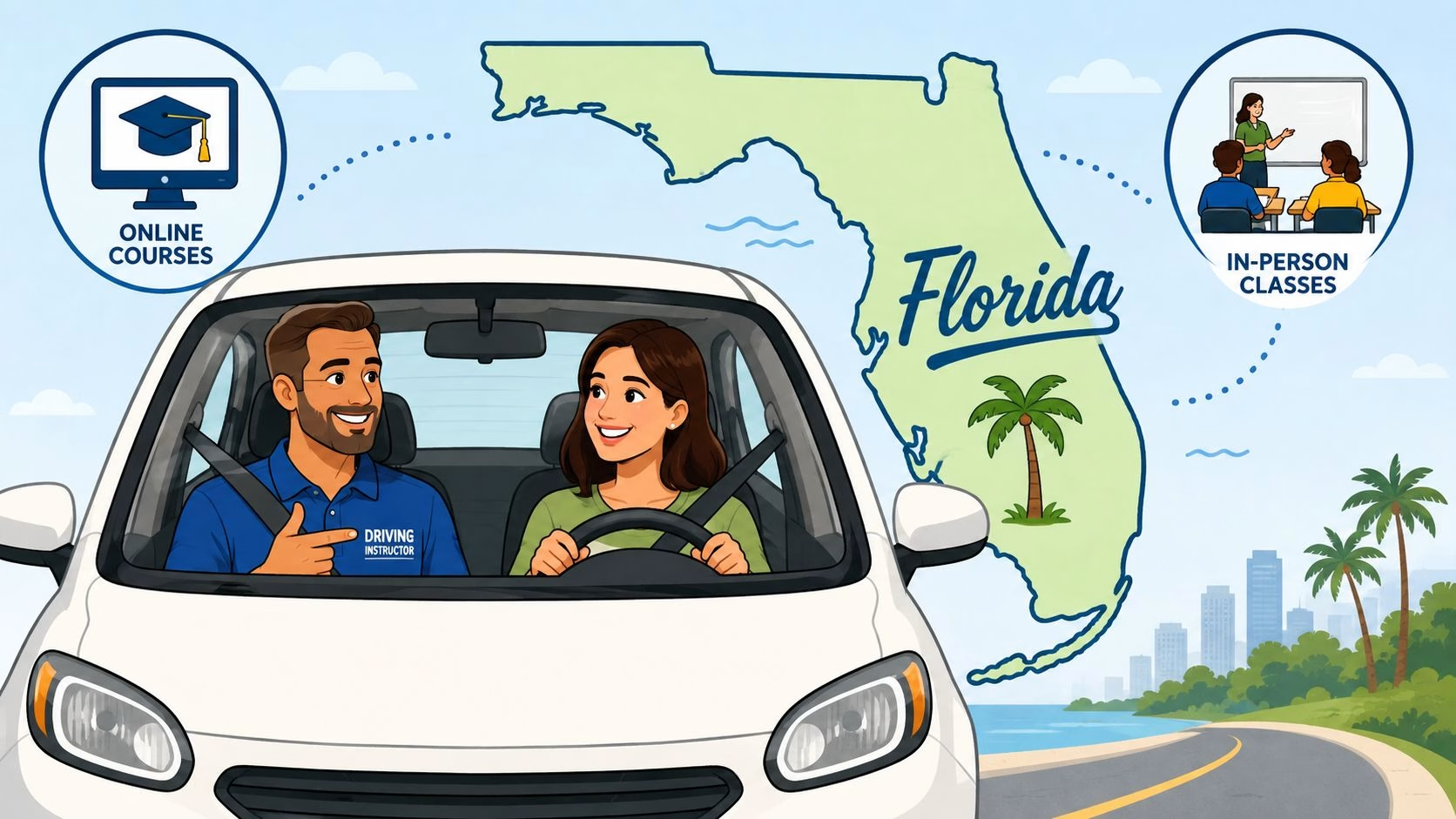
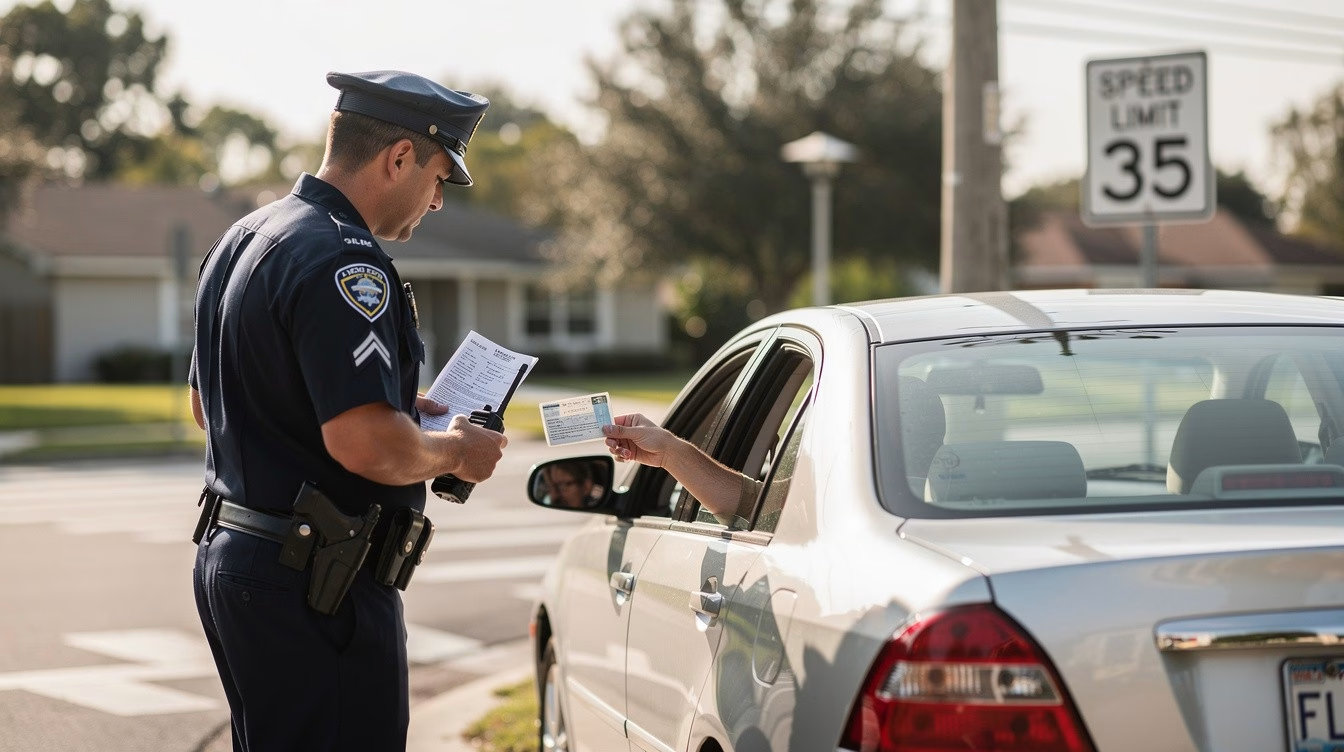
Florida’s traffic laws are strict, and breaking them costs money, points on your license, and worse. We at DriverEducators.com know that understanding traffic law essentials in Florida keeps you safe and protects your driving record.
This guide covers speed limits, right-of-way rules, and impaired driving laws-everything you need to follow the road legally.
Speed Limits and Safe Driving Distances
Understanding Florida’s Speed Limit Laws
Florida sets speed limits based on road type and conditions, but the posted limit is not always safe. Residential streets typically carry a 25 mph limit unless posted otherwise. Divided highways reach 65 mph or higher, while school zones drop to 20 mph during active hours. The National Highway Traffic Safety Administration reports that speeding was a contributing factor in 29% of all traffic fatalities in 2024, making speed control one of the most impactful safety decisions you make behind the wheel.
Speeding Fines and Point Penalties
Speeding fines in Florida scale with how far you exceed the limit. Driving 6 to 9 mph over costs $25, while 10 to 14 mph over costs $100. At 20 to 29 mph over, you face $175, and 30 mph or more over triggers a $250 fine. School zones double these penalties, so a 15 mph overage in a school zone becomes $300 instead of $150. Construction zones also double fines when workers are present or equipment is visible. A second speeding conviction for 30 mph or more over within 12 months doubles fines again. Beyond fines, speeding adds points to your license depending on violation severity, and multiple points lead to license suspension. Saving five minutes on a commute is not worth the financial hit, insurance increases, and license damage that speeding creates.
Safe Following Distance Requirements
Safe following distance prevents rear-end collisions, which account for a significant portion of traffic crashes. Florida law requires you to maintain a safe distance behind the vehicle ahead, though the statute does not specify an exact number of feet or seconds. Most safety experts recommend the three-second rule: pick a fixed point ahead, count the seconds it takes your vehicle to reach that point after the car in front passes it, and maintain at least three seconds of space. In wet conditions or heavy traffic, increase this to four or five seconds. Tailgating is dangerous and illegal, and if you cause a rear-end collision while following too closely, you bear liability.
How Traffic School Reinforces Safe Habits
Traffic school courses cover safe following distances and defensive driving techniques that reduce your crash risk significantly. Court-ordered traffic school is often required after speeding or other moving violations, and taking it proactively demonstrates responsibility to insurers and the court system. Our Florida-approved traffic school programs at DriverEducators.com help drivers become safer and more responsible by exploring defensive positioning, safe following distances, and crash avoidance strategies through clear explanations and real-life scenarios.
Moving Forward to Right-of-Way Rules
Understanding speed limits and safe distances forms the foundation of crash prevention, but knowing who has priority at intersections is equally important. Right-of-way rules determine who moves first at intersections and how you must yield to other road users.
Right-of-Way Rules and Intersection Safety
Priority at Intersections
At intersections, right-of-way determines who moves first, and getting it wrong causes crashes that injure thousands annually. Florida law establishes clear priority rules: drivers on a continuous road have the right-of-way over drivers entering from a side street, drivers turning left must yield to oncoming traffic moving straight, and drivers entering a roadway from a driveway or parking lot must yield to all traffic already on the road. When two vehicles reach an uncontrolled intersection at the same time, the vehicle on the right has priority. Traffic signals override these default rules entirely; a green light gives you the right-of-way, while a red light or stop sign means you must yield completely to all other traffic, including pedestrians and cyclists crossing legally.
Traffic Signals and Stop Signs
Yellow lights do not grant right-of-way-they warn you that the light is about to turn red, so you must stop unless you cannot safely do so. Running a red light carries a baseline $158 fine in Florida, plus court costs and an administrative fee, and you risk causing a serious crash that could kill someone. Stop signs require a complete stop with your vehicle fully stopped before proceeding; rolling stops are illegal and dangerous. At four-way stop intersections where multiple vehicles arrive simultaneously, yield to the vehicle on your right; if two vehicles are directly across from each other turning left, both must yield to oncoming traffic before proceeding.
Left Turns and Right Turns
When turning left at an intersection with a green light, you must yield to oncoming traffic moving straight through the intersection, even if your light is green (this prevents left-turn crashes, which are among the most severe intersection collisions). Right turns on red are legal in Florida after a complete stop, but you must yield to pedestrians crossing in the crosswalk and oncoming traffic. Turning onto a one-way street requires you to turn into the lane closest to the center line; turning into the far lane is illegal.
Pedestrians and Cyclists
Pedestrians have the right-of-way in marked crosswalks and at intersections, and you must yield to them regardless of signal status if they are lawfully in the roadway. Bicycles are legally treated as vehicles under Florida law, meaning cyclists have the same rights and must follow the same traffic laws as cars; you cannot force a cyclist off the road, and you must give them at least three feet of clearance when passing. Failing to yield to pedestrians, cyclists, or other vehicles results in liability if a crash occurs, plus potential citations and insurance increases.
Moving to Impaired Driving Laws
Understanding right-of-way rules prevents the crashes that kill or permanently disable drivers, passengers, and pedestrians every single day. Yet even drivers who follow intersection rules perfectly can cause catastrophic harm if they operate a vehicle while impaired by alcohol, drugs, or fatigue-a reality that makes impaired driving laws among the most serious traffic regulations you must obey.
Impaired Driving Laws and Your License
What Impaired Driving Means in Florida
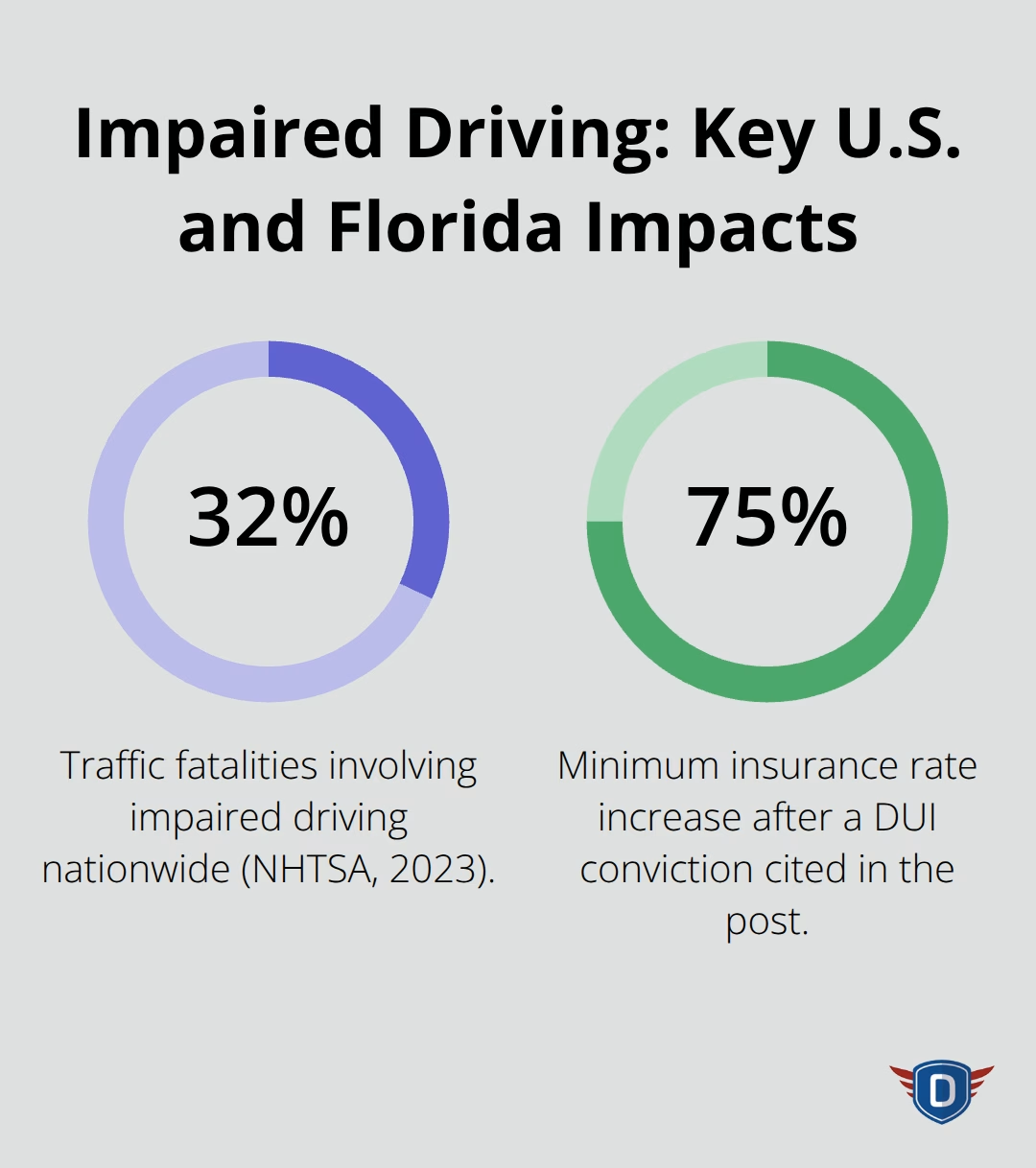
Impaired driving remains the deadliest traffic violation in Florida. The National Highway Traffic Safety Administration reported that impaired driving caused 32% of all traffic fatalities nationwide in 2023, and Florida’s roads see thousands of DUI arrests annually.
Florida law defines impaired driving as operating a vehicle under the influence of alcoholic beverages or with a blood-alcohol level of 0.08 or more grams of alcohol per 100 milliliters of blood.
How Law Enforcement Tests for Impairment
Law enforcement uses roadside sobriety tests-the horizontal gaze nystagmus test, walk-and-turn test, and one-leg stand test-to establish probable cause for arrest. These tests produce false positives when performed incorrectly or under poor conditions. If arrested, you have the right to refuse a breath test, but Florida’s implied consent law means refusal automatically suspends your license for 12 months on a first offense and 18 months on a second offense within 10 years, even before conviction.
First and Second DUI Convictions
A first-time DUI conviction carries a minimum $500 fine, up to six months in jail, a mandatory 180-day license suspension, and a requirement to install an ignition interlock device for six months if your BAC was 0.15% or higher. A second DUI within five years increases penalties to a minimum $1,000 fine, up to nine months in jail, a 12-month license suspension, and a two-year ignition interlock requirement. Florida also requires mandatory DUI education programs-a four-hour DUI School and a one-year substance abuse evaluation and treatment if recommended.
Third DUI and Felony Consequences
A third DUI within ten years becomes a felony, triggering up to 12 months in prison, a $2,000 fine, and a permanent license revocation unless you petition for reinstatement after five years. Refusing a blood or breath test carries its own penalties separate from the DUI charge itself, making the decision to refuse legally risky.
Long-Term Financial and Personal Impact
A DUI conviction triggers insurance rate increases of 75% to 100% or policy cancellation entirely, makes employment in transportation or professional fields nearly impossible, and creates a permanent criminal record that affects housing, loans, and background checks for decades. A single DUI conviction costs between $10,000 and $25,000 when you factor in fines, legal fees, license reinstatement, and insurance increases. Calling a rideshare service, taxi, or friend costs nothing compared to the devastation a DUI creates.
Final Thoughts
Florida’s traffic law essentials demand your attention because violations cost money, points, and potentially your license. Speed limits, right-of-way rules, and impaired driving laws form the foundation of safe driving, and ignoring them puts you and others at serious risk. A single speeding ticket in a school zone can double your fine, a red-light violation costs $158 plus court fees, and a DUI conviction destroys your finances and employment prospects for years.
Taking a traffic school course is one of the smartest decisions you can make after a violation. Florida-approved programs reduce points on your license, lower insurance rates, and satisfy court requirements without requiring a courtroom appearance. At DriverEducators.com, our courses teach defensive driving techniques, safe following distances, and the real consequences of traffic violations through clear explanations and real-life scenarios.
You have 30 days from your citation date to elect a driver improvement course with the Clerk of Court, so act quickly if you received a ticket. Completing the course and submitting your certificate stops points from being added and demonstrates responsibility to insurers and the court system. Whether you need a refresher on intersection safety, want to understand impaired driving penalties, or simply want to become a safer driver, traffic school provides the knowledge that keeps you compliant and protects your future on Florida roads.