Florida’s traffic laws protect everyone on the road, but new drivers often feel overwhelmed by the rules. Speed limits, right-of-way requirements, and distracted driving laws form the foundation of safe driving in the state.
We at DriverEducators.com have created this guide to break down traffic law basics in Florida into clear, actionable information. You’ll learn what matters most to pass your test and stay safe behind the wheel.
Speed Limits, Signs, and Signals
Florida sets speed limits based on road type and location, not driver preference. Residential areas max out at 30 mph, while highways allow 55 mph. School zones drop to 20 mph during active hours, and construction zones cut speeds dramatically. Speeding 1–9 mph over the limit costs 3 points; exceeding 50 mph adds 4 points to your license. Six or more points within 12 months suspends your driving privileges. The Florida Department of Transportation posts speed limits on every road, so no guessing is required-obey what the sign says, not what feels comfortable.
Traffic signs tell you what to do, and Florida law treats them seriously. A yield sign means slow down and let others pass first; failing to yield carries 3 points. Stop signs demand a complete halt before proceeding; rolling stops don’t count and trigger 4-point violations. Red lights work the same way-stopping at a red light costs you 4 points if you fail. Yellow means prepare to stop, not accelerate through. Pavement markings matter too: solid white lines mean stay in your lane, while dashed white lines allow lane changes when safe. A solid yellow line on your side means no passing; crossing it for an unsafe pass is reckless driving-a 4-point violation. Traffic control devices also include pedestrian walk signals, which you must respect; failing to yield to a pedestrian costs 3 points. New drivers often underestimate how many violations stem from ignoring signs and signals-they’re the difference between a clean record and points that affect insurance rates and driving privileges for years.
Understanding Posted Speed Limits
Speed limits vary by location and road type in Florida. Residential streets typically allow 30 mph unless posted otherwise. Highways and expressways permit 55 mph depending on conditions and designation. School zones drop to 20 mph when children are present, usually 7:45–9:15 a.m. and 2:30–4:00 p.m. on school days.
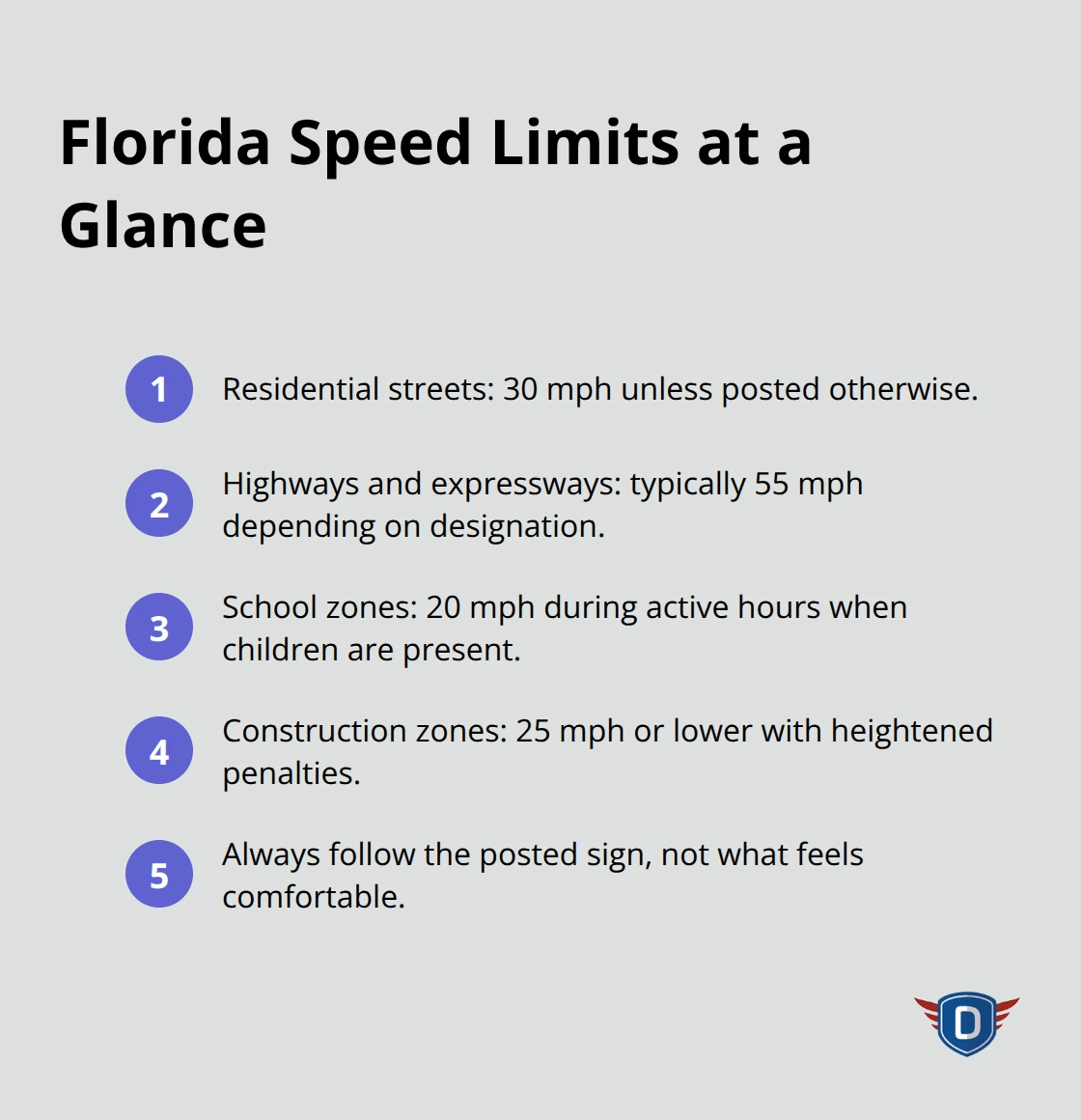
Construction zones can drop to 25 mph or lower and carry heightened penalties. Obeying the posted limit protects you legally and reduces crash risk significantly.
Recognizing When to Yield and Stop
Yield signs appear at intersections where traffic from another direction has priority. You must slow down and let that traffic pass before proceeding. Stop signs require a complete halt, with your wheels stopping fully before the line or crosswalk. At four-way stops, the first vehicle to stop has the right to go first; if two vehicles arrive simultaneously, yield to the driver on your right. Pedestrians always have the right of way in crosswalks, even if no signal is present. These rules prevent crashes and keep intersections functioning safely.
Interpreting Signals and Road Markings
Green lights mean go, but only if the intersection is clear and you can exit safely. Yellow lights indicate the signal is about to turn red-begin stopping unless you’re already too close to stop safely. Red lights require a complete stop; turning right on red is allowed only after stopping and checking for pedestrians and traffic. Solid white lines separate traffic moving in the same direction and cannot be crossed except to turn. Dashed white lines allow lane changes when safe. Solid yellow lines on your side prohibit passing; crossing them creates liability if a crash occurs. White arrows painted on the road show which lanes can turn or proceed straight, and you must follow the direction your lane allows. Diamond-shaped yellow warning signs alert you to hazards ahead, like curves, pedestrians, or reduced speed zones. These markings and signals work together to organize traffic flow and prevent collisions.
How Violations Affect Your Driving Record
Points accumulate on your license and trigger restrictions quickly. Six or more points within 12 months trigger a 30-day suspension. Eighteen points within 18 months trigger a 3-month suspension, while 24 points within 36 months result in a 1-year suspension. Points stay on your record for five years from the conviction date. Insurance companies review your record and raise premiums based on violations, so a clean record saves money long-term.
FAQ: Traffic Laws and Violations
What happens if I get a speeding ticket in Florida?
A speeding ticket costs 3 points for speeds 1–9 mph over the limit and 4 points for exceeding 50 mph. Points stay on your record for five years. Six or more points within 12 months triggers a suspension.
Can I turn right on a red light in Florida?
Yes, after coming to a complete stop and confirming no pedestrians or vehicles are in your path. Failing to stop before turning right on red is a violation.
What does a solid yellow line mean?
A solid yellow line on your side of the road prohibits passing. Crossing it is reckless driving, a 4-point violation.
How much is a speeding fine in Florida?
Fines vary by how much you exceeded the limit and the road type. School zone or construction zone speeding carries higher penalties and points.
What’s the difference between a yield sign and a stop sign?
A stop sign requires a complete halt with wheels stopped. A yield sign means slow down and let traffic pass, but you don’t need to stop if the way is clear.
Right-of-Way Rules and Intersection Safety
Right-of-way rules prevent crashes when multiple drivers arrive at the same location simultaneously. In Florida, the driver on your right always has priority when two vehicles reach an intersection at the same time with no traffic signals or stop signs controlling the intersection. This rule applies at uncontrolled intersections and represents one of the most violated rules new drivers face. At four-way stops, the first vehicle to stop proceeds first; if two vehicles stop simultaneously, the driver on your right goes first. If three or four vehicles arrive together, the one on your right still has priority, and drivers must yield in order. Most intersection crashes happen because drivers either don’t know this rule or assume other drivers will yield.
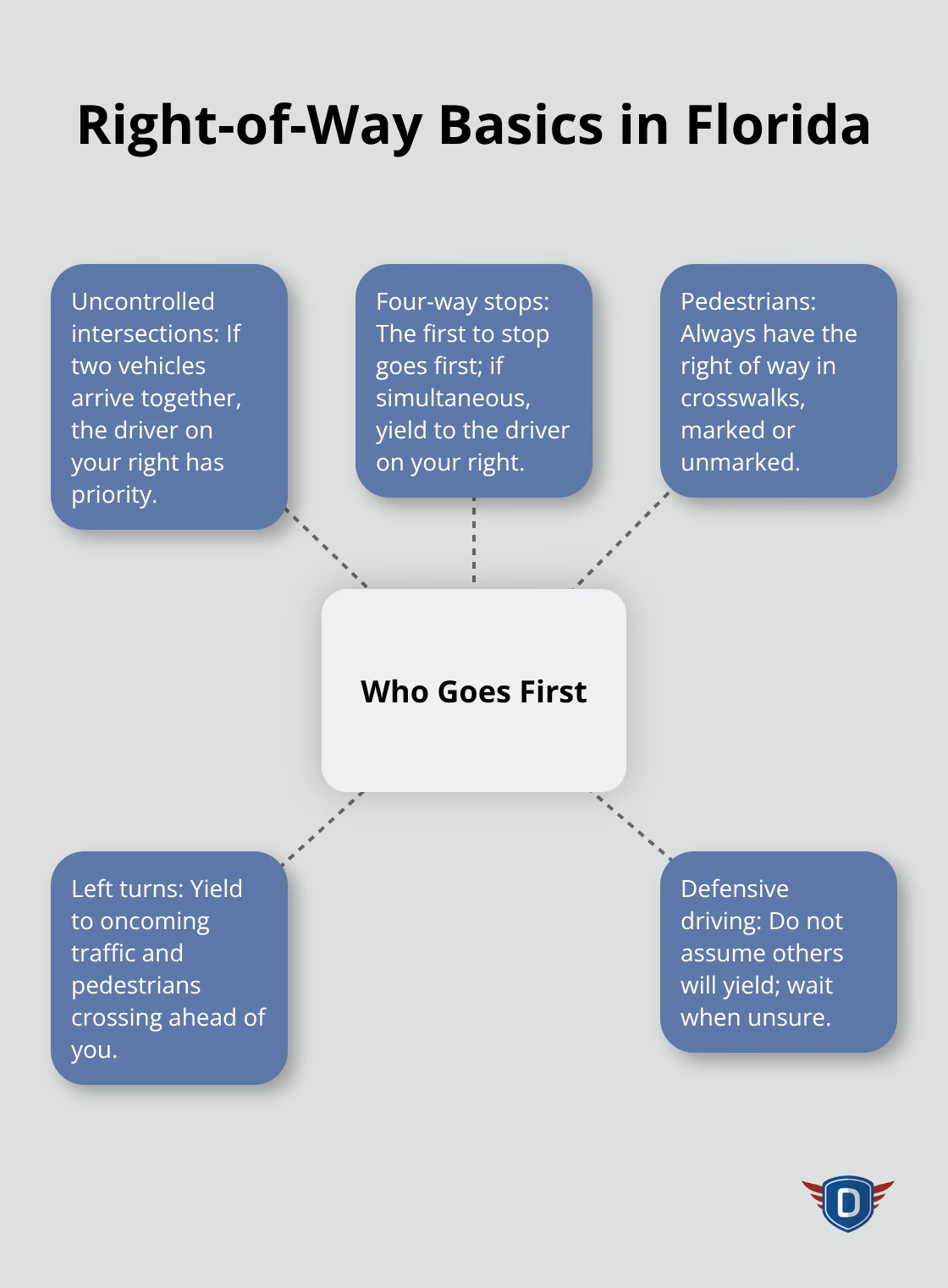
Florida law states that failing to yield carries 3 points on your license, and these points accumulate fast when combined with other violations.
Understanding Yielding Requirements
Yielding requirements change depending on road markings and signs. A yield sign means slow down and check for traffic before proceeding; you don’t need to stop if the way is clear. A stop sign requires a complete halt with your wheels fully stopped before the line or crosswalk. At intersections controlled by traffic lights, green means proceed only if the intersection is clear and you can exit safely before the light changes. Pedestrians in crosswalks always have the right of way, even if no signal is present; failing to yield to a pedestrian costs 3 points and exposes you to serious liability if a crash occurs.
When you turn left at an intersection, you must yield to oncoming traffic and pedestrians crossing in front of you. When you turn right, you must check for pedestrians in the crosswalk and yield before turning. Many new drivers fail to understand that the right of way must be actively given; you cannot assume another driver will yield even if they have less priority. Defensive driving means anticipating what other drivers might do wrong and adjusting your actions accordingly. At four-way stops specifically, if you’re unsure who arrived first, wait and let the other driver go; hesitation prevents crashes far better than aggressive assumption of your right to proceed.
Handling Uncontrolled Intersections
Uncontrolled intersections have no stop signs or traffic lights. The driver on your right always has priority in these situations. If you approach from the left, yield to traffic coming from the right. If you’re turning left, yield to oncoming traffic even if they’re further away. Defensive drivers slow down at uncontrolled intersections and scan for traffic before proceeding.
Managing Four-Way Stop Situations
Four-way stops require knowing who arrived first and acting accordingly. The first vehicle to stop proceeds first; if simultaneous, the driver on your right goes. When in doubt, let the other driver proceed; this eliminates ambiguity and prevents crashes. Hesitation costs time but saves accidents.
Protecting Pedestrians at All Intersections
Pedestrians have the right of way in marked and unmarked crosswalks. A pedestrian in your path means you must stop, even if you have a green light. Failing to yield to pedestrians costs 3 points and creates serious liability. Scan crosswalks before accelerating through intersections, especially in residential areas and near schools.
FAQ: Right-of-Way and Intersection Safety
Who has the right of way at an uncontrolled intersection?
The driver on your right has priority. If you approach from the left, yield to traffic from the right. If you’re both arriving simultaneously and you’re on the left, wait for them to proceed.
Do I have to stop at a yield sign?
No. A yield sign means slow down and check for traffic. You only stop if another vehicle or pedestrian is in your path. A stop sign requires a complete halt regardless.
Can pedestrians cross against a traffic signal?
No. Pedestrians must obey walk signals and cross only when instructed. However, drivers must still yield to pedestrians in crosswalks even if the pedestrian is jaywalking, as hitting them creates liability.
What happens if two cars arrive at a four-way stop at the same time?
The driver on the right proceeds first. If both are on the same side (one turning left, one going straight), the vehicle going straight has priority.
Is a green light a guarantee I can go?
No. A green light means proceed only if the intersection is clear and you can exit safely before the light changes. You must yield to pedestrians and traffic clearing the intersection.
Distracted and Impaired Driving
Florida enforces strict rules against handheld device use while driving because distracted driving causes crashes. Texting while driving is illegal for all drivers in Florida, and drivers under 18 face a zero-tolerance policy on any handheld wireless device use, even at red lights. Violating the handheld device law in a school or work zone carries a 3-point violation. You can elect to take a Wireless Communications Device Course to avoid fines and points if you choose to address the citation through education rather than court.
Distracted driving shifts your attention away from the road, pedestrians, and other vehicles for even a few seconds. That brief lapse creates crash risk and endangers everyone around you. Put your phone away before driving-this single action prevents most distracted driving violations and crashes.
Understanding Florida’s Handheld Device Laws
Florida prohibits all drivers from texting while driving. Drivers under 18 cannot use any handheld wireless device, even when stopped at a red light. The law applies to calls, texts, emails, and app use on phones or tablets. Violations in school or work zones result in 3 points on your license.
If you receive a handheld device citation in a school or work zone, you have an option. You can take a Wireless Communications Device Course instead of paying fines and accepting points. You must provide proof of completion to the court within the required timeframe.
Zero-Tolerance Alcohol Policy for Underage Drivers
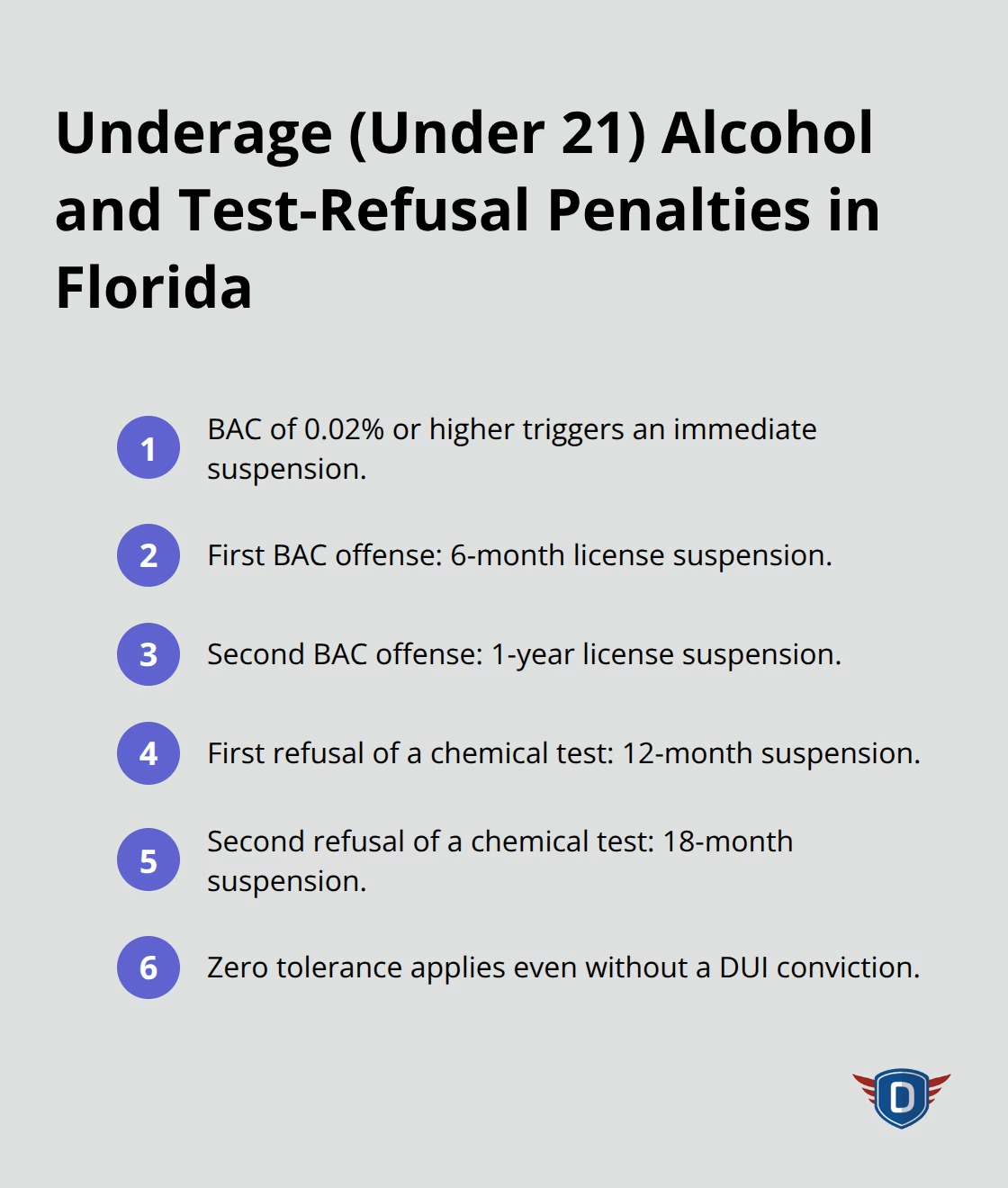
Florida enforces zero tolerance for underage drinking and driving. A blood alcohol content of 0.02% or higher triggers an immediate suspension for drivers under 21. A first offense suspension lasts six months, while a second offense results in a one-year suspension.
Refusing a chemical breath or blood test as an underage driver results in a 12-month suspension for a first refusal and 18 months for a second refusal. You lose your license without ever being convicted of DUI. This means even one drink makes driving illegal and dangerous for underage drivers.
DUI Laws for Drivers 21 and Older
The DUI threshold for drivers 21 and older is 0.08% BAC. However, law enforcement can charge impairment at lower BAC levels if your driving shows signs of alcohol or drug influence. A DUI conviction carries a minimum six-month license suspension, substantial fines, mandatory DUI education courses, and insurance rate increases that persist for years.
The consequences extend beyond legal penalties. A DUI creates a permanent criminal record that affects employment, housing, and loan applications long after your license is reinstated. A single mistake can result in a crash that injures or kills someone, criminal charges that derail your future, and insurance costs that make driving unaffordable.
Making the Right Choice Behind the Wheel
Put your phone away before driving, and never drive after consuming alcohol or drugs. These two actions eliminate the most dangerous threats to your safety and the safety of others on Florida’s roads. The safest choice is always to drive sober, focused, and free from distractions.
FAQ: Distracted and Impaired Driving
What counts as distracted driving in Florida?
Texting, calling, or using a handheld device while driving is illegal. Drivers under 18 cannot use any handheld wireless device, even at red lights. Eating, adjusting the radio, or looking away from the road also distract you and create crash risk.
What is the legal BAC limit for drivers under 21 in Florida?
Zero tolerance applies. A BAC of 0.02% or higher triggers a six-month suspension for a first offense and a one-year suspension for a second offense, even without a DUI conviction.
Can I take a course instead of paying a fine for a texting ticket?
Yes. If you received a handheld device citation in a school or work zone, you can elect to take a Wireless Communications Device Course to avoid fines and points. You must provide proof of completion to the court.
What happens if I refuse a breath test as an underage driver?
A first refusal results in a 12-month license suspension. A second refusal results in an 18-month suspension, regardless of whether you are convicted of DUI.
What is the BAC limit for drivers 21 and older in Florida?
The legal limit is 0.08% BAC. However, you can be charged with DUI at lower BAC levels if your driving shows signs of impairment from alcohol or drugs.
Final Thoughts
Traffic law basics in Florida protect you and everyone on the road, yet most new drivers underestimate how quickly violations accumulate. Speeding, failure to yield, and distracted driving account for thousands of crashes annually in Florida, and six or more points within 12 months trigger a suspension that disrupts your life. Points stay on your record for five years, affecting insurance rates and driving privileges long after you pay the fine.
We at DriverEducators.com help drivers master safe habits through online, self-paced courses that fit your schedule. Our certified instructors teach defensive driving techniques, safe following distances, and the real consequences of impaired or distracted driving, with certificates issued electronically and reported directly to FLHSMV. If you’ve received a citation, take action immediately-visit DriverEducators.com to explore our Basic Driver Improvement and Intermediate Driver Improvement courses that address your specific violation and help you avoid license suspension.