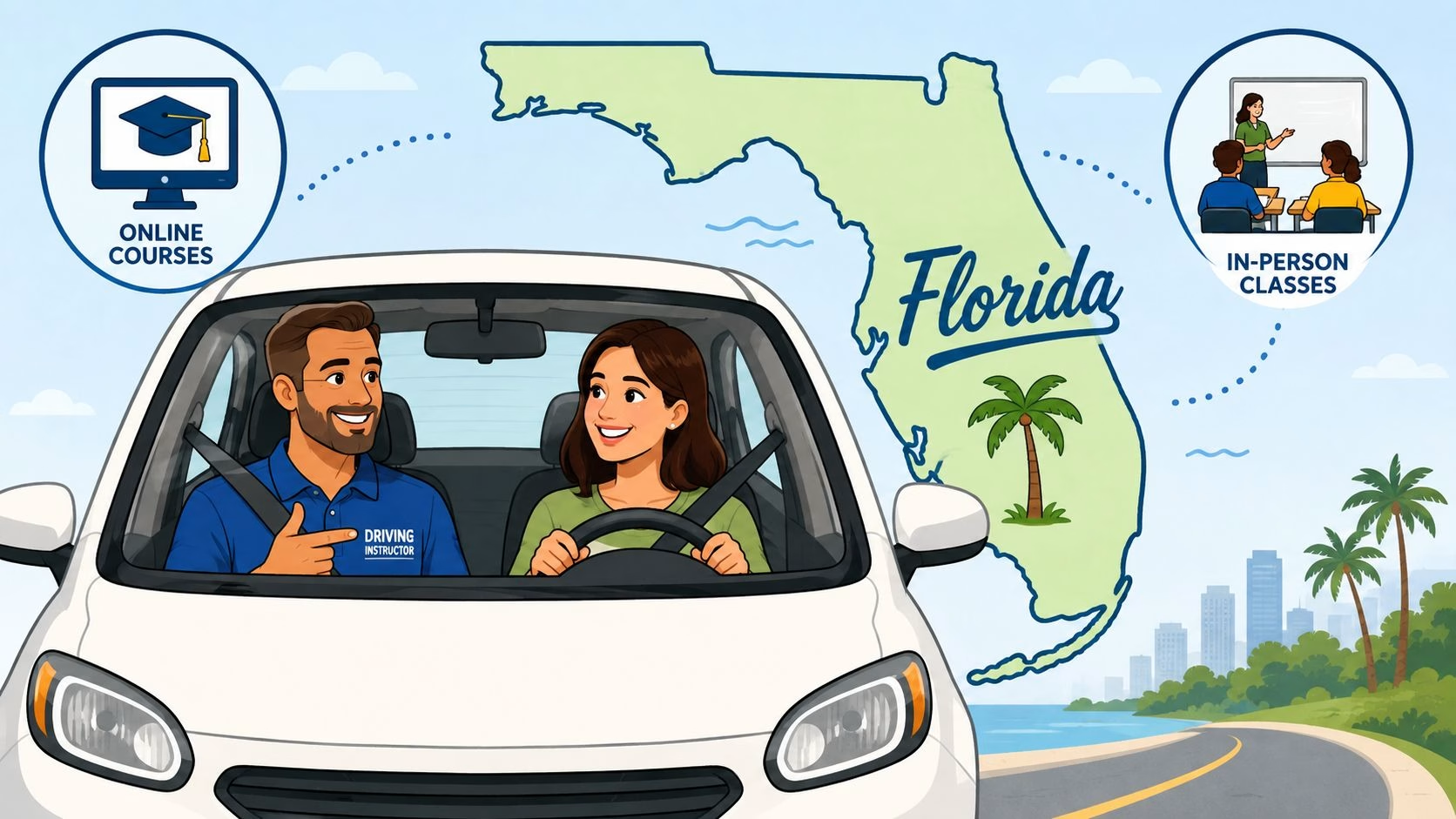

A learner’s permit appointment may be only weeks away, but the course requirement can still feel unclear. This first time driver course example shows what a typical online driver education experience looks like, what the lessons usually cover, and which details to verify before you enroll.
A first-time driver course is not simply a set of reading screens followed by a final test. It is structured education designed to prepare new drivers for licensing requirements and the real decisions they will make behind the wheel. The exact length, curriculum, testing rules, and completion process depend on the state and the student’s age.
A First Time Driver Course Example From Start to Finish
Imagine a 16-year-old student who needs driver education before applying for a license. Their state allows an approved online course, requires a specific number of classroom instruction hours, and may also require separate behind-the-wheel training.
The student starts by confirming the course is approved for their state and purpose. This step matters. A course that meets one state’s first-time licensing requirement may not satisfy another state’s rule, and online coursework generally does not replace required driving practice with an instructor or qualified supervising adult.
After enrollment, the student creates an account and begins the first lesson on a phone, tablet, or computer. A self-paced course lets them stop after a section, return later, and continue from the same place. That flexibility is useful for students balancing school, work, sports, or family schedules, but the course must still be completed within any deadline set by the state, parent program, school, or licensing agency.
Module 1: Licensing Rules and Driver Responsibility
The opening module commonly explains permit, provisional license, and full-license rules. Students learn what documents may be needed, when a parent or guardian must sign, passenger restrictions for young drivers, nighttime driving limits, and the consequences of violating license conditions.
A practical lesson may present a scenario: A new driver is asked to give three friends a ride home after an evening event. The student reviews the applicable passenger and nighttime restrictions, identifies the safe legal choice, and sees why these limits exist. Restrictions are not just paperwork. They reduce exposure to high-risk situations while a driver is still gaining experience.
Module 2: Signs, Signals, and Right-of-Way
Next, the course typically covers the traffic control devices a driver must recognize immediately. That includes regulatory signs, warning signs, guide signs, pavement markings, traffic lights, flashing signals, and railroad crossings.
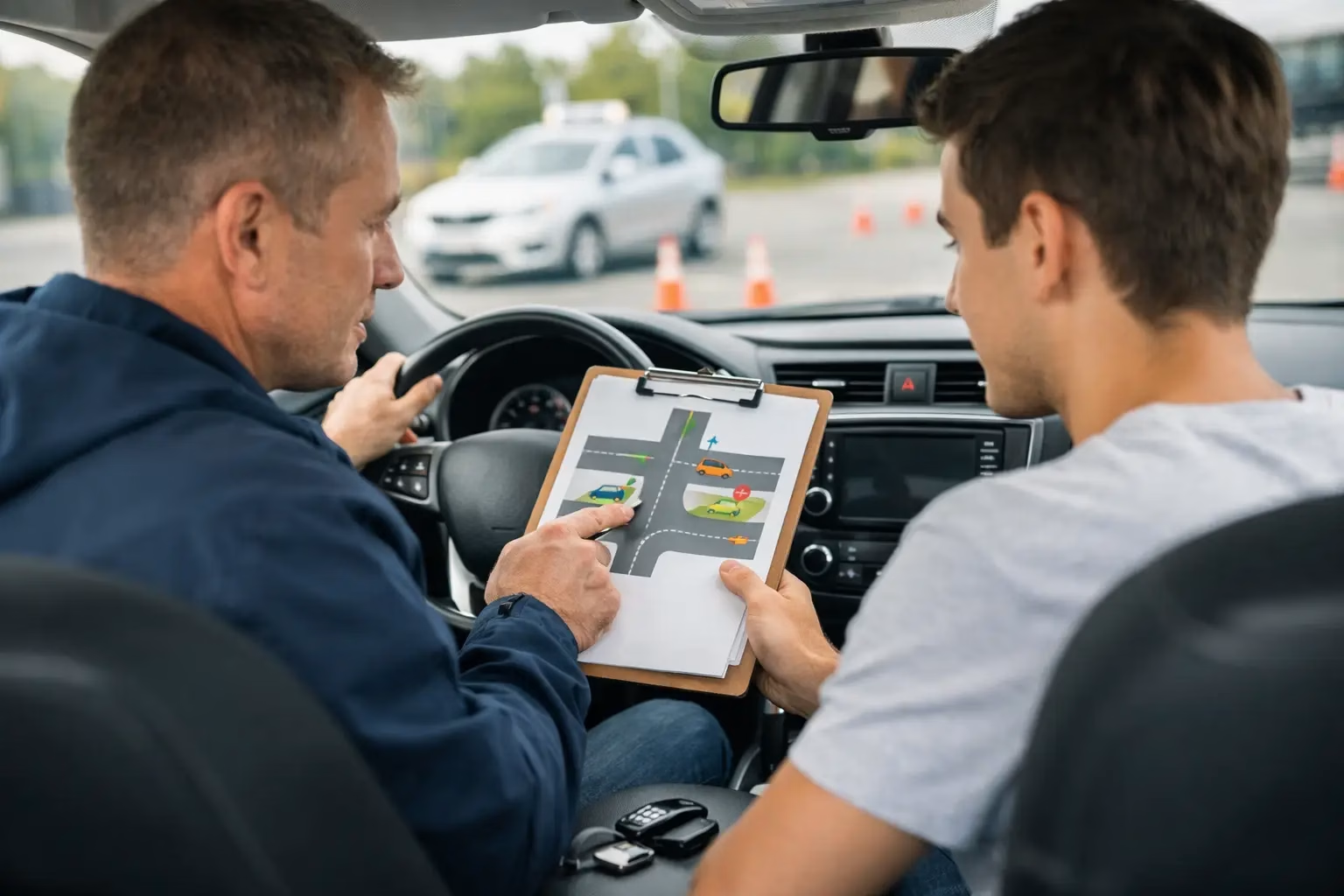
The course may ask the student to choose the correct action at a four-way stop. A strong answer considers who arrived first, whether vehicles are turning, and whether a pedestrian is crossing. Right-of-way is not something a driver takes. It is something drivers communicate and yield carefully to prevent a crash.
Module 3: Space Management and Defensive Driving
This section moves beyond memorizing rules. Students learn how to maintain following distance, scan ahead, check mirrors, manage blind spots, select a safe speed, and leave room for unexpected movement by other road users.
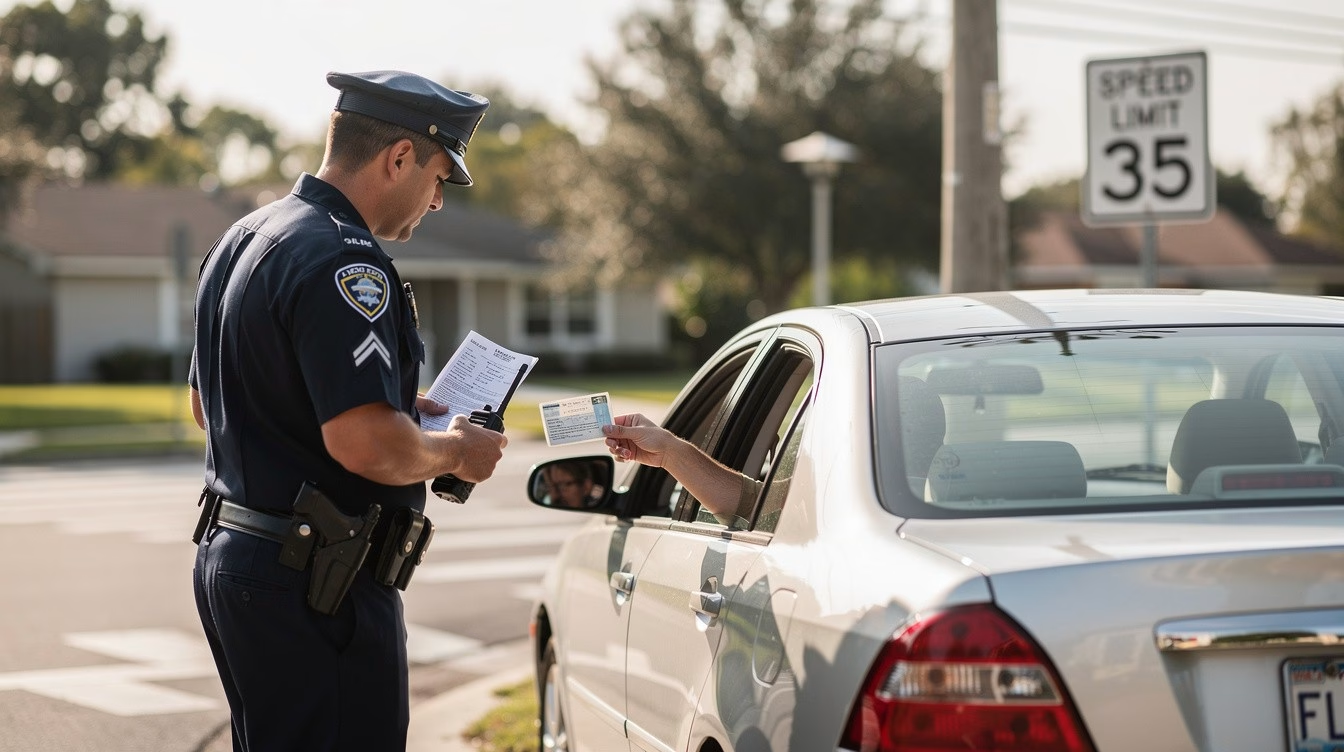
For example, a lesson may show a vehicle following a delivery truck too closely on a wet road. The student is asked what changes are needed. The best response is to slow down and increase following distance because rain reduces tire traction and increases stopping distance. A posted speed limit is the maximum allowed under ideal conditions, not a guarantee that every speed is safe.
Module 4: Sharing the Road
New drivers need to understand that they are not driving among cars alone. The course generally addresses pedestrians, bicyclists, motorcycles, school buses, emergency vehicles, large trucks, construction workers, and people using mobility devices.
A typical example involves preparing to turn right at an intersection while a bicyclist approaches from behind in a bike lane. The student learns to check mirrors and blind spots, signal early, yield when required, and avoid cutting across the bicyclist’s path. These decisions often happen quickly, which is why repeated instruction and supervised practice matter.
Module 5: Impairment, Distraction, and Risk
A first-time course should address the choices most likely to end a new driver’s independence: impaired driving, distracted driving, aggressive behavior, speeding, and failure to use a seat belt.
The lesson may explain that impairment includes alcohol, cannabis, illegal drugs, certain prescription medications, and any substance that affects judgment, coordination, reaction time, or vision. It also covers the risks of texting, holding a phone, adjusting apps, eating, and interacting with passengers while driving. For a new driver, even a brief distraction can create a situation they do not yet have the skills to recover from.
Module 6: Emergencies and Adverse Conditions
A well-rounded course prepares students for routine hazards and less common emergencies. Topics may include tire blowouts, hydroplaning, skids, brake problems, wildlife, fog, heavy rain, work zones, and crash reporting basics.
A sample question might ask what to do if a vehicle begins to hydroplane. The correct approach is usually to ease off the accelerator, keep the steering steady, and avoid sudden braking or sharp turns. The exact response can depend on the vehicle and conditions, but the central principle is to avoid abrupt inputs that can worsen the loss of traction.
What Quizzes and Course Checks May Look Like
Online driver education often uses short quizzes after lessons to confirm understanding before the student moves forward. Questions may use multiple-choice answers, matching exercises, images of signs, or realistic driving scenarios.
For example: You are approaching a stale green light, meaning it has been green for some time. Should you accelerate to get through, maintain awareness and prepare for a possible signal change, or stop immediately? The safest answer is to maintain awareness and prepare to stop if the light changes. Accelerating toward an uncertain intersection increases risk.
Some state-approved programs require identity verification, timed segments, a final exam, or minimum passing scores. These controls help verify that the enrolled student completed the work and understood the material. Read the course requirements before starting so test attempts, time limits, and retake policies do not become a surprise.
Completion Records: The Step Students Should Not Skip
Finishing the final lesson is not always the same as fulfilling the licensing requirement. In this first time driver course example, the student passes the required assessments and receives a completion record. Depending on the state, that record may be issued electronically, mailed, sent directly to the licensing agency, or provided for the student to bring to an appointment.
Save a copy of every completion confirmation and check whether there is a processing period. If the course is part of a larger licensing path, the student may still need a permit, required driving hours, a vision screening, a written knowledge test, a road test, or parent certification.
Before enrolling, confirm the following details with the course provider and the relevant state agency: the course’s approval status, the required number of instruction hours, age eligibility, completion reporting method, any driving-training requirement, and the deadline for submitting proof. Clear answers before enrollment can prevent delays at the DMV.
How to Use an Online Course Effectively
An online format is convenient, but new drivers get more value when they treat each lesson as preparation for driving, not just a requirement to finish. Set aside focused time, keep a notebook for unfamiliar rules, and discuss scenario questions with a parent, guardian, or driving instructor.
After a module on intersections, practice identifying signs and right-of-way decisions from the passenger seat. After studying distraction, put the phone away before the vehicle moves. Connecting the course material to real traffic situations helps turn information into safer habits.
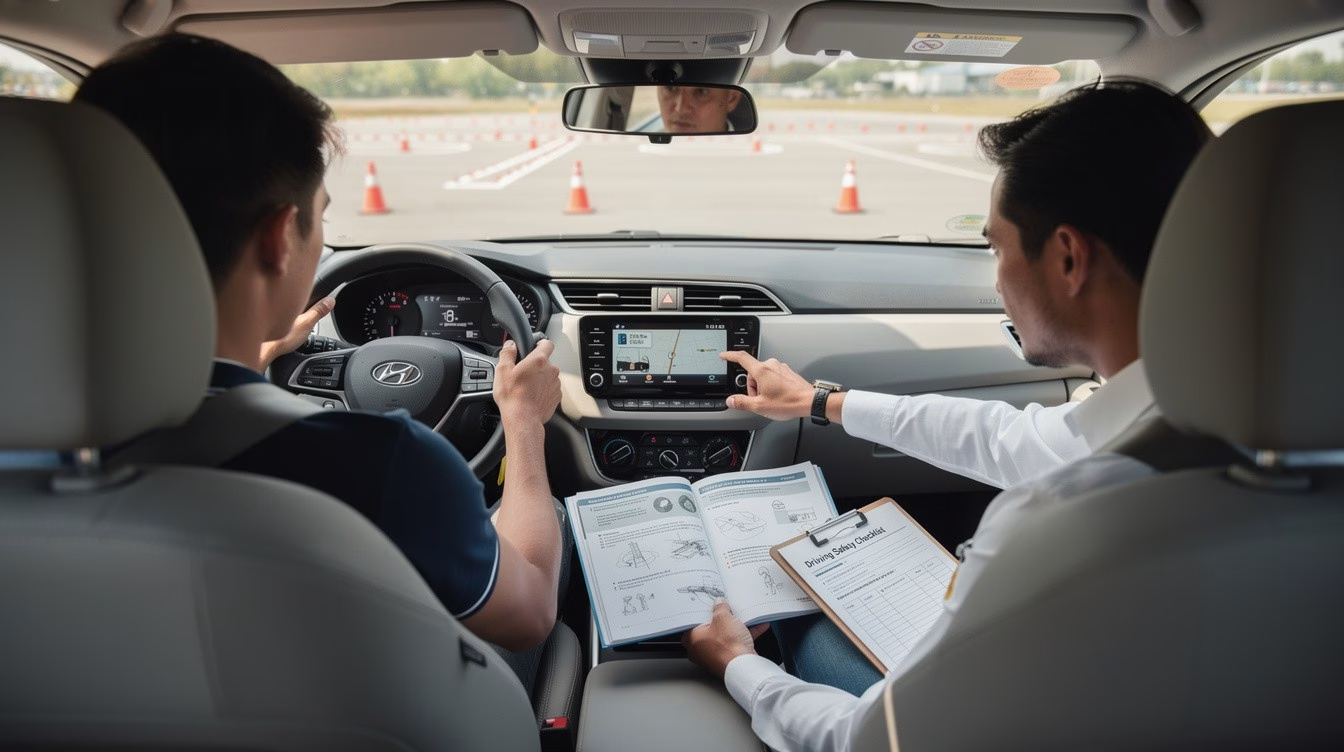
A course can teach judgment, but it cannot create experience on its own. Supervised driving practice remains where students learn the feel of braking, steering, scanning, parking, and responding calmly when traffic does something unexpected.
Frequently Asked Questions
What is a first-time driver course?
A first-time driver course is driver education for people working toward an initial license. It commonly covers traffic laws, signs, defensive driving, impairment, and safe decision-making.
Does an online course replace behind-the-wheel training?
Usually, no. Online coursework may satisfy classroom education requirements, while states can separately require supervised driving hours or professional behind-the-wheel instruction.
How long does a first-time driver course take?
It depends on state rules. Some states require a set number of instruction hours, and approved providers must follow those requirements even when the course is self-paced.
How do I know whether a course meets my requirement?
Verify approval for your state and the specific reason you need the course. Ask how completion is reported and whether you need to submit a certificate yourself.
How can I practice for the knowledge exam?
One of the best ways of practicing for the Florida DMV written knowledge exam is to use the DMV Quizlets tool, where you would have an environment that is similar to the official testing.
Can parents help a teen complete the course?
Parents can support learning and discuss lessons, but the enrolled student must complete required coursework and assessments according to provider and state rules.
The best first-time driver course is one that matches your state requirement and gives you usable safety knowledge before you take control of a vehicle. Start with approval details, keep your completion records, and give the learning the same attention you would give the road ahead.