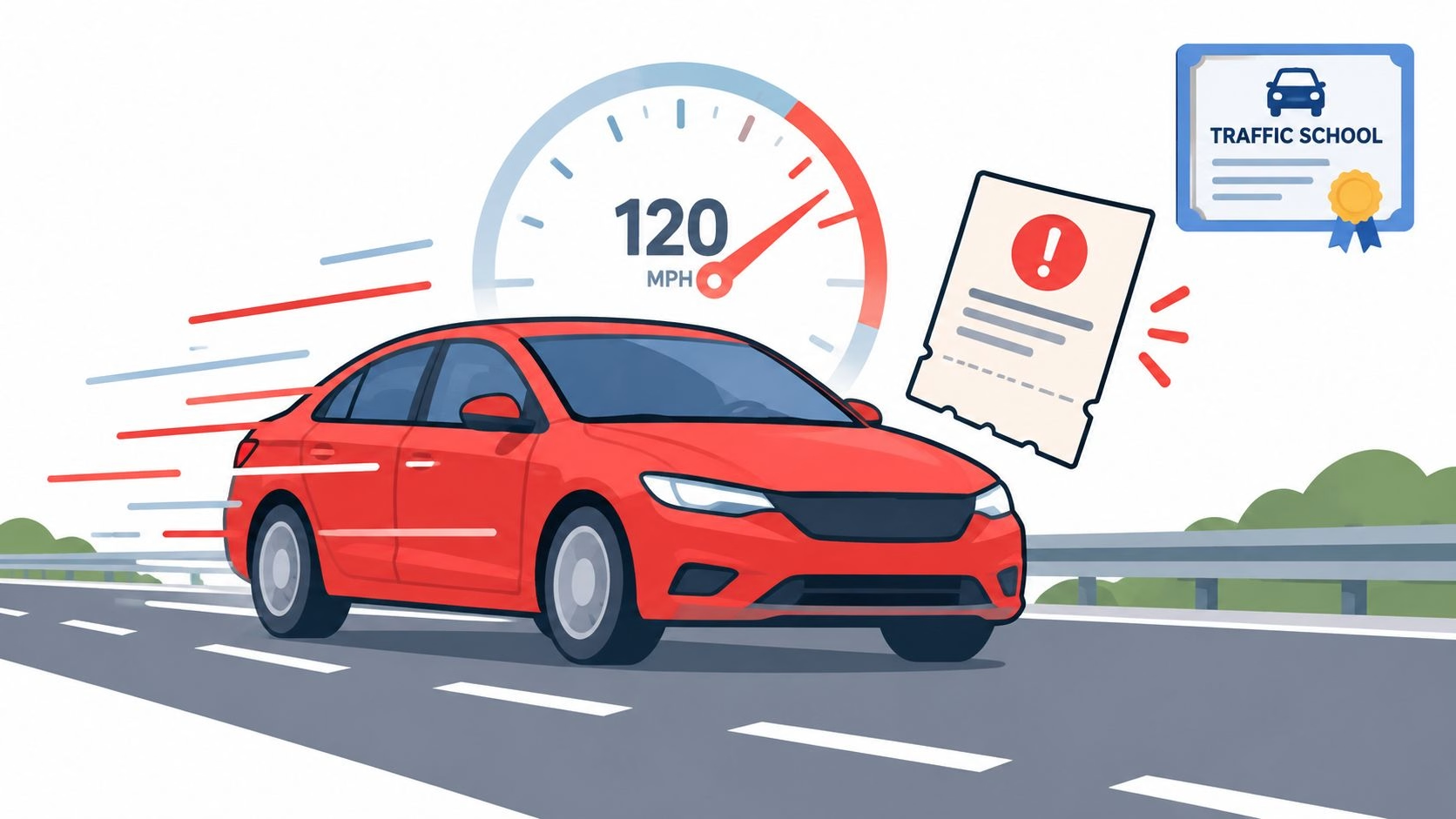
A few points on your driving record can feel like a small administrative problem until they affect your insurance rate, license status, or ability to drive for work. The available ways to reduce points depend on your state, the violation, and whether a court or DMV has set a deadline. Acting early gives you more options and helps prevent a minor ticket from becoming a larger licensing issue.
Understand How Your State’s Point System Works
Driver’s license point systems are not identical across the United States. A moving violation may add points in one state but carry a different consequence in another. States also set their own point thresholds for warning letters, license suspensions, and required driver improvement programs.
Start by reviewing your official driving record and the notice tied to your citation. Confirm the violation, the number of points assessed or pending, the deadline for responding, and whether you are eligible for a course or another form of relief. Do not assume that paying a ticket automatically resolves every issue. In many jurisdictions, payment is treated as a guilty plea and may allow points to post to your record.
If you received an out-of-state citation, check both states’ rules. Your home state may receive notice of the violation and apply its own record or licensing consequences.
1. Complete an Approved Driver Improvement Course
An approved defensive driving or basic driver improvement course is one of the most common ways to reduce points. Depending on state rules, successful completion may remove points already on your record, prevent points from being added for an eligible citation, satisfy a court order, or help you meet a reinstatement requirement.
Approval matters. A course that is useful for insurance education may not meet a court or DMV requirement in your state. Before enrolling, verify the required course type, the approved provider list, your completion deadline, and whether you or the course provider must submit the certificate.
Online courses can make compliance easier when they are approved for your situation. A self-paced program lets you complete coursework around work, school, and family responsibilities, but it still must be finished by the assigned deadline.
Ask About Eligibility Before You Start
Many states limit how often a driver can use a course for point reduction or ticket dismissal. Eligibility can also depend on the violation. Serious offenses, commercial driver violations, and violations involving injuries may not qualify.
Contact the court clerk, DMV, or licensing agency when the notice is unclear. Getting the answer before you pay for or begin a course can avoid wasted time.
2. Request Traffic School Before Paying the Citation
Some courts allow eligible drivers to choose traffic school in exchange for a dismissal, reduced charge, or withheld adjudication. When the option is granted, completing the course on time may keep points from appearing on your driving record.
This process is often time-sensitive. Your citation may list a court date, election deadline, or instructions for requesting traffic school. Follow those instructions exactly and keep copies of your election confirmation and course completion certificate.
Traffic school is not always the best choice. If you believe the citation was issued in error, you may prefer to contest it. If you already have several violations, speak with a qualified local attorney about the likely licensing consequences before making a plea decision.
3. Contest a Ticket When You Have a Valid Basis
A citation is an allegation, not necessarily the final outcome. Drivers may have the right to request a hearing and challenge the ticket. Valid grounds vary, but can include mistaken identity, incorrect vehicle information, inaccurate facts, or evidence that does not support the charge.
A successful dismissal generally means no points for that citation. A reduced charge may lower the number of points, although that depends on the specific offense and state law.
Be realistic about the trade-off. A hearing can take time, and a failed challenge may leave the original penalty in place. Review your citation carefully, preserve relevant documents or photos, and meet every filing and court deadline.
4. Ask Whether a Reduction or Withheld Adjudication Is Available
In some jurisdictions, a prosecutor or judge may approve a reduced violation, deferred disposition, probationary period, or withheld adjudication. These options can sometimes limit point consequences if you meet stated conditions, such as paying a fine, completing a course, or avoiding new violations for a set period.
The exact terms matter. A withheld adjudication does not always mean the ticket disappears for every purpose, and insurance companies may use different information than the DMV. Get the agreement in writing and understand what happens if you miss a condition or receive another violation.
5. Keep a Clean Record So Points Can Age Off
Many states remove points after a defined period without new violations. The time frame may be measured from the date of the offense, conviction, assessment, or another date specified by state law. Even when points are no longer active for suspension purposes, the underlying violation may remain visible on your driving history longer.
This makes safe driving the most dependable long-term strategy. Leave more following distance, slow down before intersections, put your phone away before moving the vehicle, and plan extra travel time. These habits lower the chance of another ticket while existing points are still active.
Do not confuse points aging off with a record being erased. If you need a record for employment, insurance, or a court matter, request an official copy and review what it shows.
6. Correct License, Insurance, or Court Compliance Issues Promptly
Some points and license actions are connected to compliance problems, not just driving behavior. Examples include failing to show proof of insurance, missing a court appearance, driving with an expired license, or failing to complete an assigned course.
Address these issues immediately. You may need to provide documents, pay a reinstatement fee, complete a required program, or appear in court. Waiting can lead to additional penalties, a suspended license, or a new charge for driving while suspended.
Keep your mailing address current with the DMV. Missing a notice does not usually stop a deadline from applying.
7. Check Your Driving Record After Taking Action
After you complete traffic school, win a hearing, or satisfy a court requirement, verify that your record reflects the outcome. Processing may take several business days or weeks, depending on the court, state agency, and course reporting process.
Save your completion certificate, payment receipts, court disposition, and correspondence until the record is updated. If points appear incorrectly, these documents can help you request a correction.
At DriverEducators.com, course information should always be matched to your state and the requirement listed on your court or DMV notice. The right approved program can support compliance, but only when it is the correct course for your specific situation.
Avoid Shortcuts That Can Create Bigger Problems
No legitimate provider can promise to erase every ticket or guarantee a particular court outcome. Be cautious of claims that a course will automatically clear your record without checking eligibility, or that you can ignore a citation while waiting for points to disappear.
Also avoid delaying your response because you are comparing options. Court and DMV deadlines are often firm. If your license is at risk, timely action is usually more valuable than finding the lowest-cost option after the deadline has passed.
Frequently Asked Questions
Can I remove points from my driving record with an online course?
Possibly. An online course can reduce or prevent points only if your state, court, or DMV approves it for your violation and you meet eligibility rules.
How long do points stay on a driving record?
It depends on state law. Active points often expire after a set period, while the violation itself may remain on the record longer.
Does paying a ticket add points?
Often, yes. Paying a ticket can be treated as accepting responsibility, which may result in points unless you were approved for a different option.
Can a court dismiss a ticket after traffic school?
Sometimes. Courts may dismiss or reduce eligible citations after traffic school, but the program must be elected or approved before the deadline.
Will point reduction lower my insurance premium?
Not necessarily. Insurance companies use their own rating rules, and a point reduction does not guarantee a lower premium.
The best next step is simple: read your notice, confirm your deadline, and choose the option your state or court recognizes. A timely approved course, a properly filed response, and safer daily driving can protect more than your point total – they can help protect your ability to stay legally on the road.