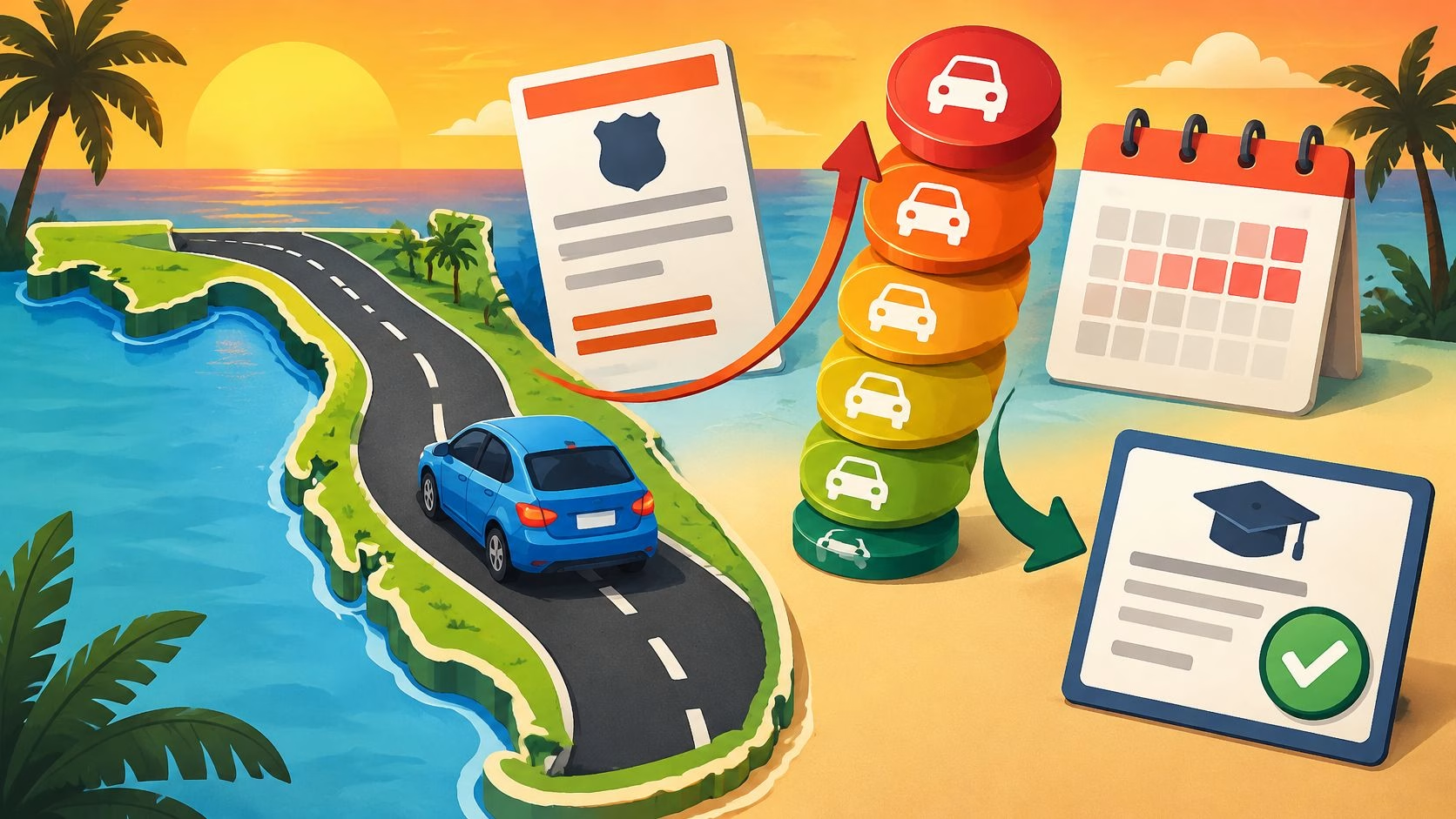
A traffic citation doesn’t have to derail your driving record. Whether you’re facing a minor violation or a serious charge, court-approved dismissal and traffic school are real options that can protect your license and insurance rates.
At DriverEducators.com, we break down exactly how dismissal works, what legal grounds matter, and when defensive driving courses make sense for your situation.
How Traffic Violations Affect Your Record and Dismissal Options
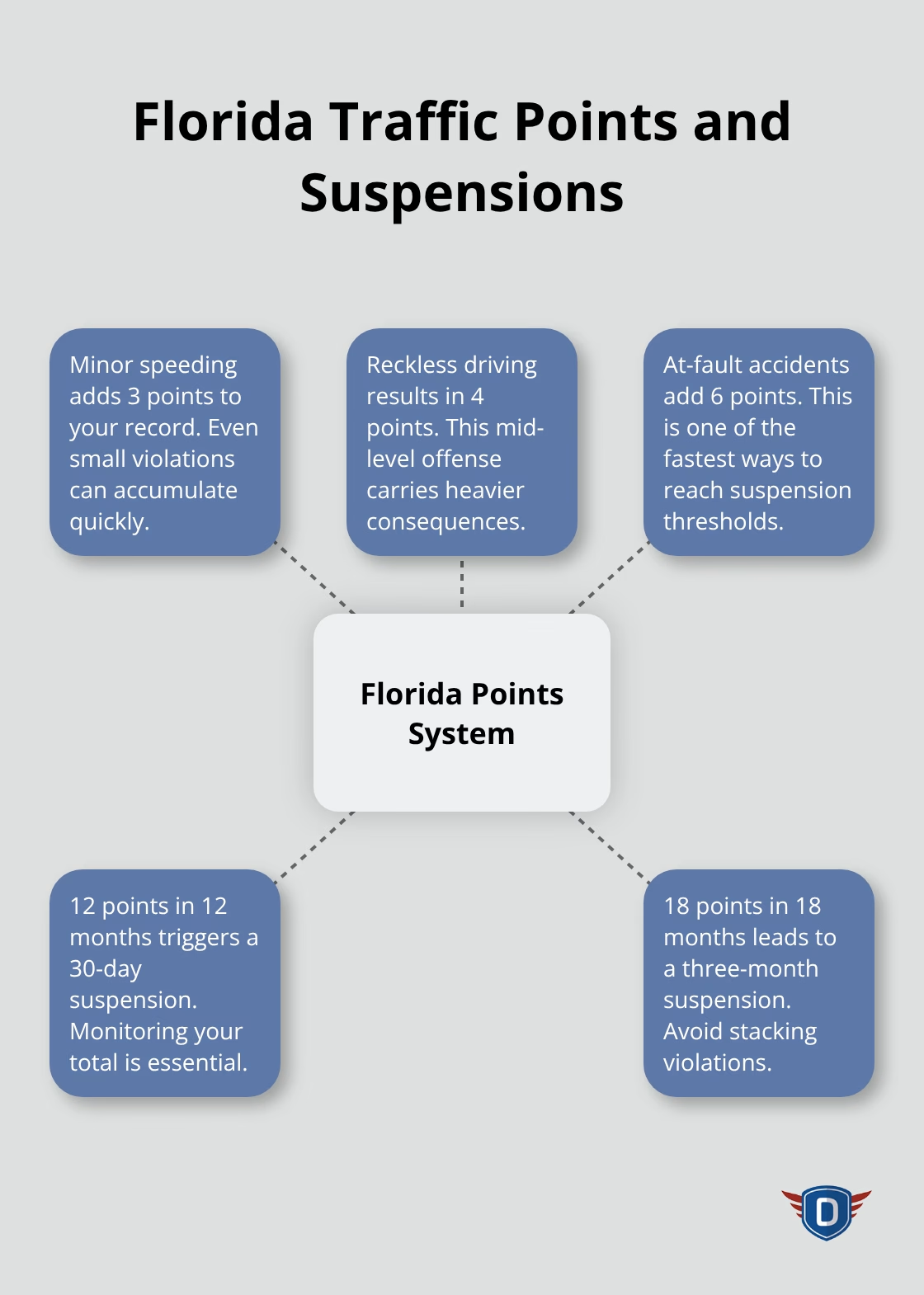
Traffic violations in Florida fall into distinct categories, each carrying different point assessments and consequences. A minor speeding ticket adds three points to your driving record, while reckless driving jumps to four points, and at-fault accidents result in six points. Once you accumulate 12 points within 12 months, the Florida Department of Highway Safety and Motor Vehicles suspends your license for 30 days. Reach 18 points in 18 months, and you face a three-month suspension.
The financial impact extends beyond fines. Insurance companies flag violations on your record, and a single moving violation increases your premiums depending on the violation type and your insurer. Dismissal removes the violation entirely, preventing points from ever reaching your record. This is why dismissal matters far more than simply paying the fine and moving on.
When Dismissal Actually Works
Dismissal isn’t guaranteed for every citation, but it’s available in specific situations. If the officer made procedural errors during the stop-failing to establish probable cause, improper documentation, or violations of your constitutional rights-the ticket can be dismissed. Equipment failures also create grounds for dismissal; if the radar gun wasn’t calibrated within required timeframes or the speed measurement was taken improperly, the evidence weakens significantly.
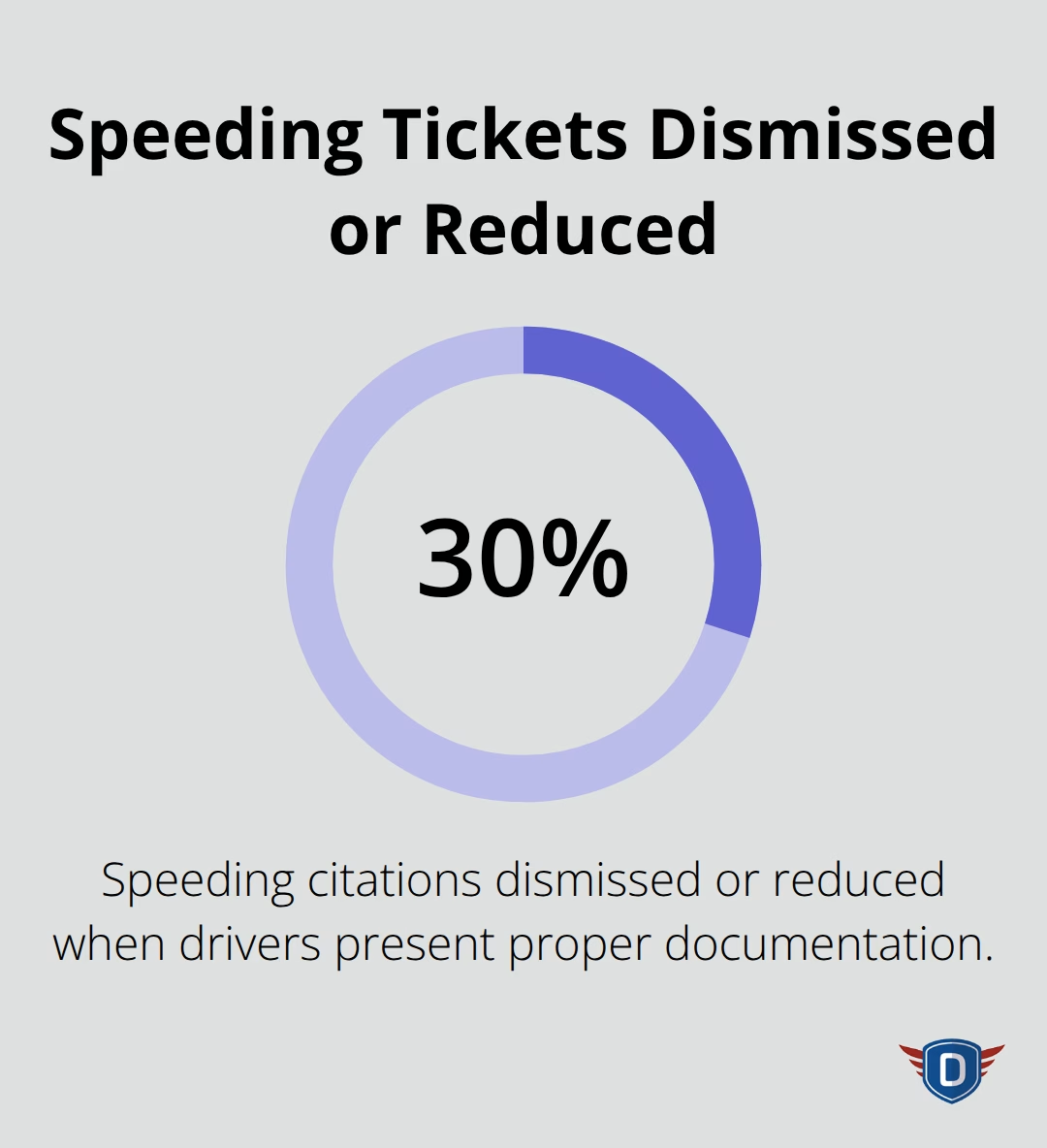
Court records show that approximately 30 percent of speeding citations are dismissed or reduced when drivers challenge them with proper documentation. However, if you were clearly at fault in an accident or committed a serious violation like driving under the influence, dismissal becomes unlikely regardless of technicalities. Understanding your specific violation matters before deciding your next move.
Why Traffic School Protects Your Record
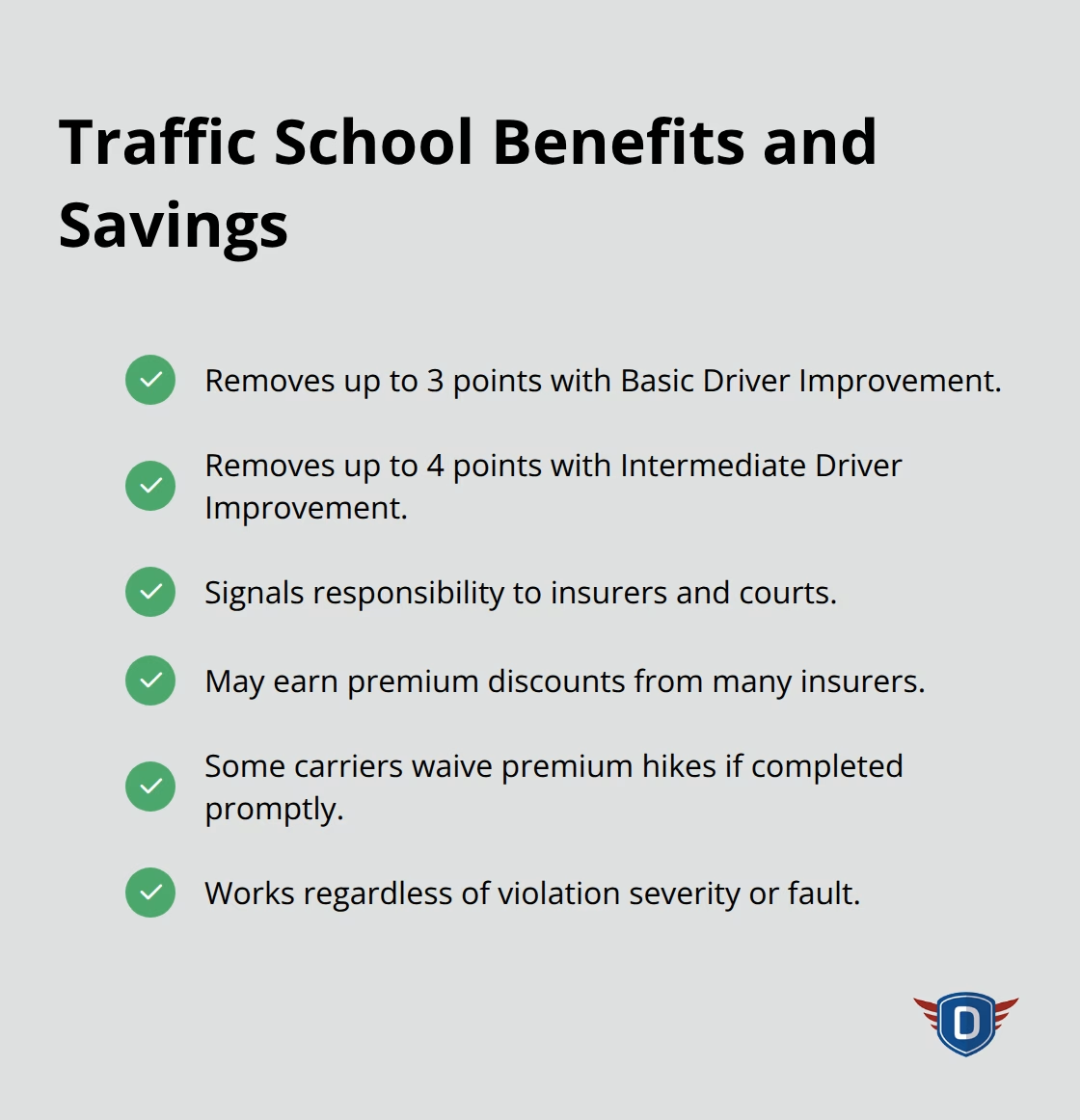
Traffic school offers an alternative when dismissal isn’t possible. Completing a Basic Driver Improvement course removes up to three points from your record, while an Intermediate Driver Improvement course removes up to four points. Courts and insurance companies view traffic school completion favorably-it demonstrates responsibility and commitment to safer driving.
Insurance companies often offer discounts for drivers who complete approved courses, and some insurers waive the premium increase entirely if you complete traffic school within 60 days of the violation. The key advantage is that traffic school works regardless of guilt or the violation’s severity, making it a reliable protective measure when dismissal isn’t viable. This flexibility makes it the practical choice for most drivers facing violations.
What Happens Next With Your Citation
Your specific violation type determines which path makes sense for your situation. Some citations qualify for dismissal based on how the officer conducted the stop, while others require traffic school to minimize damage to your record and insurance rates. The decision between challenging your ticket and enrolling in traffic school depends on the strength of your case and the violation’s severity.
How to Challenge a Traffic Ticket Successfully
Procedural Errors That Strengthen Your Case
Procedural errors during a traffic stop create the strongest foundation for dismissal. Florida law requires officers to establish probable cause before initiating a stop, document the violation accurately, and follow specific protocols for recording speed measurements. If an officer failed to activate their dashboard camera, didn’t document the radar calibration date, or couldn’t articulate why they pulled you over, these gaps weaken the prosecution’s case significantly. Courts take radar calibration documentation seriously. Request the officer’s calibration records when building your challenge-this single document often determines whether your case proceeds.
Radar and Speed Measurement Evidence
Speed detection equipment requires regular calibration to maintain accuracy. Officers must document when they last calibrated their radar gun, and Florida courts examine these records closely. If calibration records are missing or outdated, the speed measurement becomes questionable in court. Equipment malfunctions or improper operation (such as measuring speed from a moving vehicle without proper technique) create legitimate grounds to challenge the citation. Courts recognize that faulty equipment produces unreliable evidence, and this technical weakness can result in dismissal.
Officer Credibility and Testimony Reliability
Officer credibility matters more than most drivers realize. If the officer made conflicting statements in their report, couldn’t recall specific details about your vehicle or driving behavior during testimony, or has a documented history of dismissals on their tickets, you have legitimate grounds to challenge the citation. Florida traffic courts examine officer credibility closely, and contested citations often result in dismissal or reduction when drivers present proper documentation. An officer who testifies inconsistently or provides vague descriptions of the violation weakens their case substantially.
When to Challenge Versus When to Accept
Challenging a ticket only makes sense when evidence supports your position. If you were clearly speeding, caused an accident, or committed a serious violation like driving under the influence, contesting the citation wastes time and court resources. Accept the citation and pursue traffic school instead to minimize damage to your record. The decision hinges on whether the stop itself had legal problems or whether the officer’s evidence was properly documented and presented. Weak cases should move directly to traffic school enrollment, which guarantees point reduction regardless of the violation’s circumstances.
Building Your Defense Strategy
Gather documentation before your court date. Obtain the officer’s calibration records, request the dashboard camera footage, and review the citation for inaccuracies in vehicle description, location, or time of violation. Photos of road conditions, weather, or visibility issues on the day of the stop can support your defense. If you have witnesses who were present during the stop, their statements strengthen your position. Courts respond to drivers who present organized, factual evidence rather than emotional arguments or excuses. Your preparation determines whether the judge takes your challenge seriously.
Traffic school offers a guaranteed alternative when your defense appears weak or when you prefer to avoid court proceedings entirely. Our Florida-approved courses at DriverEducators.com help drivers reduce points and meet court requirements, making this path practical for most violations.
Why Traffic School Works Better Than You Think
How Traffic School Removes Points From Your Record
Traffic school removes points from your driving record without requiring you to win in court, which is why it’s the practical choice for most violations. Florida’s Basic Driver Improvement course eliminates up to three points, while the Intermediate Driver Improvement program removes up to four points. The Florida Department of Highway Safety and Motor Vehicles allows drivers to reduce points once every 12 months, and the reduction applies regardless of how severe your violation was or whether you were technically at fault.
This guarantee matters far more than the uncertainty of challenging a ticket in court, where outcomes depend on officer credibility, equipment calibration records, and judge interpretation. Insurance companies recognize traffic school completion as a sign of responsibility, and many carriers offer premium discounts for drivers who complete an approved course. Some insurers waive the entire premium increase if you enroll in traffic school quickly enough, turning a violation that would have cost hundreds in increased premiums into a manageable investment.
Insurance Discounts and Premium Savings
Insurance companies reward drivers who take traffic school seriously. Premium discounts represent real savings-on a policy costing $1,200 annually, that can translate to meaningful reductions per year. Some insurers waive premium increases entirely if you complete your course within a reasonable timeframe of the violation, which means your rates stay flat instead of jumping after a moving violation.
The timeline matters significantly. Insurers track when you complete traffic school relative to your violation date, and faster completion strengthens your case for premium forgiveness. Waiting months to take the course reduces your chances of avoiding the rate increase altogether. Florida-approved traffic school programs provide the knowledge to genuinely improve your driving while meeting court and insurance requirements simultaneously.
Court-Ordered Versus Voluntary Enrollment
Court-ordered enrollment means a judge mandated traffic school as part of your citation resolution, typically required within a specific deadline set by the court. Voluntary enrollment works differently-you choose to take traffic school before your court date or after paying a citation, strategically using it to prevent points from accumulating on your record.
Voluntary enrollment carries more flexibility because you control when you complete the course, and many drivers use this option to stop points from reaching 12 within a 12-month period, which would trigger a license suspension. The cost difference is minimal, typically ranging from $30 to $50 depending on your provider, making the decision about which course length suits your situation more important than cost concerns.
Choosing the Right Course Length
A four-hour Basic Driver Improvement course works for first-time violators or minor infractions, while an eight-hour Intermediate Driver Improvement course serves drivers with multiple violations or those seeking deeper instruction in defensive driving techniques. Your violation history and court requirements determine which option applies to your situation.
Completing traffic school creates documentation that demonstrates to insurance companies and the court that you’re taking road safety seriously, which influences how future violations or claims are handled. This paper trail protects your record and shows insurers that you’ve invested in becoming a safer driver.
Final Thoughts
Your traffic citation requires a straightforward response. You can challenge the ticket if procedural errors or equipment failures weakened the officer’s case, or you can enroll in traffic school to remove points and protect your insurance rates. Court-approved dismissal works when evidence supports your position, but traffic school guarantees point reduction regardless of circumstances. The decision hinges on your violation type, the strength of your defense, and how quickly you want to resolve the matter.
Most drivers benefit from traffic school because it eliminates uncertainty and protects their record without requiring court proceedings. Insurance companies reward drivers who complete approved programs within 60 days of a violation, sometimes waiving premium increases altogether. This practical advantage makes traffic school the reliable choice when dismissal isn’t guaranteed, and the cost typically pays for itself through insurance discounts.
Review the officer’s documentation for calibration records, dashboard camera footage, or procedural gaps that could support a challenge before making your final decision. If those elements are solid, traffic school becomes your best protection. DriverEducators.com offers Florida-approved Basic and Intermediate Driver Improvement courses that help you reduce points and meet court requirements while improving your driving skills on your own schedule.