Speed limits aren’t arbitrary numbers painted on signs. Florida police use rigorous engineering studies, accident data, and road assessments to determine what speeds are actually safe on each stretch of pavement.
Speed limit enforcement works because drivers who understand how these limits are set tend to follow them more consistently. We at DriverEducators.com break down the science behind speed limit decisions and show you why following posted limits protects both you and others on the road.
How Florida Police Determine Safe Speeds
Florida police don’t set speed limits based on guesswork or tradition. The process starts with traffic engineering studies conducted by certified professionals who measure actual vehicle speeds on roadways under normal conditions. These studies, often called 85th percentile studies, establish what speed 85 percent of drivers naturally travel at on a given road. The National Highway Traffic Safety Administration recognizes this methodology as the gold standard, and Florida law enforcement applies it to set limits that most drivers consider reasonable. When a road receives a 45 mph limit, that reflects data showing the majority of traffic naturally flows at that speed.
Road Infrastructure Sets the Speed Capacity
Road design determines speed capacity far more than any posted sign. A four-lane divided highway with wide lanes and minimal curves supports higher safe speeds than a two-lane residential street with driveways and pedestrian activity. Florida police examine pavement width, sight distance, curve radius, and intersection frequency to understand what speeds the road itself can handle safely. A road built with 12-foot lanes and gentle curves accommodates faster speeds than one with 10-foot lanes and sharp turns.
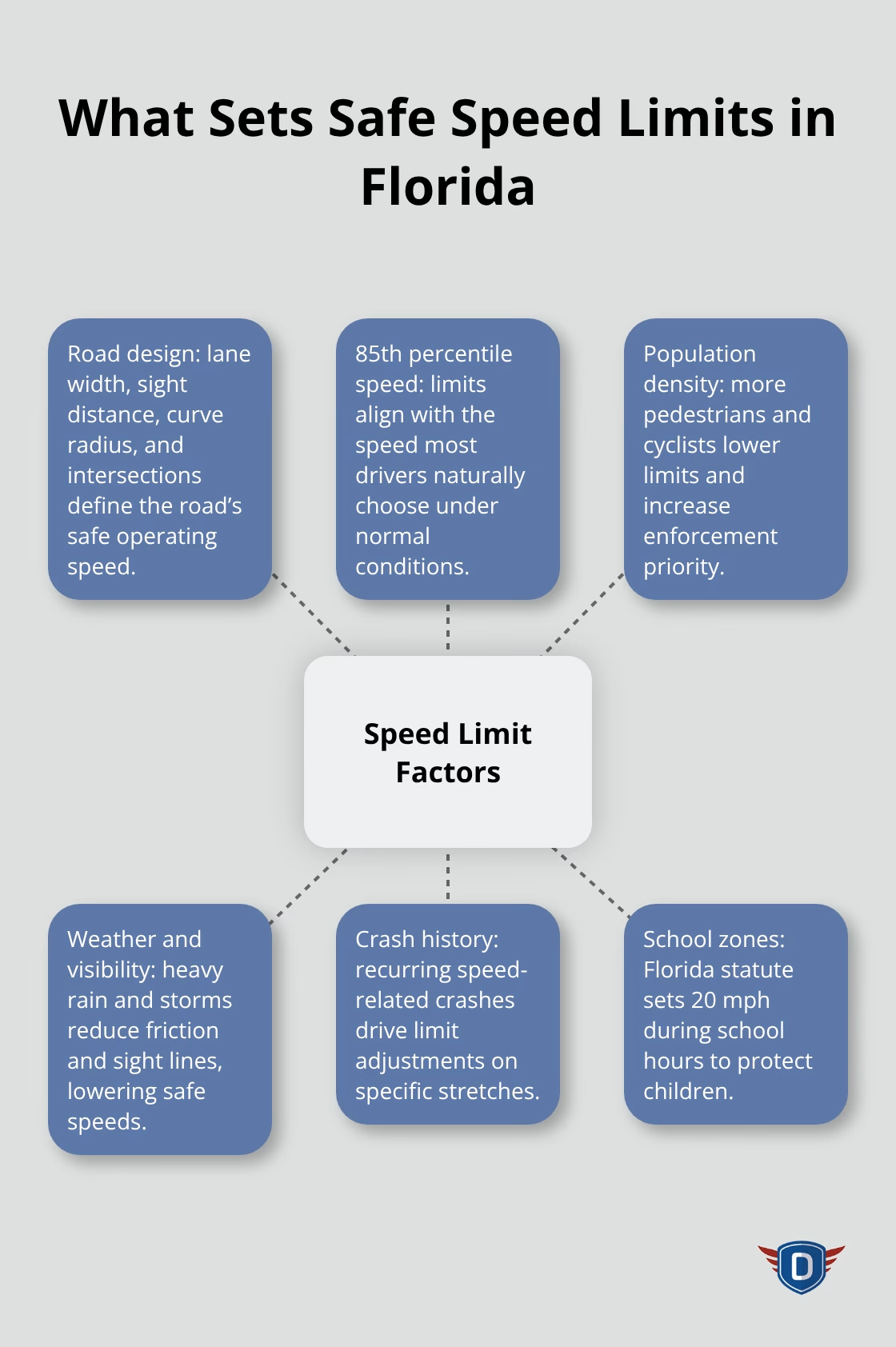
Accident history provides the hard evidence-if a particular stretch consistently produces speed-related crashes, Florida law enforcement knows the current limit isn’t working and recommends changes based on that crash data.
Population Density Changes Enforcement Priorities
Residential neighborhoods and school zones demand dramatically different speed limits than commercial corridors. Florida police account for pedestrian exposure, with areas near schools, parks, and shopping districts receiving lower limits because vulnerable road users are present. High-density areas see more aggressive speed enforcement because crash consequences are more severe when pedestrians and cyclists share the roadway. The presence of these vulnerable users shifts enforcement strategy significantly.
Weather and Environmental Conditions Matter
Florida roads experience heavy rain and reduced visibility during summer months, which engineering studies reflect in lower posted limits compared to inland areas. Weather patterns directly influence what speeds engineers consider safe on specific stretches of pavement. Environmental factors (visibility, precipitation patterns, seasonal traffic changes) all factor into the engineering analysis that produces the final posted limit.
How This Knowledge Affects Your Driving
Understanding how Florida police set speed limits reveals why posted limits protect you and others on the road. Drivers who recognize that these limits stem from actual engineering data and accident analysis tend to follow them more consistently. This foundation of knowledge about speed limit science connects directly to how defensive driving reduces speed-related accidents and why insurance companies reward safe driving records-topics we’ll examine next.
What Really Changes Speed Limits Between Roads
Road Classification Determines Speed Capacity
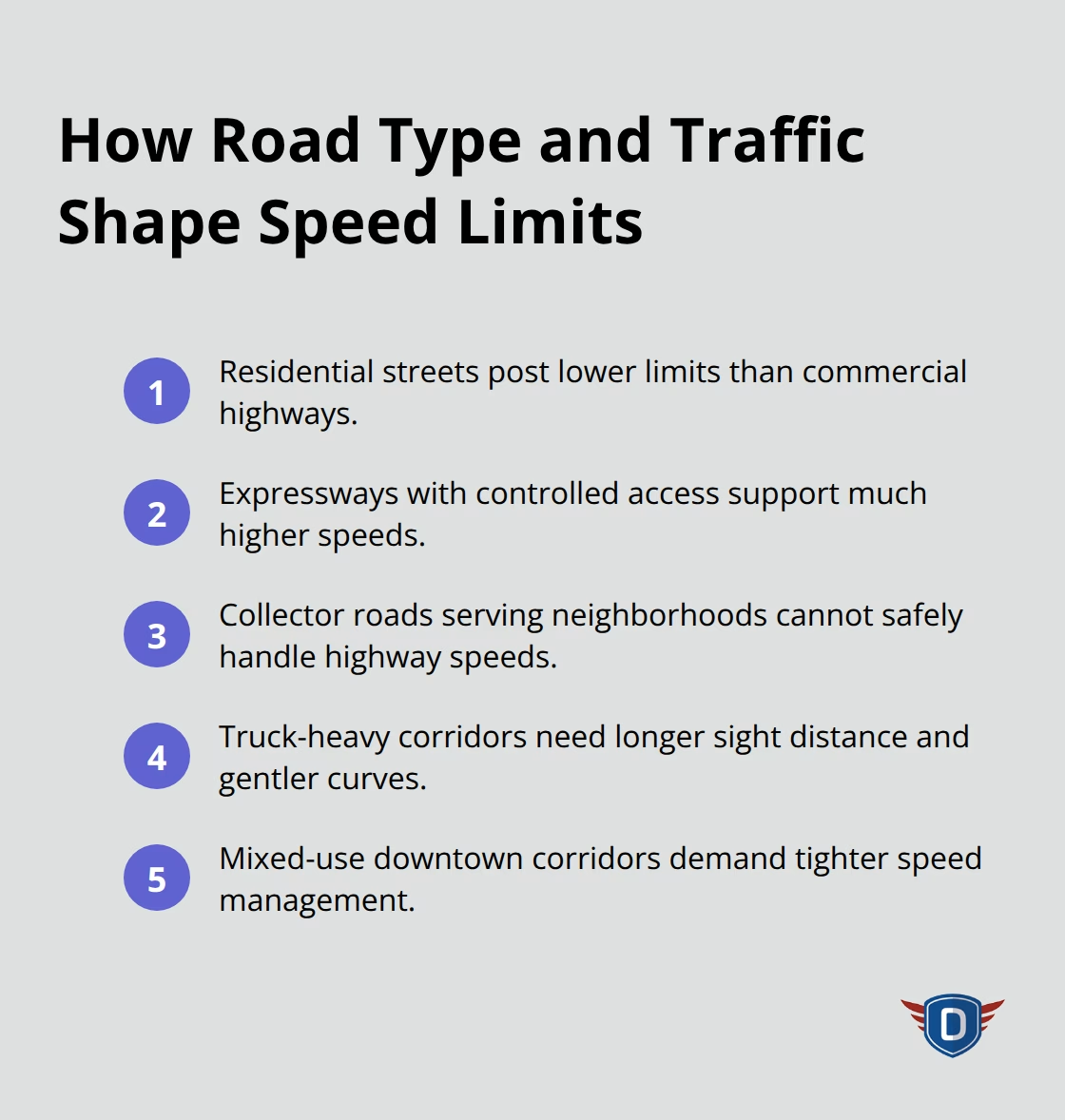
Speed limits shift dramatically across Florida because roads function differently, not because of arbitrary decisions. A 35 mph limit on a residential street and a 55 mph limit on a nearby commercial highway reflect genuine engineering differences. A six-lane divided expressway with controlled access points handles speeds that would be reckless on a two-lane collector road serving neighborhoods and small businesses. Road classification determines speed capacity more than anything else. Florida police recognize that a pickup truck on a rural highway behaves differently than the same truck navigating a downtown corridor, and speed limits account for these operational realities.
The vehicle mix on a road influences enforcement strategy significantly. Highways dominated by commercial trucks require different speed management than residential streets where families walk to nearby shops. Trucks traveling at highway speeds need longer sight distances and gentler curves than passenger vehicles in urban areas.
Seasonal Weather Patterns Shape Posted Limits
Florida’s weather creates seasonal speed limit considerations that inland states rarely face. From June through September, afternoon thunderstorms reduce visibility and pavement friction, which engineering studies reflect in posted limits for coastal and central Florida corridors. A road that safely accommodates 50 mph during clear winter months might warrant a 40 mph limit during wet season based on actual accident data from those periods.
Rainfall patterns directly influence what speeds engineers consider safe on specific stretches of pavement. Environmental factors (visibility, precipitation intensity, seasonal traffic changes) all factor into the engineering analysis that produces the final posted limit.
School Zones and Residential Protection
School zones operate under Florida Statute 316.0775, which mandates a 20 mph speed limit during school hours and 15 minutes before and after dismissal-these aren’t suggestions but legal requirements that Florida law enforcement monitors closely. Residential areas with high pedestrian activity see aggressive enforcement because a child stepping into the street at 25 mph faces dramatically different survival odds than at 35 mph; crash data consistently shows this threshold matters.
Enforcement intensity increases in neighborhoods near parks and recreational facilities where vulnerable road users concentrate. Officers prioritize these zones during peak activity hours. The presence of bus stops, crosswalks, and driveways on residential streets justifies lower limits that drivers often view as overly cautious until they understand the pedestrian exposure data behind them.
How Enforcement Reflects Engineering Data
Florida police don’t enforce speed limits uniformly across all road types because the engineering data supporting each limit differs significantly. A 45 mph corridor through a commercial district receives different enforcement attention than a 45 mph stretch on a rural two-lane road, even though the posted numbers match. The difference lies in what the 85th percentile study revealed about each road’s actual operating speed and the crash history tied to speeding violations.
Understanding these distinctions helps drivers recognize why speed limits change frequently in some areas and remain stable in others. This foundation connects directly to how Florida police actually enforce these limits and what methods they use to monitor compliance-topics we’ll examine next.
How Florida Police Enforce Speed Limits and What Safe Drivers Gain
Radar, Lidar, and Camera Technology
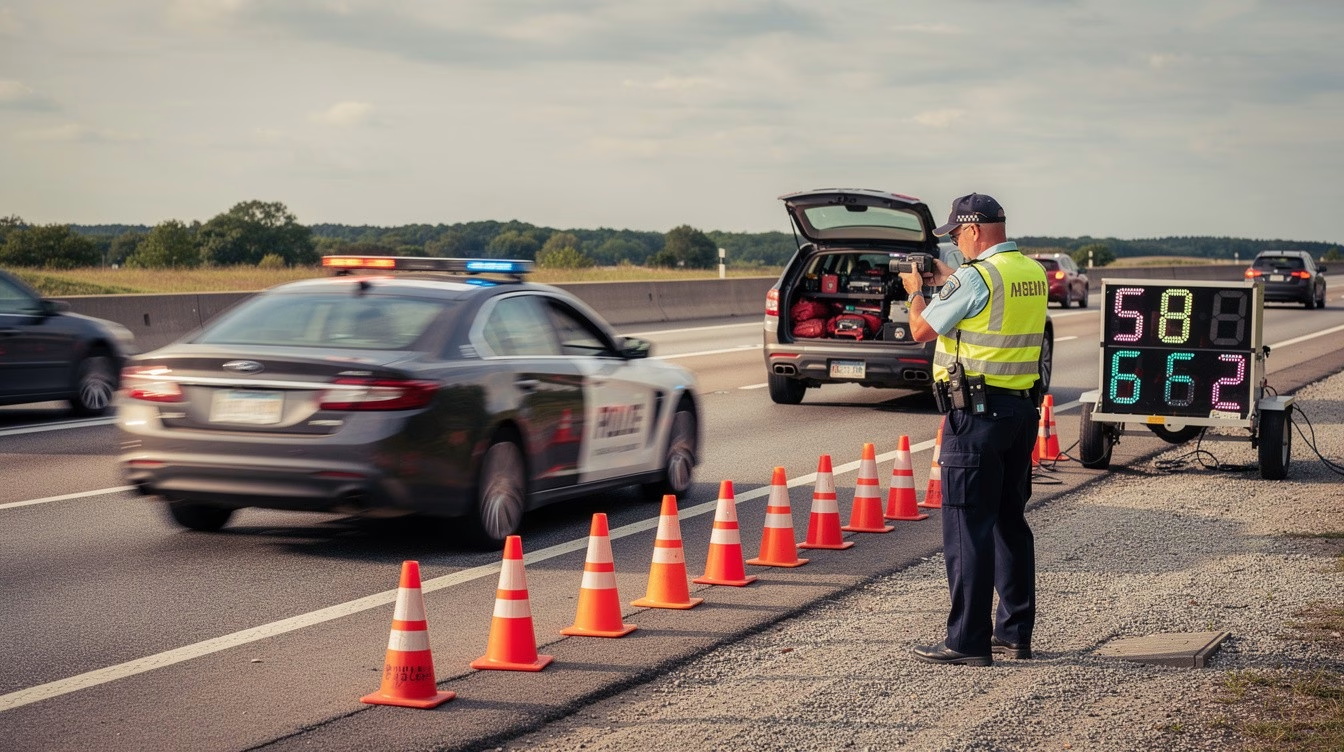
Florida law enforcement uses radar, lidar, and speed detection cameras positioned at high-crash locations to monitor compliance with posted limits. Radar guns measure vehicle speed from stationary positions near problem corridors, while lidar technology offers accuracy within one mile per hour by targeting individual vehicles from distances up to 2,000 feet. Fixed-camera systems operate on stretches where engineering studies show consistent speeding correlates with accidents, particularly on I-95 and US-27 where speed-related crashes account for significant injury rates.
Mobile Enforcement in High-Risk Areas
Officers conduct mobile enforcement during peak traffic hours in school zones and residential areas where the 85th percentile studies revealed drivers exceed safe speeds. Speeding contributed to a significant portion of all traffic fatalities, making enforcement a direct response to documented crash data rather than revenue generation. This data-driven approach targets locations where speed violations create the highest crash risk.
How Defensive Driving Protects Your Record
Drivers who maintain speeds appropriate for road conditions, adjust velocity before curves, and reduce throttle input during rain reduce their involvement in speed-related crashes. Posted limits represent the maximum safe speed under ideal conditions, not target speeds for all situations. Recognizing this distinction separates safe drivers from those who treat speed limits as suggestions rather than safety thresholds.
Insurance Discounts for Clean Driving Records
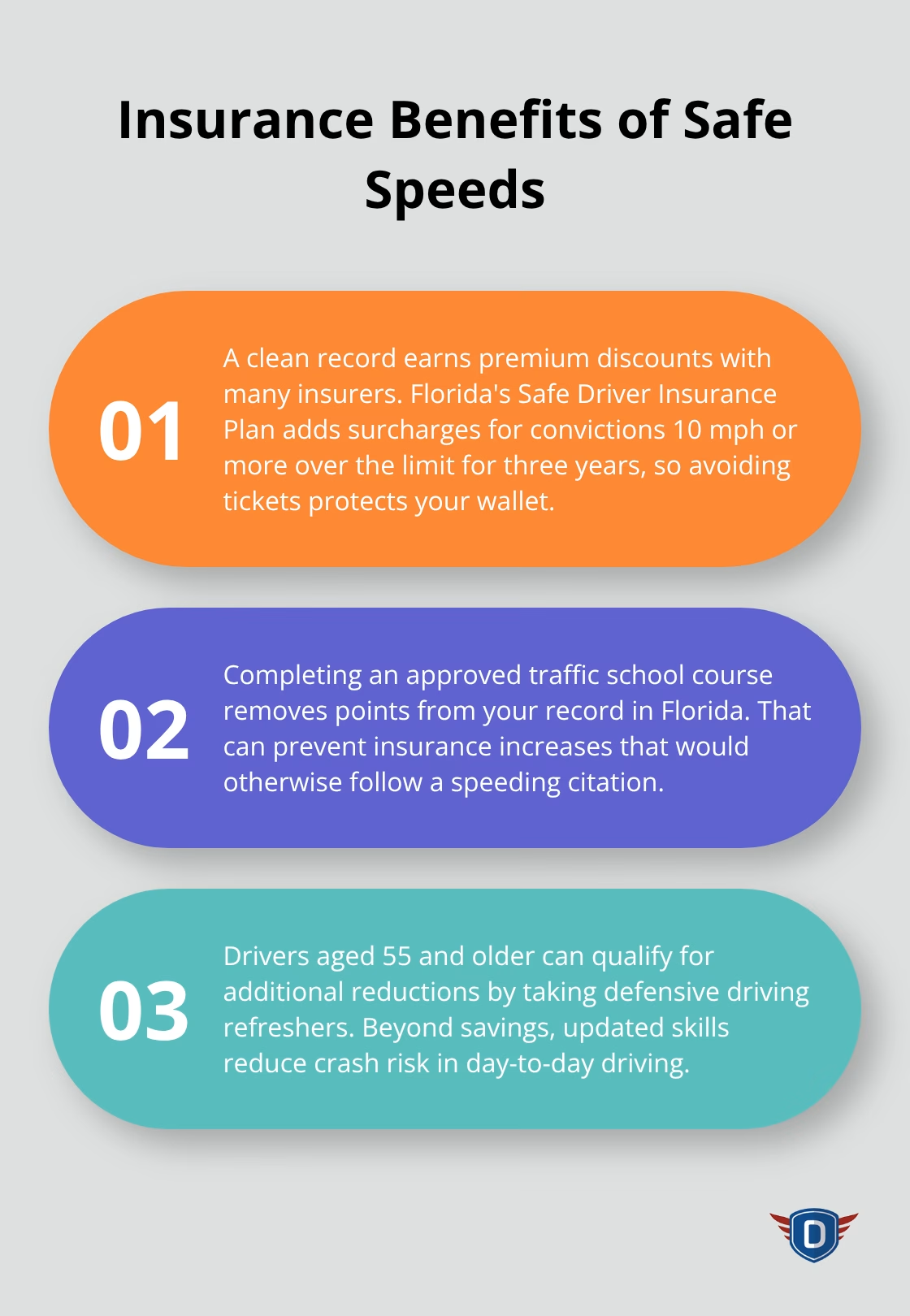
Insurance companies track driving records through third-party data providers, and a clean record without speeding violations qualifies drivers for discounts on premiums. Florida’s Safe Driver Insurance Plan imposes surcharges for speeding convictions that exceed posted limits by 10 mph or more, adding to policies for three years following violation. Completing a traffic school course removes points from your record in Florida, potentially preventing insurance increases that would otherwise follow a speeding citation.
Additional Savings for Mature Drivers
Drivers aged 55 and older benefit from additional insurance reductions by completing defensive driving refresher courses that update knowledge on modern road hazards, intersection safety, and medication effects on driving ability. The financial incentive alone justifies compliance, but the survival benefit of traveling at speeds matched to road conditions and vehicle capability matters far more than any discount.
Final Thoughts
Speed limit enforcement works because it rests on engineering data, accident analysis, and road design principles rather than arbitrary decisions. Florida police measure actual driving speeds, examine infrastructure, and track crash patterns to establish limits that protect everyone sharing the roadway. When you understand that a 20 mph school zone limit reflects survival statistics for children, or that a 45 mph commercial corridor limit accounts for pedestrian exposure, following posted speeds becomes a rational choice rather than a restriction.
The financial and safety benefits of maintaining a clean driving record extend far beyond avoiding citations. Insurance companies reward drivers with clean records through measurable discounts, while traffic school courses remove points and prevent surcharges that accumulate over years. A single speeding violation can trigger Florida’s Safe Driver Insurance Plan surcharges lasting three years, making compliance financially smart regardless of your age or driving experience.
Defensive driving practices that match your speed to road conditions, weather, and traffic patterns reduce your crash risk substantially. We at DriverEducators.com offer Florida-approved traffic school courses that deepen your understanding of safe driving principles and current traffic laws, helping you navigate roads confidently while protecting your record and qualifying for insurance discounts. Visit DriverEducators.com to explore our self-paced, online programs.