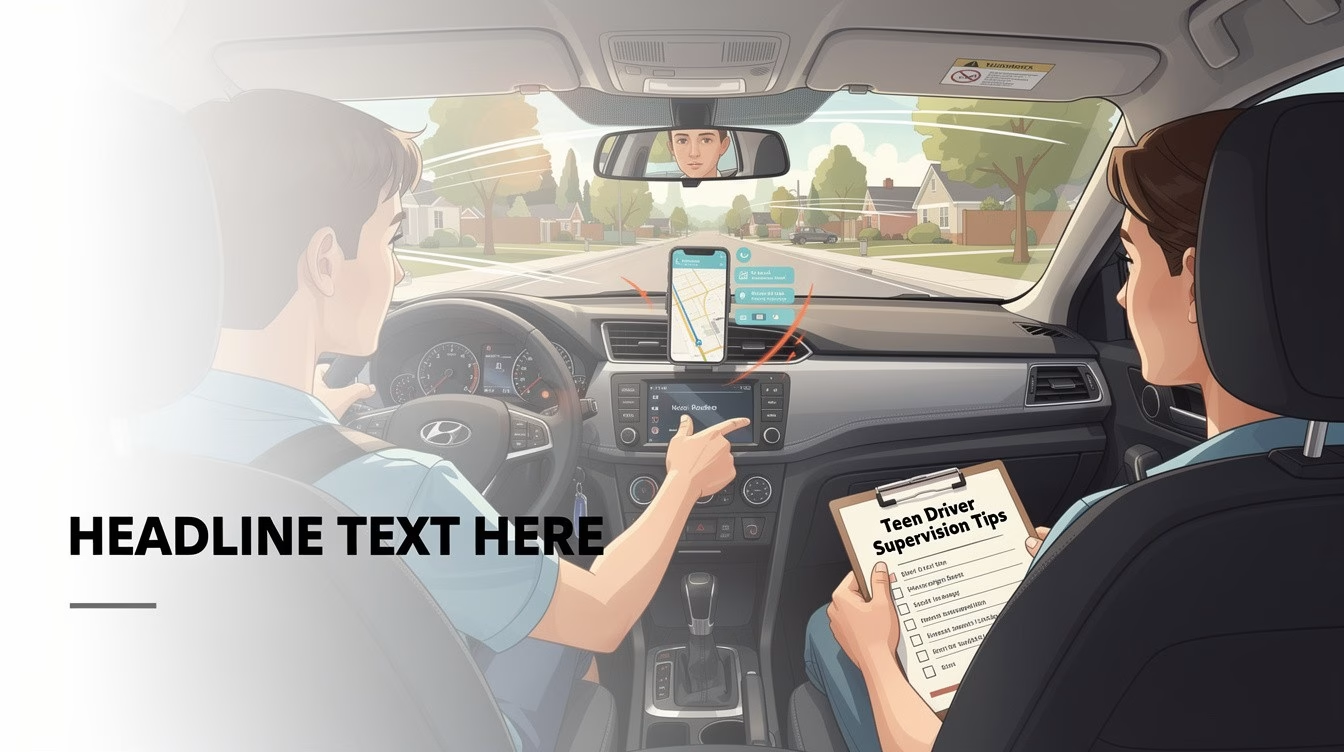
Teen drivers need structure, oversight, and honest conversations to develop safe driving habits. The first year behind the wheel is when most accidents happen-in fact, motor vehicle crashes are the leading cause of death for teenagers in the United States.
We at DriverEducators.com know that effective teen driver supervision tips go beyond handing over car keys. This guide covers the strategies parents need to stay involved, set boundaries, and build a foundation for lifelong safe driving.
Set Clear Rules Before the Keys Change Hands
Write and Sign a Parent-Teen Driving Agreement
A parent-teen driving agreement is non-negotiable. This isn’t about distrust-it’s about clarity. According to the CDC, a parent-teen driving contract with specific rules in writing significantly increases compliance and creates a reference point when discussions get heated. Your agreement should cover cell phone use, passenger restrictions, speed limits, seat belt requirements, night-driving curfews, and consequences for violations. Make it specific: not just no phones, but no touching the phone at all, even at red lights. Not just passengers, but zero teen passengers for the first six months, with exceptions only for immediate family. Both parent and teen should sign it, making it feel like a negotiated contract rather than a unilateral decree.
Eliminate Phone Use While Driving
Phone use while driving is the fastest way to turn a capable teen driver into a statistic. According to NHTSA data, about one in three teens who text has texted while driving, and texting increases crash risk by 23 times. Dialing a number increases risk by 6 times. These aren’t theoretical margins-they represent the difference between walking away from an intersection and not.
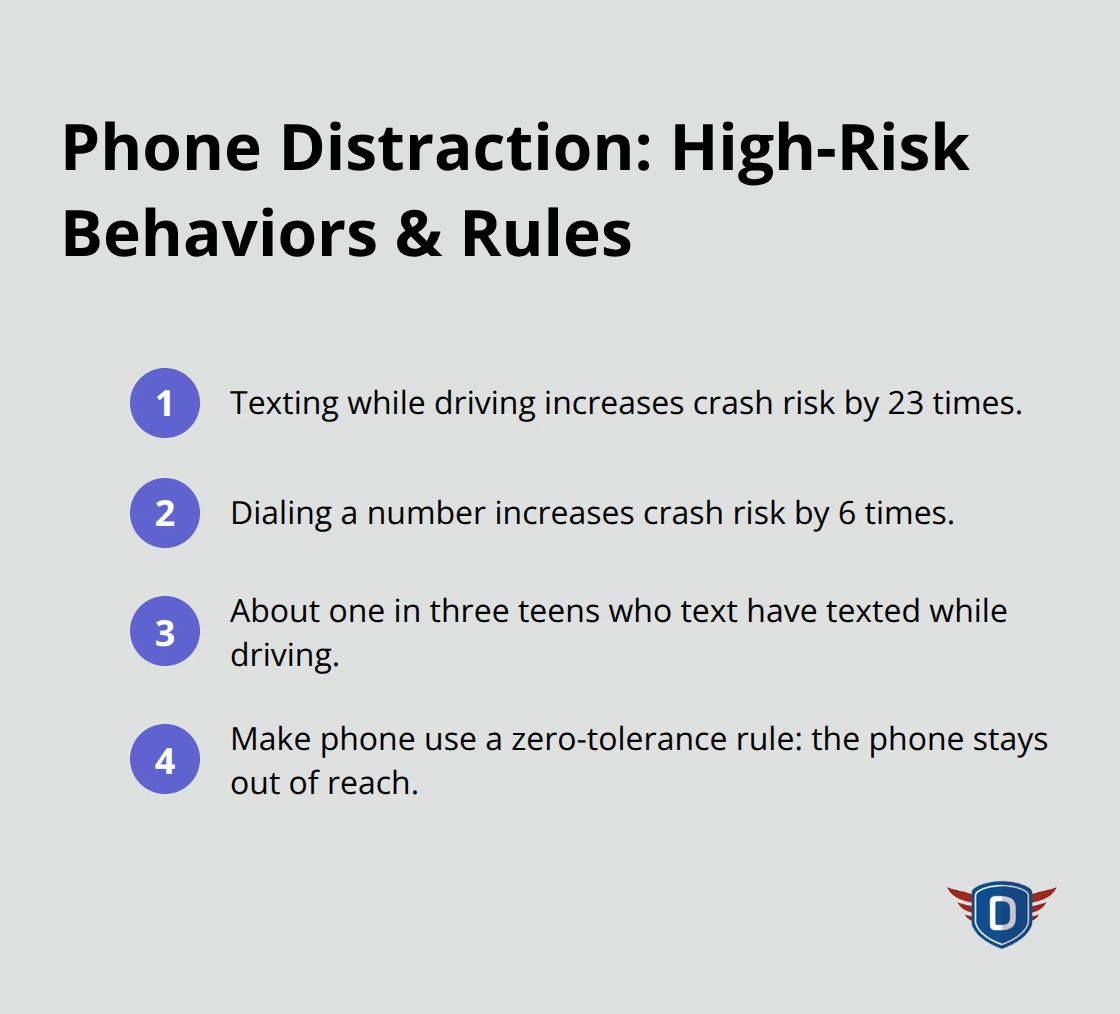
Your rule should be absolute: the phone stays in the glove box or the back seat, not in a cupholder within arm’s reach. Enable Do Not Disturb While Driving on their phone before they get behind the wheel.
Restrict Passengers During Early Months
Passenger presence amplifies distraction and risk. NHTSA research shows that with one teen passenger present, the risk of risky driving behaviors jumps 2.5 times, and with multiple teen passengers, it rises to 3 times. Teen passengers are a liability during the critical early months of driving. Restrict passengers entirely during the first six months, then allow only one non-sibling passenger after that. This boundary protects your teen when they lack the experience to manage both social dynamics and road hazards simultaneously.
Enforce Consequences Immediately
Consequences must be immediate and meaningful, not delayed lectures. If your teen violates the agreement (speeding, carrying passengers against the rule, or using their phone), they lose driving privileges for a specific period, not indefinitely. A two-week suspension for a first violation, escalating to a month for a second violation, gives them a concrete reason to follow the rules. Financial consequences work too: require them to pay for increased insurance premiums resulting from speeding tickets or accidents. Real costs create real motivation. Enforce the consequences the same day the violation happens-consistency matters more than severity.
With clear rules in place and consequences tied to real outcomes, you’ve created the structure your teen needs. The next step is to monitor how they actually drive and identify where they need more practice or guidance.
Monitor Driving Habits and Progress
Install an OBD-II Device to Track Real Driving Data
Telematics devices transform supervision from guesswork into evidence-based coaching. An OBD-II plug-and-play tracker reads data directly from your teen’s vehicle-speed, acceleration, hard braking, location, and engine status-delivering accuracy that smartphone-based apps cannot match. Smartphone GPS often produces false speeding alerts, showing 75 mph in a 30 mph zone due to signal lag; OBD-II devices eliminate this problem by pulling data from the car’s diagnostic port. Install the device under the dashboard near the steering column-no charging required, no subscription for basic models.
Configure Alerts and Geofences for Immediate Feedback
Configure speed thresholds matching your local limits and create geofences around high-risk zones like school areas, highways, or your home. Real-time alerts notify you when your teen exceeds thresholds or enters restricted zones, giving you a window to intervene immediately rather than discovering problems after they escalate. Weekly driving reports show patterns: repeated speeding on certain routes, hard braking incidents, late-night driving frequency, or excessive acceleration.
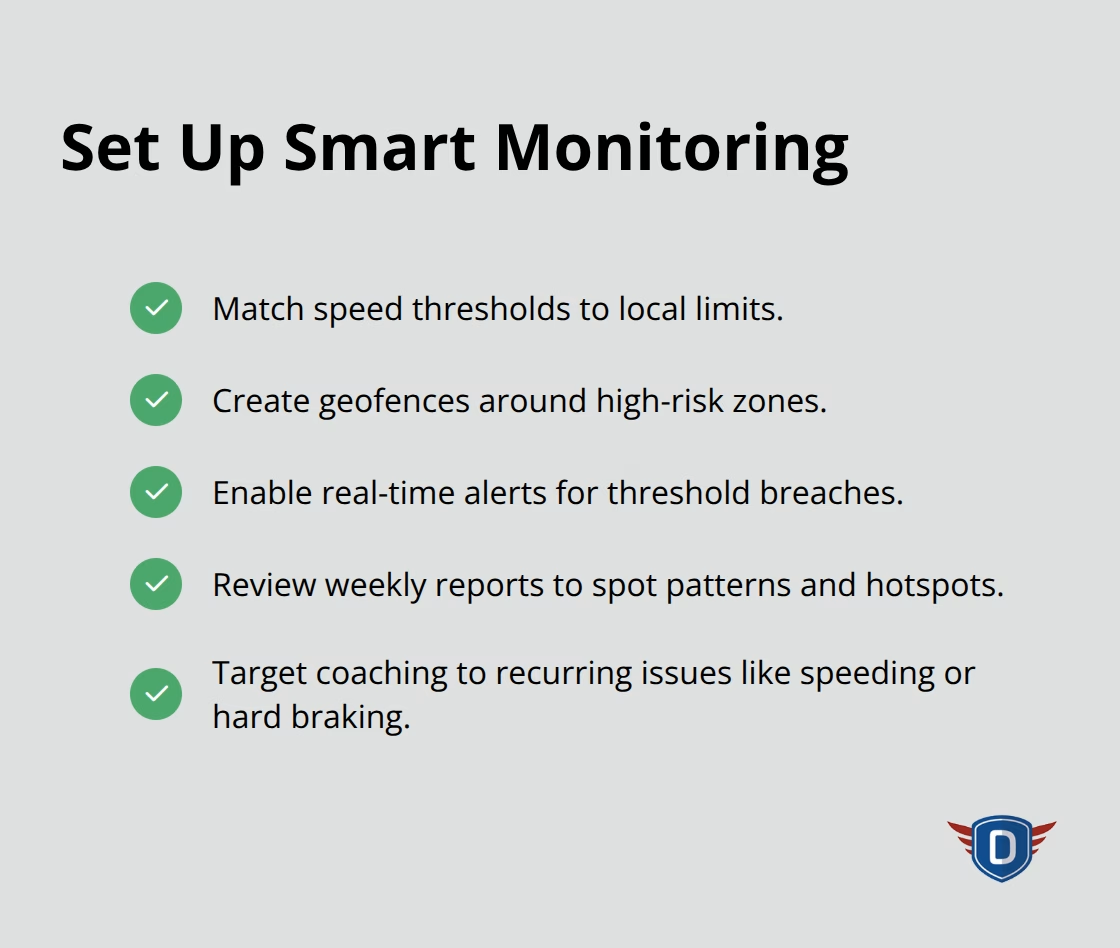
These patterns reveal where your teen needs more practice or stricter boundaries.
Use Data to Guide Coaching Conversations
If the data shows consistent speeding on a particular road, that becomes a coaching conversation: Why is this route tempting to speed on? What would make you slow down? This shifts monitoring from surveillance into collaborative problem-solving. The conversation focuses on understanding their choices, not punishing them for mistakes. Data transforms abstract rules into concrete examples your teen can learn from.
Schedule Supervised Practice Based on Driving Reports
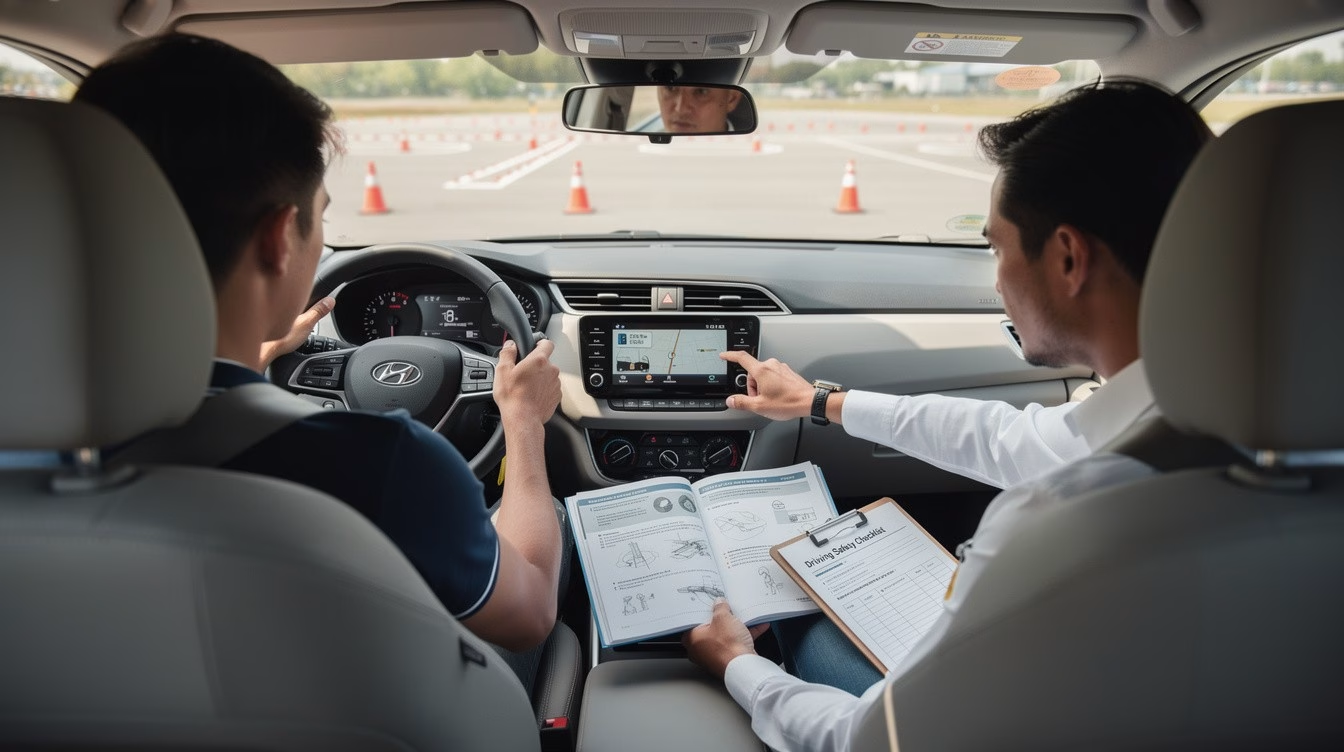
Schedule supervised practice around the data you’re seeing, not on a random calendar. If reports show your teen struggles with smooth braking, dedicate sessions to low-speed stopping scenarios in parking lots. If late-night driving appears risky in the reports, enforce an earlier curfew or eliminate unnecessary nighttime trips entirely. The IIHS Driving Skills Checklist provides a structured framework for tracking skill development during supervised drives-hazard perception, smooth steering, proper braking distance, and passenger management. Conduct one supervised practice session per week minimum during the first six months, then taper to monthly check-ins.
Review Data Together and Reward Progress
During supervised sessions, review the previous week’s telematics data together: show your teen the speeding incident on Oak Street, the hard brake near the grocery store, the time they drove home at 11:47 p.m. Ask them to explain what happened and what they’d do differently. After each supervised drive, document what skills improved and what needs work. If your teen demonstrates consistent smooth braking, safe speed control, and hazard awareness across multiple supervised sessions, gradually reduce your in-car presence-start with you in the passenger seat, then progress to you following in another vehicle, then independent driving. Graduated independence rewards progress and keeps practice relevant to their actual skill level. Tie feedback to specific data points from the telematics reports or your observations during supervised drives, not generic praise.
With real driving data in hand and supervised practice sessions tied to actual performance, you now have the foundation to address the conversations that matter most-the ones about hazards, decision-making, and the real-world scenarios your teen will face on the road.
Turn Driving Conversations Into Problem-Solving Sessions
Ask Questions Before Accusations
The telematics data you’ve gathered sits dormant unless you talk about it with your teen. Most parents approach these conversations wrong-they lead with the violation, which puts teens on the defensive immediately. Instead, start by asking what happened.
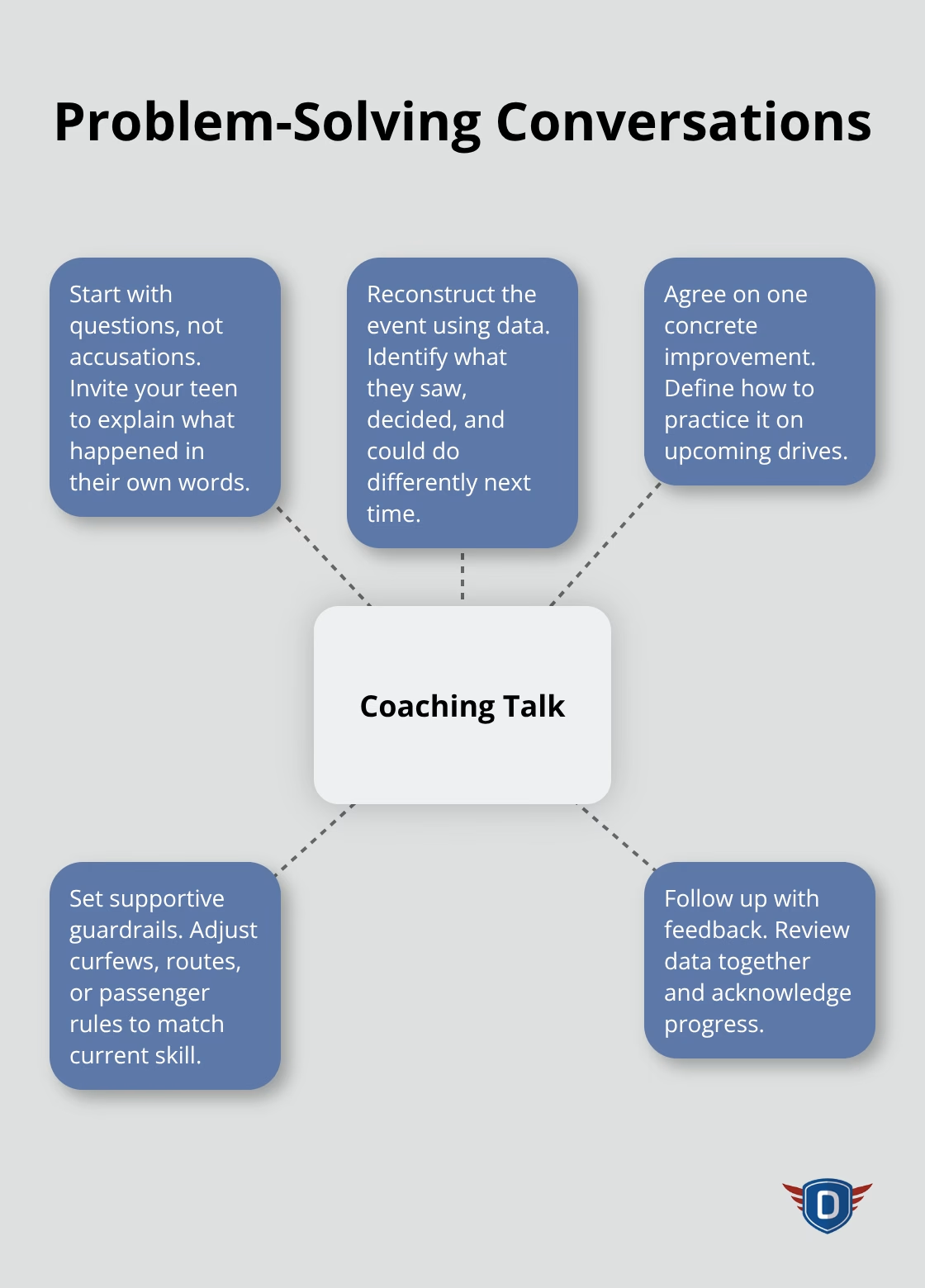
If the data shows a hard braking incident at 2 p.m. on Tuesday near the mall, ask your teen to walk you through that moment: What did you see? Why did you brake hard? What would you do differently?
This approach shifts the conversation from accusation to analysis. Your teen becomes the expert explaining their own driving, not a defendant justifying their mistakes. According to research from the Insurance Institute for Highway Safety, teens who engage in problem-solving conversations about their driving mistakes retain safety lessons far better than teens who receive lectures.
Anchor Safety to Real Hazards
Start these conversations early, before violations happen. Discuss specific hazards on routes your teen drives regularly: the intersection where drivers run red lights, the highway merge where speed mismatches cause accidents, the parking lot where pedestrians ignore crosswalks. Ask your teen how they would handle each scenario. What speed would they use? How far back would they stay? When would they assume another driver might do something unpredictable?
The NHTSA emphasizes that discussions about real-world hazards anchor safety knowledge to actual scenarios your teen will face. Concrete examples beat abstract warnings every time.
Model Safe Driving Consistently
Your own driving behavior during these conversations matters more than your words. If you check your phone at a red light while lecturing your teen about distraction, the message collapses. If you exceed the speed limit while discussing safe speeds, your teen learns that rules are flexible. Model the exact behaviors you expect: hands on the wheel, eyes on the road, full attention to driving.
Your teen is watching how you handle frustration on the road, how you respond to aggressive drivers, and how you manage fatigue on long drives. That observation shapes their own habits more powerfully than any rule you write down.
Final Thoughts
Effective teen driver supervision tips rest on three pillars: clear rules that eliminate ambiguity, real driving data that replaces guesswork, and honest conversations that transform mistakes into learning moments. You established a parent-teen driving agreement with specific boundaries around phone use, passengers, and night driving. You installed telematics devices to monitor actual driving behavior and scheduled supervised practice sessions tied to real performance data. You shifted from accusation-based conversations to problem-solving discussions anchored in concrete hazards your teen will face.
This approach works because it treats supervision as coaching, not punishment. Your teen learns that rules exist to protect them, not to control them. The data you review together becomes evidence for why certain behaviors matter, not ammunition for arguments. Over time, your teen internalizes safe driving habits because they understand the reasoning behind them, not because they fear consequences.
Ongoing communication ties everything together. Check in weekly about driving experiences, celebrate improvements shown in telematics reports, and adjust rules as your teen demonstrates readiness for greater independence. We at DriverEducators.com support this journey by providing comprehensive driver education that reinforces the safety habits you build at home.