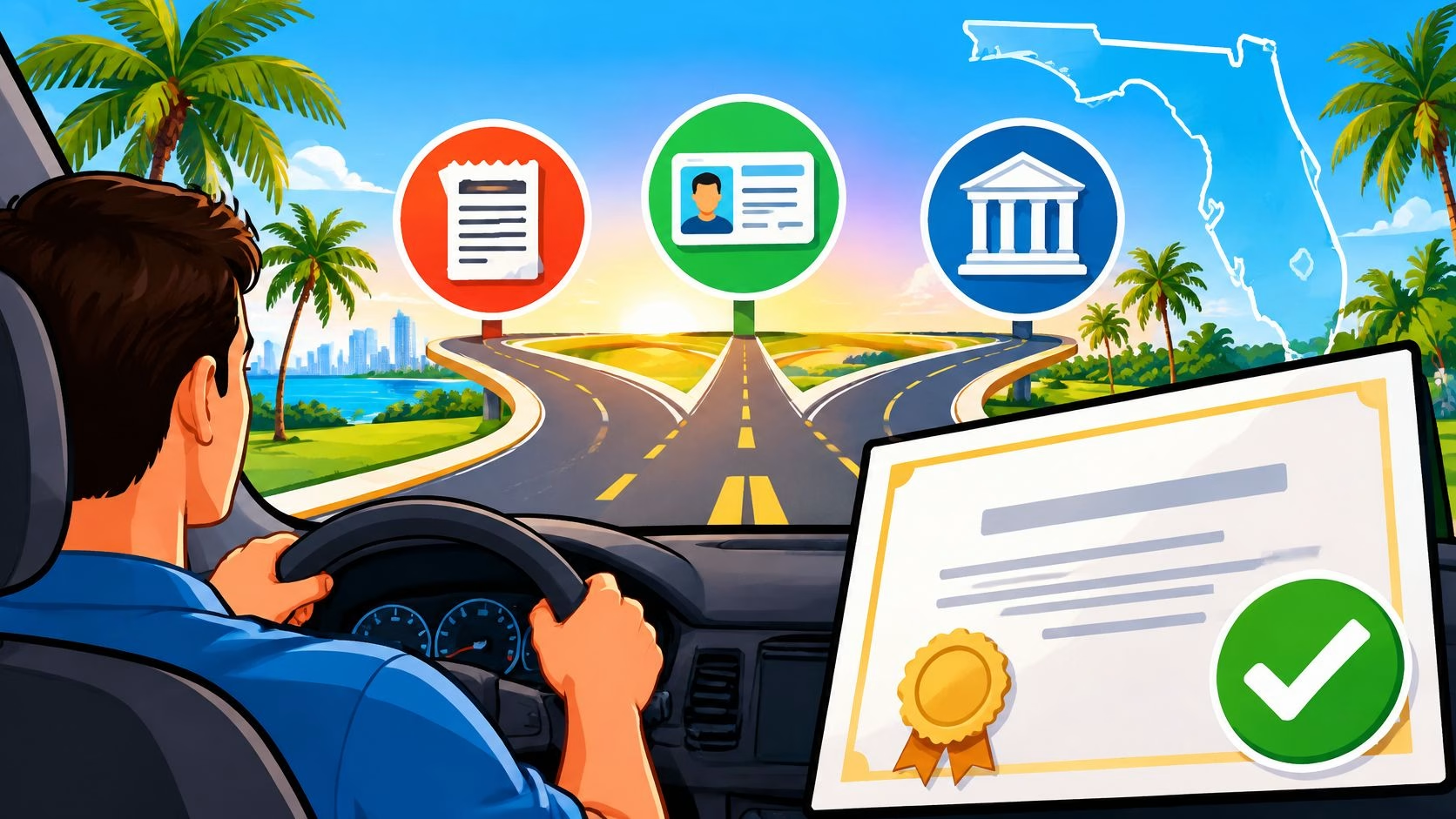

A traffic ticket, first-license requirement, court notice, or insurance discount request can create the same urgent question: which course will actually count? This state approved course guide explains how to confirm the requirement before you enroll, so your time and payment support the result you need.
The right course is not simply the shortest or lowest-priced option. It must match the rules of the state, court, DMV, insurance carrier, or licensing program that requested it. Approval can also depend on the course type, your county, the reason for enrollment, and the date you complete the program.
Start With the Requirement You Need to Satisfy
Read the paperwork or official notice closely before choosing a course. Look for the required course name, number of hours, completion deadline, and where the completion record must be sent. A citation may specify basic driver improvement, while a first-time license applicant may need a pre-licensing traffic law and substance abuse course.
If the notice uses unfamiliar language, focus on the purpose behind it. Driver improvement courses are commonly used for traffic citations, point reduction, court orders, or reinstatement-related requirements. Driver education courses may be required before a permit or license application. Mature driver programs are often tied to a possible auto insurance discount, subject to the insurer’s rules.
Do not assume one approved course can substitute for another. A four-hour basic driver improvement course and a traffic law and substance abuse education course cover different requirements, even when both are completed online.
Common reasons drivers need an approved course
Drivers usually enroll because they need to address a citation, meet a court order, qualify for a learner’s permit or first license, satisfy a DMV requirement, improve a driving record, or ask an insurer about a discount. Specialized programs may also apply to aggressive driving, intermediate driver improvement, or wireless device violations.
Your reason for taking the course determines what approval matters. For example, an insurance discount course may be approved for insurer recognition but may not satisfy a court-ordered driver improvement requirement.
What “State Approved” Actually Means
A state-approved course is authorized or accepted by the relevant government agency for a specific educational purpose. It does not mean every course from the same provider is approved in every state or accepted for every reason.
Approval is often program-specific. One provider may offer an approved course in several states, but course length, content, final exam rules, identity verification, completion reporting, and eligibility requirements can differ by location.
This is why approval should be verified at the course level. Check the state listed for the program, the course’s intended use, and any stated agency or court acceptance details. If your paperwork names a court, clerk, probation office, or insurer, confirm that organization’s requirements too.
Approval and acceptance are related but different
Approval refers to the course provider’s authorization by an agency or program. Acceptance refers to whether the organization handling your case will apply that course to your specific record.
A court may accept only certain providers, require advance permission, or set a deadline that an approved course alone cannot overcome. When the consequence is dismissal, point reduction, or license eligibility, verify first rather than relying on general assumptions.
How to Choose the Right Online Course
Once you know the course type, compare options based on compliance and usability. Convenience matters, but it should come after confirming the program is designed for your requirement.
Start by matching the course to your state. Then review whether the program is approved for your purpose, how long it takes, what devices it supports, and whether the price is clearly stated before checkout. A transparent provider explains the course requirement without adding surprise charges at the end.
For most busy drivers, self-paced online access is a practical advantage. You can work from a computer, tablet, or mobile device and complete lessons around work, family, or school commitments. Still, self-paced does not mean deadline-free. Build in time for the final assessment, identity checks, certificate processing, and any reporting delay.
Look for clear answers to these questions before enrolling:
- Is this exact course approved or accepted for my state and reason for enrollment?
- Does it meet the required number of hours?
- Will completion be reported electronically, or do I need to submit a certificate?
- What is the completion deadline, and how quickly can I access my certificate?
- Are there eligibility limits based on prior tickets, course history, age, or license status?
If an answer is not clear, contact the agency that issued the requirement or the course provider’s support team before starting. A short confirmation can prevent enrolling in the wrong program.
Check Timing Before It Becomes a Problem
Deadlines are one of the most common sources of trouble. A course can be approved, correctly completed, and still fail to help if it is finished after the court date, payment date, eligibility window, or DMV deadline.
Complete the course early whenever possible. This gives you room to correct a name mismatch, download a certificate, respond to a verification request, or confirm that a completion record was received. If electronic reporting is available, ask how long it typically takes for the agency’s system to update.
Be especially careful with court requirements. Some courts require you to request permission before enrollment, plead or pay by a specific date, or submit proof directly to the clerk. Completing a course without following the court’s full process may not result in dismissal or other expected relief.
Protect Your Completion Record
Use the legal name and identifying details requested by the program. Small errors in your driver’s license number, date of birth, citation number, or email address can delay reporting or make it harder to match the completion to your record.
Save your confirmation email, payment receipt, and completion certificate. Even when a provider reports completion electronically, keeping your own copy is a sensible backup. If you are taking the course for insurance, send the certificate only in the format your insurer requests and ask whether the discount is available for your policy.
DriverEducators.com offers online courses designed around approved driver education and improvement requirements, with flexible access and straightforward enrollment. The best fit still depends on your state, course purpose, and the instructions you received.
When an Online Course May Not Be the Right Fit
Online learning is convenient for many drivers, but rules sometimes require a live class, a specific local provider, an in-person assessment, or a program assigned directly by a court or agency. Certain cases may also involve additional steps, such as a hearing, reinstatement fee, treatment evaluation, or proof of insurance.
If your notice is unclear or your situation involves a suspended license, repeat offenses, or a serious violation, contact the issuing authority. The goal is not just to complete coursework. It is to complete the exact requirement that applies to you.
Frequently Asked Questions
How do I know if a driver course is state approved?
Confirm the course is approved for your state and intended purpose. Review the provider’s approval information, then verify any court, DMV, or insurer-specific rules that apply to your case.
Can I take a state-approved course online?
Yes, many approved driver education and driver improvement courses are available online. Availability depends on the state, course type, and the authority requiring the course.
Will an approved course dismiss my ticket?
Not automatically. Ticket dismissal depends on court eligibility, deadlines, payment requirements, and the court’s acceptance of your completed course.
How long does reporting take after I finish?
It varies by course and agency. Electronic reporting may be faster, but you should allow time before your deadline and keep your completion certificate.
Can I use a mature driver course to reduce insurance costs?
Possibly. A mature driver course may qualify you for a discount, but the insurer decides eligibility, discount amount, and how long the discount remains available.
Choose the course only after the requirement is clear, then give yourself enough time to finish and document completion. That practical approach turns an administrative obligation into one less thing to worry about.