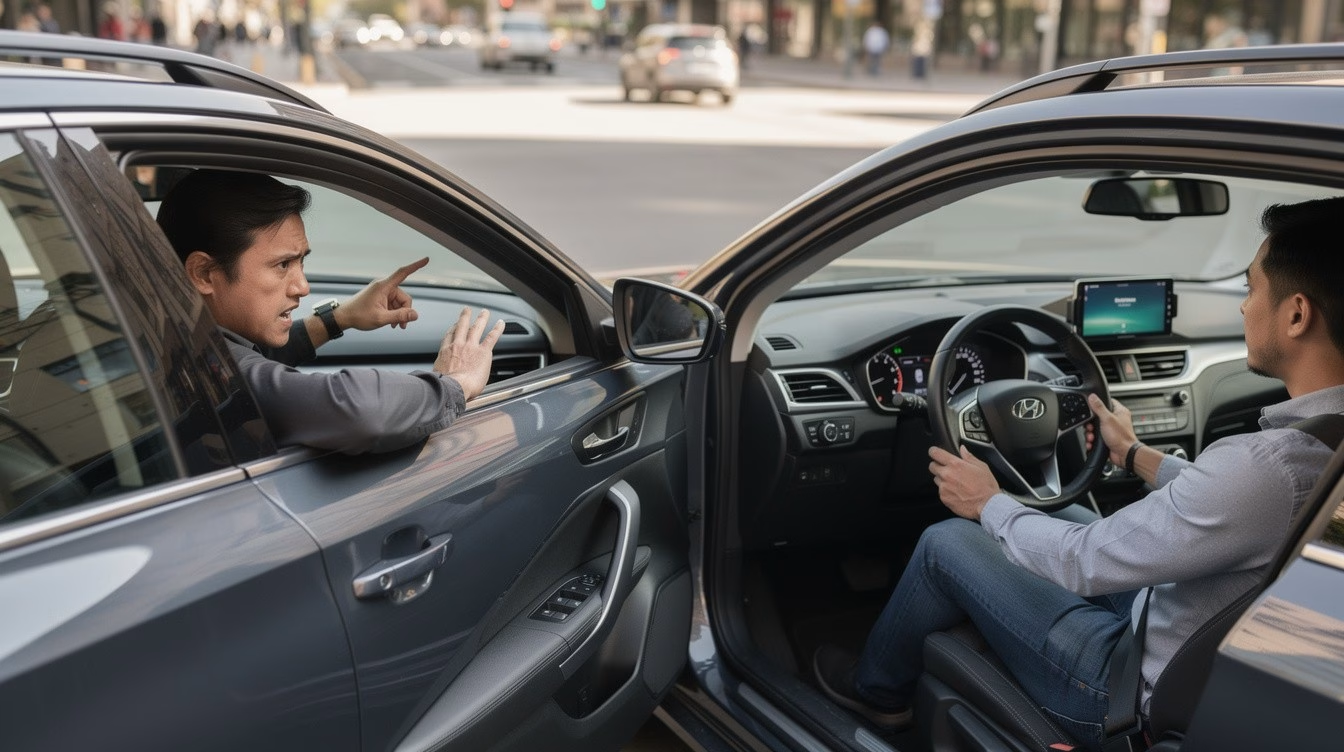
Road rage incidents are increasing on highways and city streets alike. An aggressive driver confrontation can escalate in seconds, turning a minor traffic annoyance into a dangerous situation.
We at DriverEducators.com know that the right skills and mindset can prevent these confrontations before they spiral out of control. This guide shows you exactly how to recognize warning signs and defuse tension on the road.
Spotting Aggressive Behavior on the Road
Aggressive drivers telegraph their intentions through specific, recognizable actions. Excessive honking accompanied by high-beam flashing signals frustration that escalates toward confrontation. These drivers aren’t simply annoyed-they’re attempting to intimidate and force a reaction. Aggressive gestures like middle fingers or verbal insults shouted through windows represent a deliberate escalation beyond normal traffic frustration. Tailgating, brake checking, and cutting off other vehicles constitute dangerous driving behaviors that put lives at risk. According to the National Highway Traffic Safety Administration, aggressive driving contributes to fatal crashes. The key distinction is that these behaviors stem from intentional hostility rather than accidental mistakes or poor driving skills.
How Aggressive Drivers Differ from Careless Ones
Careless drivers make mistakes. Aggressive drivers make threats. A driver who drifts into your lane without signaling is inattentive. A driver who speeds up when you attempt to pass them deliberately blocks you. A driver who honks once when the light turns green is impatient. A driver who lays on the horn while flashing lights repeatedly attempts psychological intimidation. Understanding this difference matters because your response strategy changes entirely. With careless drivers, a simple tap of your horn or a wave works fine. With aggressive drivers, any response feeds their hostility and accelerates the confrontation.
Recognizing the Escalation Pattern
Road rage rarely explodes without warning. It follows a predictable progression that you can intercept. First comes the trigger event-someone cuts off another driver, or a driver feels disrespected by a perceived slight. Then comes the aggressive signal (honking, flashing, or a rude gesture).
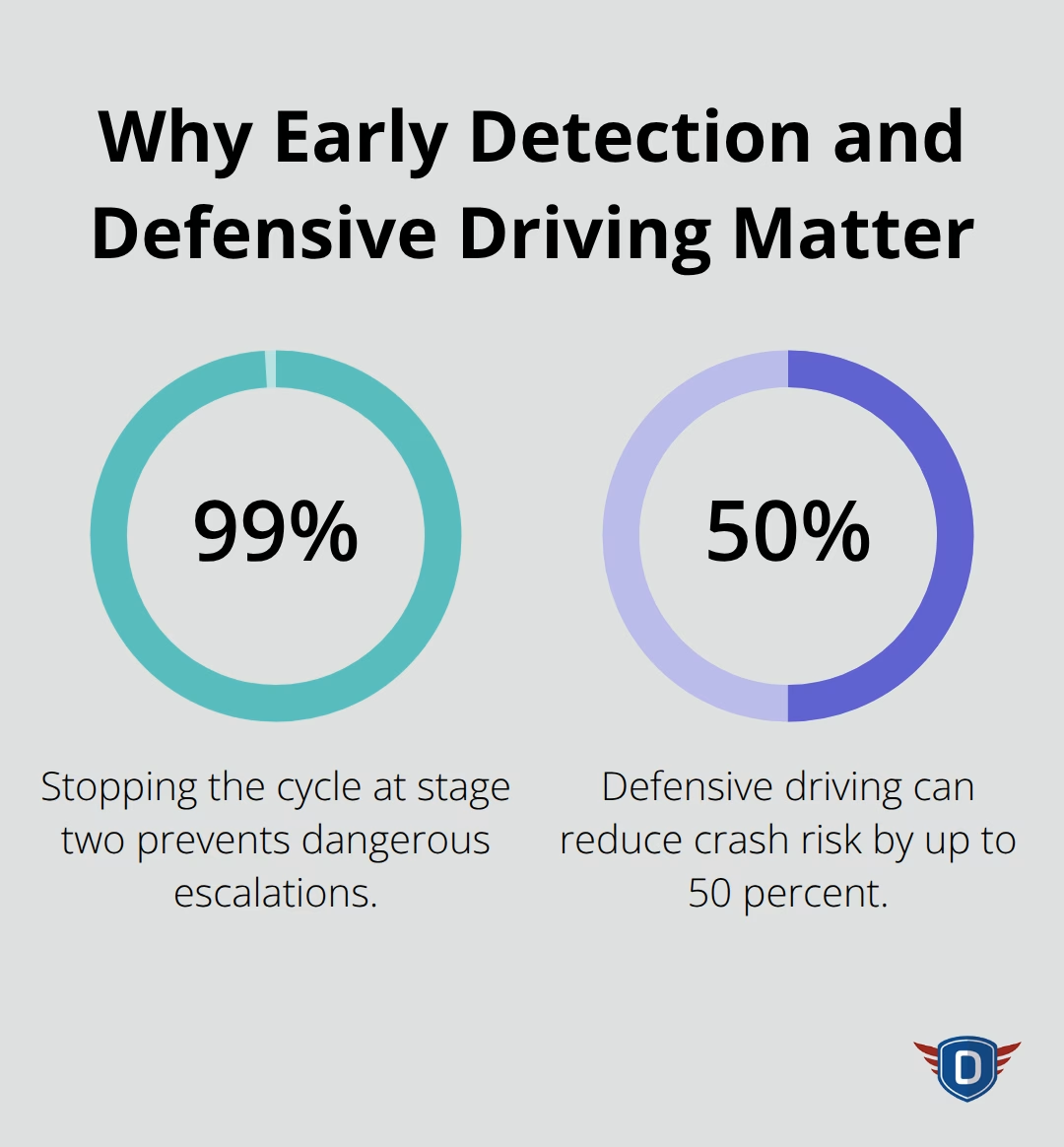
If you respond or the other driver interprets your actions as a challenge, the situation intensifies. Tailgating begins, brake checking follows, and the aggressor may attempt to force you off the road. Research from the AAA Foundation found that aggressive drivers engage in dangerous behaviors on U.S. roads. Stopping the cycle at stage two-recognizing the aggressive signal without responding-prevents 99% of dangerous escalations.
Why Early Detection Saves Lives
Spotting these warning signs early gives you the power to prevent escalation. The moment you notice excessive honking or high-beam flashing, you know a confrontation is forming. You can then apply de-escalation techniques before the situation spirals. Drivers who wait until tailgating or brake checking occurs have already lost critical reaction time. The first aggressive signal is your window to act. Most road rage incidents that turn fatal or result in serious injury involve drivers who failed to recognize or respond appropriately to early warning signs. Your ability to identify these patterns directly determines whether a tense moment remains just that-a moment.
Understanding these warning signs prepares you for what comes next. De-escalation techniques work only when you recognize the threat early enough to apply them.
How to Defuse Tension Before It Spirals
Your physical and mental response in the first ten seconds determines whether a confrontation escalates or dissolves. The moment you notice aggressive honking or high-beam flashing, your instinct might be to respond defensively, but that reaction guarantees escalation. Instead, treat the aggressive driver as someone experiencing a temporary loss of control rather than a rational person you can reason with. Your goal is invisibility and non-engagement.
Keep Your Eyes Forward and Avoid Acknowledgment
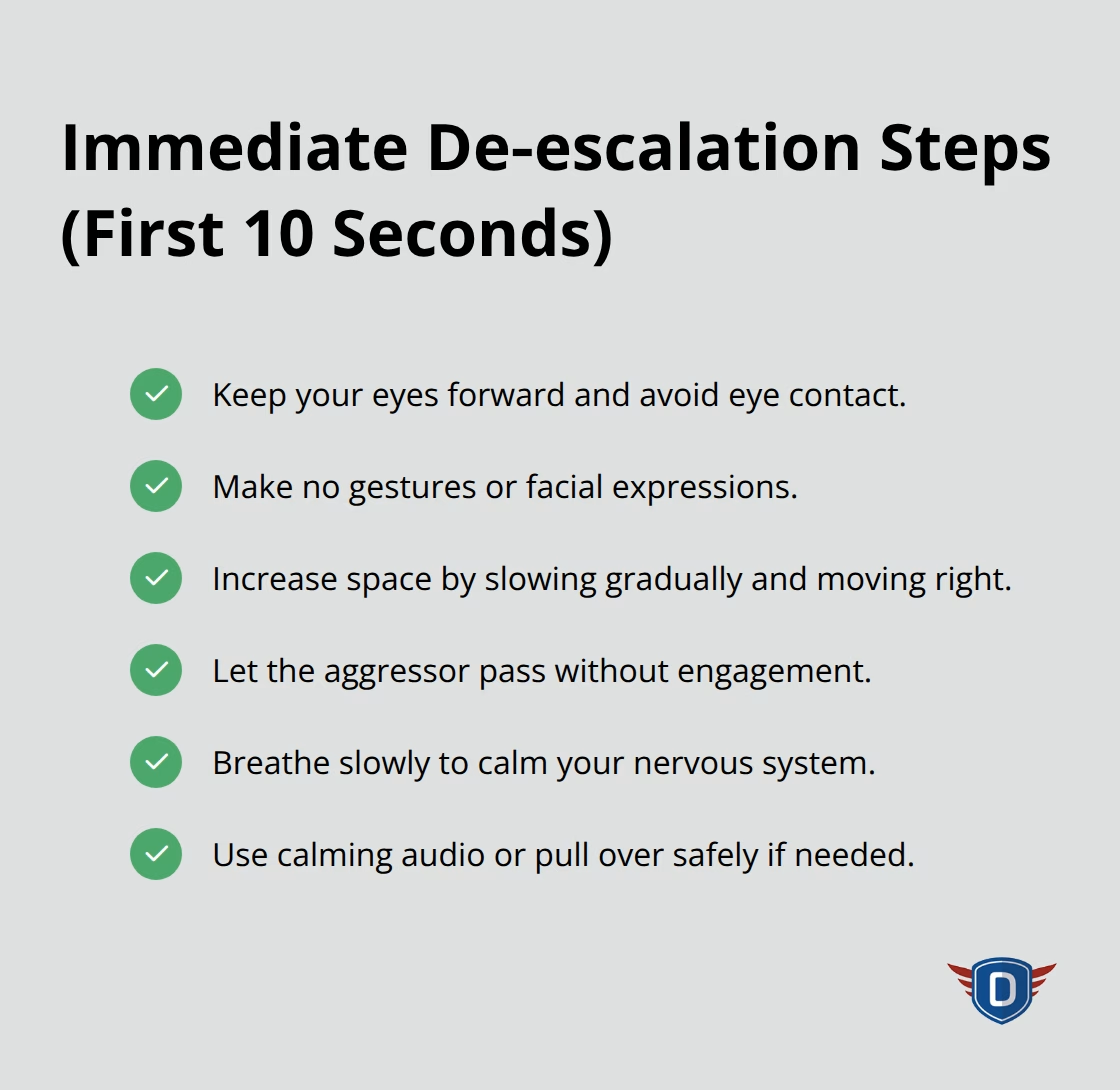
Keep your eyes forward on the road, not on the mirror or the other vehicle. Avoid any eye contact, hand gestures, or facial expressions that the other driver might interpret as acknowledgment or defiance. When aggressive drivers receive no reaction, they lose their primary motivation for continued escalation. Research from the National Safety Council shows that drivers who maintain emotional control reduce confrontation outcomes significantly. This isn’t about being passive or weak-it’s about being strategically smart.
Create Distance Between You and the Aggressor
The most effective de-escalation technique is distance. The moment you recognize an aggressive driver behind or around you, increase the space between your vehicle and theirs. If they tailgate, slow down gradually and move to the right lane, allowing them to pass. Many drivers make the mistake of speeding up or matching the aggressive driver’s intensity, which only intensifies the confrontation.
Let them go. Your destination isn’t worth your safety.
If the aggressive driver is ahead of you, slow down and create a buffer zone. If they attempt to cut you off or brake-check you, don’t honk or flash your lights in response-simply brake smoothly and maintain distance. Never attempt to block an aggressive driver or prevent them from passing. Your responsibility is solely to yourself and your passengers. The physical space you create buys you reaction time if the situation deteriorates further and gives the aggressive driver an exit from the confrontation.
Regulate Your Nervous System
Anger clouds judgment. When another driver acts aggressively, your body releases adrenaline and cortisol, triggering your fight response. You must consciously override this biological reaction. Take deep breaths through your nose and out through your mouth-this activates your parasympathetic nervous system and reduces the stress response. Keep your hands relaxed on the steering wheel rather than gripping it tightly, which signals tension to yourself and others.
If you feel your anger rising, turn on music or a podcast that calms you, or pull over safely to regain composure. Remind yourself that aggressive drivers often face personal crises, traffic stress, or untreated anger issues (none of which you caused and none of which you can fix). This perspective shift prevents you from taking their behavior personally. The goal is to arrive at your destination safely, not to teach someone a lesson or win a confrontation that will never truly resolve.
These de-escalation techniques work in the moment, but they address only immediate threats. Building lasting protection requires you to develop habits that prevent road rage situations from forming in the first place.
How Safe Drivers Actually Prevent Road Rage
Defensive driving eliminates the scenarios where road rage takes hold. The best confrontation never starts in the first place. This means positioning your vehicle strategically, maintaining predictable speeds, and signaling your intentions clearly so other drivers know what you’re doing. The National Safety Council reports that defensive drivers reduce crash risk by up to 50 percent, and that same principle applies to avoiding aggressive encounters. When you drive predictably, you remove the uncertainty that triggers aggressive responses.
Drive Predictably to Eliminate Threats
Tailgating someone makes them feel threatened. Cutting someone off without signaling makes them interpret your action as disrespect. Drive smoothly with clear signals and appropriate spacing, and most drivers won’t perceive a threat worth responding to. Your vehicle’s movements communicate your intentions to everyone around you.
Abrupt lane changes, sudden acceleration, and unpredictable braking signal aggression or carelessness to other drivers. They respond by mirroring that energy back at you. Smooth, deliberate movements tell other drivers you’re in control and aware of your surroundings.
Manage Your Stress Before and During Your Commute
Your emotional state directly influences how you drive and how others react to you. If you’re stressed about being late, frustrated with traffic, or angry about something unrelated to driving, you’ll unconsciously project that tension through aggressive acceleration, abrupt lane changes, or impatient horn use. Research shows that stress management reduces confrontational incidents on the road.
Start your drive with realistic time expectations. Leave fifteen minutes earlier than you think necessary so you’re never rushing. This single change eliminates one of the primary triggers for aggressive driving behavior. If you feel frustration building during your drive, pull over for five minutes rather than letting that emotion escalate your actions on the road.
Plan Routes Around Your Personal Triggers
Knowing your personal triggers and planning routes that minimize them creates a buffer against road rage situations. If you know that rush hour traffic on the interstate makes you angry, try the longer surface road during peak hours. If a particular intersection or highway stretch consistently frustrates you because of heavy congestion or aggressive drivers, find an alternative route.
This isn’t about avoiding the problem forever-it’s about controlling when and where you encounter high-stress driving situations so you’re mentally prepared. Route planning is a legitimate safety strategy, not a weakness. Drivers who know their triggers and consciously design their routes around them report significantly fewer confrontational incidents and lower stress levels during their commutes.
Final Thoughts
Road rage doesn’t have to control your driving experience. The techniques in this guide work because they address the root problem: aggressive driver confrontation escalates when drivers respond emotionally rather than strategically. Recognizing warning signs early, maintaining distance, and regulating your nervous system transform potentially dangerous situations into non-events.
Real safety comes from building habits that prevent confrontations from forming in the first place. Predictable driving, stress management, and route planning eliminate the scenarios where road rage takes hold. When you drive with intention and awareness, other drivers perceive you as controlled and non-threatening, which removes their motivation to escalate.
We at DriverEducators.com understand that safe driving requires more than following traffic laws-it requires understanding human behavior, managing your emotions, and developing strategies that work in real-world conditions. Our Aggressive Driver Course teaches exactly these skills to drivers who’ve experienced confrontations on the road, focusing on behavioral change and responsibility to help you break patterns that lead to dangerous encounters.