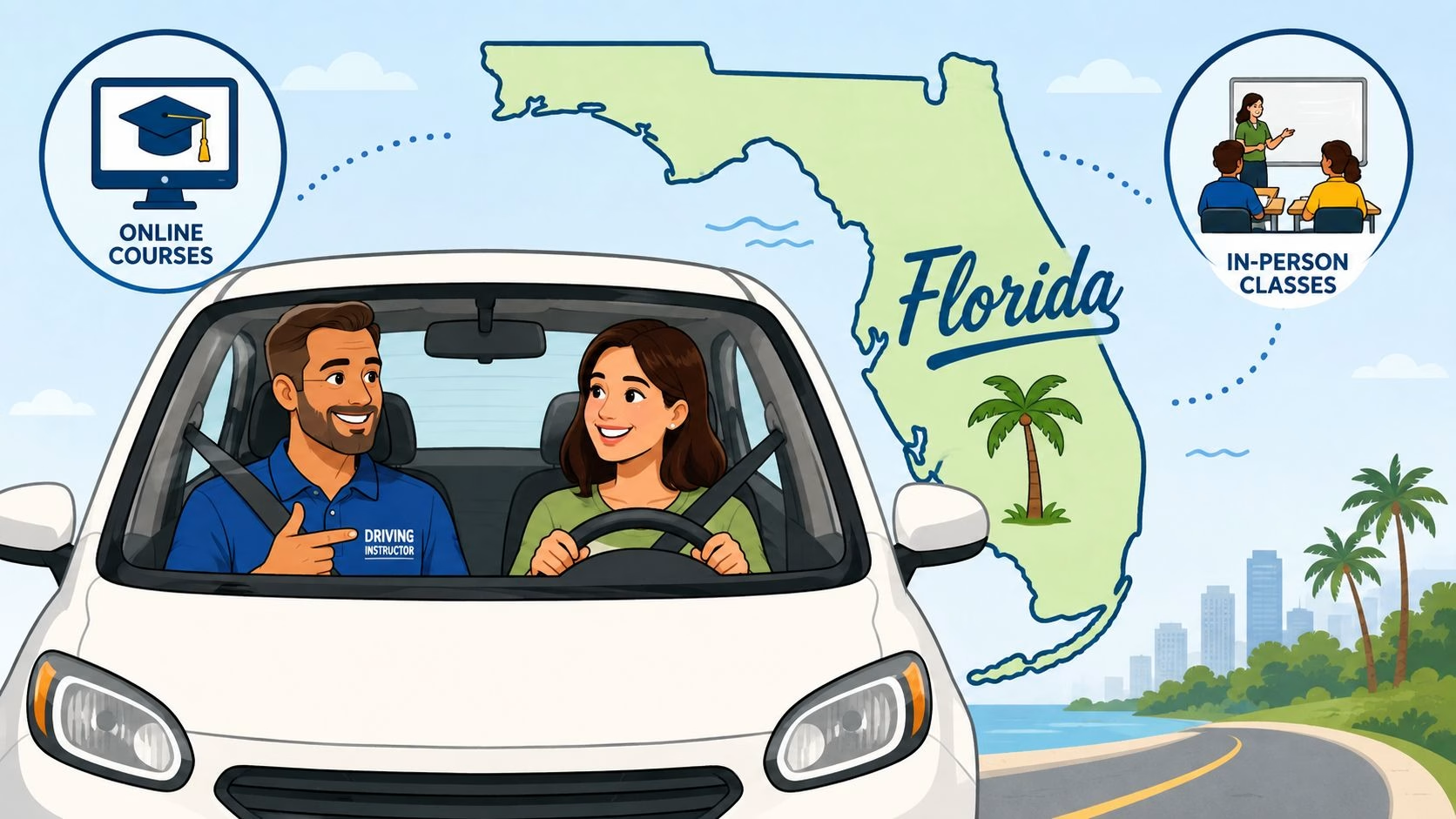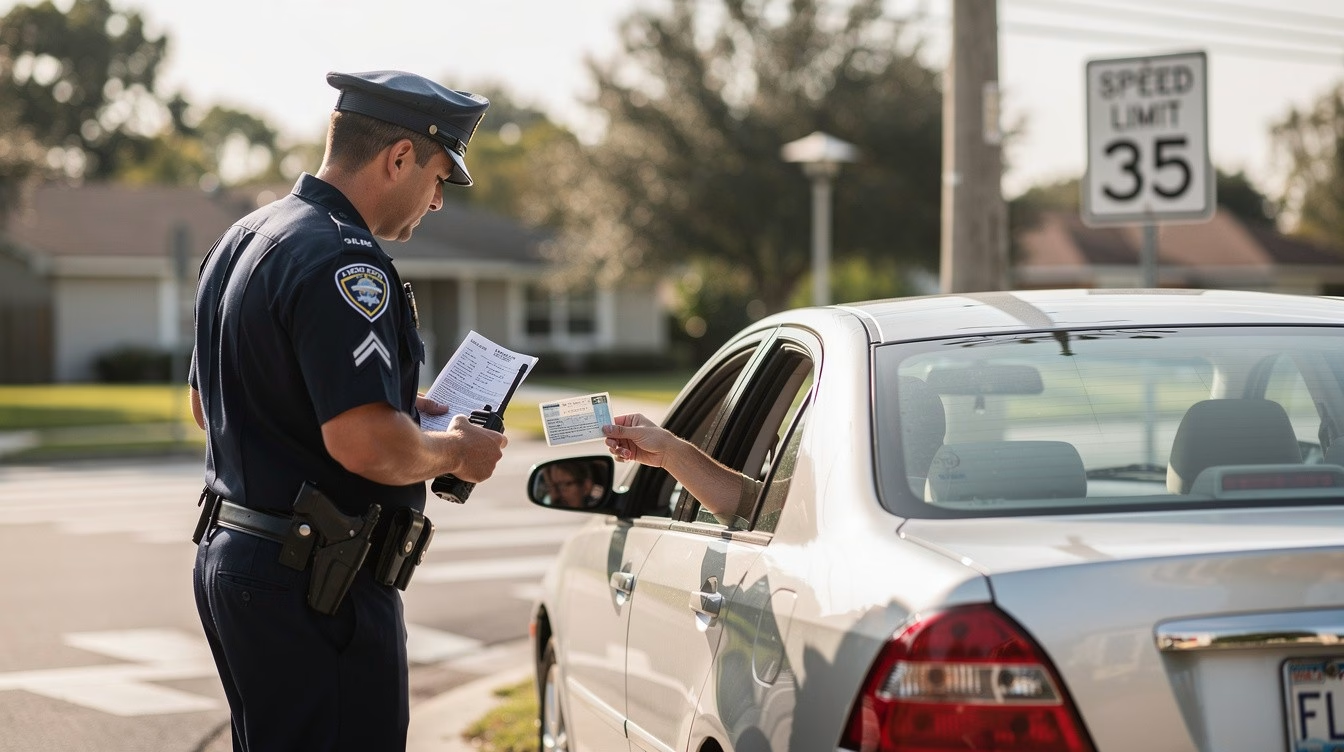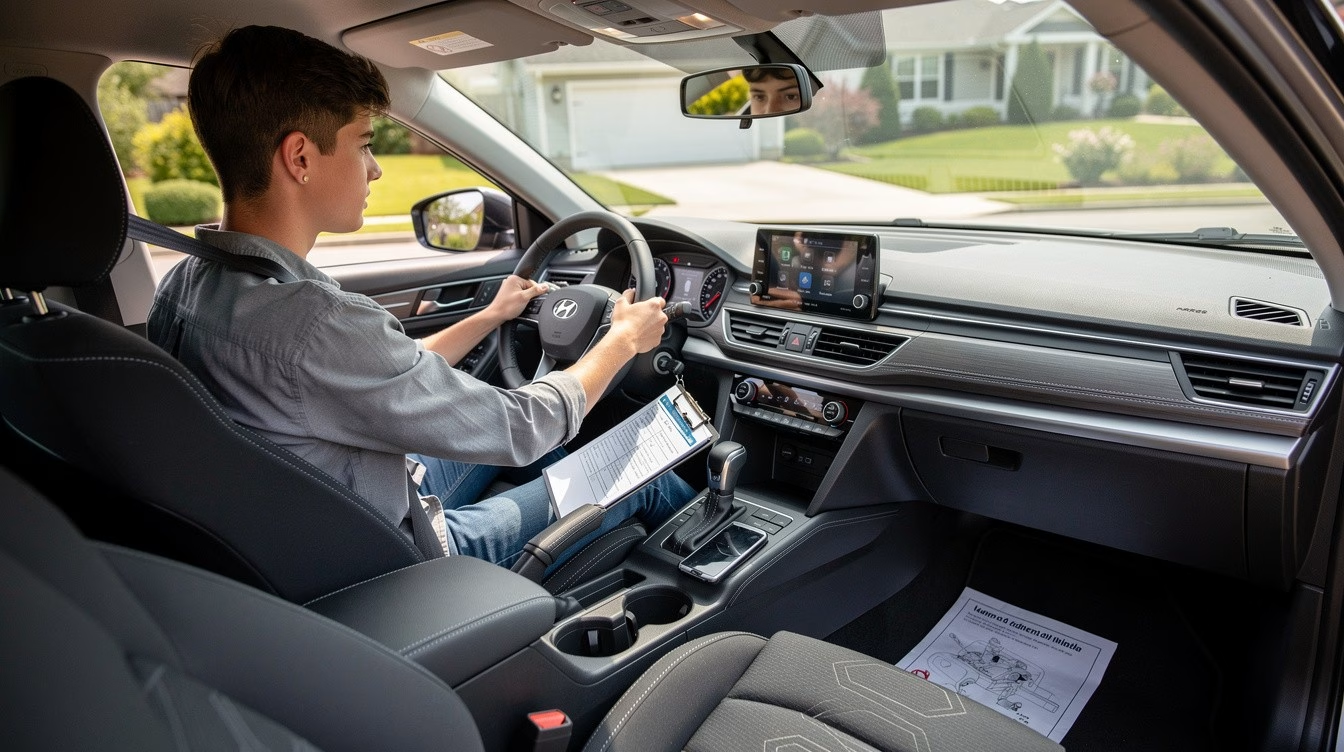

A first license course example can make the licensing process feel far less uncertain. Instead of wondering what happens after enrollment, new drivers and parents can see how online driver education typically moves from traffic-law basics to real-world decisions behind the wheel.
The exact requirement depends on your state, age, and permit status. Some states require a specific number of classroom or online instruction hours before a learner’s permit or first license, while others require a state-approved driver education course only for younger applicants. Always verify the requirement with your state licensing agency before you enroll.
What a First License Course Example Usually Includes
A first-time driver course is structured to prepare a student for more than a written test. It teaches the rules that govern driving, the risks that cause crashes, and the judgment needed to share the road responsibly.
Most online courses are self-paced. Students sign in when their schedule allows, complete one lesson at a time, and save their progress automatically. This format is useful for teens balancing school and activities, as well as adults pursuing a first license around work or family obligations.
1. Licensing rules and driver responsibilities
The course commonly begins with the licensing process. Students learn the difference between a learner’s permit, provisional or intermediate license, and full license, where those categories apply.
Lessons also explain identification requirements, supervision rules for permit holders, passenger restrictions, curfews, and the consequences of driving without a valid license or required insurance. These rules are state-specific, so a course should clearly identify the state it serves.
2. Traffic laws and roadway signs
This section covers the foundation of safe, legal driving: speed limits, right-of-way rules, lane markings, traffic signals, school zones, railroad crossings, and work zones. Students learn what signs require them to stop, yield, slow down, or change direction.
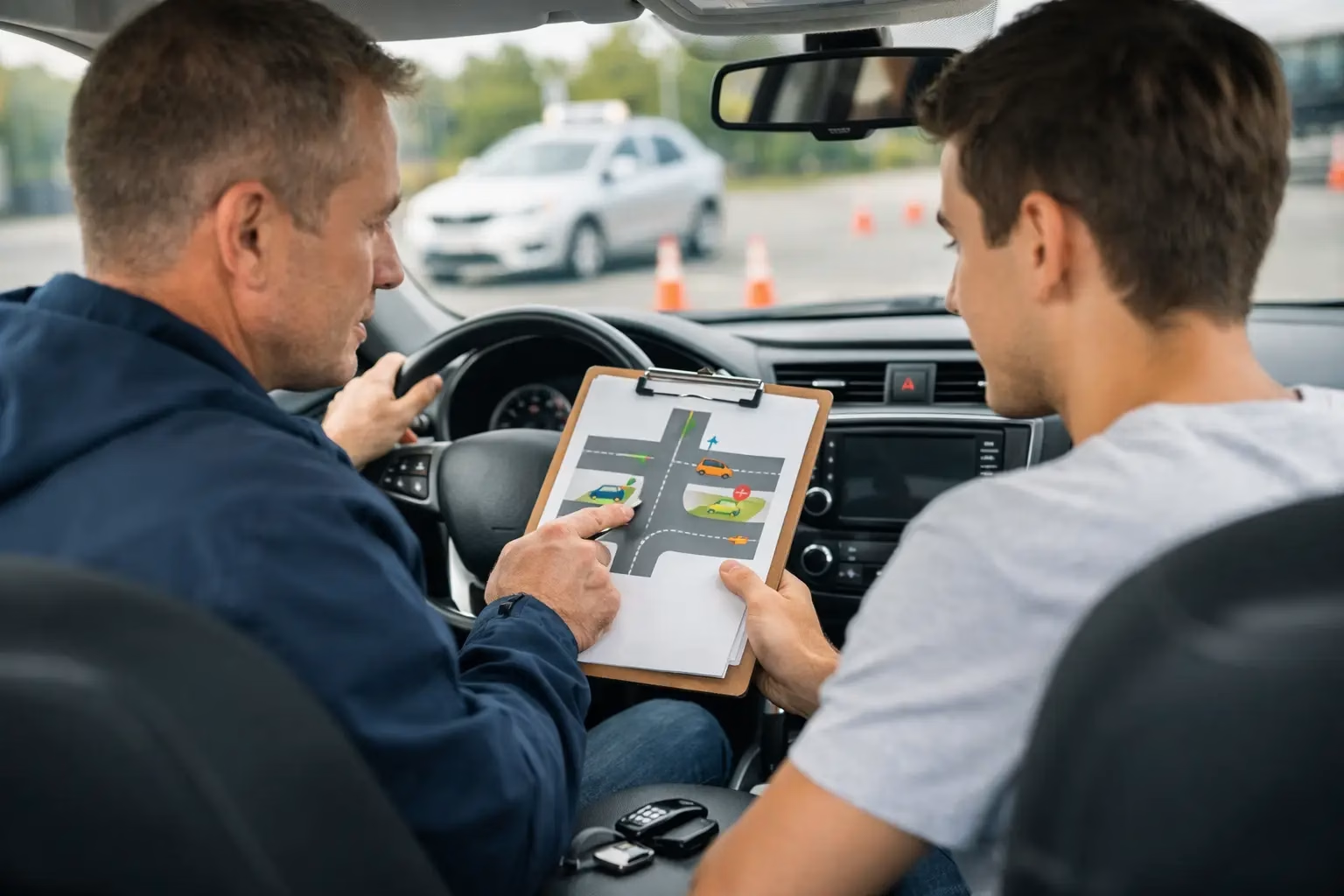
A useful course does more than ask students to memorize sign shapes. It places rules in driving situations. For example, a lesson may ask who has the right of way when two vehicles reach a four-way stop at the same time, or what a driver should do when a traffic light turns yellow.
3. Space management and defensive driving
New drivers need a repeatable way to identify hazards before they become emergencies. A course may teach scanning ahead, checking mirrors, maintaining a safe following distance, and leaving room around the vehicle.
Students also learn that having the right of way does not remove the need to avoid a crash. A green light, for instance, allows a driver to proceed only after checking that the intersection is clear.
4. Impaired, distracted, and aggressive driving
First-license education addresses high-risk choices directly. Alcohol, drugs, fatigue, speeding, tailgating, road rage, and phone use can all affect reaction time, attention, and decision-making.
Expect practical examples rather than abstract warnings. A lesson might describe a driver reading a message at a stoplight, then continuing to look down as traffic starts moving. The key point is simple: even a brief distraction can eliminate the time needed to recognize braking traffic, a pedestrian, or a changing signal.
5. Vehicle control and difficult conditions
A course usually introduces basic vehicle operation, including turning, braking, backing, parking, seat belt use, and proper mirror adjustment. It may also address sharing the road with motorcycles, large trucks, bicyclists, pedestrians, school buses, and emergency vehicles.
Weather and road conditions matter, too. Wet pavement, fog, darkness, glare, and heavy traffic require drivers to slow down, increase following distance, and adjust their expectations. The posted speed limit is not always a safe speed for the conditions.
A Sample First License Course Path
A typical first license course example may begin with a brief registration process. The student selects the appropriate state course, creates an account, and confirms basic eligibility information. Before starting, they should review the course description for required hours, identity-verification steps, final-exam rules, and how completion is reported.
The first module might cover the purpose of driver licensing and the responsibilities that come with operating a vehicle. Short knowledge checks follow lessons to confirm understanding before the student progresses.
The next modules often focus on signs, signals, right of way, speed management, and roadway positioning. These lessons may use illustrations and scenario questions to help students apply rules instead of simply recalling them.
Later modules typically concentrate on crash prevention. A student may work through situations involving a vehicle entering from a driveway, a cyclist near a parked car, a school bus with flashing lights, or a driver following too closely in rain. The safest response is explained along with the legal rule.
Near the end, the course reviews risky driving behaviors and prepares the student for the final assessment. Depending on state rules, the student may need to pass a final exam, complete identity validation, or meet a minimum course time before receiving credit.
After successful completion, the provider may report the result electronically to the state or issue a completion certificate. The method matters. Students should keep a copy of any confirmation and understand whether they need to bring documentation to the DMV or whether the state receives the record automatically.
What Online Coursework Does and Does Not Cover
Online driver education can satisfy the knowledge portion of a first-license requirement when it is approved for that purpose in your state. It offers flexibility, mobile access, and the ability to review a lesson when a topic is unclear.
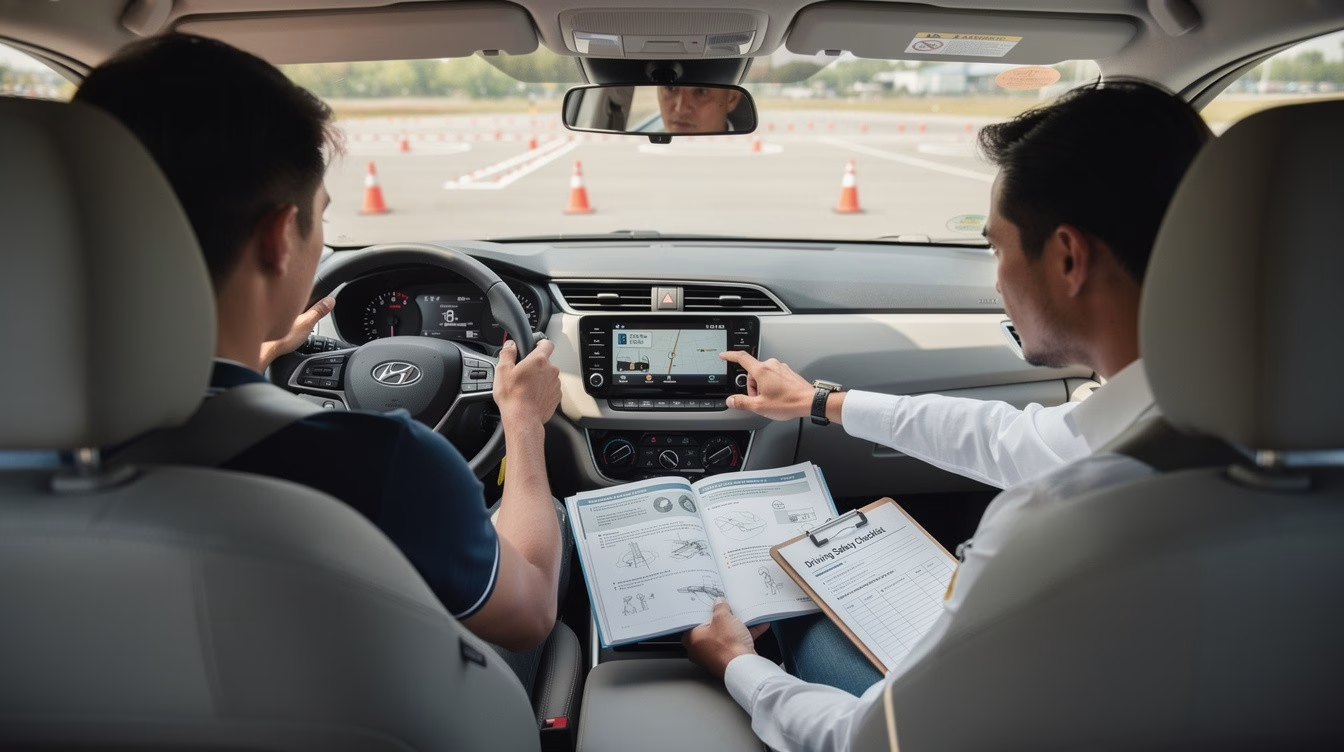
However, online coursework does not replace behind-the-wheel training when your state requires supervised driving hours or professional in-car instruction. A student still needs real practice with steering, braking, parking, lane changes, and hazard recognition under the conditions required by state law.
Think of the course as preparation for safe practice, not a substitute for it. The strongest results come when a new driver connects each online lesson to supervised time on the road.
How to Choose the Right Course for Your First License
Do not choose a course based on convenience alone. The first question is whether it is accepted for your exact licensing requirement. Approval can vary by state and course type, and a traffic school course is not necessarily a first-time driver education course.
Before registering, confirm the state served, the course’s approval status, required instructional hours, age eligibility, and completion-reporting process. Also check whether the course works on the devices you use and whether support is available if you have a technical or account question.
Transparent pricing is another practical consideration. Look for clear information about the total cost and any optional services before checkout. A course should make the next steps easy to understand, especially when a deadline or DMV appointment is involved.
DriverEducators.com provides online driver education and traffic safety courses designed to make approved requirements more manageable, with flexible access and straightforward course information. The correct course still depends on the student’s state, age, and licensing objective.
Frequently Asked Questions
What is a first license course?
A first license course is driver education for people applying for an initial driver’s license. It generally covers traffic laws, safe driving habits, risk prevention, and licensing responsibilities.
Is a first license course required in every state?
No. Requirements vary by state and often by the driver’s age. Some states require formal driver education for teens, while others may require it only in certain situations.
Can I take a first license course online?
Yes, if your state accepts an approved online course for your requirement. Verify approval and completion-reporting details before enrolling.
Does completing the course mean I can get my license immediately?
Not always. You may still need a permit, supervised driving hours, a vision test, a written knowledge test, a road test, or other documents required by your state.
How long does a first-time driver course take?
Course length depends on state rules. Many states set a required number of instructional hours, and online courses may also require students to meet minimum time requirements before completion.
A good first license course should leave a new driver with more than a completion record. It should provide clear habits to use at every intersection, lane change, and unexpected moment on the road.