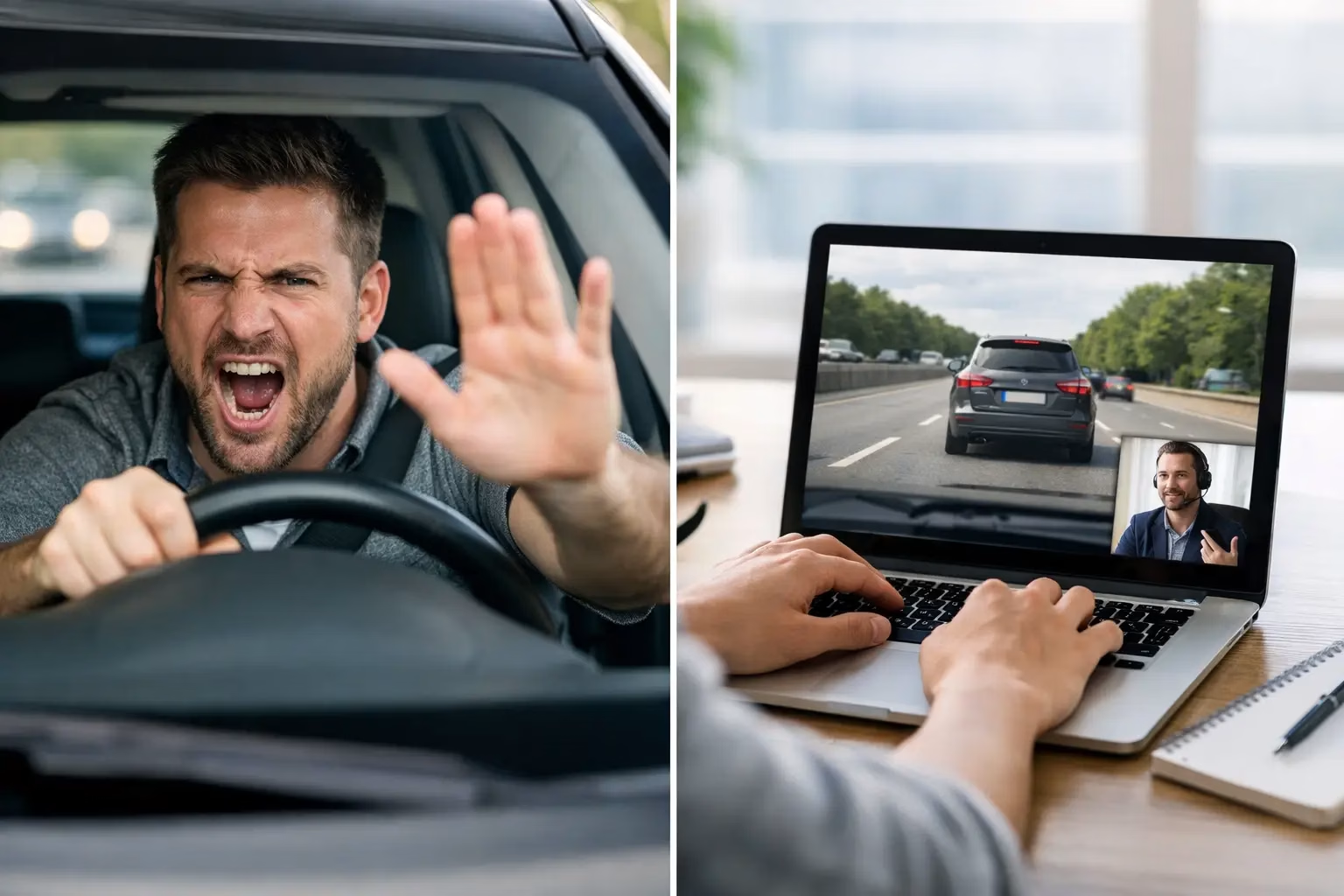
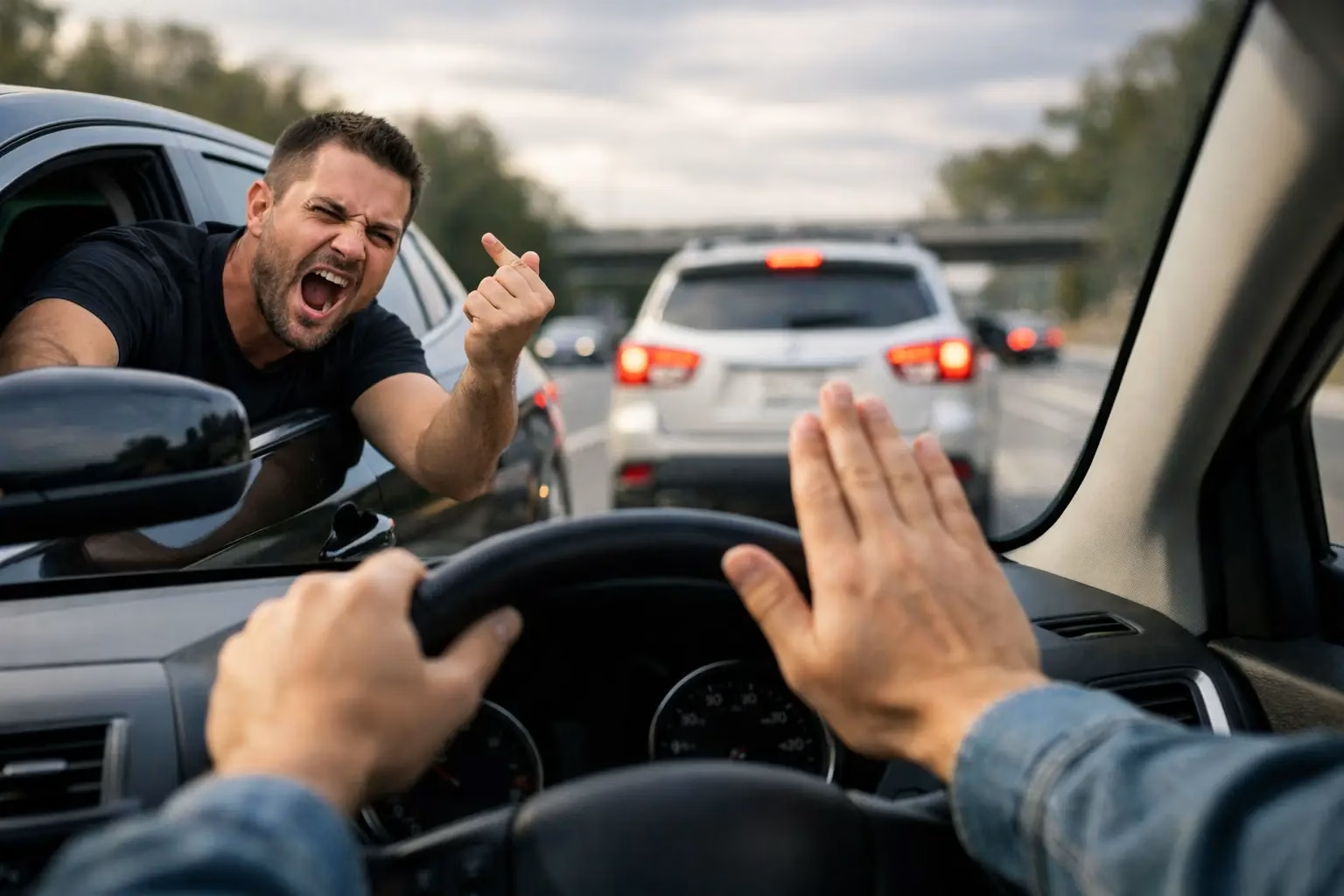
A driver races up behind you, follows too closely, then cuts across two lanes to get ahead at the next red light. That is more than frustrating behavior. Aggressive driving creates unpredictable situations that can turn a routine trip into a serious crash risk within seconds.
For drivers dealing with a ticket, court order, or DMV requirement, understanding this behavior also has a practical purpose. A driver improvement or aggressive driver course may be required in some cases, but the larger goal is learning how to recognize risky decisions before they lead to another violation, collision, or confrontation.
What Is Aggressive Driving?
Aggressive driving is a pattern of unsafe driving behaviors that endanger people or property. It can include speeding, following too closely, unsafe lane changes, failing to yield, running traffic controls, or using a vehicle to intimidate another driver.
A single mistake does not always establish aggressive driving. A driver may misjudge a gap or brake too late without intending to threaten anyone. The concern increases when unsafe actions are repeated, deliberate, or combined with anger, impatience, and disregard for traffic laws.
Aggressive driving is not always the same as road rage. Road rage generally refers to criminal conduct or violence connected to a traffic dispute, such as threatening another person, intentionally hitting a vehicle, or getting out of the car to confront someone. Aggressive driving may lead toward road rage, but it should be addressed well before it reaches that point.
Common aggressive driving behaviors
Some behaviors are easy to spot because they force other drivers to react quickly. Others may feel normal to a rushed driver until they result in a citation or crash. Common examples include:
- Tailgating to pressure another driver to move faster
- Speeding well beyond the posted limit or traffic flow
- Weaving through traffic without enough space to change lanes safely
- Blocking another vehicle from merging or passing
- Honking, flashing high beams, yelling, or making hostile gestures
- Cutting off another driver and braking suddenly
No one behavior tells the full story in every situation. For example, a driver may brake suddenly to avoid a hazard. Context matters, but consistently driving in a way that frightens, provokes, or traps others is a clear safety concern.
Why Aggressive Driving Is So Dangerous
Aggressive driving reduces the time and space needed to avoid a collision. Higher speeds increase stopping distance and crash force. Tailgating leaves little room for a safe response when traffic slows. Quick lane changes can place a vehicle in another driver’s blind spot just as that driver begins to move.
The problem is not only technical. Anger narrows attention. A frustrated driver may focus on “getting even” rather than watching for pedestrians, motorcycles, changing traffic signals, or vehicles entering from side streets.
Aggressive behavior can also spread through traffic. One driver tailgates, another brakes hard, a third driver changes lanes abruptly, and a chain reaction follows. Choosing not to participate can protect more than your own vehicle.
Penalties vary by state and by the facts of a case. Depending on the violation, consequences may include fines, points, license suspension, court requirements, higher insurance costs, or required driver education. A course requirement is not simply paperwork. It is an opportunity to address the decision-making habits behind the violation.
How to Respond to an Aggressive Driver
The safest response is usually to create distance and avoid engagement. Do not try to teach the other driver a lesson, block their path, match their speed, or respond to gestures. Even a brief exchange can make an already unstable situation worse.
If someone is following too closely, maintain a steady speed, avoid sudden braking, and move over when it is safe and legal to do so. Give the driver a clear path to pass rather than competing for position. If you cannot change lanes safely, continue driving predictably and leave more space ahead of your own vehicle.
Avoid eye contact when it appears likely to be taken as a challenge. Keep your doors locked and windows up if the situation feels threatening. If you believe you are being followed, do not drive home or stop in an isolated area. Travel to a busy public location or law enforcement facility when possible, and call 911 if there is an immediate danger.
Do not use a phone while trying to manage a confrontation. If you need to report a vehicle, pull over safely first or ask a passenger to make the call. A license plate number, vehicle description, location, and direction of travel can be useful, but collecting information is never worth creating another hazard.
How to Avoid Becoming an Aggressive Driver
Most aggressive driving starts before the driver turns the key. Running late, missing a meal, dealing with a stressful phone call, or assuming every slow driver is acting intentionally can lower patience and lead to poor choices.
Build extra time into trips when you can. Leaving even 10 minutes earlier reduces the temptation to speed, tailgate, or force a lane change. If a delay is unavoidable, accept that arriving late is safer than creating a crash or receiving a citation.
Use space as a safety tool. Keep a following distance that gives you time to see, decide, and brake. Increase that distance at night, in rain, in heavy traffic, or when following a large vehicle that blocks your view ahead.
It also helps to separate another driver’s behavior from your own decision. Someone may drive slowly, merge poorly, or make an inconsiderate choice. You still control whether you respond with a safe adjustment or turn the moment into a conflict.
Before driving, silence distracting notifications and plan your route. A missed turn is inconvenient, but making a sudden turn across lanes or reversing direction is far more costly. Continue safely and use the next available route option.
When an Aggressive Driver Course May Be Required
Some courts, state agencies, or traffic programs require an aggressive driver course after certain citations or repeat violations. Requirements can differ based on the state, the specific offense, driving history, and whether a court has issued an order.
Read your citation, court paperwork, or DMV notice carefully. Confirm the required course name, number of hours, completion deadline, and whether the provider must be approved for your state or county. Enrolling in the wrong course may not satisfy the requirement.
Online education can make compliance more manageable for eligible drivers. A self-paced course allows you to work from a phone, tablet, or computer when your schedule permits, but you should always verify that the course matches your official requirement before enrolling. DriverEducators.com offers online traffic safety education designed to help drivers complete applicable requirements with clear, practical instruction.
Frequently Asked Questions About Aggressive Driving
Is aggressive driving a criminal offense?
It can be. Many aggressive driving behaviors are traffic violations, while threats, intentional collisions, or physical confrontations may lead to criminal charges.
Is speeding considered aggressive driving?
Sometimes. Speeding by itself may be cited as a separate violation, but excessive or repeated speeding combined with unsafe maneuvers can be considered aggressive driving.
What should I do if an aggressive driver follows me?
Do not drive home or confront the driver. Go to a public, well-lit location or law enforcement facility and call 911 if you believe you are in immediate danger.
Can a driver improvement course remove a ticket?
It depends on your state, court, and citation. Some programs may allow a course for ticket dismissal, point reduction, or compliance, but approval is not automatic.
How long does an aggressive driver course take?
Course length depends on the state requirement and program. Check your official notice for the required number of hours and completion deadline.
The next time traffic tests your patience, make the choice that gives everyone more room to recover. A few extra seconds, a calmer response, and a safer following distance can prevent consequences that last far longer than the delay.