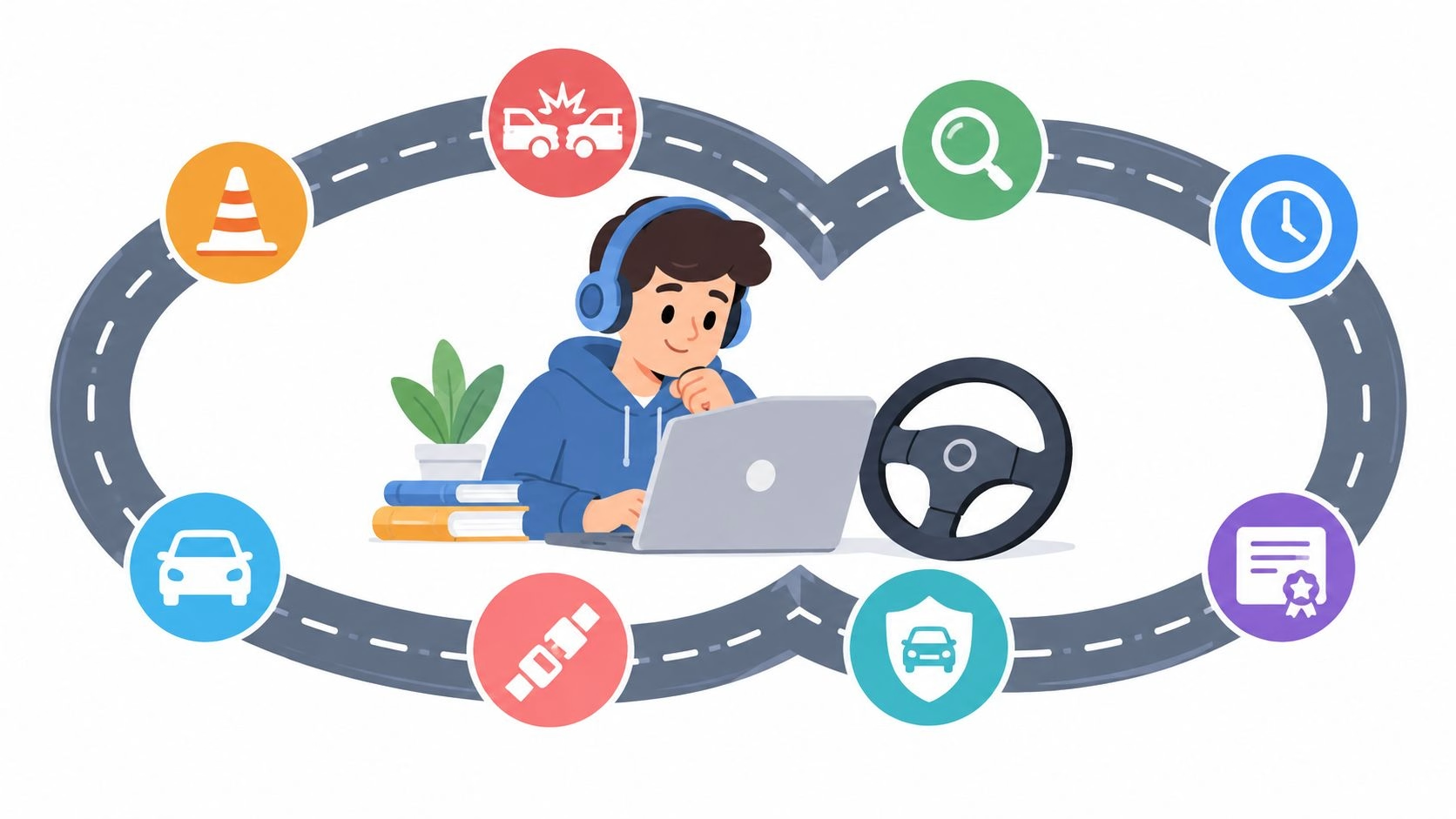
A traffic ticket can create an immediate question: can you take a driver improvement course instead of accepting points, a suspension, or another penalty? Driver improvement eligibility depends on the reason you need the course, the state where the violation occurred, your driving history, and sometimes a court order. The right answer is not always the fastest answer, but checking first can prevent wasted time and enrollment in the wrong program.
For many drivers, an approved online course offers a practical path to meet a DMV, court, employer, or insurance requirement on a schedule that works. The key is matching the course to your specific requirement before you begin.
What Driver Improvement Eligibility Means
Driver improvement eligibility is the set of rules that determines whether you may complete a driver improvement program and receive a particular outcome. That outcome may be a reduced point total, ticket dismissal, compliance with a court order, reinstatement-related education, or fulfillment of a required licensing condition.
Eligibility is not the same as enrollment. Most people can enroll in an online course, but only eligible drivers receive the benefit connected to that course. For example, a driver may be allowed to take a basic course voluntarily for safer-driving knowledge but may not be eligible to use it to avoid points on a current citation.
The agency setting the requirement controls the rules. Depending on the situation, that may be a state DMV, traffic court, clerk of court, insurance company, licensing authority, or employer. Course providers deliver approved education, but they cannot waive an agency’s deadline, violation restriction, or prior-course limit.
When You May Qualify for Driver Improvement
Many states allow some drivers to complete a basic driver improvement course after a moving violation. Common eligible situations include a first or infrequent traffic citation, an elective option offered by the DMV, a court-approved alternative to another sanction, or a licensing requirement following a violation.
However, the details vary significantly. One state may allow a course once within a certain number of months, while another may calculate eligibility by years. A court may approve a course only before a hearing date. Some jurisdictions require written permission, while others let drivers elect the option directly through an online portal.
Your driving record also matters. Recent citations, prior traffic school completions, accumulated points, license status, and the nature of the offense can all affect the result. A driver who received a routine speeding ticket may have options that are not available after a serious or repeat violation.
Common eligibility factors
Before enrolling, confirm the violation date, the county or state handling the case, the deadline, and the exact course name required. These details are more useful than a general assumption that “traffic school” will satisfy every requirement.
You may also need to confirm whether the course must be state-approved, court-approved, or both. Approval is specific to the program and jurisdiction. A course accepted for one purpose may not satisfy a different requirement, even if the subject matter appears similar.
Violations that may have different rules
Serious violations often have stricter requirements. These can include DUI-related offenses, aggressive driving, driving with a suspended license, crashes involving injuries, commercial driver violations, or violations involving a mandatory court appearance.
That does not automatically mean education is unavailable. It means the required program may be different from a standard basic driver improvement course. A court or DMV may require intermediate driver improvement, an aggressive driver program, substance education, or another specialized course instead.
How to Check Eligibility Before You Enroll
Start with the document you received. A citation, court notice, DMV letter, or online case record usually identifies the violation, case number, deadline, and next step. Look for language such as “driver improvement,” “traffic school,” “election,” “court ordered,” or “approved course.”
If the notice does not clearly state your options, contact the agency named on it. Ask direct questions: Am I eligible to complete a driver improvement course? Which course is required? Does the provider need a specific approval? What is my completion deadline? Will I need to submit the certificate, or is it reported for me?
Keep a record of the answer, including the date and the name of the person or agency that provided it. If your case is handled online, save confirmation screens and receipts. Administrative requirements can be strict, and a completed course may not help if it is submitted late or sent to the wrong office.
Do not wait until the deadline is close. Self-paced online learning offers flexibility, but agencies may need time to process a completion certificate. The best approach is to verify the requirement, enroll in the correct approved course, complete it carefully, and confirm that the agency received your completion information.
Choosing the Right Type of Course
The phrase “driver improvement” can describe several programs. Choosing the wrong one is one of the most avoidable problems drivers face.
A basic driver improvement course is commonly used for eligible moving violations and voluntary point-related education. It typically reviews traffic laws, defensive driving, crash prevention, sharing the road, and decision-making behind the wheel.
An intermediate driver improvement course may be required after repeat violations, a suspension-related notice, or another higher-level DMV action. It usually involves more extensive instruction and may not be interchangeable with a basic course.
Aggressive driver, wireless communications device, mature driver insurance discount, and substance education courses serve different needs. Each has its own approval standards and intended outcome. A mature driver course, for instance, may help with an insurance discount when accepted by an insurer, but it is not automatically a solution for a traffic court requirement.
If you are a first-time driver, a pre-licensing program such as driver education or traffic law and substance abuse education may be the correct course instead. Read the agency notice closely and choose based on the requirement, not the course title alone.
What an Online Course Can and Cannot Do
An approved online course can make compliance more manageable. You can study from a computer, tablet, or phone, save your progress, and complete coursework around work, family, or school obligations. For drivers with busy schedules, this may eliminate the need to attend a scheduled classroom session.
Online access does not remove your responsibility to meet the underlying rules. You still need to complete the full course, pass any required assessment, provide accurate identifying information, and follow the agency’s certificate process. If the court ordered attendance, you must also comply with every other part of the order, including fines or appearances.
Be cautious about promises that any course will erase a ticket or guarantee a specific result. The final decision belongs to the court, DMV, or insurer. A dependable provider will be clear about approval status, pricing, completion procedures, and what the course is designed to satisfy.
Avoid These Eligibility Mistakes
The most common mistake is assuming that a course completed in the past makes you eligible again. Many states limit how often a driver can use a course for point reduction or ticket-related benefits. Check the current rule rather than relying on memory.
Another mistake is completing a course before asking whether it is accepted. This can be especially costly when your case requires a specialized program or a provider approved in a particular state. Verify first, then enroll.
Finally, do not confuse a certificate of completion with case closure. A certificate proves that you finished education. Your citation or DMV action is resolved only when the responsible agency updates the record and confirms that all requirements have been met.
Frequently Asked Questions
Can I take a driver improvement course for any ticket?
No. Driver improvement eligibility depends on state law, your violation, your driving history, and any court or DMV instructions. Check with the agency handling your case before enrolling.
Does taking a course remove points automatically?
No. A course may reduce points or prevent points only when the applicable DMV or court rule allows it. The agency, not the course provider, applies the benefit.
Can I take driver improvement online?
Yes, if your state, court, or requirement accepts an approved online program. Confirm that the specific course and provider meet the approval requirement for your case.
What if my deadline has passed?
Contact the court or DMV immediately. Some agencies may explain available next steps, but a provider cannot extend a government or court deadline.
Do I need a basic or intermediate driver improvement course?
It depends on your notice and driving history. Basic courses are often used for routine eligible violations, while intermediate courses may apply to repeat violations or more serious DMV actions.
A driver improvement course should make a required step easier to complete, not create more uncertainty. Confirm your eligibility, select the approved program that matches your notice, and give yourself enough time to finish and document completion correctly.