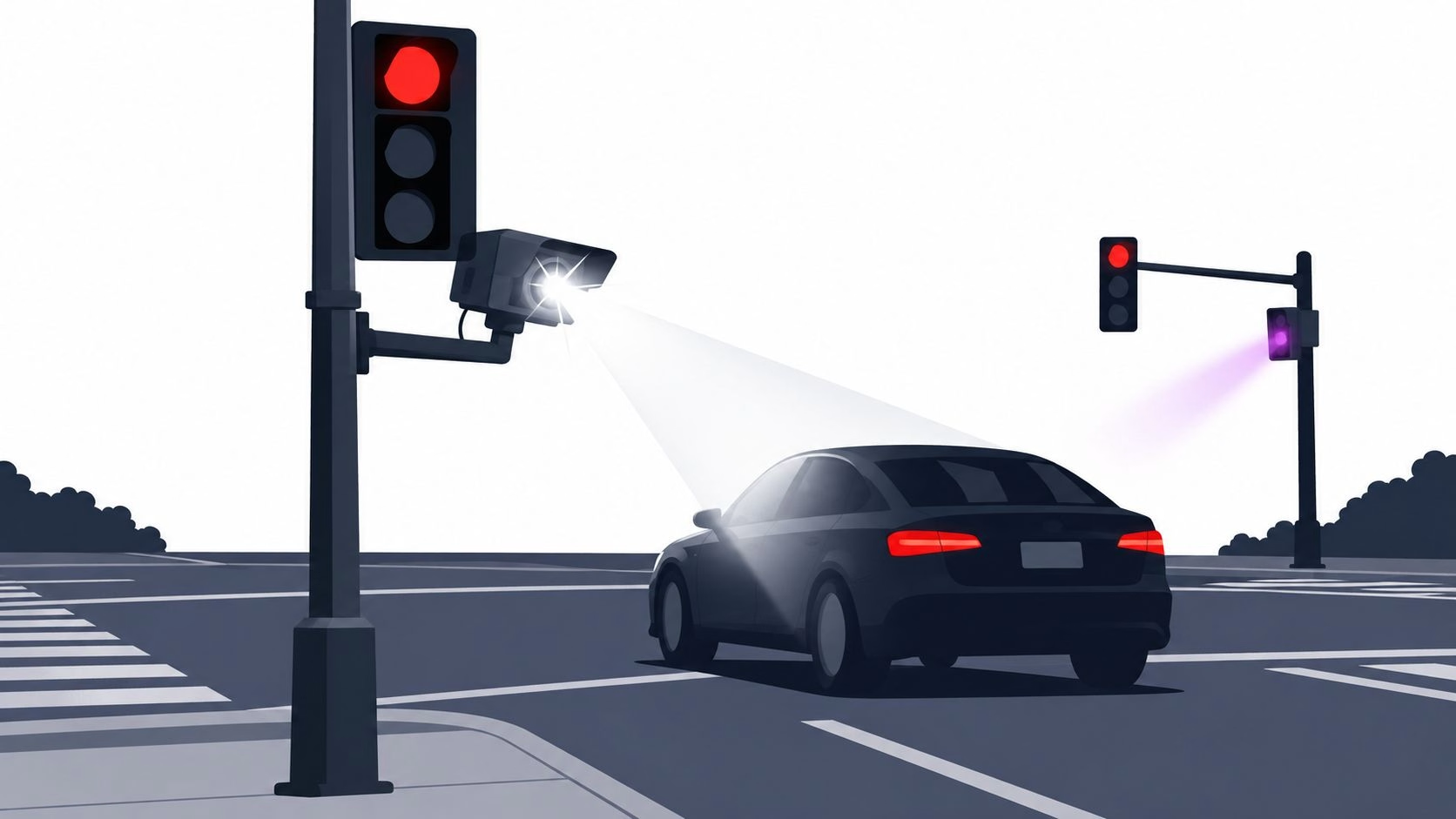
Yes, many red light cameras do flash to capture a clear photo, but many modern systems use invisible infrared and no visible flash does not mean no ticket. Whether you see a bright burst depends on the camera’s design, the illumination it uses, and the rules in that Florida community.
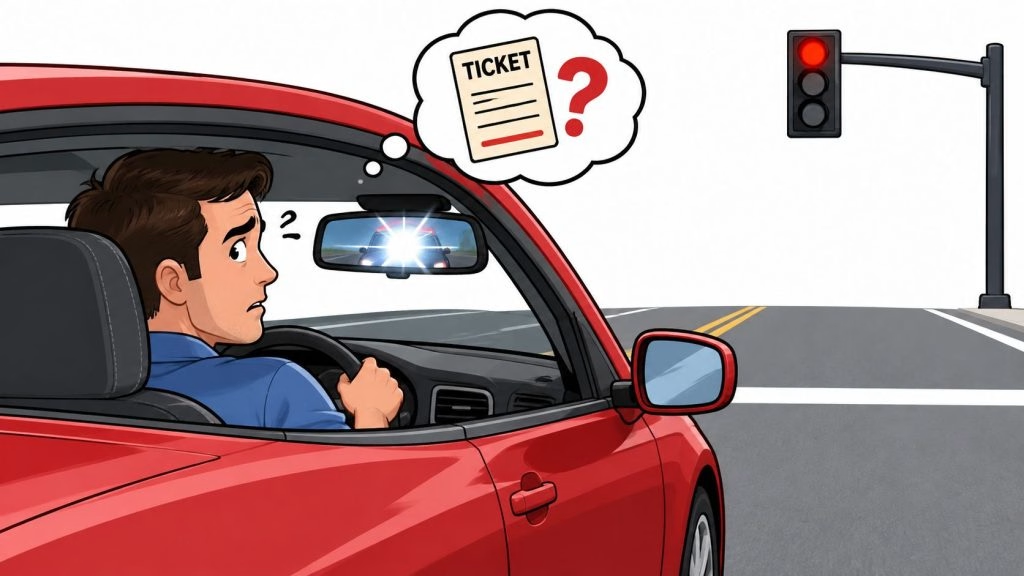
You’re driving through an intersection, the light has just changed, and suddenly a bright flash reflects in your mirror. Your first thought is probably simple: “Was that for me?” A second question usually follows: “Does the flash mean a ticket is already on its way?”
The answer is more nuanced than the flash suggests. A visible burst can be part of the camera’s image-capture system, but some units illuminate a scene with infrared light that human eyes can’t see. A camera event can also be reviewed and rejected, so the flash itself doesn’t decide whether you committed a violation.
The practical answer: A flash may help create photographic evidence, but it isn’t proof by itself that you’ll receive a citation. No flash doesn’t prove that no camera recorded the event.
This distinction matters for Florida drivers because a camera notice follows an administrative process. You may have rights to review the images or video and request a hearing. Learning what the equipment records, what reviewers examine, and what you should do after receiving a notice can help you respond calmly instead of guessing.
For a Florida-focused explanation of the equipment and enforcement process, review this guide to red light cameras in Florida. Then use the information below to separate a camera’s flash from the driving habit that caused concern. A Florida-approved defensive driving course can also help you strengthen your decision-making before another intersection creates a bigger problem.
How Red Light Camera Systems Detect and Capture Violations
A red light camera works like a motion-triggered camera with an important extra connection. It does not photograph every vehicle passing through an intersection. The system links vehicle movement to the traffic signal’s phase and captures an event when its programmed conditions are met.
The capture sequence
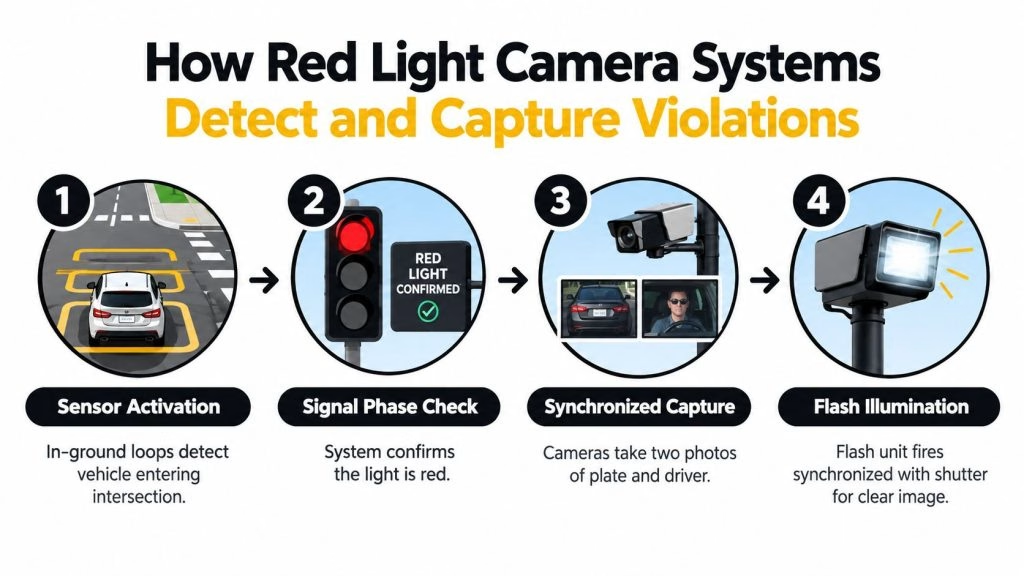
Think of the process as a series of checks rather than one sudden decision.
-
A detection device notices movement. In-ground loops or another detection method identify a vehicle near the stop line or intersection.
-
The system checks the signal phase. The camera system is synchronized with the traffic signal, so it can determine whether the light is red when the vehicle reaches the relevant detection point.
-
The camera records the event. The National Highway Traffic Safety Administration explains in its red light camera operational guidelines that a unit may record a violation with one or two photographs or digital images.
-
Illumination helps the camera see clearly. A flash synchronized with the shutter provides additional lighting at the moment of exposure. Federal operational guidance says one flash unit is typically integrated into the camera housing.
The flash therefore has a practical job. At night, headlights, shadows, glare, and motion can make a plate difficult to read. Synchronized lighting helps the camera create a usable image of the vehicle and license plate, and where permitted, a clearer image of the driver.
Why timing matters
The camera isn’t taking a random snapshot after a driver reaches the intersection. It’s recording images connected to the signal phase and the vehicle’s position. That timing gives reviewers context, such as whether the vehicle was approaching the stop line, crossed it, or continued into the intersection.
The system’s image is evidence for review, not an automatic judgment. The visible burst is only the camera’s way of exposing the scene clearly at a precise instant.
You can also watch this red light camera system video for a visual explanation of how detection and image capture work. The essential point is simple: the camera needs both a qualifying vehicle movement and a matching signal condition.
Why Some Cameras Flash and Others Use Invisible Infrared
Drivers often compare experiences and assume one person must be mistaken. One driver sees a bright white burst at night, while another passes the same type of intersection without noticing anything. Both experiences can be real because enforcement systems use different illumination designs.
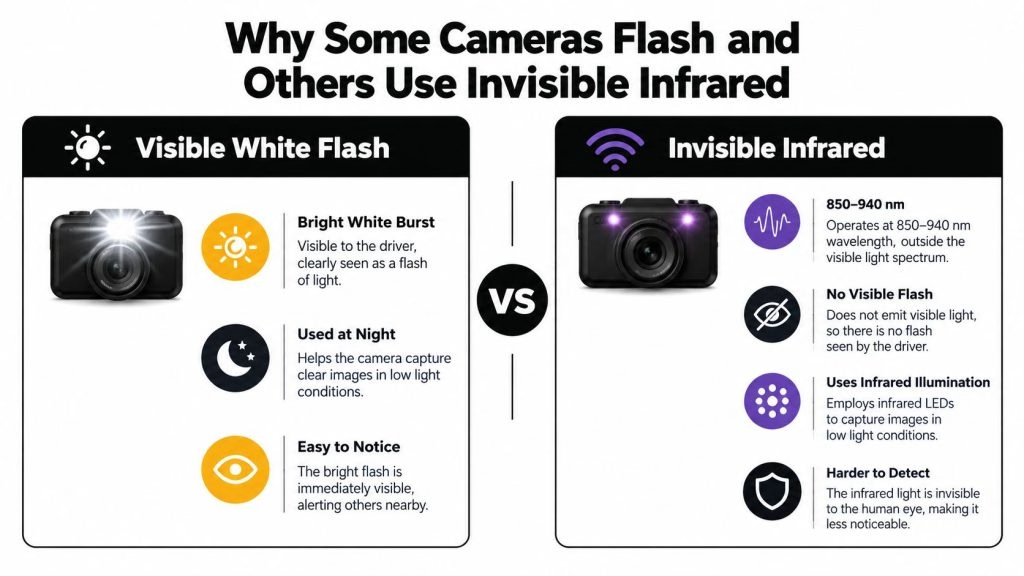
A visible-flash system uses a burst of light that a driver can usually see. Older installations, or systems designed with visible illumination, may produce the familiar bright reflection in a windshield or rearview mirror.
An infrared system works differently. Technical descriptions commonly place its illumination in the 850–940 nanometer range, outside the visible spectrum, as explained in this overview of infrared traffic-light camera illumination. The camera can use that light to capture a nighttime image without producing a bright visible burst.
A side-by-side comparison
| Feature | Visible Flash System | Infrared System |
|---|---|---|
| Driver visibility | Produces a noticeable white burst | Produces no noticeable visible flash |
| Night operation | Uses visible light to illuminate the scene | Uses infrared illumination outside human vision |
| Driver perception | Easy to notice, especially in a dark intersection | May operate without the driver realizing an image was captured |
Whether a community uses one design or another depends on its equipment and operating rules. A state-by-state legal review updated in September 2026 reports that 25 states and D.C. allow red-light cameras, while 9 states prohibit them. That legal variation helps explain why drivers encounter different systems when they travel.
The flash can also affect attention. A peer-reviewed study of red-light camera flashes found that higher-intensity flashes reduced scene-recognition accuracy to 54% at night versus 65% during the day. The finding doesn’t tell you whether a ticket will be issued, but it shows that a visible flash can be strong enough for drivers to notice and react to.
If you’re driving in the Tampa area, this resource on Tampa red light cameras can help you understand why equipment and enforcement experiences may differ from another Florida intersection.
Does a Flash Mean You Will Get a Ticket
No. A flash means the system recorded or attempted to record an event. It doesn’t mean the system has already established that a violation occurred.
A government red-light camera FAQ explains that a camera event may be triggered even when a driver stops before entering the intersection or makes a rolling right turn. Police review each event before issuing a citation, so the image passes through a human review step.
What reviewers look for
A reviewer generally needs to determine whether the vehicle’s movement fits the violation defined by the program. That can include examining the vehicle’s position, the stop line, the signal phase, and the available photographs or video.
A bright flash may happen because the system detected movement near the relevant area. It could also capture a maneuver that requires closer review rather than an automatic citation.
Myth: “The camera flashed, so I definitely got a ticket.”
Reality: The flash creates an event for review. The citation decision depends on the evidence and the applicable rules.
That distinction is especially important for drivers who stop late but before the line, or who turn right after slowing without fully stopping. The camera may still flag the movement, but the review process determines what happens next.
What you should do
Don’t make a payment or ignore a notice based only on what you saw in the mirror. First, confirm whether an official notice arrives and review the evidence made available by the issuing authority.
You can also read this explanation of Florida red light camera ticket costs before choosing how to respond. The useful question isn’t “Did I see a flash?” It’s “What does the official evidence show, and what response options does the notice provide?”
Florida Red Light Camera Rules Privacy and What Your Notice Means
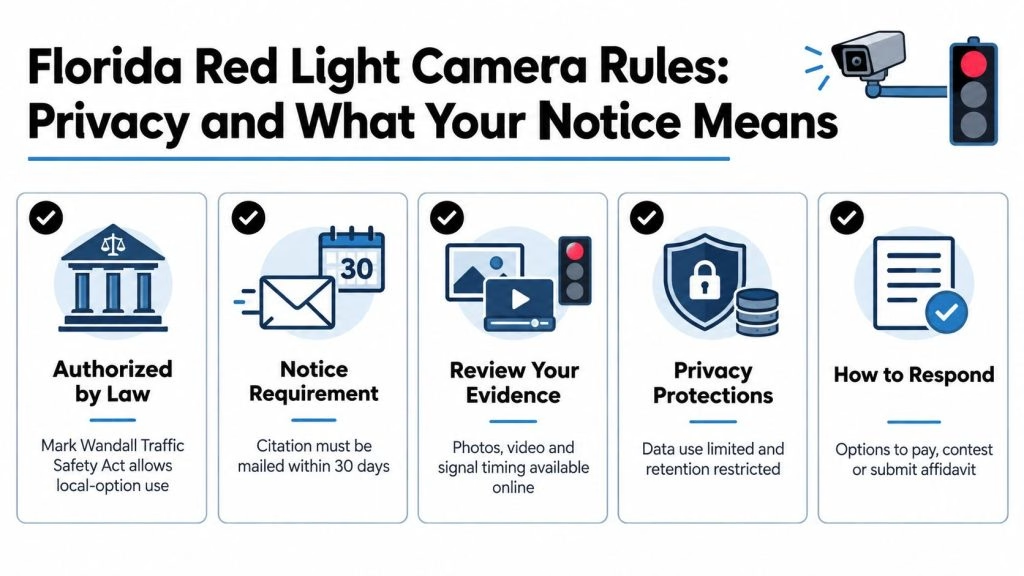
Florida uses a local-option approach under the Mark Wandall Traffic Safety Act. Counties and municipalities can use red-light cameras at intersections under state law, but camera enforcement isn’t automatically used in every Florida community.
If a local program issues a camera violation, Florida law requires notice to be mailed to the vehicle owner within 30 days of the offense, according to the Florida red-light camera legal materials. The notice must explain the owner’s right to review the photo or video evidence and the right to request a hearing.
That timeline makes the process administrative and time-sensitive. A flash at an intersection isn’t the same thing as an immediate ticket handed to you by an officer, and it isn’t the final decision.
What a Florida camera notice means
Florida red-light camera citations are treated as civil infractions rather than moving violations. Florida materials commonly identify the penalty as $158, with no driver-license points attached when the matter is handled as a camera citation, as described in this Florida red-light citation overview.
The registered vehicle owner usually receives the initial notice. That doesn’t mean you should assume the notice is correct or incorrect. It means you should read the instructions and use the review rights provided.
Check these items as soon as you receive the notice:
- Mailing date: Confirm that the notice was mailed within the required 30-day period.
- Vehicle details: Compare the plate, vehicle description, date, time, and location with your records.
- Evidence access: Follow the instructions to view the photographs or video and signal information.
- Response choices: Identify the payment instructions, hearing procedure, and any affidavit option included.
- Calendar deadline: Mark the response or hearing date so you don’t lose an option through inaction.
Privacy questions often arise because the system creates an image connected to a vehicle and a specific event. The practical safeguard described in the Florida process is your ability to review the evidence and request a hearing. For a clearer explanation of red light camera citation options, consult a resource that focuses on Florida’s notice and response process.
How Florida Drivers Can Protect Their Record After a Violation
A camera notice gives you a reason to review the event, but it can also reveal a driving habit worth correcting. Many red-light situations develop before the vehicle reaches the intersection, when a driver is following too closely, accelerating to beat the light, or approaching without enough space to stop smoothly.
A Florida-approved driver improvement course can turn that moment into practical training. The course should help you recognize signal changes earlier, manage speed, scan cross traffic, and make full stops where required.
BDISchool offers Florida-approved online options for drivers handling a moving violation, court-related requirement, aggressive-driving concern, or mature-driver refresher. The available choices include:
- Basic Driver Improvement, 4 hours: Designed for drivers who received a moving violation and want instruction that may help them avoid points and insurance increases where eligible.
- Intermediate Driver Improvement, 8 hours: Intended for court-ordered drivers or people seeking more extensive safe-driving education.
- Aggressive Driver Course, 8 hours: Focuses on responsibility, road rage, and behavior change.
- Mature Driver Course, 6 hours: Provides a refresher for drivers aged 55 and older and may support insurance discounts where accepted.
The courses are self-paced and available online in English, Spanish, and Portuguese. After completion, certificates are issued electronically and reported directly to FLHSMV, subject to the applicable state requirements and eligibility rules.
Course completion isn’t a substitute for reading your notice or meeting its deadline. It’s a separate step that can improve your knowledge and help you make safer choices at the next signal. Check the available BDISchool and DriverEducators courses before selecting the option that matches your situation.
What to Do Next If You Saw a Flash or Received a Notice
Start with the simplest fact: a visible flash can help capture evidence, while an infrared system can record an event without a visible burst. Neither observation tells you by itself whether a citation will be issued.
Use this checklist:
- Wait for official information. Don’t treat a flash, a reflection, or another driver’s warning as a citation.
- Inspect the notice. Check the vehicle details, location, date, mailing information, and response instructions.
- View the evidence. Use the access instructions to review the photographs or video and consider whether the vehicle crossed the stop line after the light was red.
- Calendar the deadline. Florida law provides notice within 30 days of the offense, and the notice explains the right to review evidence and request a hearing. Follow the specific deadline printed on your notice.
- Choose an informed response. If you’re unsure about the procedure, review this guide on how to fight a traffic ticket in Florida.
- Correct the driving pattern. Approach signals at a controlled speed, leave room to stop, and make a complete stop before turning right where required.
- Consider driver improvement training. A Florida-approved course can reinforce defensive habits and may help with eligible record or insurance goals.
The flash is only the beginning of the process. Your response, your deadline management, and your future driving choices matter more than what you saw for a split second at the intersection.
BDISchool offers Florida-approved online driver improvement courses, including Basic, Intermediate, Aggressive Driver, and Mature Driver options, with self-paced study in English, Spanish, and Portuguese. Visit BDISchool today, choose the course that fits your situation, and start building safer intersection habits before the next camera event.