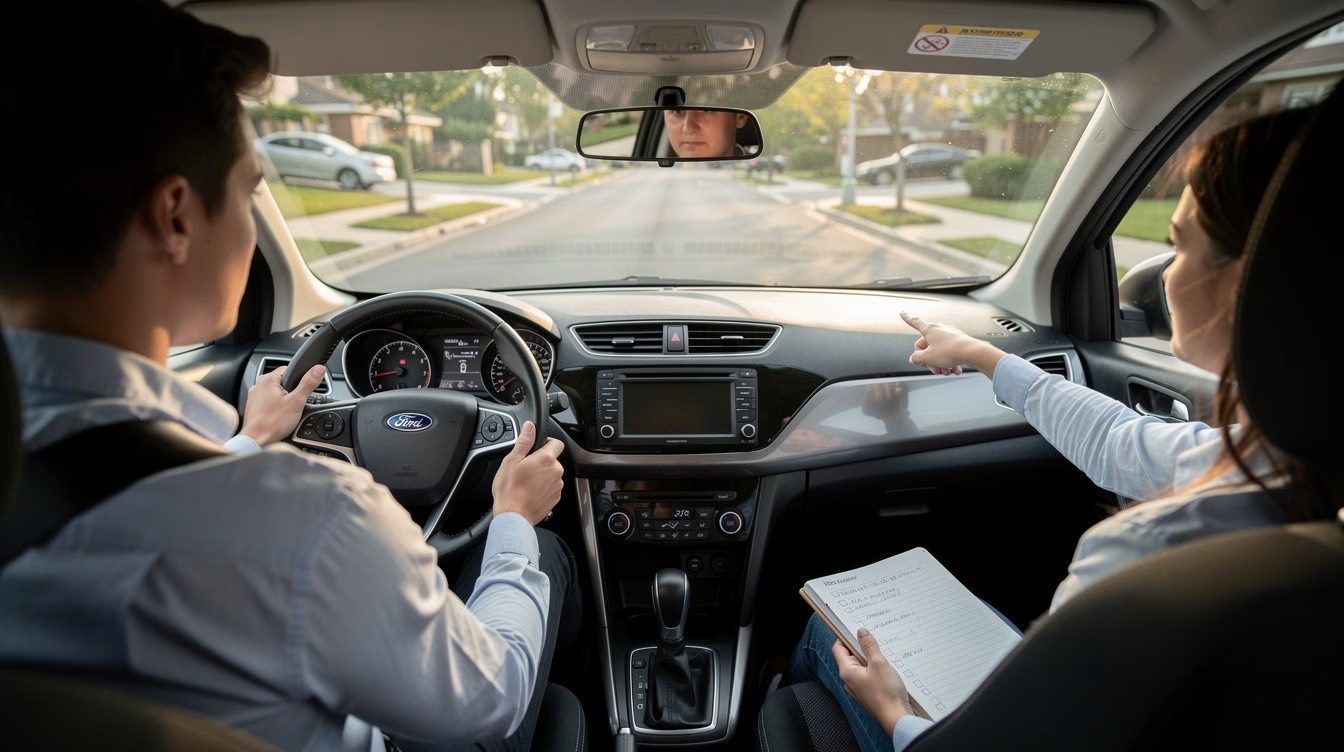
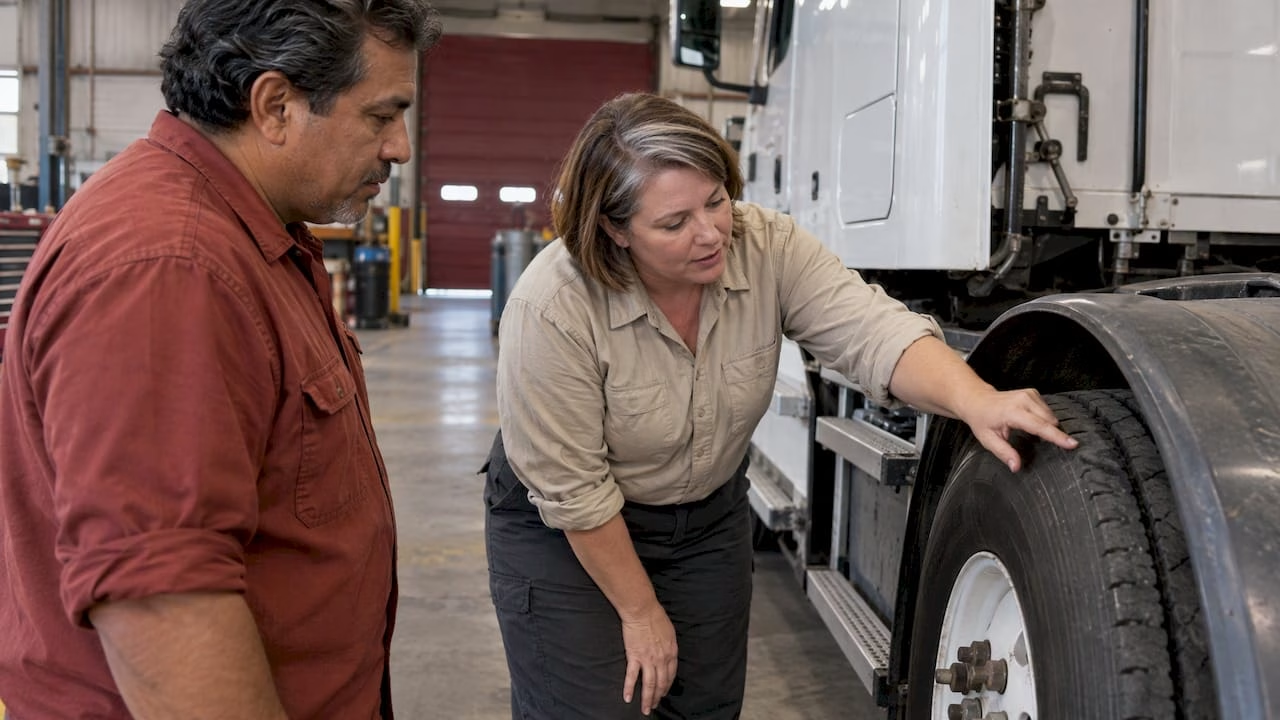
Fleet driver compliance training is the set of courses, written policies and records that prove every driver on your fleet knows the rules for the vehicles they operate. For commercial drivers that means federal FMCSA requirements first, then your state’s rules, then your own safety standards. The strongest programs treat training as something you can show an auditor: assigned, completed and filed. If you need a course built around your drivers and your vehicles, our custom fleet safety course is designed for that.
Key Takeaways
- Which rules apply depends on the vehicle and the operation. CDL drivers, drivers subject to drug and alcohol testing, and supervisors each have their own training duties.
- Federal rules require a written drug and alcohol policy, a signed receipt from every driver, and 120 minutes of training for supervisors.
- A training record is only as good as its proof: what, when, where, who and why, filed where you can find it in minutes.
- Rules change. Federal oversight of CDL training providers tightened sharply in 2025 and 2026, so check official pages for what applies today.
- A custom fleet course gives you one consistent curriculum for every driver, on any device, with completion you can document.
Table of Contents
- What fleet driver compliance training actually covers
- Who needs it: vehicle type and operation decide
- Federal training requirements for CDL drivers
- Drug and alcohol policy training: the part employers often miss
- Multi-state fleets: what changes across state lines
- How to document training so it survives an audit
- What has changed recently
- Why a structured program also lowers risk and cost
- A rollout plan for your fleet
- Our perspective
- A fleet course built around your drivers
- FAQ
- Sources
What fleet driver compliance training actually covers
The phrase sounds like one course. In practice it is several layers, and a fleet manager’s job is to know which layer applies to which person.
- Licensing and entry-level training. Drivers who need a commercial driver’s license (CDL) must meet federal training standards before they test.
- Regulatory knowledge. Every commercial motor vehicle operator must know a defined list of safety topics, from vehicle control to the effects of alcohol and drugs.
- Drug and alcohol policy education. Employers must educate drivers, and train the people who supervise them.
- Company safety training. Distracted driving, aggressive driving, defensive driving and vehicle checks. This part is where your own policies live.
- Records. Proof that each of the above happened.
The first three come from federal regulation. The fourth is where fleets differ most, and it is also where the biggest day-to-day risk sits: what drivers do on the road after the paperwork is filed.
Who needs it: vehicle type and operation decide
Not every fleet driver is a CDL holder. A plumber in a cargo van, a delivery driver in a light truck and a tractor-trailer driver all work for fleets, but different rules reach them.
Federal rules have required a CDL for certain commercial motor vehicles since April 1, 1992, and the vehicles and operations that require one are defined by FMCSA standards. If your drivers hold a CDL, the training rules below apply. If they do not, your obligations are mostly driven by your insurer, your state, your customers’ contracts and your own safety policy. A documented course is still the cleanest way to meet all of them.
A simple way to sort your roster:
| Driver group | Typical federal training duty | What you should file |
|---|---|---|
| New CDL (Class A or B) applicants | Entry-level driver training before the skills test | Provider records, self-certification, CLP/CDL copy |
| Drivers seeking P, S or H endorsements | Theory and, for P and S, behind-the-wheel training | Same as above |
| CDL drivers subject to drug and alcohol testing | Written policy and educational materials | Signed receipt for each driver |
| Supervisors of those drivers | 120 minutes of drug and alcohol training | Training date, content, attendee |
| Non-CDL fleet drivers | Set by state, insurer and company policy | Course completion and policy acknowledgment |
Federal training requirements for CDL drivers
Entry-level driver training (ELDT)
Drivers seeking a Class A or Class B CDL, or a passenger (P) or school bus (S) endorsement, must complete theory and behind-the-wheel training from a provider listed on FMCSA’s Training Provider Registry before the state skills test. Drivers seeking the hazardous materials (H) endorsement must finish theory training before the state knowledge test, according to FMCSA’s training requirements FAQ. States can add stricter requirements on top.
Two timing points matter for hiring:
- Drivers who were issued a Class A or B CDL, or a P, S or H endorsement, before February 7, 2022 are not required to complete ELDT for that license or endorsement.
- Anyone who gets a commercial learner’s permit on or after that date must comply. Except for H endorsement seekers, they must finish the theory and range/public-road portions within one year of completing the first portion, per the same eCFR regulation.
The registry is a step the federal government gives to an authority and to listed training providers, so this part of the process sits outside any online defensive driving course. Your role as the employer is to confirm each new hire’s ELDT status and keep the proof in the file.
The knowledge every CMV operator needs
Federal regulation lists 20 general areas of knowledge for commercial motor vehicle operators. They include the driver-related parts of the safety regulations, safe vehicle control systems, and the effects of alcohol and drug use on safe operation. These make a good outline for refresher training, even for drivers who passed their tests years ago.
Vehicle readiness belongs in this conversation too. A driver who knows the rules but starts the day with a truck missing required equipment is still out of compliance, so many fleets pair training with a truck inventory checklist for fleets that maps what each vehicle must carry.
Drug and alcohol policy training: the part employers often miss
This is the requirement with the clearest paperwork trail, and the one an auditor can check in minutes.
Under 49 CFR §382.601, employers must write a policy on controlled substances use and alcohol misuse, give it to every driver, and keep a statement signed by each employee certifying receipt of the policy and educational materials.
Supervisors have their own requirement. Under §382.603, anyone who supervises drivers covered by the testing rules needs at least 60 minutes of training on alcohol misuse and 60 minutes on controlled substances use, 120 minutes in total, so they can judge whether reasonable suspicion exists to require a test. FMCSA’s guidance on this page frames the purpose plainly: drivers who understand how alcohol and drugs affect health and safety, and supervisors who are trained, make these programs work.
A practical routine:
- Hand the policy to every new driver at hire, with the educational materials.
- Collect the signed receipt the same day.
- Schedule supervisor training before a supervisor oversees a covered driver, and record the minutes.
- Review the policy annually and re-issue it when it changes.
Multi-state fleets: what changes across state lines
Federal rules are the floor, not the ceiling. FMCSA states that CDL regulations do not directly preempt state law, and that a state may impose more stringent requirements on training providers and instructors in that state. California, for example, asks CDL applicants for a minimum of 15 hours of behind-the-wheel training, submitted to the DMV as proof of completion, according to the state’s business startup guide for freight trucking.
For a fleet that crosses borders, the practical consequences are:
- Build your training around the strictest state you operate in, so one standard covers everyone.
- Track each driver’s state of license and any state-specific course or credential.
- Re-check your assumptions whenever you add a new state to your routes.
The courses we publish are state-approved for the states where we operate: Florida, Michigan, Delaware and Colorado. For fleets based there, state-specific requirements for ordinary drivers are already built into the course content.
How to document training so it survives an audit
The saying among compliance people is that if it is not written down, it did not happen. The guidance that ranks well for this topic puts it the same way: good documentation answers the five Ws, what, when, where, who and why.
For every training event, record:
- What: course name and topic covered
- When: start and completion dates
- Where: online, classroom or on the road
- Who: driver name, license number, and trainer or provider
- Why: the requirement it satisfies, such as hire onboarding, annual refresher or post-incident retraining
Retention periods to know
Training providers delivering ELDT must keep self-certifications, CLP or CDL copies, instructor qualifications, lesson plans and individual assessment records for three years from the date created or received. Providers must also track a minimum score of 80 percent on the theory assessment.
On the driver qualification side, an insurance broker’s summary of the rules says the initial motor vehicle record (MVR) and annual MVRs stay in the driver qualification file for as long as the driver is employed plus three years. The same summary notes that carriers must request a new hire’s MVR from each state where the driver held a license in the prior three years within 30 days of the start of employment.
A sensible filing structure keeps three folders per driver: license and qualification, training certificates, and policy acknowledgments. Whatever system you use, pick one place and one naming convention.
What has changed recently
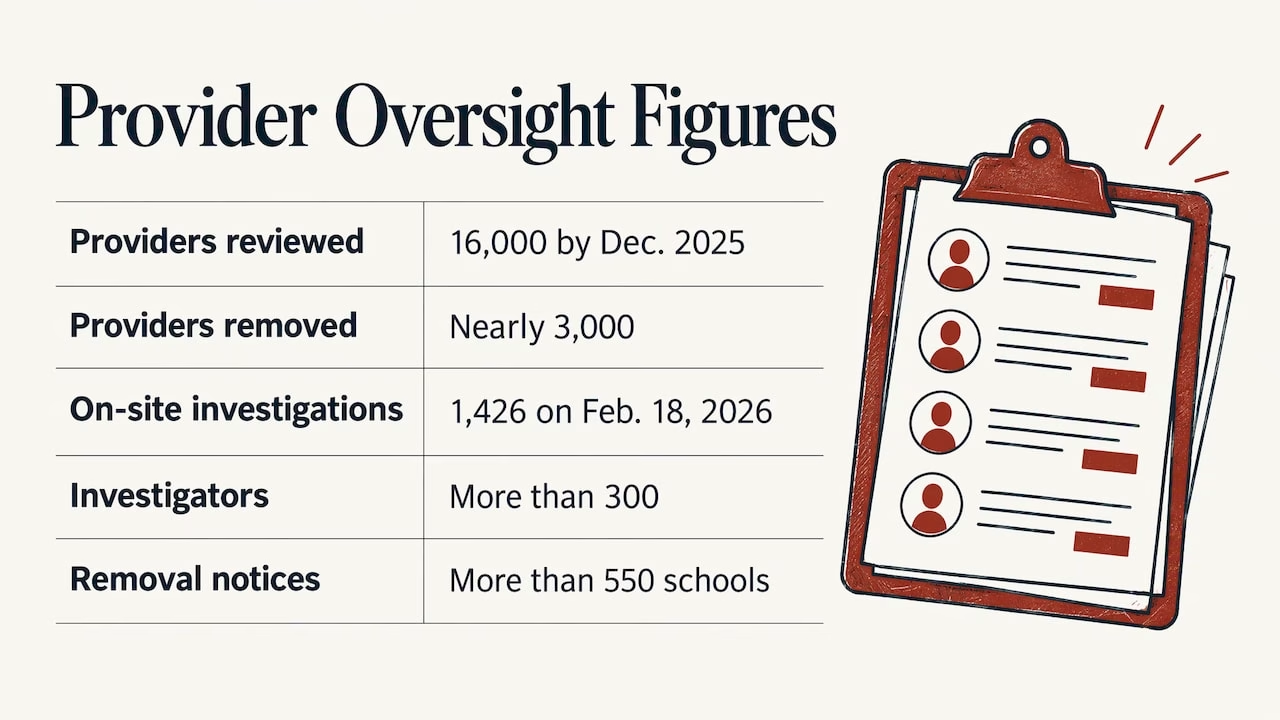
Oversight of CDL training providers has become much more active. According to FreightWaves reporting, FMCSA had reviewed 16,000 CDL training providers by December 2025 and removed nearly 3,000 from the Training Provider Registry for failing curriculum standards or falsifying student data. On February 18, 2026, more than 300 investigators carried out 1,426 on-site investigations, and more than 550 schools received notices of proposed removal.
The same report describes Dalilah’s Law, which passed the House Transportation and Infrastructure Committee on March 18, 2026, by a 35-26 vote. As described there, it would restrict non-domiciled CDLs, end provider self-certification in favor of recertification every 18 months, and penalize non-compliant states with highway funding cuts of up to 12%. It was a committee vote, not a final law, so check the official Congress and FMCSA pages for its status.
What this means for you: when a new hire presents ELDT credentials, confirm the provider is listed on the registry and keep that confirmation in the file. Paperwork from a removed provider is a problem you want to find before an auditor does.
Why a structured program also lowers risk and cost
Compliance training is a legal duty, and it is also a cost lever. An analysis of commercial auto claims reported by Risk & Insurance found that average claim costs fell by about $7,600 over three years after fleets began monitoring drivers, from $94,994 to $87,414. Monitoring and training work together: records show you who needs help, and training is how you give it to them.
For the drivers on your payroll, the topics that most often show up in claims are the ones a good course should address directly: distracted driving, aggressive driving, following distance and speed. Our site covers how to improve commercial driving safety, and our guide to choosing and rolling out commercial driver safety training goes deeper on rollout. If you want more on records and delivery, see our explainer on digital compliance training for drivers.
A rollout plan for your fleet
- List every driver and vehicle class. Mark who holds a CDL, who is subject to testing, and who supervises.
- Map the rules to each group. Use the table above as a start, then add state and insurer requirements.
- Choose the delivery format. Drivers rarely sit at the same desk at the same time. Online courses that run on a phone or tablet let drivers learn between routes and at their own pace.
- Assign and set deadlines. A due date is what turns “available” into “completed.”
- Collect proof. Certificates, signed policy receipts, supervisor training logs.
- Review quarterly. Check expirations, new hires and any rule changes.
- Retrain after incidents. Tie retraining to events, and record the reason.
License status is part of the same cycle. Our overview of license compliance requirements for drivers and the latest safe driving compliance trends help you keep the calendar current. If part of your team is moving into commercial work, see what a Class A license involves.
Our perspective
Most fleet training fails in the same place: it exists, but nobody can prove who finished it. We build our courses in-house with certified educators and safety specialists, and we update the content for statutory requirements, because a course that drifts from the rules is worse than no course at all.
We also think drivers learn better when the course fits their day. That is why our courses run on any device, include multilingual read-along features, and let each driver move at their own pace. A fleet is rarely made up of one kind of learner, and a course that works for all of them is a compliance tool, not a chore.
Our pricing is transparent, with no hidden fees, and we back our courses with a money-back guarantee. For a fleet, we build a custom safety course around your drivers, your vehicles and your policies, so the training you assign is the training your risk actually calls for.
the author
A fleet course built around your drivers
Our custom fleet safety course is developed on our proprietary in-house curriculum and delivered online, so drivers can complete it on a phone, tablet or computer. It includes multilingual read-along features, which helps when your team speaks more than one language. Pricing for fleet courses is not published because each course is custom, so contact us through the fleet training page to describe your fleet.
Individual drivers who need a state-approved course for a ticket, a court order or an insurance discount can see every option on our courses page.
FAQ
Does every fleet driver need a CDL-level compliance course?
No. CDL-specific rules apply to drivers operating vehicles that require a CDL. Drivers of lighter vehicles are covered by state rules, insurer requirements and your own policy. Many fleets still give all drivers the same defensive and distracted-driving training so the standard is consistent.
What is the one document auditors ask for most often?
For CDL drivers subject to testing, a signed statement that the driver received your drug and alcohol policy and educational materials is a core item, required under 49 CFR §382.601. Pair it with the driver’s training certificates and MVRs in the same file.
How long should I keep training records?
Federal ELDT providers keep their records for three years. For driver qualification files, MVRs stay for the length of employment plus three years. Keeping all driver training records for at least that long is a simple, safe policy.
Can online training count toward fleet compliance?
Yes, for the topics that do not require behind-the-wheel instruction. Company safety, distracted driving and policy education all work online. Entry-level CDL training has its own federal requirements and needs a provider on the Training Provider Registry.
Sources
- Frequently Asked Questions, FMCSA Training Provider Registry
- What are my employee and supervisor training responsibilities, FMCSA
- 49 CFR Part 380 Subpart F, eCFR
- 49 CFR 383.111 Required knowledge, eCFR
- Drivers, FMCSA
- Entry-Level Driver Training Rule Implementation Checklist, FMCSA
- Business Quick Start Guide: Freight Trucking, California OSBA
- Driver Qualifications 101, North Risk Partners
- Secretary Duffy prioritizes barriers to entry in trucking, FreightWaves
- Data-Driven Safety Solutions Emerge as Answer to Commercial Auto Insurance Crisis, Risk & Insurance
Recommended
- Digital Compliance Training for Drivers Explained
- License Compliance Requirements for Drivers
- Safe Driving Compliance Trends for U.S. Drivers
- Fleet Training
This article is provided for general information and is not a professional advice.