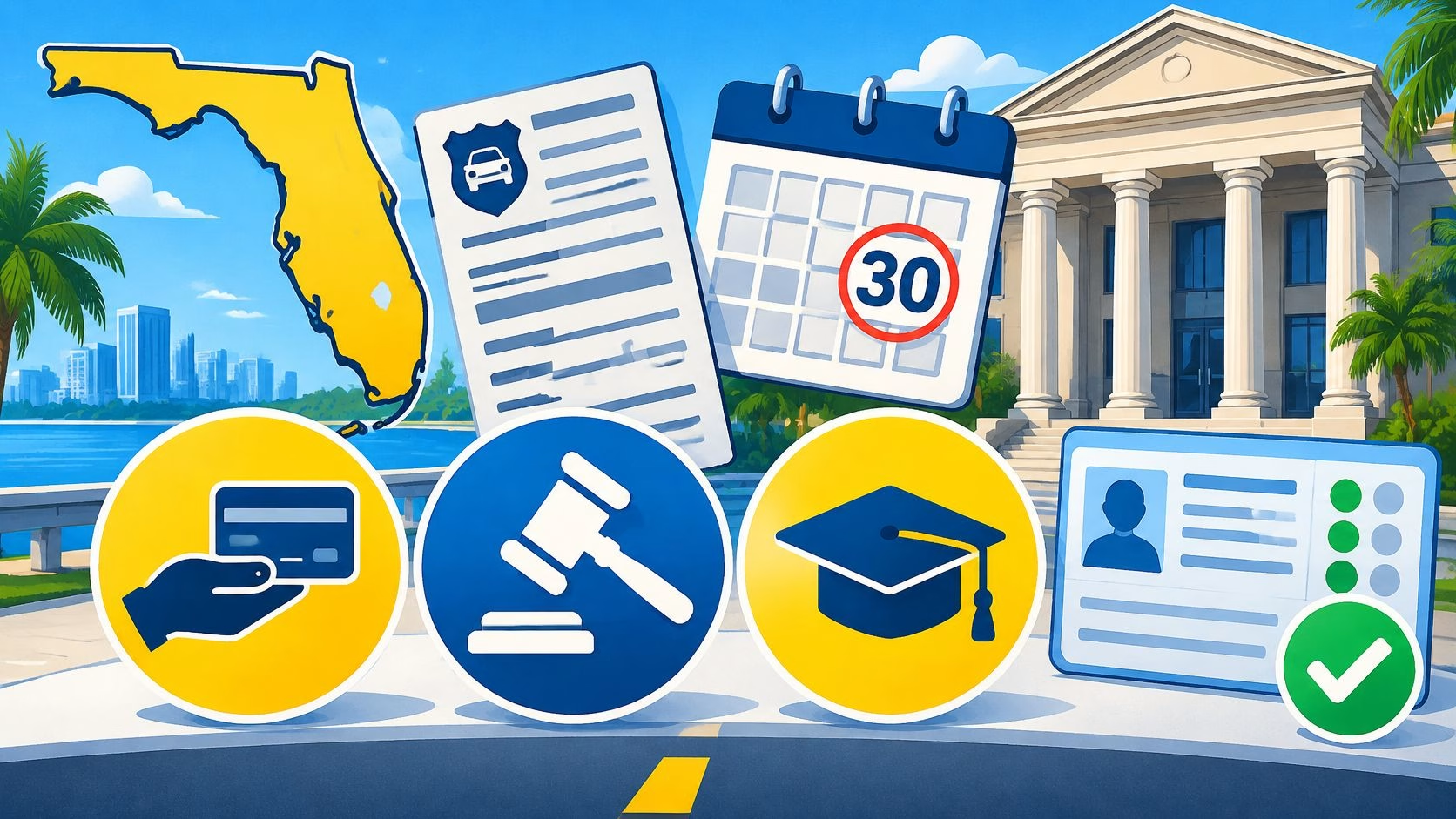
A missed court deadline can turn a manageable traffic citation into added fines, a suspended license, or a failure-to-comply notice. A typical court compliance example involves a driver who receives a ticket, is ordered to complete an approved course, and must provide proof of completion by a specific date. The course is only one part of the process. The driver must also follow the court’s instructions for payment, documentation, and submission.
For most drivers, the goal is straightforward: satisfy the requirement correctly, protect driving privileges, and avoid unnecessary penalties. The details, however, depend on the court, the citation, the state, and the language in the court order.
A Court Compliance Example for a Traffic Ticket
Consider a driver who receives a speeding citation. The court or clerk’s office informs the driver that they may be eligible to complete a state-approved basic driver improvement course rather than receive points on their record. The notice states that the driver must pay the required court amount, complete the course, and ensure the completion certificate is filed by the listed deadline.
The driver enrolls in a course that is approved for that specific purpose, completes every required lesson and final exam, and receives a certificate of completion. Depending on the jurisdiction, the course provider may report completion electronically, the driver may need to submit the certificate personally, or both may be required.
Compliance is complete only when the court or the appropriate agency accepts the required proof. Finishing a course after the deadline, choosing a course that is not approved for the driver’s county or case type, or assuming a provider reports automatically can all create problems. The safest approach is to read the court notice first and confirm exactly what the court expects.
What “Court Compliance” Means
Court compliance means completing every condition ordered by a court or authorized through a court-related traffic program. For a traffic matter, that may include a driver improvement course, payment of fines and fees, proof of insurance, community service, a court appearance, or compliance with a probation condition.
A driving course is often assigned to improve knowledge of traffic laws, decision-making, and safe driving habits. It may also be available as an option for qualifying drivers who want to address a citation under a local diversion or election program. Eligibility is not automatic, and the court’s notice controls.
Court compliance is different from simply resolving the original ticket. A driver can pay a fine but still need to submit a certificate. Another driver may complete a course but still need to pay an administrative fee. Treat each item on the notice as a separate requirement unless the court says otherwise.
How to Read Your Court Notice
Start with the document that came from the court, clerk, citation agency, or supervising authority. Look for the case number, citation number, deadline, required course name or length, and directions for reporting completion. If the wording is unclear, contact the court clerk or the agency identified on the notice before enrolling.
Pay close attention to whether the requirement says “court ordered,” “approved,” “certified,” or “accepted by the court.” Those terms can affect which course you need. A general defensive driving course may not meet a requirement for an aggressive driver program, a wireless communications device course, or another specialized program.
Also check whether the court requires an original certificate, a digital record, a mailed copy, or electronic reporting from the provider. Keep a copy of every document you submit, along with confirmation numbers, email receipts, and the date and time of submission.
Choosing the Right Course for the Requirement
The right course is the one accepted for your exact reason for enrollment. That may be a basic driver improvement course for a traffic citation, a traffic law and substance abuse education course for first-time licensing, or an intermediate or aggressive driver program following a more serious violation.
Approval requirements vary by state and sometimes by county or court. Before you start, confirm the course’s approval status and make sure its completion method matches your notice. A convenient online course can allow you to work from a phone, tablet, or computer on your own schedule, but convenience does not replace the need for correct approval.
If electronic reporting is offered, ask whether it is sent directly to the court, the DMV, or another state system. If you are responsible for filing the certificate yourself, do not wait until the final day. Courts may need processing time, and technical issues can happen when deadlines are close.
DriverEducators.com offers online driver education and improvement courses designed for approved requirements in applicable states. Drivers should still verify that a selected course meets the specific instructions on their court notice before enrollment.
A Practical Compliance Checklist
Before considering the matter resolved, confirm that you have completed each of these four steps:
- Read the court notice and identify every deadline, fee, and condition.
- Verify that the selected course is approved for your case and location.
- Complete the entire course early enough to allow for reporting or certificate submission.
- Confirm the court, clerk, DMV, or required agency received the completion record.
That final confirmation matters. A certificate in your email inbox is useful evidence, but it may not prove the court has updated your file. If the court provides an online case portal, check your case status after the expected processing period. If no portal is available, contact the clerk and ask whether the compliance item has been recorded.
Common Mistakes That Delay Compliance
The most common mistake is enrolling in a course based only on its title. Courses with similar names can serve very different legal or licensing purposes. A driver should match the course to the notice, not to a general description found online.
Another mistake is treating the course deadline as the submission deadline. If a court requires proof by Friday, completing the course Friday evening may be too late. Plan for the time needed to issue, transmit, upload, or mail the certificate.
Drivers also sometimes assume that paying a ticket means there is nothing else to do. In some cases, payment may be an admission of responsibility and may affect eligibility for a course or alternative disposition. When a notice offers options, review the instructions before making a payment.
Finally, do not ignore a notice because you moved, lost the original ticket, or believe the issue was already handled. Contact the court promptly, provide the citation or case number if available, and request the current status. Acting early usually gives you more options than waiting for a suspension notice.
If You Missed the Deadline
Contact the court or clerk as soon as possible. Ask whether the case remains open, whether a late filing can be accepted, and whether you need to appear before a judge. Do not assume that completing a course late will automatically erase a failure-to-comply status.
The outcome depends on local rules and the status of your case. You may need to pay an additional fee, request a new deadline, submit proof of completion, or resolve a license hold with both the court and the DMV. Keep notes from each call, including the representative’s name, the date, and the instructions provided.
Frequently Asked Questions
What is a court compliance example?
A court compliance example is completing every condition tied to a traffic case, such as an approved course, fine payment, and certificate submission by the deadline. The court notice defines the required steps.
Does completing a driving course automatically close my case?
Not always. Some providers report electronically, while other courts require you to submit the certificate yourself or complete additional requirements.
How do I know whether an online course is accepted?
Check the court notice and verify approval for your state, case type, and court program before enrolling. If you are unsure, contact the clerk’s office.
What proof should I keep after finishing the course?
Keep your completion certificate, enrollment receipt, confirmation emails, and any record showing when and where you submitted proof. Save them until the case shows as resolved.
Can I take the course after the court deadline?
You may be able to, but late completion is not guaranteed to satisfy the requirement. Contact the court immediately to ask what action is needed.
A court requirement does not have to be confusing or disruptive. Read the order closely, choose the approved course that matches it, finish with time to spare, and verify that your record reflects compliance. Those few careful steps can help keep a traffic matter from becoming a larger licensing problem.