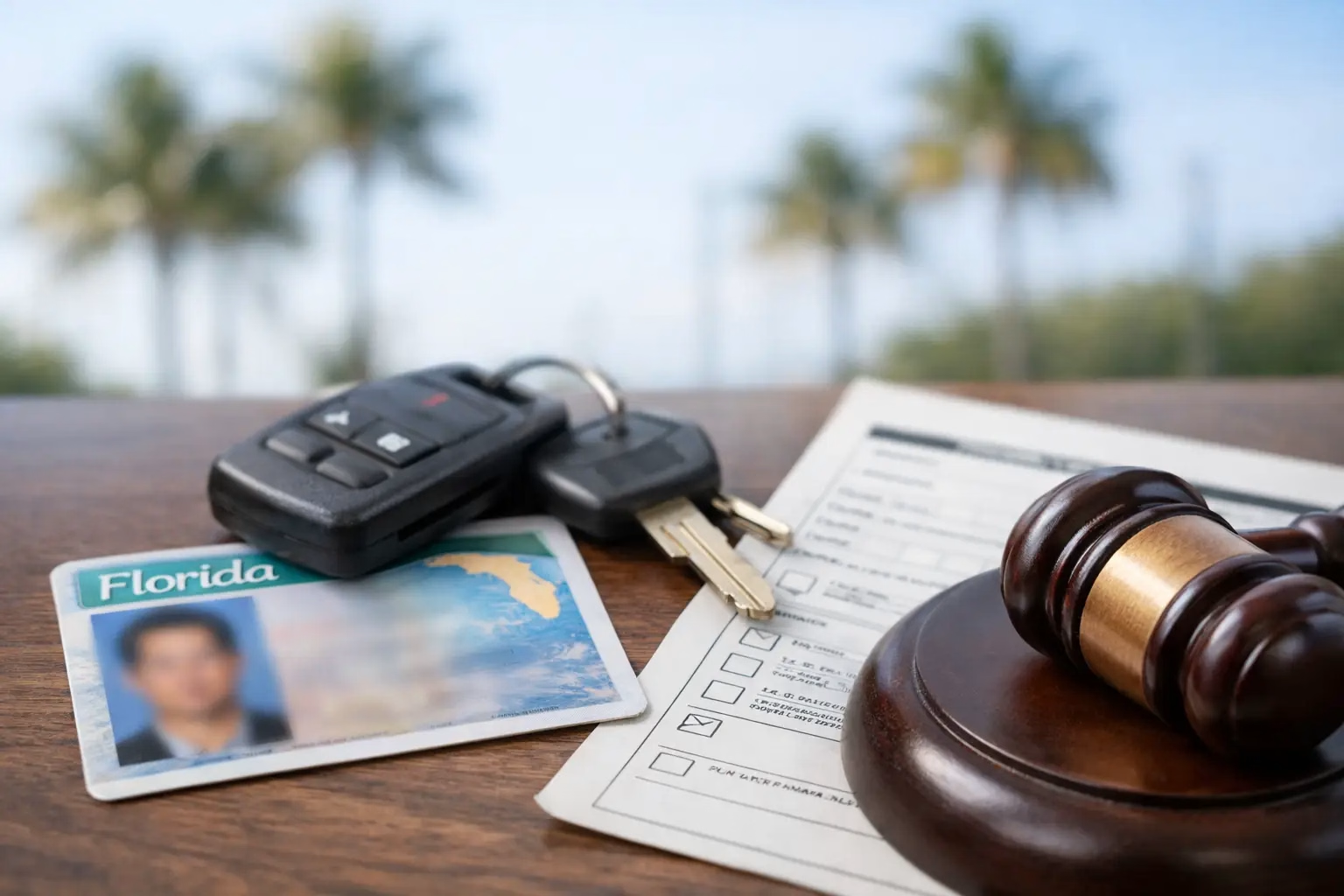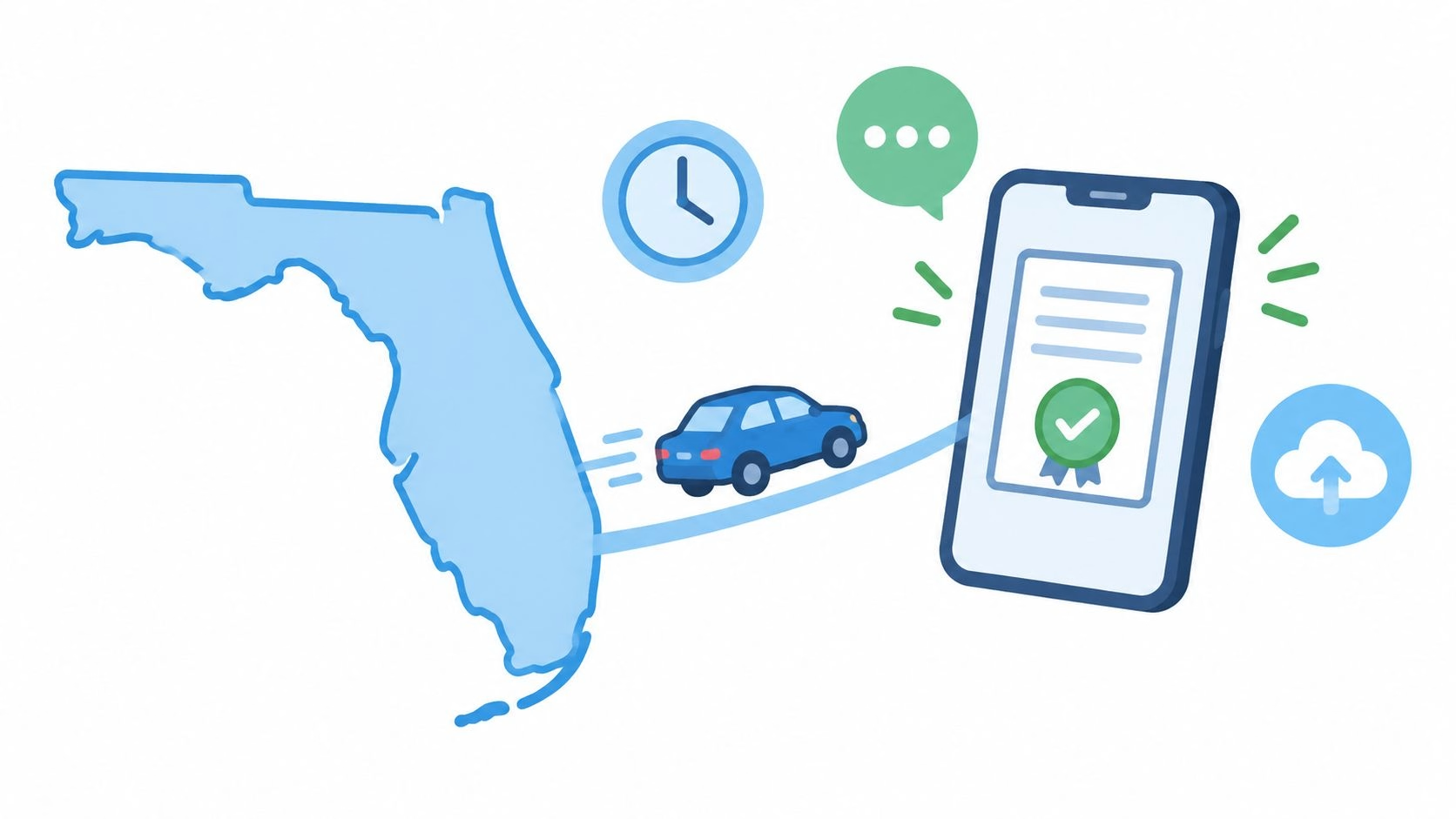

A traffic citation can come with a short deadline, a confusing court notice, and one question that matters immediately: can online courses satisfy courts? Often, yes. But an online course only counts when it matches the exact requirement in your court order and is approved for your state, county, or jurisdiction.
The convenience of completing traffic school from your phone or computer is real. So is the risk of taking the wrong course, missing a reporting deadline, or enrolling before you know whether the court requires preapproval. Treat the order from the court as the final instruction, then choose a course that is specifically accepted for that purpose.
When Can Online Courses Satisfy Courts?
Online courses can satisfy courts when the judge, clerk, state agency, or local traffic program permits online completion and the provider is approved for the assigned course. This commonly applies to traffic school, basic driver improvement, defensive driving, aggressive driver education, and certain substance abuse or driver education requirements.
Approval is not universal. A course accepted in one Florida county, for example, may not satisfy an order issued in another state. Courts can also set requirements beyond the course topic, such as a minimum number of instructional hours, a specific program name, a completion deadline, or a certificate submission process.
Your court paperwork may use terms such as traffic school, driver improvement, defensive driving, diversion program, or remedial driving course. Those labels are not always interchangeable. A defensive driving course for an insurance discount may be valuable, but it may not fulfill a court-ordered basic driver improvement requirement.
The court order controls the decision
Start with the citation, disposition notice, sentencing order, or instructions from the clerk of court. Look for the exact course name, deadline, case number, court location, and directions for filing your completion certificate.
If the document says you are eligible to elect traffic school, check whether you must make that election before enrolling. In some jurisdictions, completing a course without first notifying the court or DMV does not remove points, prevent a conviction, or resolve the citation.
When the paperwork is unclear, contact the court clerk or the agency named in your notice. Ask a direct question: “Is an online course accepted for my case, and which approved course do I need?” Keep a record of the answer, including the date and the name of the person who provided it.
What Makes an Online Course Court-Accepted?
A court-accepted course is not simply a course that teaches safe driving. It is a program authorized by the relevant state authority or accepted by the court for a defined legal or administrative purpose.
The provider should clearly identify the states, course types, and approvals associated with its programs. You should also be able to see the course length, pricing, certificate process, technical requirements, and customer support options before you begin.
A legitimate online driver education provider may use identity verification, timed modules, knowledge checks, required attendance time, and a final exam. These features can feel more structured than a casual online class because the course must document that the enrolled person completed the required instruction.
Do not assume a certificate alone proves compliance. The certificate must reflect the correct student name, course, completion date, and, when required, case or citation information. Some providers report completion electronically to the court or DMV. Others issue a certificate that you must submit yourself.
Four details to verify before enrollment
Before paying for a course, confirm these four items with your court notice and the provider’s course information:
- Course type: Make sure the course title and required hours match the order.
- Approval: Confirm the course is approved or accepted in the state and jurisdiction handling your case.
- Deadline: Find out whether the course must be completed, reported, or received by the court by a certain date.
- Reporting method: Verify whether the provider reports electronically or whether you must upload, mail, or deliver your certificate.
This step takes only a few minutes and can prevent the expense and delay of repeating a course.
Common Situations Where the Answer Changes
The answer to whether online coursework will satisfy a court is often based on the reason the course was assigned. Traffic ticket requirements are usually handled differently from criminal sentencing, DUI-related education, or probation conditions.
Traffic citations and point reduction
For a routine moving violation, an approved online traffic school or driver improvement course may help you meet a court requirement, avoid points, reduce penalties, or qualify for a citation dismissal. Eligibility can depend on your driving history, the type of violation, and how recently you last completed traffic school.
Serious violations may be excluded. Speeding far above the limit, crashes involving injuries, commercial driver cases, and repeat offenses can have separate rules. Never rely on a course enrollment confirmation as proof that a ticket has been resolved.
Court-ordered driver improvement
A judge may order a driver improvement course after repeated violations, aggressive driving, reckless driving, or a license-related issue. These orders often require a particular program rather than a general defensive driving course.
Pay close attention to the required number of hours. An intermediate or advanced driver improvement course cannot always be replaced with a shorter basic course, even if both cover traffic laws and safe-driving strategies.
DUI, substance-related, or probation requirements
Alcohol, drug, DUI, and probation-related cases require added caution. A court may require a state-approved in-person program, assessment, treatment, victim impact panel, or a specific education provider. An online course may be allowed for part of the requirement, but it may not satisfy every condition.
Get written confirmation from the court, probation officer, or assigned agency before enrolling. This is especially important when your license status, probation compliance, or criminal case outcome is involved.
How to Complete the Requirement Without Last-Minute Problems
Once you have confirmed that an online course is accepted, enroll using the same legal name shown on your court documents. Enter your citation or case number carefully if the course asks for it. A small mismatch can slow down reporting or make it harder for the clerk to locate your record.
Begin early. Online access is available around your schedule, but most approved courses still require a set amount of study time. Waiting until the final evening leaves no room for technical issues, identity checks, a final exam retake, or certificate processing.
Save proof at every stage. Keep your enrollment receipt, confirmation emails, completion certificate, and any electronic reporting confirmation. If you submit the certificate yourself, follow the court’s instructions exactly and retain evidence that it was received.
If the provider reports electronically, check with the court or DMV after a reasonable processing period rather than assuming the record updated immediately. Courts may need time to match a completion record to your case.
DriverEducators.com offers online driver education and traffic safety programs designed around approved course requirements, self-paced access, and clear completion documentation. Still, the course selection should always begin with the exact requirement listed on your court notice.
FAQ: Can Online Courses Satisfy Courts?
Can I take online traffic school before asking the court?
Sometimes, but it is safer to confirm eligibility first. Some courts require you to elect traffic school or receive approval before you complete the course.
Will an online certificate automatically dismiss my ticket?
No. A certificate documents course completion, not automatic case dismissal. The court must receive and accept it, and you may still need to pay a fine or meet other conditions.
Can I use an insurance discount course for court?
Usually not unless the court specifically accepts it. Insurance discount courses and court-ordered driver improvement courses can have different approval standards and hour requirements.
What happens if I finish the course after my deadline?
The court may reject the completion or impose additional penalties. Contact the court immediately if a deadline has passed or you need an extension.
Do courts accept certificates from every online provider?
No. Courts generally accept only providers and programs approved for the required state and course type. Verify acceptance before you enroll.
A court requirement is manageable when you focus on the details that determine compliance: the right course, the right approval, and proof delivered by the right deadline. Taking those steps first lets online learning provide the convenience it is supposed to provide, without adding uncertainty to your case.