
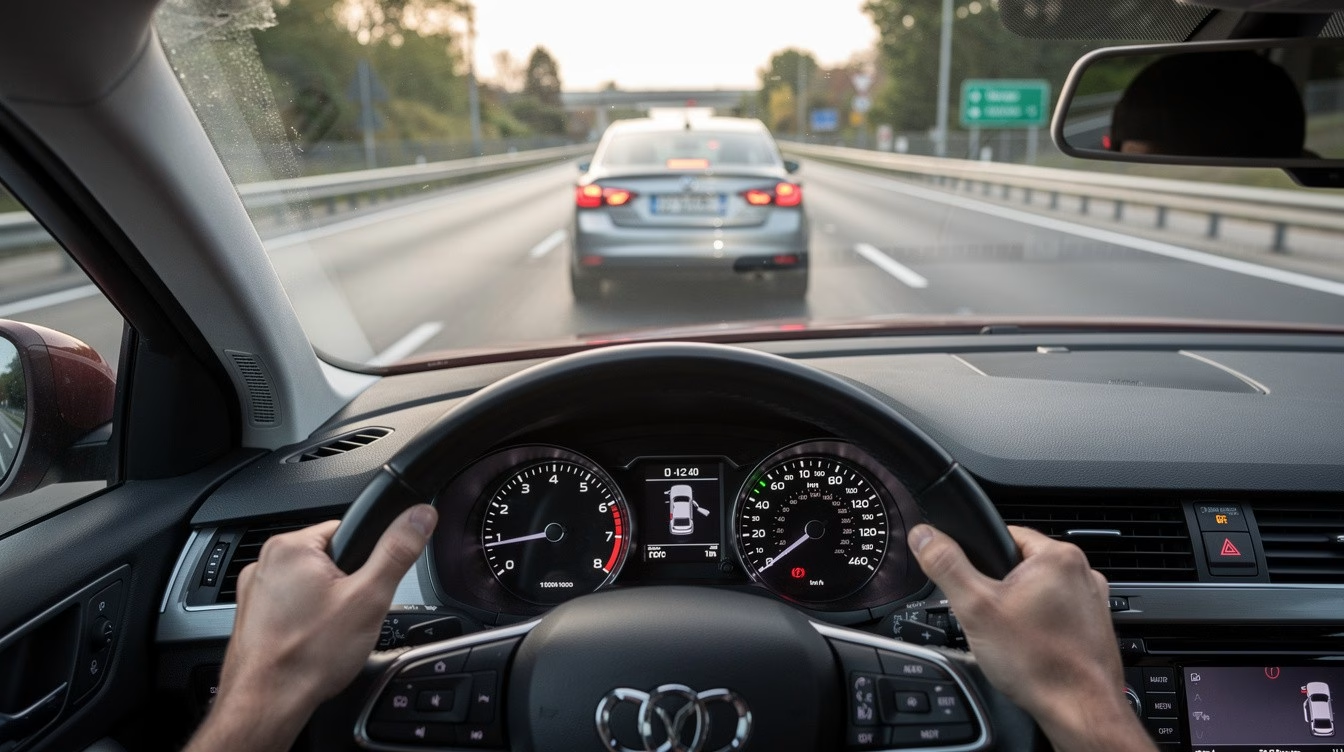
Most drivers underestimate how far their vehicle travels before coming to a complete stop. The distance between spotting a hazard and your car actually stopping is split into two distinct phases, and understanding this gap saves lives.
At DriverEducators.com, we break down the science behind stopping distance and show you exactly how to maintain a safe following distance in real-world driving conditions. Speed, weather, tire condition, and brake performance all play measurable roles in how quickly you can stop.
How Your Stopping Distance Breaks Down Into Two Critical Phases
Most drivers underestimate how far their vehicle travels before coming to a complete stop. The distance between spotting a hazard and your car actually stopping splits into two separate measurements that happen in sequence, and most drivers fatally underestimate the first one.
Thinking Distance vs. Braking Distance
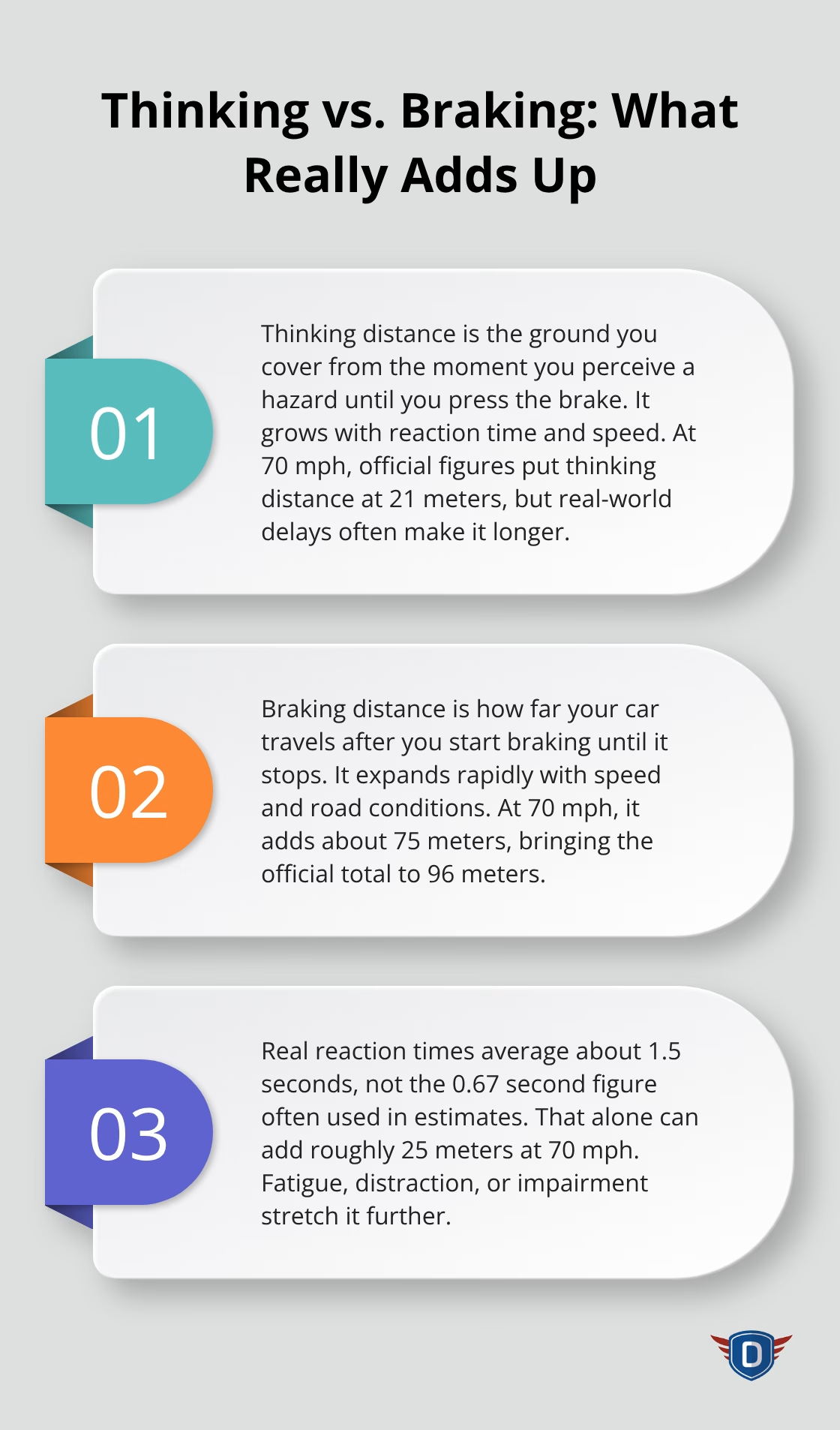
Thinking distance is how far your vehicle travels from the moment you perceive a hazard until you actually press the brake pedal. Braking distance is the distance your car needs to come to a complete stop after braking begins. According to the Highway Code, at 70 mph your thinking distance alone covers 21 meters, while your braking distance adds another 75 meters, totaling 96 meters before you stop completely.
Real-world reaction times are significantly longer than official estimates assume. Research from the Transport Research Laboratory shows average thinking time sits around 1.5 seconds, more than double the 0.67 second assumption used in Highway Code figures. This means at 70 mph, actual stopping distance can exceed official estimates by roughly 25 meters, or about six car lengths. Fatigue, distraction, or impairment stretch thinking time even further, making the gap between official figures and reality dangerously wide on highways.
Speed Creates Disproportionate Stopping Distance Increases
The relationship between speed and stopping distance is not linear, and this is where most drivers make catastrophic miscalculations. Braking distance increases with the square of your speed, meaning a small speed increase creates a disproportionately large jump in how far you travel before stopping. Jumping from 50 mph to 60 mph does not add roughly 20 percent more stopping distance-it adds substantially more.
At 50 mph, total stopping distance reaches roughly 53 meters. At 60 mph, it jumps to 73 meters, an increase of 20 meters despite only raising speed by 10 mph. This acceleration of stopping distance becomes even more dramatic at highway speeds. Wet conditions double your braking distance, while snow or ice multiply it by ten. A loaded commercial vehicle at 65 mph may require over 500 feet to stop, which is why professional drivers must account for far greater following distances than passenger car drivers.
Tire and Brake Condition Directly Control Your Actual Stopping Performance
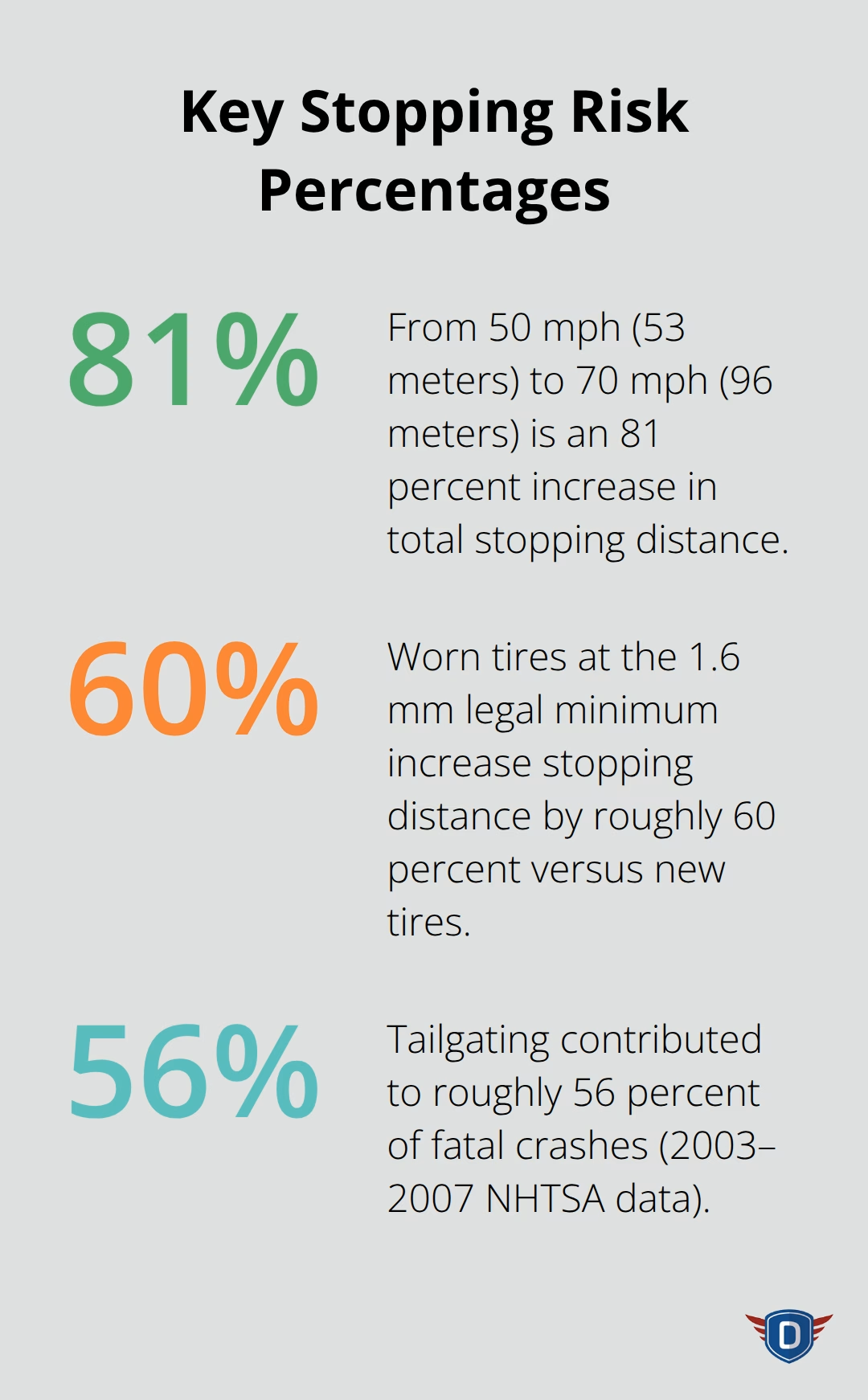
Your tires and brakes directly control whether you can actually achieve the stopping distances you calculate. Budget tires add approximately 14 meters to your stopping distance at 70 mph in wet conditions compared to premium tires, according to RAC testing. Worn tires at the legal minimum of 1.6 mm tread depth increase stopping distance by roughly 60 percent versus new tires. Under-inflated tires compound the problem by reducing grip and heating up during braking.
Brake pad wear, moisture between pads and discs after water exposure, and overall brake system condition all extend braking distance measurably. If your brakes or tires fall below standard, you cannot stop as quickly as the numbers suggest, which means the safe following distances you calculate become worthless. Regular maintenance is not optional if you want stopping distances that match reality. The next section explores exactly how to maintain your vehicle so your brakes and tires perform at their peak.
What Actually Controls Your Stopping Distance
Speed Amplifies Stopping Distance Exponentially
Speed amplifies stopping distance exponentially, not linearly, which means your intuition about stopping performance is almost certainly wrong. A 10 mph increase at highway speeds creates stopping distances that jump by 20 meters or more, not a proportional 10 percent bump. At 50 mph you need 53 meters total, but at 70 mph you need 96 meters-an 81 percent increase for only a 40 percent speed bump.
Reducing speed by just 5 mph cuts your stopping distance by roughly 10 to 15 meters at highway speeds. That genuinely meaningful safety margin costs almost nothing in travel time. The relationship between speed and stopping distance is so steep that small adjustments yield outsized safety gains.
Vehicle Weight Compounds Stopping Challenges
Vehicle weight compounds this problem severely. A loaded commercial truck at 65 mph requires over 500 feet to stop compared to roughly 200 feet for a passenger car at the same speed. Heavy vehicles carry momentum that brakes alone cannot dissipate quickly, which is why professional drivers maintain following distances measured in seconds rather than car lengths.
Larger vehicles need proportionally longer stopping distances because mass resists deceleration. This reality shapes how commercial fleets must operate on highways and city streets alike.
Road Conditions Destroy Theoretical Stopping Distances
Road conditions destroy the stopping distances you calculate in your head. Wet pavement reduces friction between tire and asphalt, while snow or ice multiply stopping distance by ten according to Highway Code data. You cannot rely on the same stopping distance in rain as you would on dry pavement, and most drivers fail to adjust their following distance accordingly.
Weather changes stopping performance faster than drivers adjust their behavior. This gap between conditions and driver response creates the majority of weather-related collisions.
Tire Quality and Condition Determine Real-World Performance
Tire quality determines whether those theoretical stopping distances become reality or fiction. Premium tires add roughly 14 meters less stopping distance at 70 mph in wet conditions than budget alternatives according to RAC testing, which translates directly to the difference between stopping before a collision and hitting whatever is ahead.
Worn tires exhibit an average increased stopping distance of 87 feet for a passenger car compared to new tires. Under-inflated tires worsen the situation by reducing grip and generating excess heat during braking. Your brake system condition matters equally-moisture between brake pads and discs after driving through water, worn pads, and degraded fluid all extend braking distance measurably.
Maintenance Bridges the Gap Between Theory and Reality
Maintenance is not optional if you want stopping distances that match reality rather than theoretical numbers that only work on perfectly maintained vehicles in ideal conditions. Regular brake inspections, tire pressure checks, and tread depth monitoring keep your vehicle performing at its actual capability rather than some imaginary best-case scenario.
The next section explores exactly how to maintain your vehicle so your brakes and tires perform at their peak, and how to adjust your driving behavior when conditions or equipment fall short of ideal.
How to Apply the Three-Second Rule and Adjust for Real Conditions
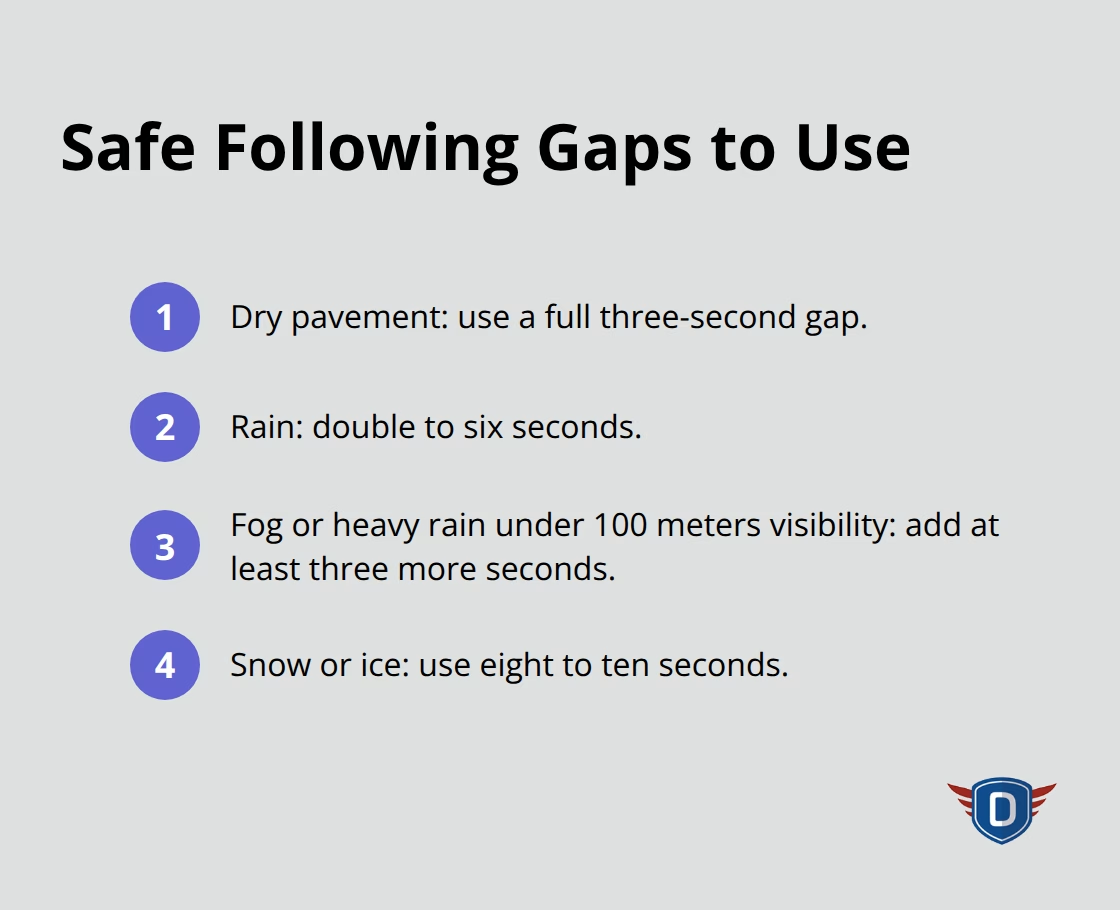
The three-second rule works only if you actually use it, and most drivers abandon it the moment traffic feels slow. Count three full seconds after the vehicle ahead passes a fixed object like a road sign or bridge pillar, then check whether you’ve reached that same marker. If you haven’t, you’re following too closely.
This simple test accounts for your vehicle’s length and reaction time without requiring math, but it assumes dry pavement and normal visibility. In rain, double your distance to six seconds because wet roads cut tire grip dramatically, and braking distance can be 1.5 to 2 times longer than on dry roads. In fog or heavy rain where visibility drops below 100 meters, add another three seconds minimum. Snow and ice demand eight to ten seconds since braking distance multiplies by ten according to Highway Code data.
Most drivers refuse to leave these gaps because it feels excessive, yet this refusal directly causes rear-end collisions. NHTSA data shows tailgating contributed to roughly 56 percent of fatal crashes from 2003 to 2007, and the economic cost of tailgating-related crashes runs into billions annually through vehicle damage, injuries, and liability. The three-second rule is not a suggestion for cautious drivers; it’s the minimum gap that protects you legally and physically.
Tire Maintenance Determines Whether Your Stopping Distance Calculations Actually Work
Your tires determine whether stopping distance theory becomes reality. Check tread depth monthly using the penny test: insert a penny upside down into the tread grooves, and if you see the top of Lincoln’s head, your tread is at or below 2/32 inches and requires replacement immediately.
Tires at 1.6 millimeters tread depth, the legal minimum in most places, increase stopping distance by roughly 60 percent compared to new tires. Budget tire brands add approximately 14 meters to your stopping distance at 70 mph in wet conditions versus premium alternatives, which means choosing cheap tires directly lengthens how far you travel before stopping. Under-inflated tires worsen this dramatically by reducing grip and generating excess heat during braking.
Check tire pressure when tires are cold, before driving or at least three hours after driving, since heat from friction inflates pressure artificially. Pressure should match the manufacturer specification on your driver’s door jamb, not the maximum pressure listed on the tire itself. Replace tires before they reach legal minimum if you drive frequently in wet conditions, since worn tires perform worse in rain than dry pavement.
Brake Inspection Reveals Hidden Performance Problems Before They Cause Collisions
Brake condition directly controls your actual stopping capability, yet most drivers ignore brakes until they feel spongy or produce warning sounds. Schedule a brake inspection annually or every 12,000 to 15,000 miles, whichever comes first, to catch worn pads and degraded fluid before they compromise stopping distance.
Moisture between brake pads and discs after driving through water or deep puddles extends braking distance temporarily; test your brakes gently in a safe area after water exposure to dry them. Brake fluid absorbs moisture over time, which lowers the boiling point and can cause brake fade during heavy braking or extended downhill driving. If your brake pedal feels softer than normal or requires more pressure to stop, have the system inspected immediately since these symptoms indicate fluid contamination or air in the lines.
Worn brake pads typically show 60 to 70 percent wear before producing warning sounds, meaning you may have already lost stopping performance before the squeal alerts you. Premium brake pads cost roughly 20 to 40 percent more than budget alternatives but provide better heat dissipation and consistent stopping power across a wider temperature range. Maintaining brakes at their peak performance costs far less than repairing collision damage or facing liability for hitting a vehicle you couldn’t stop in time to avoid.
Final Thoughts
Stopping distance transforms from theory into life-or-death reality the moment weather changes or a hazard appears ahead. The 96 meters your car needs to stop at 70 mph on dry pavement becomes 192 meters in rain and potentially 960 meters on ice, yet most drivers fail to adjust their safe following distance accordingly. Speed amplifies this number exponentially, tire quality determines whether you achieve it, and brake condition controls whether your vehicle responds when you need it most.
Three actions protect you on every drive: leave a safe following distance using the three-second rule on dry pavement, then double or triple it based on weather and visibility; check your tire tread depth monthly and replace tires before they reach legal minimum, especially if you drive frequently in wet conditions; schedule brake inspections annually to catch worn pads and fluid contamination before they compromise stopping performance. These habits cost almost nothing compared to collision damage, injury liability, or worse. Tailgating contributes to roughly 56 percent of fatal crashes, which means your commitment to maintaining proper stopping distance protects you, your passengers, and everyone sharing the road.
We at DriverEducators.com teach drivers how defensive driving techniques and safe following distance work together to prevent crashes before they happen. Small adjustments to speed and following distance yield outsized safety gains on every drive. Your next step is to apply these principles on your commute today.