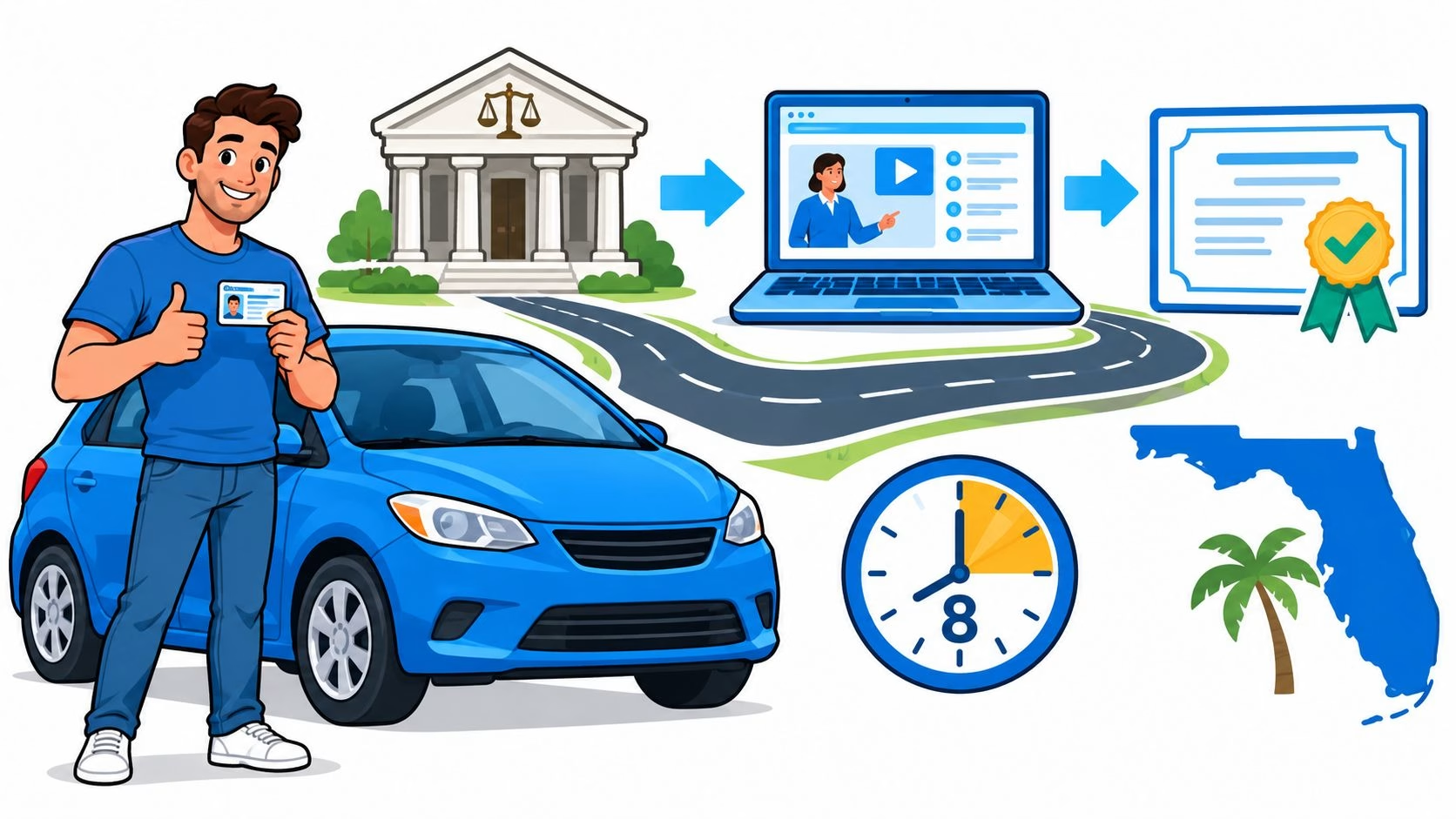
A certificate is often the final item standing between you and a cleared court requirement, restored driving privilege, insurance discount, or next licensing step. This certificate delivery review explains what drivers should verify before enrolling in an online course and after completing one, so a finished course does not turn into an avoidable administrative delay.
For most drivers, the key question is not simply, “Will I receive a certificate?” It is “How will the right agency receive proof of completion, and when?” The answer depends on your state, course type, and the agency requiring the course.
Why Certificate Delivery Details Matter
Driver education certificates are not all handled the same way. A court may require you to submit your own completion certificate. A state licensing agency may receive results electronically from an approved course provider. An insurance company may ask you to send a copy directly to its discount department.
Assuming every course works the same way can create problems. If you wait for a mailed certificate when your provider reports electronically, you may miss a deadline while looking for paperwork. If you assume electronic reporting is automatic when self-submission is required, the court or DMV may show your requirement as incomplete.
Before you begin, confirm the exact requirement listed on your citation, court order, DMV notice, insurer letter, or licensing checklist. Look for the agency name, deadline, approved course type, required number of hours, and instructions for submitting proof.
Certificate Delivery Review: What to Check Before Enrolling
The best time to review delivery is before paying for a course. Course approval and certificate delivery are related, but they are not identical. An approved course may still have different reporting procedures based on the state or program.
Confirm the course matches your requirement
Start with the course name and purpose. Basic Driver Improvement, traffic school, first-time driver education, mature driver insurance discount, aggressive driver education, and court-ordered programs can have different completion records and delivery rules.
A course that is approved for insurance savings may not satisfy a traffic court requirement. Likewise, a course accepted for one state agency may not be accepted by a court in another jurisdiction. When the order or notice names a specific course, follow that language closely.
Ask who receives the completion record
There are three common delivery methods. Your provider may report completion electronically to the required agency, make a certificate available for you to download or print, or send a certificate by mail or another delivery method.
Electronic reporting can be convenient, but it does not always mean the agency updates its records instantly. Courts, DMVs, and insurers each have their own processing timelines. Keep your completion confirmation even when a provider reports on your behalf.
Check the timing, not only the delivery method
A certificate may be issued immediately after course completion, while agency reporting can take longer. Some programs require a final identity verification, exam, or payment confirmation before a certificate is released.
If you have a deadline, finish well ahead of it. Do not plan to complete a required course on the morning a court filing is due. Allow time for the provider to process your record and for the receiving agency to post it.
Verify the information on your enrollment record
Your name, date of birth, driver license number, citation number, and case number must be entered accurately when required. A single incorrect digit can prevent an electronic completion record from matching the agency file.
Use the name and identifying information shown on your official notice. If you notice an error, contact the course provider before completing the course whenever possible. Corrections may take additional time after a record has already been submitted.
What a Valid Completion Certificate Usually Includes
A valid certificate generally identifies the student, the completed course, the completion date, and the approved provider. Depending on the program, it may also include a certificate number, approval number, provider license number, course duration, or verification code.
These details help a court, DMV, or insurance company confirm that the record belongs to you and satisfies the stated requirement. A screenshot showing that you finished course modules may be useful for your personal records, but it may not be accepted as official proof of completion.
Keep a readable copy of the actual certificate or completion confirmation. Save it in more than one place, such as your email and a secure phone or computer folder. If you need to submit it yourself, submit the complete document rather than a cropped image with key details missing.
When Electronic Reporting Is the Better Option
Electronic reporting reduces the risk of a lost document and can simplify compliance for drivers who need records sent to a participating state agency. It is especially helpful when a course provider is authorized to transmit completion data directly to the DMV or another official system.
Still, electronic delivery does not remove your responsibility to verify completion. Check your course account for a completion status, save the confirmation, and review the agency record when enough processing time has passed. If your court portal, DMV account, or insurer continues to show the requirement as outstanding, act before the deadline.
Electronic reporting may not be available for every course, jurisdiction, or agency. Courts often have their own submission portals and filing procedures. If your notice tells you to upload, email, mail, or bring in a certificate, follow those instructions even if you believe the course provider also reports completions.
Common Certificate Delivery Problems and How to Avoid Them
The most common issue is completing the wrong course. This usually happens when a driver chooses based on a general course title rather than the exact requirement. Compare the provider’s approval information with your court, DMV, licensing, or insurance instructions before enrolling.
Another issue is a mismatch in personal information. A completion record submitted under a nickname, old address, incorrect driver license number, or wrong citation number may not connect to the agency’s record. Review your enrollment details carefully before the course is finalized.
Timing is also a frequent problem. A driver may complete a course by the deadline but fail to submit the certificate by the deadline. Unless the agency specifically says completion alone is enough, treat certificate submission as a separate required step.
Finally, do not discard your records after an agency marks the requirement complete. Keep the certificate and confirmation for your files. An insurer may request proof later, or an agency record may need to be reviewed if there is a processing error.
How to Follow Up When an Agency Cannot Find Your Certificate
First, confirm that you completed the course and that your final status shows completed rather than merely enrolled. Download or save the official completion certificate, receipt, and any reporting confirmation available in your account.
Next, check the expected reporting timeline. Contact the receiving court, DMV, or insurance company only after allowing the stated processing period, unless your deadline is close. Ask what identifying details they need to locate the record, such as your full name, date of birth, driver license number, citation number, or certificate number.
If the agency still cannot locate the record, contact the course provider with the same details. A dependable provider should be able to explain the delivery method, confirm whether a report was sent, and help identify issues that may require correction.
For court-related requirements, do not assume an unresolved record will be fixed automatically. Follow the court’s instructions and keep proof of your efforts, especially when a hearing date, payment due date, or compliance deadline is approaching.
FAQs About Certificate Delivery
How long does certificate delivery take after an online driver course?
It depends on the course and delivery method. Your certificate may be available right after completion, while electronic reporting and agency posting can take additional business days.
Do I need to submit my certificate if the provider reports electronically?
Usually, no, if the provider is authorized to report directly to the required agency. However, you should verify the instructions on your court or DMV notice and keep your own completion record.
Can I use a certificate from any online driving course?
No. The course must meet the specific approval and program requirements for your state, court, DMV, or insurer. Confirm acceptance before enrolling.
What should I do if my name is wrong on the certificate?
Contact the course provider as soon as possible. Incorrect personal information can prevent the agency from matching your certificate to your file.
Is a completion email the same as an official certificate?
Not always. A completion email confirms your course status, while an official certificate is the document or electronic record accepted by the receiving agency.
A course requirement should feel manageable, not uncertain. Choose the correct approved course, verify how completion is delivered, finish ahead of your deadline, and keep clear records until the agency confirms your requirement is complete.