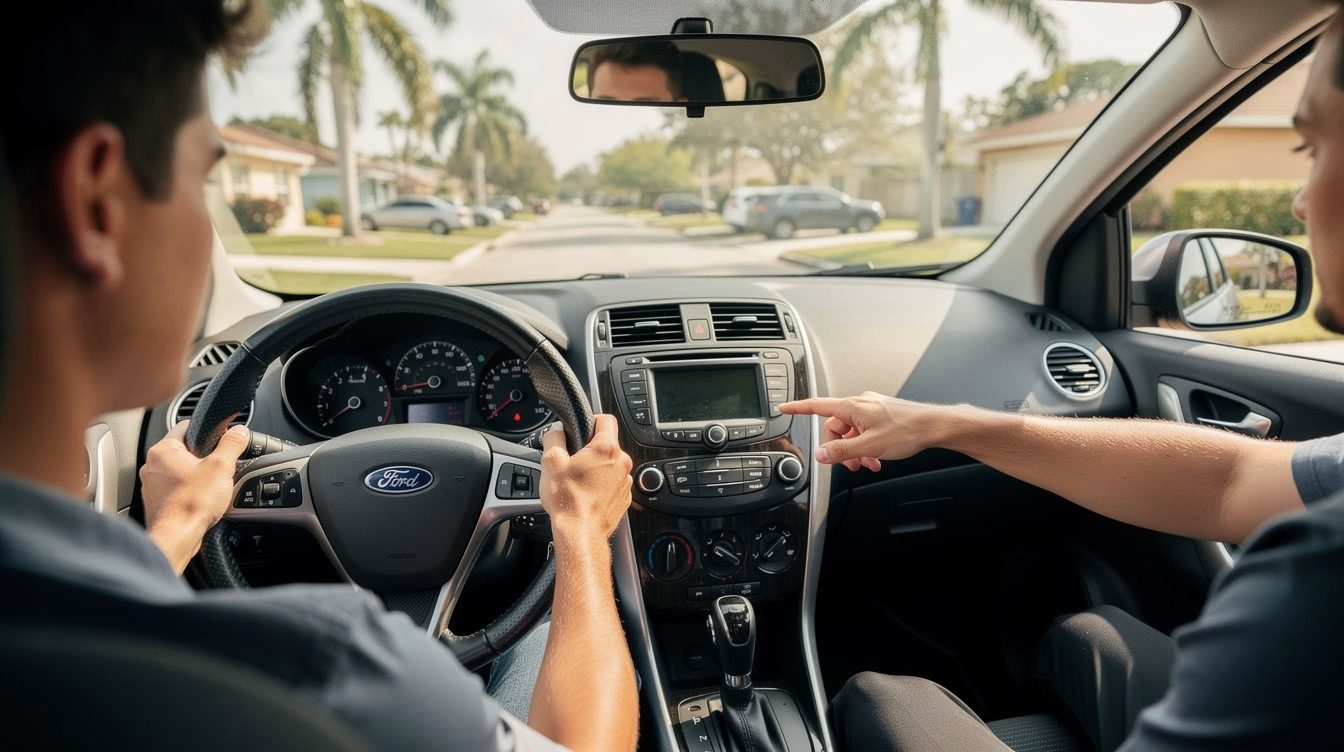
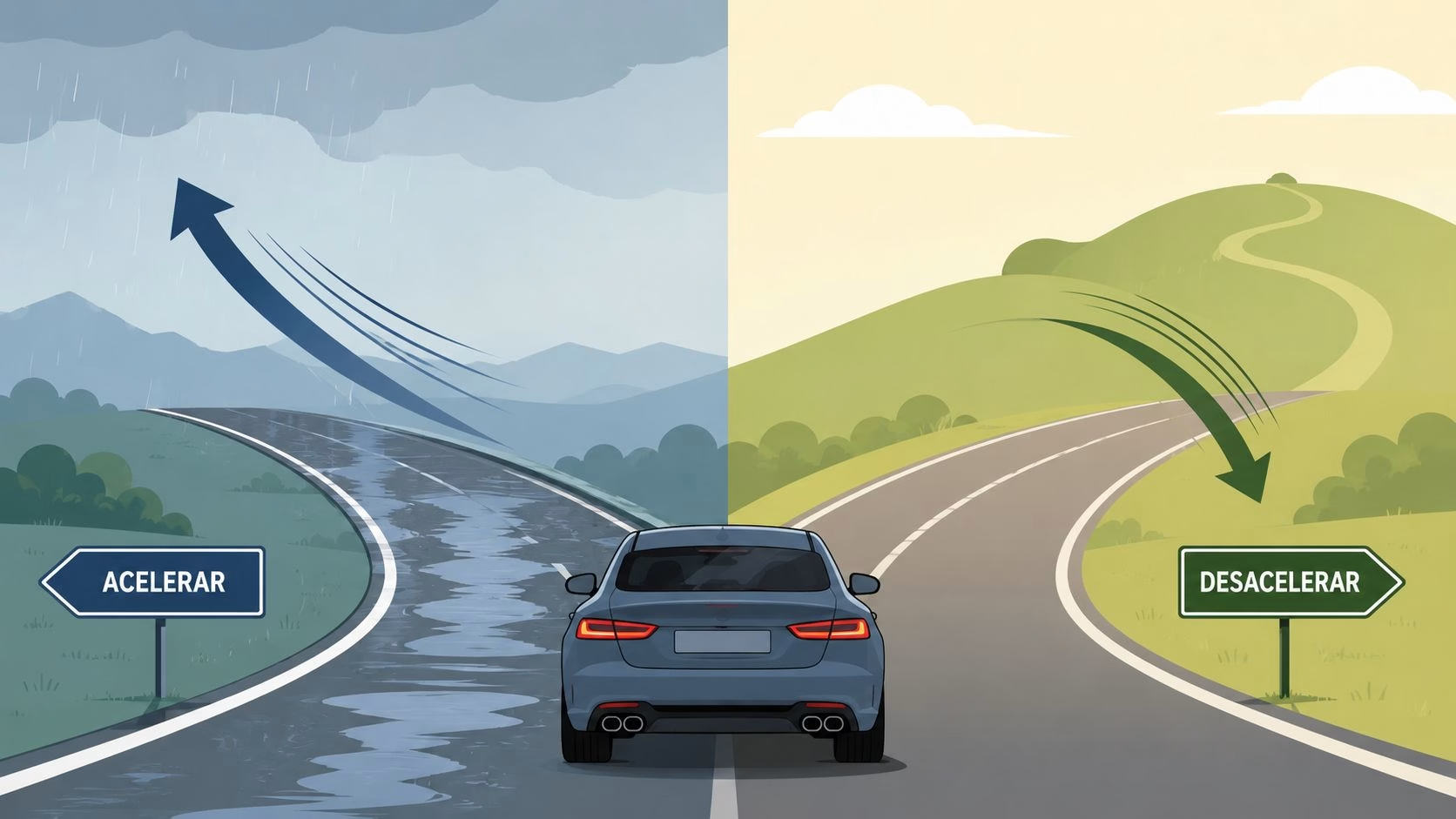
You’re easing through a Florida school zone when the car ahead brakes suddenly. Your right foot moves from the accelerator to the brake, but the critical question starts before that moment: how quickly was your vehicle changing speed, and how much road did you leave yourself to respond?
Acceleration and deceleration aren’t just classroom physics terms. They describe what happens every time you press the gas pedal, lift your foot, apply the brakes, merge into traffic, approach a turn, or slow for a pedestrian crossing. Understanding the difference helps you make smoother decisions, preserve a larger safety margin, and recognize why speed can turn a manageable stop into an emergency.
What Acceleration and Deceleration Mean at the Wheel
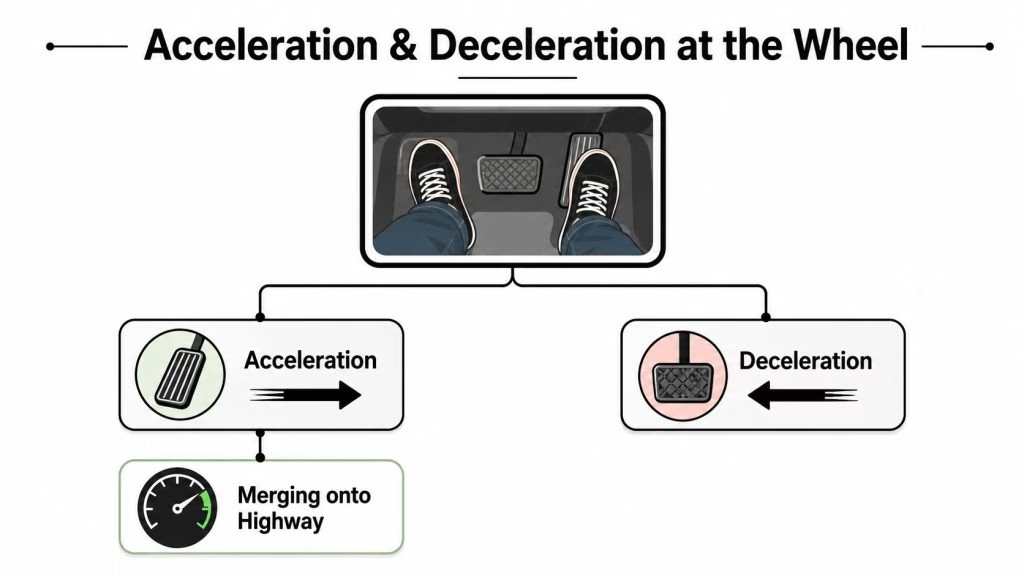
Your right foot shapes both speed and the safety margin around your vehicle. Acceleration means velocity changes over time. Drivers usually notice it as speeding up when joining a highway, yet turning also changes velocity because velocity includes direction as well as speed.
Deceleration reduces speed. It can begin when you lift off the accelerator, apply the brakes, travel against gravity on a slope, or use engine braking. In daily driving, deceleration is how you bring momentum under control before a corner, a queue, or a crossing.
A useful driving translation: The accelerator builds speed, while the brake system removes speed. Both pedals manage changing velocity.
Pedal pressure sets the pace of that change. A light accelerator input adds forward movement gradually. Releasing it smoothly lets the vehicle settle, while progressive braking asks the tires to use their available grip without demanding maximum force immediately.
Why the timing matters
Spotting a red light early gives you time to lift off the accelerator, coast briefly where appropriate, and brake with less urgency. Waiting until the last moment can require a harder stop, even when both vehicles had the same speed moments earlier.
Timing matters during acceleration too. A smooth throttle input in a merge gives the vehicle time to gain speed predictably, helping you maintain lane position and space. Stomping on the gas creates a sudden surge that can make both harder to judge.
The same connection appears in heavy traffic. Hard braking on a highway may be needed when a hazard appears, while hard acceleration in a dense urban street can quickly shrink the gap to the vehicle ahead. In either case, early pedal decisions leave more room for correction.
After a moving violation, the goal is not timid driving. It is recognizing how each input changes speed, spacing, and your next available choice before the road demands a rushed correction.
The Core Physics Every Driver Should Know
Start with three related ideas. Speed tells you how fast the vehicle is moving. Velocity adds direction, so a car traveling at the same speed while turning is still changing velocity. Acceleration measures how quickly that velocity changes.
The formal definition is the rate of change of velocity over time. The average form is:
[
\bar{a}=\Delta v/\Delta t
]
Here, Δv means the change in velocity, and Δt means the time over which that change occurs. Acceleration is commonly expressed in meters per second squared, or m/s², and sometimes in g-forces, a way of comparing acceleration with the gravitational acceleration used in physics.
One concept, two pedal directions
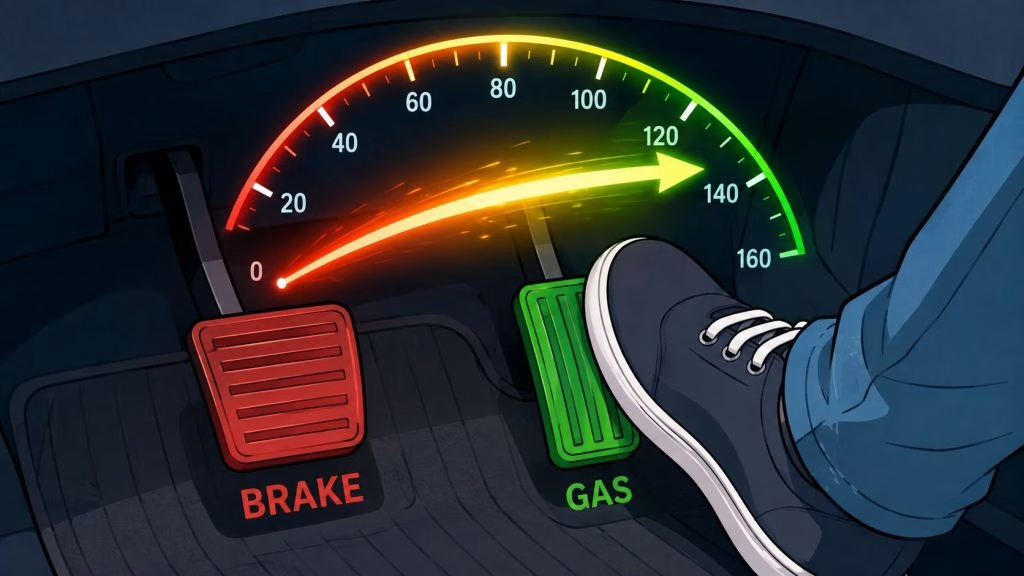
Press the accelerator and the vehicle’s velocity usually increases in the direction of travel. Press the brake and the vehicle’s velocity decreases. Mathematically, braking can be represented as acceleration in the opposite direction, but drivers usually call that change deceleration because it describes the practical result.
Suppose a vehicle’s speed changes by a certain amount during a fixed period. The formula lets you describe how quickly that change happened. A gentle change spreads the adjustment over more time. A sharp change compresses it into a shorter interval, which the occupants feel as a stronger push forward or pull against the seat belt.
That physical sensation is useful feedback, but it isn’t a complete safety test. A maneuver can feel controlled while still reducing your available space, especially when traffic, wet pavement, poor visibility, or pedestrians are involved.
Reading a telematics number
A driver-score app may record acceleration and braking events using a threshold. That threshold is not a universal law of driving. It’s a rule selected by the device, insurer, fleet operator, or research model.
The practical lesson is simple: understand what a number measures before judging it. A positive acceleration value usually describes increasing velocity, while a negative value describes slowing. The road environment determines whether that event was appropriate, unnecessary, or risky.
How Acceleration and Deceleration Shape Stopping Distance
You notice a hazard ahead and lift off the accelerator. The vehicle still travels during the instant you recognize the danger, move your foot, and begin braking. Stopping distance therefore has two parts: reaction distance, covered before braking starts, and braking distance, covered while the vehicle slows.
The stopping-distance calculation guide shows how speed, reaction time, and braking performance combine. Braking deceleration affects only the second part. Any delay before the brakes engage adds road traveled at the vehicle’s original speed.
What vehicle tests reveal
A published test set examined 55 passenger vehicles braking from 60 mph, or 97 km/h. Their stopping distances ranged from 114 feet, or 35 meters, to 179 feet, or 55 meters, with an average of 140 feet, or 43 meters. Measured decelerations ranged from 7.1 m/s² to 9.8 m/s², according to the vehicle braking-distance data.
The spread shows why speed alone cannot predict the result. Two vehicles traveling at the same speed may need different amounts of road because tire condition, pavement, brakes, vehicle design, load, and driver response all affect grip and braking force.
A separate highway-code table illustrates how quickly the distance rises:
| Speed | Approximate Stopping Distance |
|---|---|
| 20 mph | 12 m |
| 60 mph | 73 m |
| 70 mph | 96 m |
The increase from 12 meters at 20 mph to 73 meters at 60 mph and 96 meters at 70 mph shows that stopping distance does not rise one-for-one with speed. More speed gives you less time to react and leaves more distance to remove during braking.
A practical comparison
At 30 mph, spotting danger early may give you time to lift off the accelerator, check the gap, and apply the brake progressively. At 60 mph, the vehicle covers much more road during the same reaction period, while the braking phase also requires more space.
Use following distance as usable stopping room, not empty pavement. If speed increases while the gap stays unchanged, the margin for perception and braking becomes smaller.
On a highway, hard braking can consume that margin quickly. In dense urban traffic, hard acceleration can create the problem first by closing the gap to the next vehicle or pedestrian crossing. Both pedal inputs change the space available for your next decision.
Practical rule: Look farther ahead, begin decelerating earlier, and let the tires build braking force smoothly instead of waiting for a crisis.
Safe Techniques for Accelerating and Braking in Real Conditions
You are driving on Florida pavement after a summer storm when traffic suddenly compresses on I-4 or I-95. Bridges, overpasses, and hidden crests can also change what you see and how the vehicle responds. Good pedal technique begins before an emergency, by adjusting speed and space to the road ahead.
Wet pavement after a storm
Keeping speed until danger appears, then braking sharply, leaves little room for correction. Reduce speed early, create more space, and apply the brake progressively. This lets the tires build braking force without demanding all their grip at once.
Standing water calls for the same restraint. Avoid sudden steering and abrupt throttle changes, because either input can disturb the vehicle while the tires are already working through reduced traction. For a practical explanation of how a vehicle can lose contact with the pavement, review what hydroplaning means.
Dense I-4 or I-95 traffic
Heavy traffic rewards an earlier response. Watch several vehicles ahead, notice brake lights moving through the lane, and lift the accelerator while your usable gap is still open. Deceleration can then begin gently instead of arriving as a panic stop.
Merging requires the opposite pedal direction, but the same control. If an opening looks temporary, stomping on the gas can close the space to the next vehicle or crossing before you have assessed it. Apply the throttle smoothly, match traffic flow, and keep steering steady. The goal is a controlled increase in speed, not the fastest burst.
Use following distance as working room for both acceleration and braking. This two-second rule for safer driving provides a simple way to maintain a usable gap before traffic forces a decision.
Bridges and overpass hills
On an uphill approach, smooth acceleration keeps movement predictable without a sudden surge. Near a crest, ease off early because the road beyond may be hidden. A small speed adjustment can preserve time to respond.
On a long downgrade, repeated heavy braking can keep the brake pedal under constant demand. Where the vehicle and conditions allow, select an appropriate lower gear to support engine braking and reduce continuous pedal pressure.
Pedal feedback can feel different from what a telematics system records. An ordinary-feeling input may still cross a system’s selected hard-acceleration or hard-braking threshold. For drivers comparing normal pedal feedback with performance equipment, this guest experience with racing pedals provides context for how simulator pedals can feel.
When Hard Braking and Hard Acceleration Are Not Equal
“Aggressive driving” is too broad to explain every risky event. The road environment changes which maneuver deserves the most attention.
Large-scale telematics research found that hard braking is a stronger crash indicator on highways, while hard acceleration is a stronger risk marker on dense urban roads. The finding is summarized in the telematics research on maneuver risk.
Why highways and cities differ
Highways typically involve higher speeds and longer travel paths between exits and changes in traffic flow. A hard brake can signal that a driver followed too closely, noticed congestion late, or had to react to a sudden event with little spare distance.
Dense urban roads create a different pattern. Intersections, pedestrians, cyclists, turning vehicles, and short gaps make repeated hard acceleration more consequential. A driver who launches aggressively from each light may reach the next conflict point with less time to assess what’s happening.
The correct habit depends on the setting:
- On highways: Scan far ahead, preserve following space, and avoid late braking.
- In dense urban traffic: Start smoothly, anticipate the next stop, and avoid racing between signals.
- On either road type: Treat a repeated pattern as a warning that your timing or spacing needs adjustment.
Thresholds are measurement choices
Safety studies and connected-vehicle systems use different thresholds. Fleet analytics may identify braking around 0.4g, while another research model uses an acceleration threshold around 5.01 m/s². These figures appear in the connected-vehicle threshold analysis.
The same analysis found that 100 additional hard-acceleration events were associated with a 35% increase in crash frequency, while hard braking rose 134% in that model. Those are model-specific associations, not universal predictions for every driver or vehicle.
If your brakes ever feel ineffective or fail to respond normally, use a prepared emergency plan rather than relying on force alone. This guide on what to do when brakes fail provides practical steps to review before you need them.
Common Mistakes and Easy Fixes
Small pedal habits can create large safety problems because they shift the timing of both acceleration and deceleration.
Riding the brake on a hill may confuse following drivers and keep the vehicle slowing unnecessarily. Select a suitable gear where appropriate, hold a steady speed, and brake deliberately when speed must fall.
Following too closely leaves less time to notice a change and respond. Choose a visible roadside reference point, keep a consistent gap, and add space when rain, darkness, congestion, or unfamiliar roads reduce your margin.
Lifting off the accelerator late before a turn leaves too much speed to manage near the corner. Look through the turn, release the accelerator earlier, and complete most of the slowing before steering. The car should enter the curve settled, not still making a sharp speed change.
Flooring the accelerator to beat a light may save a moment while creating a rushed approach to the next intersection. Wait for a safe opening, build speed progressively, and watch for the traffic pattern ahead to change. Hard acceleration in dense urban traffic can be as difficult to manage as hard braking on a highway, because the next conflict may be only a short distance away.
Wet pavement narrows that margin further. Review this hydroplaning safety explanation to understand why reducing speed early gives the tires more opportunity to maintain contact.
A vehicle does not need dramatic pedal movements to become difficult to control. Earlier, smaller, predictable inputs give you more time to correct a mistake.
Smooth inputs buy you margin.
That margin can help a new driver build confidence, help a busy professional avoid another citation, or help a Florida driver protect eligibility for an insurance discount.
Quick Answers About Acceleration and Deceleration
Is deceleration the same as braking? Deceleration means slowing down. Braking is one way to create it, but lifting off the accelerator and using engine braking can also reduce speed.
Why does stopping distance grow so quickly with speed? The vehicle travels farther during your reaction time, and the braking phase also needs more space as speed rises.
Does gentle acceleration save fuel? It can reduce unnecessary energy use compared with repeated aggressive surges, especially in stop-and-go traffic, but road conditions and vehicle design also matter.
What threshold does an insurance telematics app use for hard braking? There isn’t one universal threshold. Research and fleet systems use different measures, including roughly 0.4g deceleration in some analytics, as described in the threshold analysis.
What course can help after a ticket? A Florida-approved Basic Driver Improvement course can support drivers dealing with a moving violation, while Intermediate, Aggressive Driver, and Mature Driver courses address other needs.
BDISchool offers Florida-approved BDI, IDI, Aggressive Driver, and Mature Driver courses online, with self-paced lessons, electronic certificates, and instruction available in English, Spanish, and Portuguese. Visit BDISchool to choose the course that fits your driving record and turn better acceleration and deceleration habits into safer decisions behind the wheel.