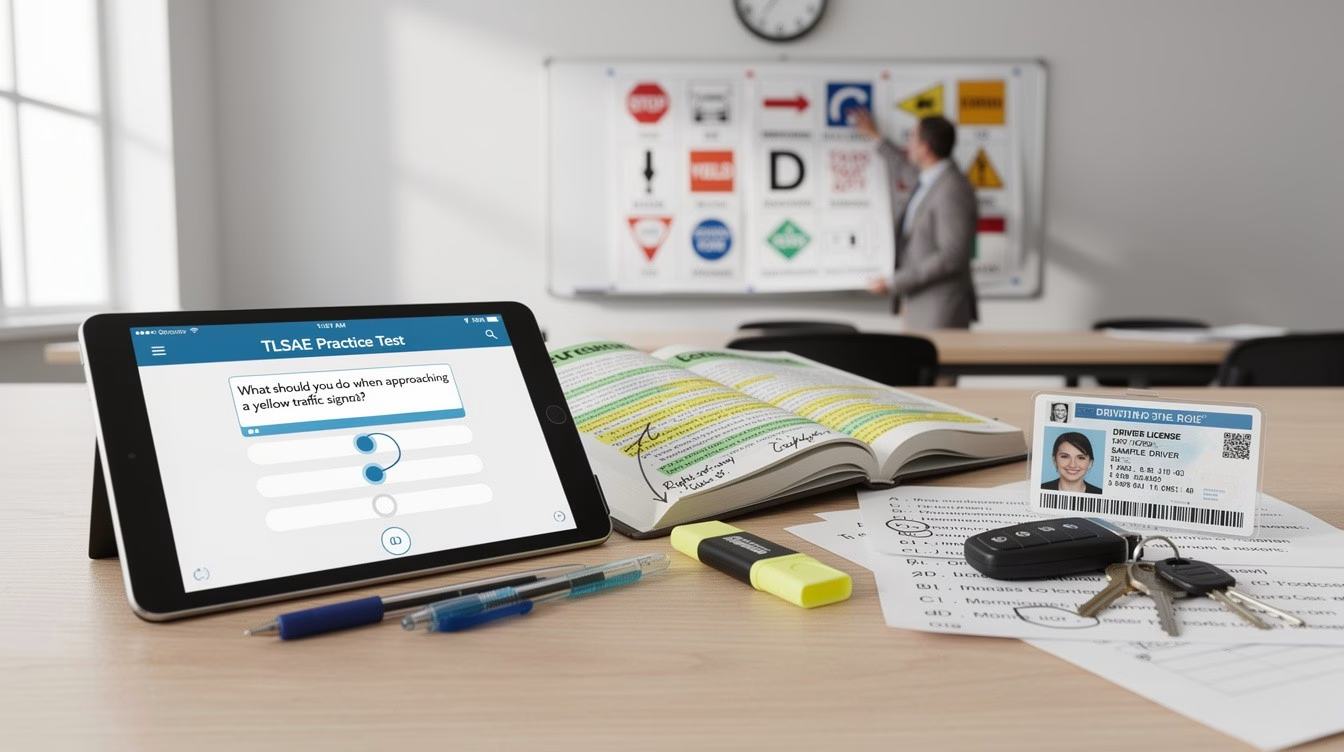
You completed traffic school, passed the test, and felt confident about what you learned. But here’s the hard truth: most drivers forget the core safety concepts within three to four weeks.
At DriverEducators.com, we’ve seen this pattern repeatedly. TLSAE knowledge retention doesn’t happen by accident-it requires active effort and the right strategies to stick.
Why Your Brain Dumps Traffic School Information
The Forgetting Curve Works Against You
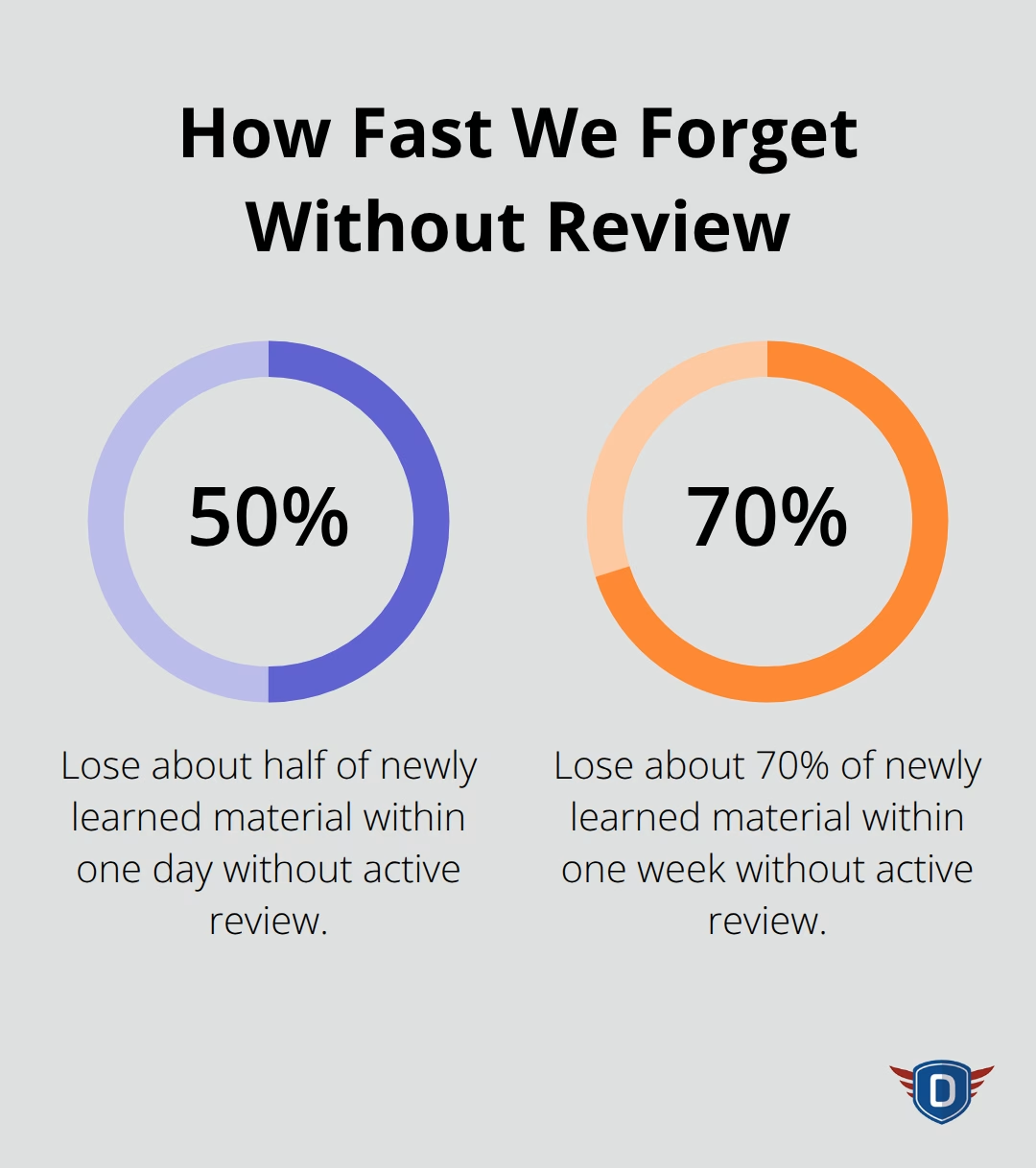
Your brain treats traffic school content like temporary data. During the course, information flows into your working memory, but without reinforcement, it evaporates fast. Research from cognitive psychology shows that the forgetting curve-first documented by Hermann Ebbinghaus-causes people to lose approximately 50% of newly learned material within one day and 70% within a week if they don’t actively review it.
Traffic safety rules are especially vulnerable because they feel abstract during online courses. You read about right-of-way rules or safe following distances while sitting at your desk, disconnected from the actual driving environment where these rules matter. The gap between learning and application creates a retention problem that most drivers ignore entirely.
Why Your Test Score Doesn’t Equal Real Knowledge
Florida traffic laws don’t stick in your memory just because you passed a test. The test measures short-term recall, not lasting knowledge. Once you close the course window, your brain prioritizes information it uses daily, and traffic rules get pushed aside unless you actively practice them on the road.
At DriverEducators.com, we understand this challenge. Our Florida-approved traffic school programs teach not just for test passage, but for real-world application. The difference matters: a high score on your final exam tells you nothing about what you’ll remember three weeks later.
Spaced repetition Anchors Information in Long-Term Memory
The solution isn’t memorization-it’s strategic reinforcement tied to real driving. Spaced repetition works because it forces your brain to retrieve information at increasing intervals, strengthening neural pathways each time. Instead of cramming, you review key concepts days after completion, then weeks later, then monthly.
Apply this immediately: within three days of finishing your course, drive through a school zone and consciously apply speed limit awareness. Within two weeks, practice defensive following distance on a highway. Within a month, mentally review one Florida traffic law during your commute. This active retrieval during actual driving conditions anchors the information in long-term memory far better than passive review.
The Drivers Who Stay Safe Make Deliberate Connections
The drivers who maintain safe habits aren’t those with perfect test scores-they’re the ones who deliberately connect classroom rules to steering wheel decisions. Your investment in traffic school pays off only when you apply what you learned, and that application starts the moment you finish your course.
How to Lock Traffic School Knowledge Into Your Long-Term Memory
Act Within 72 Hours to Cement What You Learned
The first 72 hours after completing traffic school are critical. Your brain remains primed to retain what you learned, but only if you force it to retrieve that information in a real driving context. Within three days of finishing your course, execute one specific defensive driving technique you studied. If you learned about safe following distance, practice it on your next highway drive. If you reviewed right-of-way rules, navigate a busy intersection and consciously apply what you know.
This immediate application transforms abstract knowledge into muscle memory. Research on cognitive retention shows that retrieval practice within 24 to 72 hours dramatically strengthens neural encoding compared to passive review. Most drivers skip this step entirely, which explains why they forget everything within weeks.
Monthly Reviews Through Real-World Scenarios Beat Digital Tools
Monthly reviews through real-world scenarios produce far better results than flashcards or apps for sustained retention. Your brain stores information differently depending on context. When you studied traffic laws on a screen, your brain tagged that knowledge as screen-based. When you apply those same rules while actually driving, your brain creates a stronger, more retrievable memory because it’s tied to the physical environment where you’ll need it.
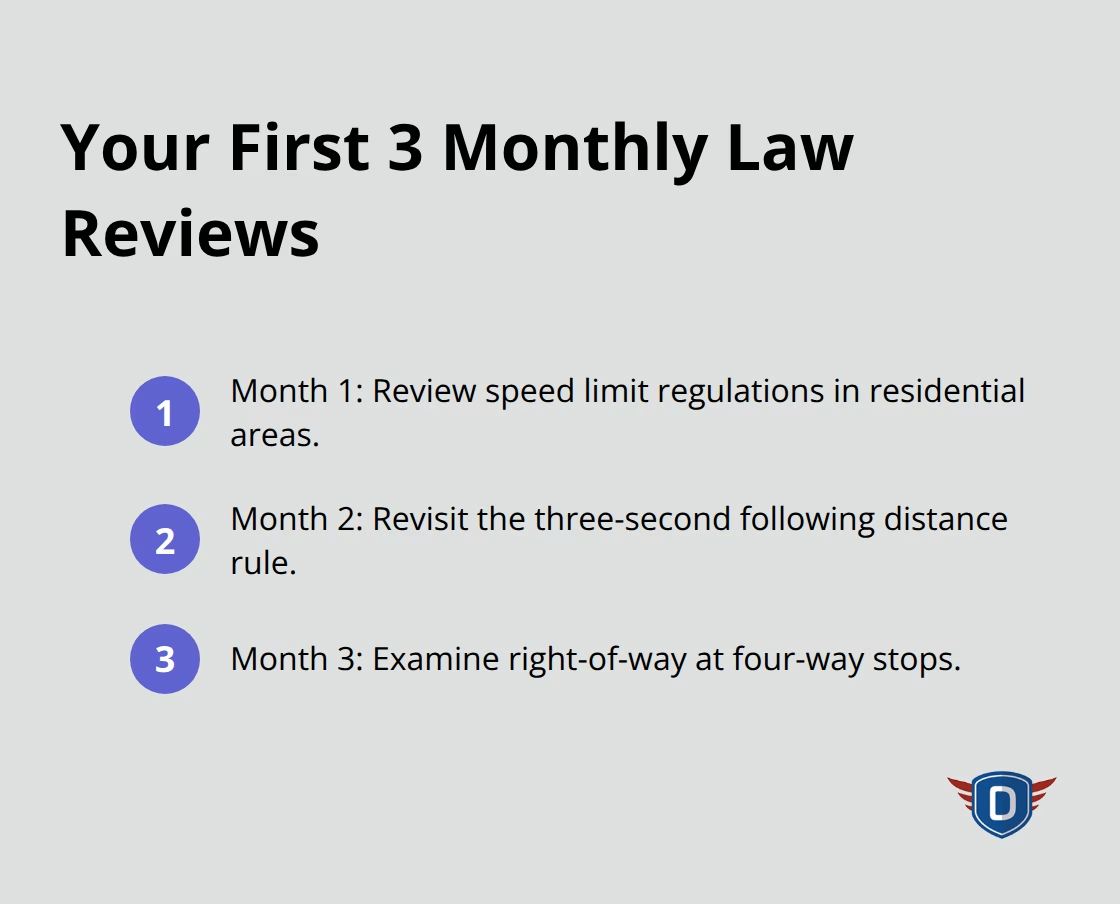
Set a calendar reminder for the first of each month to mentally review one Florida traffic law during your commute. In month one, focus on speed limit regulations in residential areas. In month two, review the three-second rule for following distance. In month three, examine right-of-way at four-way stops.
Spaced Retrieval Produces Dramatically Higher Retention Rates
This spaced retrieval system works because you force your brain to recall information at expanding intervals. Research on the spacing effect shows that this approach produces significantly greater memory strength through spacing. Mobile apps and flashcards feel productive but lack the contextual richness that actual driving provides.
Your investment in traffic school compounds only when you anchor that knowledge to steering wheel decisions, not when you flip through digital cards during coffee breaks. The drivers who maintain safe habits aren’t those with perfect test scores-they’re the ones who deliberately connect classroom rules to real driving situations. This connection starts the moment you finish your course and continues through deliberate monthly practice.
Why Retention Matters for Your Safety and Wallet
Insurance Premiums Rise When You Forget What You Learned
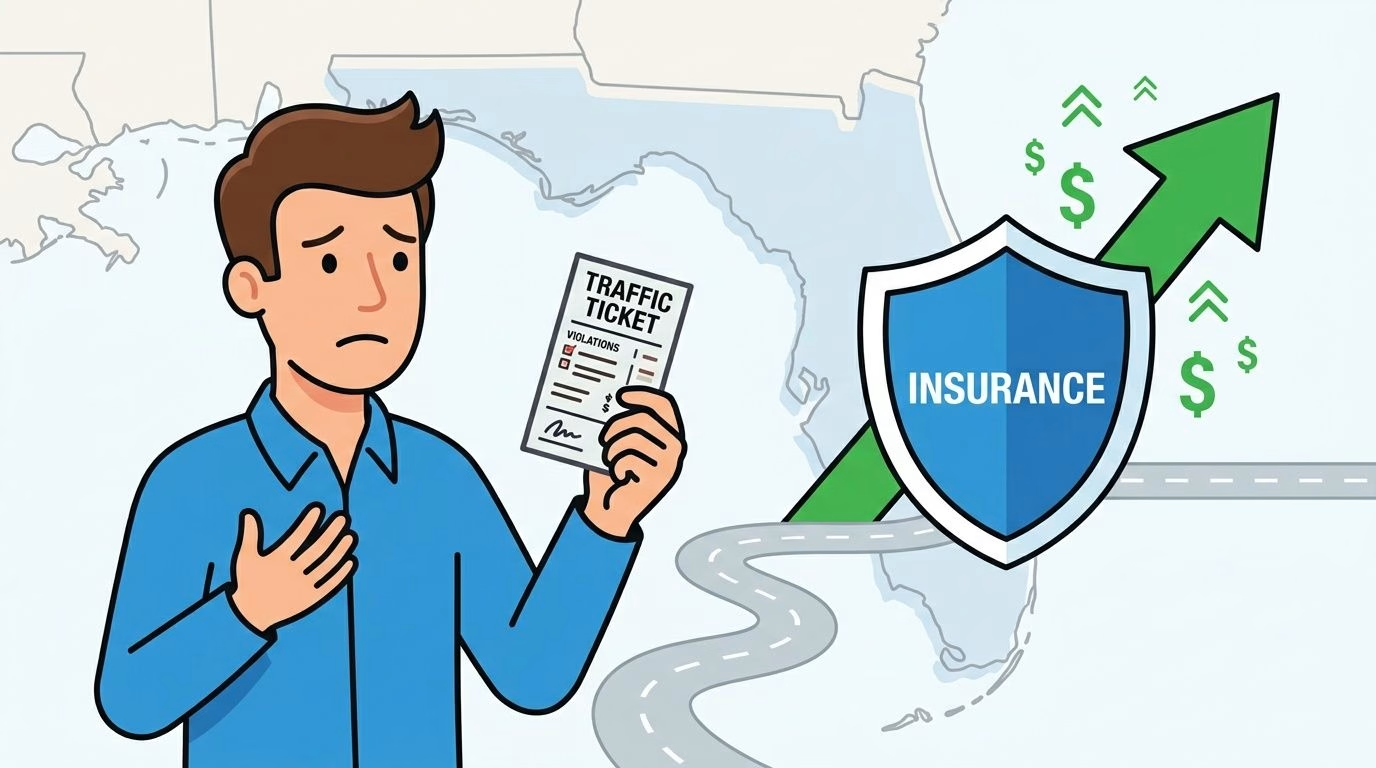
Forgetting traffic school content doesn’t fade quietly-it hits your wallet hard. Insurance companies track driving violations and accidents closely, and your claims history determines your premiums. A single violation adds points to your Florida driving record, and the National Association of Insurance Commissioners reports that drivers with violations pay 20–40% higher premiums than clean drivers, depending on the violation severity.
When you retain and apply what you learned in traffic school, you avoid violations that would otherwise lock you into years of inflated rates. Most drivers don’t realize that a three-year-old speeding ticket still impacts their current insurance quote because insurers review violations within the past three to five years. Your traffic school certificate protects more than your record-it’s an investment that compounds through years of lower insurance costs.
Insurance Discounts Vanish Without Safe Driving Habits
If you completed a course to qualify for an insurance discount, that benefit only materializes when you actually drive safely and avoid future violations. Insurance companies offer defensive driving discounts when you maintain an accident-free driving record, but only if you keep that record clean after completion. The moment you receive another violation, that discount disappears and your rates spike immediately.
This means your traffic school investment yields returns only when you practice what you learned consistently. A certificate sitting in your file while your actual driving habits revert to old patterns transforms the course into wasted time and money.
Retained Knowledge Prevents Crashes That Injure and Kill
Beyond insurance, retained traffic knowledge directly prevents crashes that hurt or kill people. The National Highway Traffic Safety Administration reports that risky driving behaviors-speeding, following too closely, ignoring right-of-way-account for thousands of fatal crashes annually. When you forget the three-second rule for following distance or blur the details of right-of-way at intersections, you endanger passengers and other drivers.
The drivers who retain traffic school lessons actively practice hazard recognition on every drive, which means they catch hazards earlier, brake smoother, and avoid the split-second decisions that cause collisions. Your decision to review what you learned monthly determines whether you become the driver who avoids crashes or the one who becomes another statistic.
Your Driving Habits Determine Real-World Safety Outcomes
Safe driving isn’t about passing a test-it’s about what you do behind the wheel every single day. The drivers who maintain safe habits aren’t those with perfect test scores; they’re the ones who deliberately connect classroom rules to steering wheel decisions. This connection starts the moment you finish your course and continues through deliberate monthly practice.
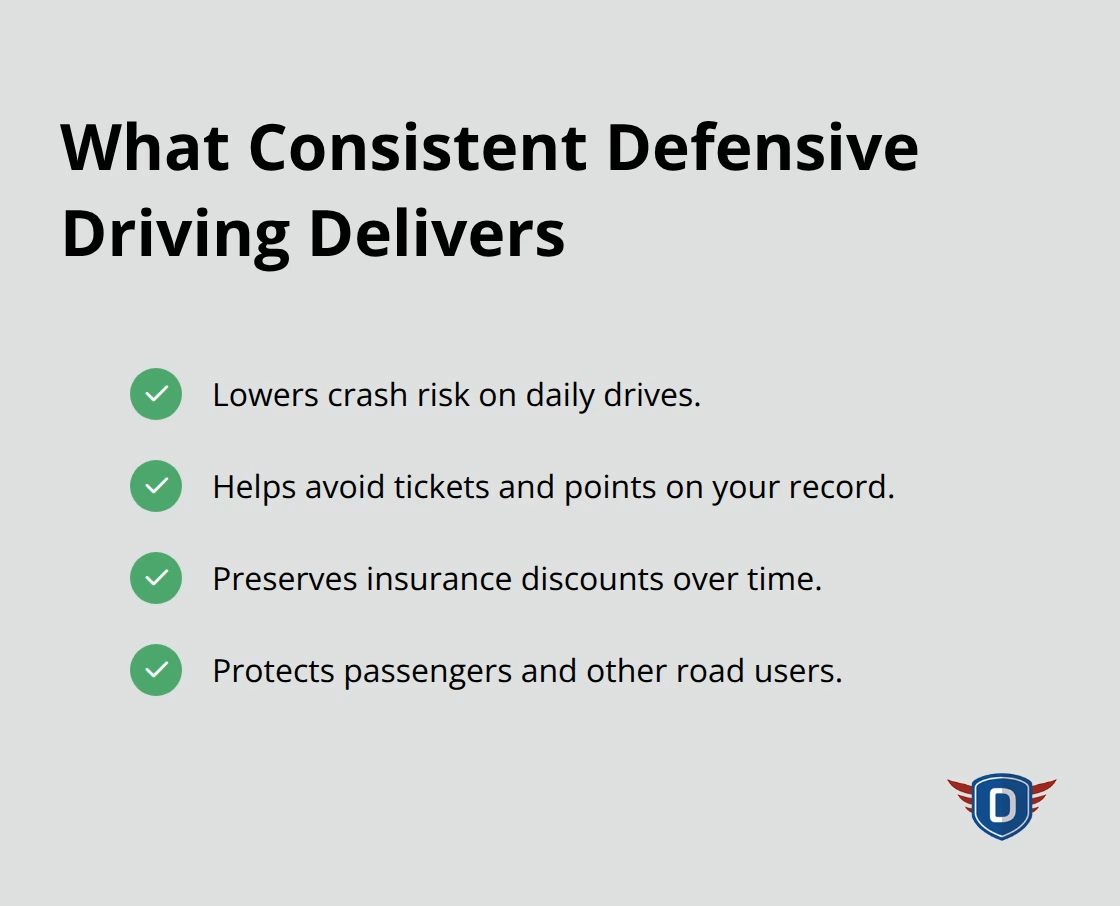
When you apply defensive driving techniques consistently, you reduce your crash risk substantially. Your investment in traffic school compounds only when you anchor that knowledge to real driving situations, not when the certificate sits unused in a drawer.
Final Thoughts
Traffic school knowledge fades fast without active reinforcement, and TLSAE knowledge retention requires deliberate practice tied to your actual driving rather than passive review after course completion. You can pass the final exam and feel confident, but within weeks, most of what you learned disappears from memory unless you force your brain to retrieve that information in real driving contexts. The drivers who stay safe aren’t those with perfect test scores-they’re the ones who apply defensive driving techniques immediately after completion and review key concepts monthly during actual drives.
Your investment in traffic school pays off only when you apply what you learned, and a certificate sitting in a drawer while your driving habits revert to old patterns transforms the course into wasted time and money. When you practice what you studied (maintaining proper following distance, respecting right-of-way, recognizing hazards), you reduce your crash risk, avoid violations that spike insurance rates, and protect yourself and others on the road. At DriverEducators.com, we design our Florida-approved traffic school programs not just for test passage, but for real-world application that sticks.
Start your retention strategy within 72 hours of finishing your course by practicing one defensive driving technique on your next drive. Set a monthly calendar reminder to review one Florida traffic law during your commute, and this simple system transforms abstract knowledge into lasting memory. Your traffic school investment actually protects your record and your safety when you commit to this approach.