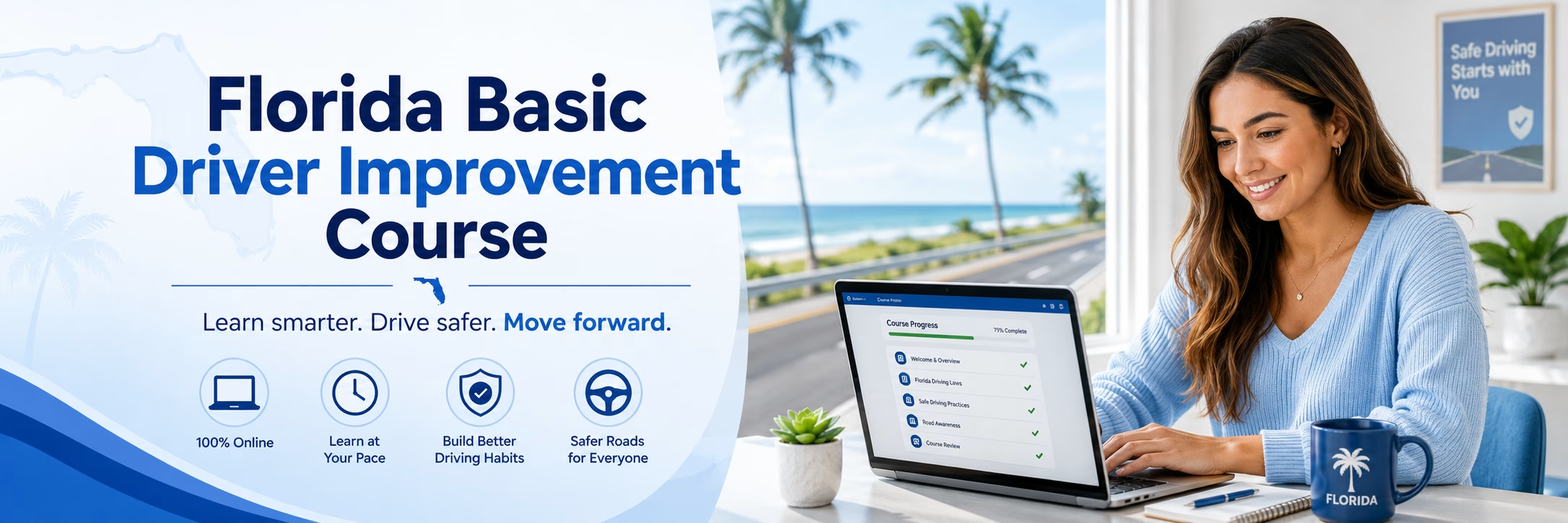

A traffic citation can create a deadline, paperwork, and uncertainty all at once. An online BDI course review should help you identify the course that meets your specific requirement before you spend time or money on the wrong option.
BDI stands for Basic Driver Improvement. It is commonly required or elected after certain traffic violations, especially in Florida, but the correct course depends on your citation, court order, licensing agency, and eligibility. The goal is not simply to finish a course quickly. It is to complete an approved program that is accepted for your situation and gives you practical information for safer driving.
What a BDI Course Is Designed to Do
A Basic Driver Improvement course reviews the driving decisions that contribute to crashes, citations, and preventable risk. Topics often include speed management, following distance, distracted driving, sharing the road, impaired driving, traffic laws, and defensive driving habits.
For many drivers, BDI may be connected to a traffic ticket or an option to reduce the impact of a qualifying violation. Others may be assigned a course by a court or agency. Requirements can differ by state, county, offense, and driver history, so a course that works for one driver may not meet another driver’s obligation.
That is why approval matters more than a polished website or a low advertised price. Confirm that the provider and course format are accepted by the authority handling your case before enrollment.
Online BDI Course Review: 7 Checks Before You Enroll
A reliable online course should make compliance easier, not leave you guessing about what happens after payment. Use these seven checks to compare your options.
- Approval for your specific requirement. Check whether the course is approved for the state, court, county, or agency listed on your paperwork. Do not assume that a course approved in one state is accepted everywhere.
- The required course length and type. A standard BDI course is not interchangeable with an intermediate driver improvement, aggressive driver, TLSAE, or mature driver course. Match the required program name and number of hours to your notice.
- Your deadline and reporting process. Find out when completion is due, whether you receive a certificate immediately, and whether the provider reports completion electronically. If electronic reporting is available, confirm who receives it and how long processing may take.
- The full price. Look for a clear total before checkout. A transparent provider explains what the price includes and identifies any optional services separately, so there are no surprises after you begin.
- Access on the devices you use. A practical online course should work on a phone, tablet, or computer and save your progress. This matters when you need to complete the course around work, school, family, or travel.
- Language and accessibility options. If you need a course in a language other than English or need assistance with access, verify those options before enrolling. The right course is one you can complete accurately and comfortably.
- Support and refund policies. Customer support is especially valuable when a deadline is close or your paperwork is unclear. Review the provider’s policies before purchase, including how it handles eligibility concerns and unused courses.
The lowest price is not always the best value if the course does not satisfy the requirement, lacks accessible support, or adds unexpected fees. On the other hand, paying more for features you do not need may not make sense either. The best choice is the approved course that fits your deadline, device, and reporting needs.
Why Online BDI Works for Busy Drivers
Online BDI courses are designed for drivers who cannot easily attend a scheduled classroom session. Instead of rearranging work or family obligations, you can generally log in when time is available, complete a section, and return later.
Self-paced access is useful, but it does not remove your responsibility to meet the completion deadline. Some programs have timed content requirements, identity verification steps, knowledge checks, or final exam rules. Give yourself enough time to read the material and address any technical issue before the due date.
Mobile access is another practical benefit. You may be able to review a lesson during a break, continue from home, and finish on a different device. Still, use a reliable internet connection and a setting where you can focus. Traffic safety content is more useful when you can absorb it rather than rush through it.
How to Confirm You Are Choosing the Right Course
Start with the official document related to your citation or requirement. Look for the course name, required hours, completion deadline, jurisdiction, case number, and instructions about where proof of completion must be sent.
Next, compare that information with the provider’s course description. If the notice says Basic Driver Improvement, do not enroll in a course with a similar-sounding name without confirming that it is the correct program. If your court or agency gave you a list of approved providers, use it as your first reference point.
Finally, keep your enrollment confirmation and completion certificate. Even when a provider reports electronically, retaining your records gives you a useful backup. Completion does not always mean every part of your case is automatically closed. You may still need to pay a fine, submit documentation, or verify that the court or DMV received the record.
What You Should Learn From a Quality BDI Course
A good BDI course does more than repeat traffic laws. It connects common driving choices with the real consequences that follow. For example, speeding is not just a number on a speedometer. It reduces the time available to recognize a hazard, react, and stop safely.
The same applies to distraction. Looking away from the road for a few seconds can mean traveling the length of a football field with limited awareness at highway speeds. Effective instruction explains the risk in plain language and gives drivers habits they can apply on the next trip.
Look for lessons that address scanning ahead, maintaining space around your vehicle, adjusting for weather and traffic, recognizing impairment, and making calmer decisions when other drivers behave aggressively. These skills can help reduce the chance of another citation, but more importantly, they help protect passengers, pedestrians, cyclists, and everyone sharing the road.
FAQ About Online BDI Courses
What is an online BDI course?
An online BDI course is a Basic Driver Improvement program completed through a web-based learning platform. It teaches traffic safety and may satisfy an eligible court, DMV, or citation-related requirement.
How long does an online BDI course take?
The required length depends on the program and jurisdiction. Review your citation or court order and choose a course with the required number of instructional hours.
Will an online BDI course remove my ticket?
Not automatically. Eligibility, ticket outcomes, points, fines, and reporting rules are determined by the court, DMV, or other authority handling your case.
Can I take a BDI course on my phone?
Many online courses are mobile-friendly and let you save your progress. Confirm device compatibility before enrolling, especially if you plan to complete most of the course on a phone.
Do I need to send my completion certificate to the court?
It depends on the jurisdiction and provider’s reporting process. Keep your certificate and follow the instructions on your citation, court notice, or agency letter.
Before you begin, take two minutes to verify the course type, approval status, and deadline against your official paperwork. That small step can prevent a simple driver improvement requirement from becoming a second administrative problem.