
Florida traffic safety guidelines exist for one reason: to keep you and everyone else on the road alive. Ignoring them costs drivers thousands in fines, insurance hikes, and license suspensions every year.
We at DriverEducators.com have helped thousands of Florida drivers understand these rules and avoid costly violations. This guide breaks down the laws that matter most, the penalties you face for breaking them, and how to drive defensively in Florida’s unique conditions.
How Right-of-Way Rules Prevent Crashes at Florida Intersections
Stop Signs and Four-Way Stops
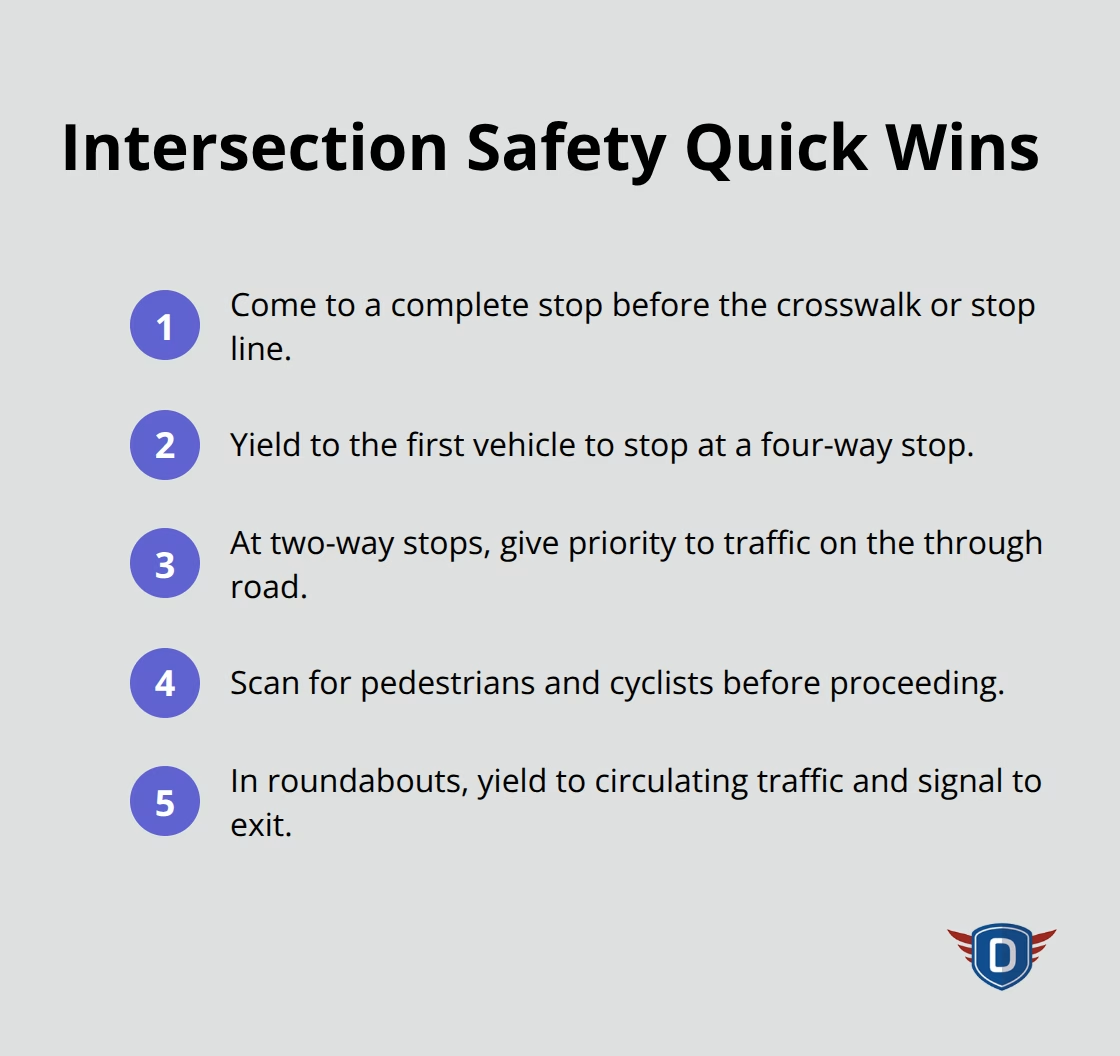
Stop signs and intersection rules are not suggestions in Florida. According to FLHSMV’s Traffic Crash Facts, improper lane changes and failure to stop at stop signs rank among the most common traffic violations cited by law enforcement. At four-way stops, the driver of the first vehicle to stop at the intersection shall be the first to proceed, meaning you must yield if another vehicle reaches the intersection simultaneously from your left. At a two-way stop, drivers on the through road have priority over those on the stop-controlled road.
Intersection crashes cause over 40% of all crashes in urban Florida areas, and many of these collisions are entirely preventable by understanding who goes first. When you approach a stop sign, come to a complete stop before the crosswalk or stop line-not rolling or creeping forward. If visibility is poor, inch forward slowly to check for pedestrians and cyclists before proceeding.
Roundabouts Require Different Tactics
Roundabouts operate differently than traditional intersections. In Florida, drivers already inside the roundabout have the right-of-way, so you must yield to traffic moving counterclockwise before entering. Slow down as you approach a roundabout and watch for pedestrians crossing at entry and exit points. Signal your intent to exit so other drivers know your path.
Many Florida drivers misjudge roundabout entry speed and cause sideswipe collisions. Treat roundabouts as low-speed zones and adjust your expectations accordingly.
Pedestrians and Cyclists Have Legal Rights
Pedestrians and cyclists have equal legal standing on Florida roads. Florida Statutes treat cyclists as drivers with the same rights and duties, meaning they must follow traffic signals and you must respect their space on the road. At intersections with pedestrian signals, you cannot turn right on red if a pedestrian has a walk signal. This is enforced strictly in Florida’s urban centers, and violations carry fines plus points.
When turning, scan for pedestrians in crosswalks before committing to your turn, even if you have a green light. Children and elderly pedestrians move slower than you expect, so give them extra time to clear the intersection.
Hit-and-Run Consequences and Defensive Positioning
Hit-and-run crashes involving pedestrians remain a serious problem in Florida, with enforcement campaigns reminding drivers that leaving the scene carries criminal penalties. If you strike a pedestrian or cyclist, you must remain at the scene, provide your information, and contact law enforcement immediately.
Defensive driving means anticipating that pedestrians might step into your path without looking, that cyclists might merge suddenly, and that other drivers will violate right-of-way rules. Position yourself to avoid these conflicts rather than relying on your legal right to proceed. Understanding these intersection dynamics sets the foundation for recognizing how speed, weather, and distraction compound your risk on Florida roads.
How to Drive Defensively in Florida’s Challenging Conditions
Defensive driving means controlling what you can control: your speed, your following distance, and your attention. Florida’s roads present unique hazards that require constant adjustment. Heat mirages distort depth perception on highways, afternoon thunderstorms reduce visibility to near zero within seconds, and construction zones shift lane patterns without warning. The National Safety Council has trained over 80 million drivers in defensive driving techniques, and the core principle remains unchanged: anticipate what other drivers will do wrong and position yourself to avoid it.
Distraction and Speed Kill on Florida Roads
Distracted driving poses the highest risk for Florida drivers, particularly teens who show the highest crash rates in the state. One practical tactic is the three-second rule for following distance on dry roads. Count the seconds between when the vehicle ahead passes a fixed point and when your vehicle reaches that same point. If you count fewer than three seconds, you are too close.
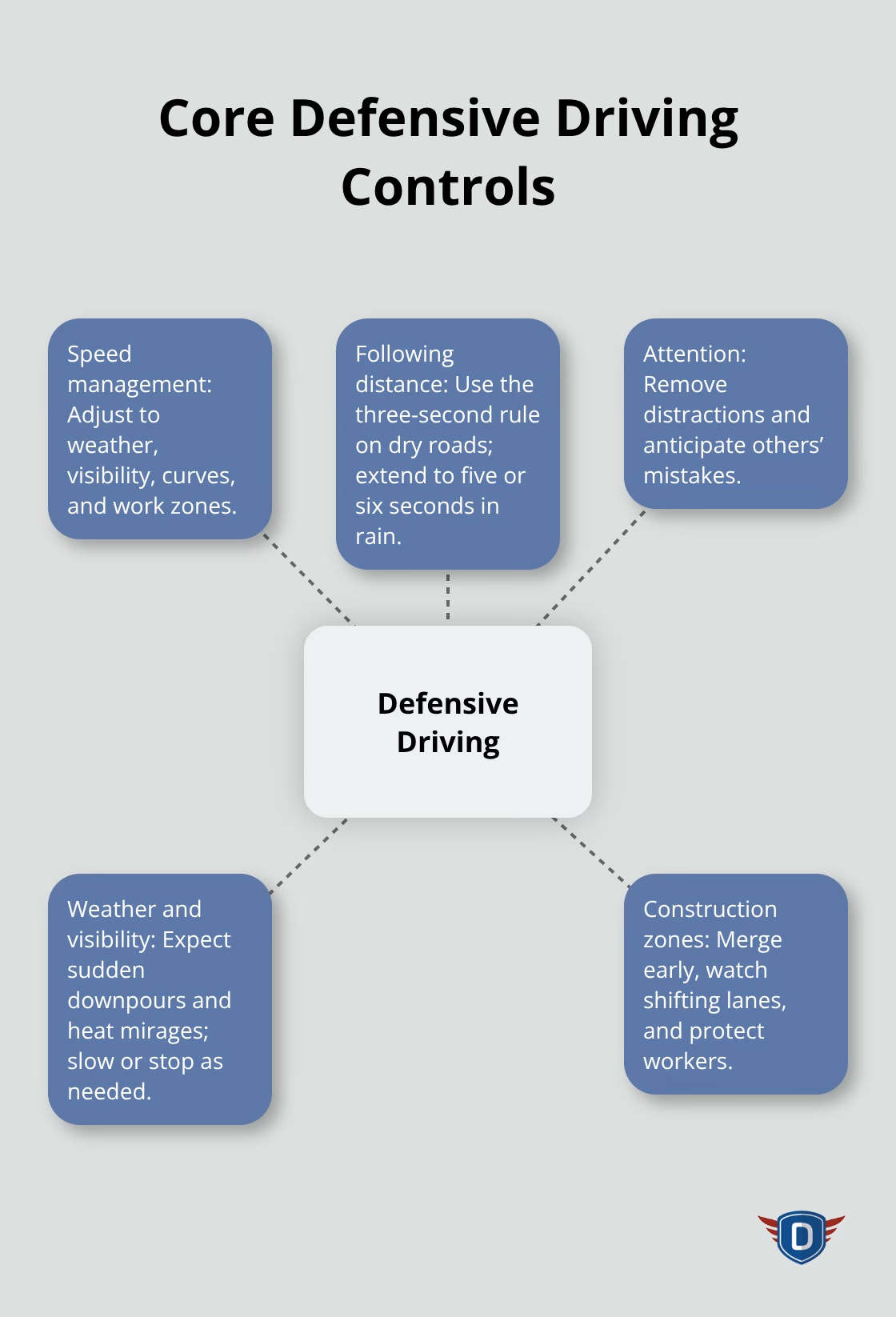
In wet conditions, increase this to five or six seconds because your tires have less grip. Rain reduces braking effectiveness significantly, with braking distance 1.5 to 2 times longer than on dry roads. When heavy rain begins, pull over and wait rather than driving through zero-visibility downpours.
Speed limits exist for ideal conditions, not the conditions you face on any given day. If the posted limit is 65 miles per hour but fog reduces visibility to 100 feet, driving 40 miles per hour is the correct speed for those conditions. Law enforcement focuses heavily on speeding because it is a contributing factor in a significant share of traffic fatalities nationwide.
Adjust Speed and Positioning in Curves and Construction
Adjust your speed before entering curves, not during them, because braking mid-turn can cause your vehicle to skid. Construction zones demand heightened alertness because lane markings shift, barriers narrow your path, and workers may step into traffic unexpectedly. Merge into construction zones smoothly rather than waiting until the last second to change lanes, which creates bottlenecks and rear-end collisions.
Control Your Attitude to Control Your Risk
Your attitude behind the wheel directly affects your safety. Aggressive driving, including tailgating and rapid lane changes, doubles your crash risk. If another driver cuts you off or gestures at you, your job is not to respond but to create distance and let them pass. The goal of defensive driving is reaching your destination alive, not winning a confrontation with another driver.
Build Habits That Stick
These habits compound over time. Drivers who complete formal defensive driving training reduce collision risk measurably. The techniques taught in structured courses-real-world scenario practice, hazard recognition, and Florida-specific road conditions-help you internalize safe responses rather than simply memorizing rules. Understanding these defensive principles prepares you to recognize how violations and poor decisions by other drivers create the dangerous situations you must navigate every day.
Common Traffic Violations and Their Financial Impact
How Florida’s Point System Controls Your License
Florida’s point system directly controls your driving privileges and wallet. Every moving violation adds points to your license: failure to obey a traffic control signal costs 4 points, speeding 6–9 points depending on how far over the limit, and reckless driving 4 points. Accumulate 12 points in 12 months and your license is suspended for 30 days. Reach 18 points in 18 months and you face a 3-month suspension. Hit 24 points in 36 months and your license is gone for a full year.
This escalation matters because suspension means you cannot legally drive, which damages employment, school attendance, and family obligations. Florida Statutes Section 322.24 governs these suspensions, and law enforcement tracks your points electronically.
Mandatory Driver Improvement Courses for Serious Violations
Certain offenses trigger automatic driver improvement requirements with no flexibility. If you receive a citation for failure to obey a red light, failure to stop for a school bus, racing on the highway, or reckless driving, you must complete Basic Driver Improvement within 90 days or your license is automatically canceled. There is no grace period and no exceptions.
If you are convicted of a third traffic offense that caused a crash within 36 months, Florida Statutes Section 322.0261 mandates an Advanced Driver Improvement course that includes behind-the-wheel training and a driving-ability assessment. This requirement is costly and time-consuming.
Insurance Premiums Rise Immediately After Conviction
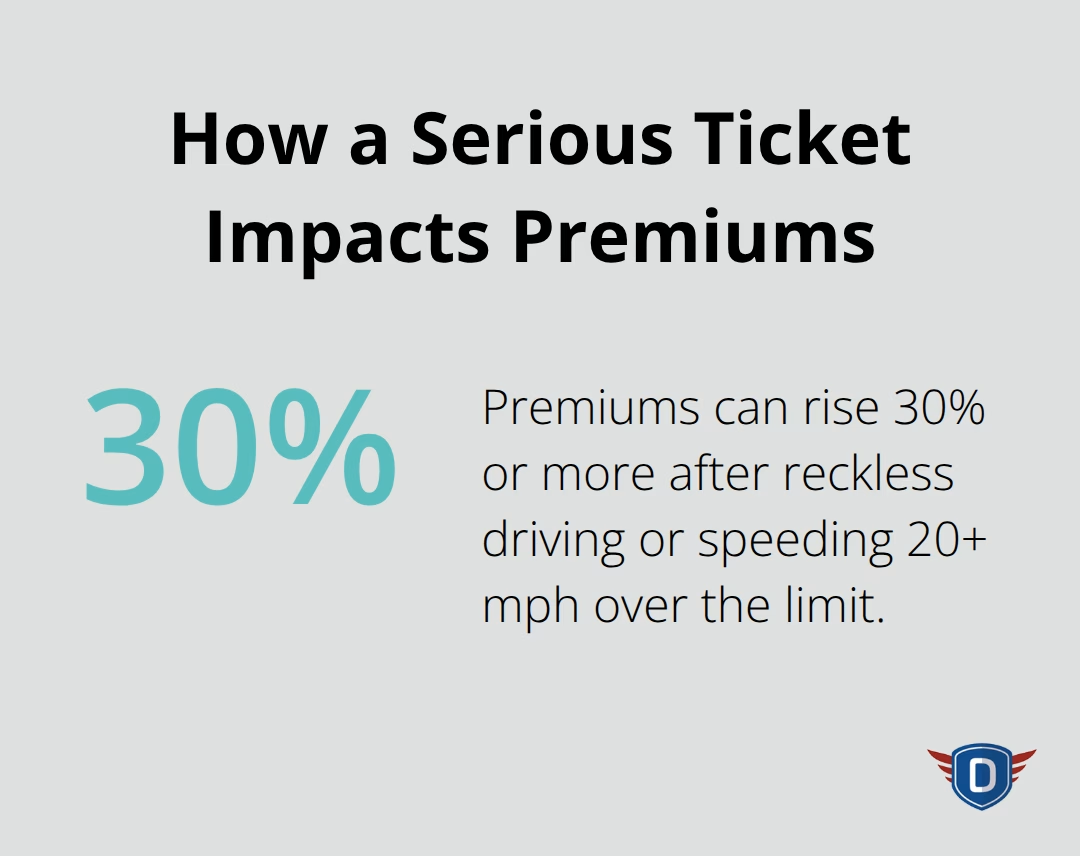
Insurance companies track your violations through state records and raise your premiums immediately after a conviction. Insurance premiums rise $588+ per year after a ticket conviction. Reckless driving or speeding 20+ miles per hour over the limit can increase premiums 30% or more. Over a three-year period, a single ticket can cost you $1,500 to $3,000 in additional insurance premiums beyond the fine itself.
Suspended licenses trigger SR-22 insurance requirements, which are substantially more expensive than standard coverage. The financial damage compounds quickly when you add court costs, fines, and increased premiums together.
How to Stop Points From Posting to Your License
You can elect Basic Driver Improvement within 30 days of receiving a non-criminal moving violation citation and use it up to eight times in your lifetime to avoid points. This option stops your points from posting to your license if you complete the course and pay the citation. However, if you miss the 30-day deadline or fail to pay the citation, your license suspension is automatic.
Court requirements vary by violation severity. Minor violations typically require payment only, but serious violations demand court appearances or representation. Many drivers hire ticket defense services to represent them in court, which costs $49 to several hundred dollars depending on the violation.
Taking Action After a Citation
Completing a Florida-approved driver improvement course after you receive a citation demonstrates to the court that you take road safety seriously. This proactive step can influence how prosecutors and judges view your case, particularly if you have prior violations. The course also refreshes your knowledge of Florida traffic laws and defensive driving techniques, reducing your likelihood of future violations.
Final Thoughts
Florida traffic safety guidelines protect your license, your wallet, and your life. A single speeding ticket raises your insurance premiums $588 or more per year, while accumulating 12 points in 12 months suspends your license for 30 days. Citations for running a red light or reckless driving trigger mandatory 90-day driver improvement courses with no flexibility, and these consequences affect Florida drivers every single day.
Taking action within 30 days of a citation stops points from posting to your license and demonstrates to courts and insurers that you take road safety seriously. Completing a Florida-approved driver improvement course refreshes your knowledge of traffic laws and defensive driving techniques, which directly reduces your likelihood of future violations. At DriverEducators.com, our programs help you become a safer driver while protecting your driving record and insurance rates.
If you received a citation, enroll in DriverEducators.com within 30 days to protect your license. If you have not received a citation, completing a defensive driving course now reduces your crash risk and demonstrates responsibility to insurers.