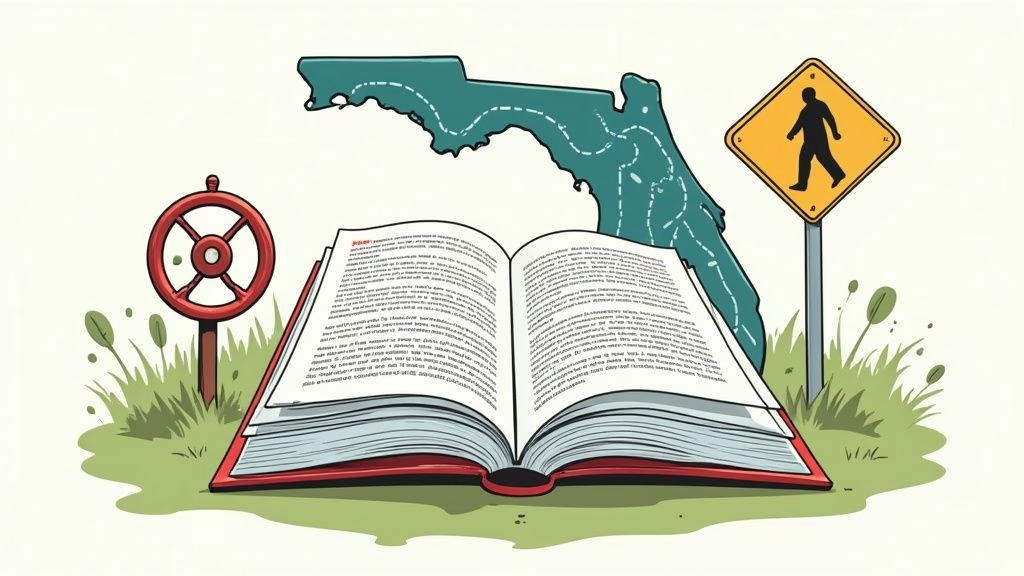
The Florida Driver’s Handbook, officially called the Official Florida Driver License Handbook, is the primary study resource for Florida traffic laws, road signs, safe-driving practices, licensing requirements, and the Class E Knowledge Exam.
If you are preparing for a Florida learner’s license or driver license, start with the official handbook published by the Florida Department of Highway Safety and Motor Vehicles (FLHSMV). This page gives you direct access to the official manual and explains the most important topics to study.
Official Florida Driver’s Handbook: Quick Access
Looking for the current Florida driver’s manual? Use the official FLHSMV resources below:
- Official Florida Driver License Handbook – English: View the official English PDF
- Official Florida Driver License Handbook – Spanish: View the official Spanish PDF
- FLHSMV Handbooks and Manuals: View all official FLHSMV handbooks and available languages
Because Florida licensing requirements and traffic laws can change, always use the current handbook published by FLHSMV available at these links.
What Is the Florida Driver’s Handbook?
The Florida Driver’s Handbook is FLHSMV’s official guide to the rules and responsibilities of driving in Florida. You may also hear it called the Florida driver’s manual, Florida DMV handbook, or Florida permit test study guide.
The handbook explains what drivers need to know about:
- Florida driver license and learner’s license requirements
- Traffic signs, signals, and pavement markings
- Right-of-way rules and intersections
- Speed limits and safe following distance
- Lane use, passing, and turning
- Defensive-driving practices
- Driving in rain, reduced visibility, and other hazardous conditions
- Pedestrians, bicycles, motorcycles, school buses, and commercial vehicles
- Distracted, impaired, drowsy, and aggressive driving
- Florida traffic laws and driver responsibilities
- Driver license restrictions, suspensions, and the point system
The handbook should be your primary source when studying for the Florida Class E Knowledge Exam. Practice tests and study guides can help reinforce the material, but they should supplement—not replace—the official FLHSMV handbook.
What Should You Study for the Florida Permit Test?
The Florida Class E Knowledge Exam contains 50 multiple-choice questions. According to FLHSMV, the questions cover three major areas:
- Florida traffic laws
- Safe-driving practices
- Identifying traffic controls
This means you should understand the rules rather than simply memorize a few sample questions. Pay particular attention to traffic signs, right-of-way situations, lane markings, speed and stopping rules, school buses, sharing the road, impaired driving, and defensive-driving principles.
A Simple Way to Study the Florida Driver’s Handbook
- Read the official handbook first. Work through the FLHSMV manual in manageable sections rather than trying to memorize everything at once.
- Pay attention to numbers and restrictions. Ages, time restrictions, distances, speed limits, license requirements, and penalties are common areas students need to remember.
- Learn traffic signs by meaning. Understand how colors and shapes communicate warnings, regulations, and directions.
- Study real driving situations. Focus on intersections, turns, passing, following distance, pedestrians, bicycles, school buses, emergency vehicles, and hazardous weather.
- Use practice questions to find weak areas. After studying the handbook, use a Florida permit test practice resource to identify topics you should review again.
Important Topics in the Florida Driver’s Handbook
| Topic | What You Should Know | Why It Matters |
|---|---|---|
| Traffic Controls | Signs, traffic signals, pavement markings, railroad crossings, and regulatory controls. | You must recognize and respond correctly to traffic controls while driving and on the knowledge exam. |
| Safe Driving | Following distance, stopping, speed, lane use, turns, passing, intersections, and defensive-driving techniques. | These rules help drivers anticipate hazards and reduce the risk of a crash. |
| Sharing the Road | Rules involving pedestrians, bicyclists, motorcycles, school buses, emergency vehicles, and large trucks. | Florida roads are shared by many different types of road users. |
| Impaired and Distracted Driving | Alcohol, drugs, medications, texting, mobile devices, fatigue, and other forms of impairment or distraction. | Impairment and distraction can greatly increase crash risk and may lead to serious legal consequences. |
| Driver Licensing | Learner’s license requirements, testing, identification, restrictions, driving experience, and licensing procedures. | New drivers must meet the applicable Florida requirements before receiving driving privileges. |
| Traffic Violations and Points | Moving violations, driver-record points, suspensions, and driver-improvement requirements. | Understanding these rules can help drivers protect their driving privileges and make informed decisions after receiving a citation. |
Florida Road Signs, Signals, and Pavement Markings
Traffic signs and pavement markings use standardized colors, shapes, symbols, and lines so drivers can recognize important information quickly.
Common Traffic Sign Colors
- Red: generally identifies stop, prohibition, or immediate regulatory instructions.
- Yellow: generally warns of roadway conditions or hazards ahead.
- Orange: is commonly used for construction and maintenance warnings.
- Green: is commonly used for directions and destination information.
- Black and white: are commonly used for regulatory information such as speed limits.
Common Traffic Sign Shapes
- Octagon: STOP.
- Downward-pointing triangle: YIELD.
- Round sign: advance warning of a railroad crossing.
- Pennant-shaped sign: generally marks the beginning of a no-passing zone.
- Diamond-shaped sign: generally warns of roadway conditions or hazards.
Do not rely on a short summary alone. The official Florida Driver License Handbook includes the signs, illustrations, pavement markings, and explanations you should study for the knowledge exam.
Florida Driver Education Requirements: Under 18 vs. Age 18 and Older
Florida’s first-time driver education requirements now depend in part on the applicant’s age. This distinction is important because older information on the Internet may still state that every first-time driver takes the same course.
| Applicant | Current Education Requirement | What to Know |
|---|---|---|
| Under age 18 | Driver Education Traffic Safety (DETS) or another qualifying FLHSMV-approved driver education program meeting Florida’s required curriculum. | Florida law requires a learner’s license applicant under 18 to satisfactorily complete an approved driver education course meeting or exceeding the Department of Education Driver Education/Traffic Safety-Classroom 1900300 course description. |
| Age 18 or older | Traffic Law and Substance Abuse Education (TLSAE), when applicable. | An applicant age 18 or older generally must complete TLSAE if the applicant has not previously been licensed in another jurisdiction and does not qualify for an applicable driver-education exemption. |
You can review Florida’s current requirements in Florida Statute 322.1615 for learner’s licenses and Florida Statute 322.095 for TLSAE requirements.
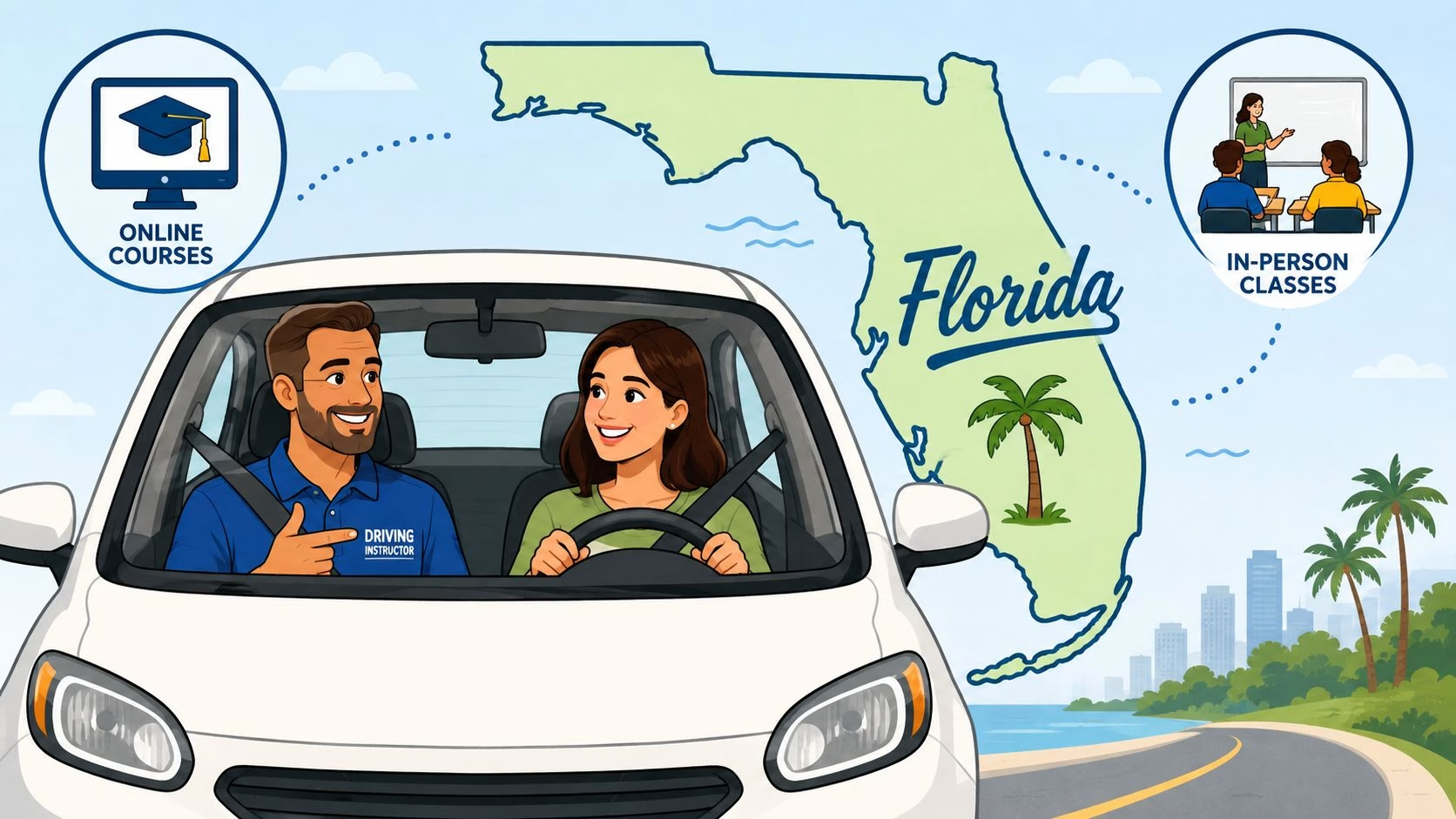
DriverEducators.com offers Florida-approved online driver education programs, including DETS for qualifying drivers under 18 and TLSAE for qualifying first-time applicants age 18 and older. You can view the available Florida driver education courses for current course information.
Getting a Florida Learner’s License
For a learner’s license, Florida requires applicants to satisfy the applicable age, education, examination, identification, and other licensing requirements.
Among the requirements for a learner’s license are:
- Being at least 15 years old.
- Completing the applicable driver-education requirement.
- Passing the required vision examination.
- Passing the Class E Knowledge Exam.
- Meeting Florida’s identification and other eligibility requirements.
If the driver is under 18, additional requirements apply, including parental or guardian requirements and restrictions on when and with whom the learner may drive.
Florida Learner’s License Driving Restrictions
A driver operating with a Florida learner’s license must be accompanied by a properly licensed driver who is at least 21 years old and occupies the seat closest to the learner driver.
Florida law also restricts the hours during which a learner may drive. A learner’s license holder may initially drive only during daylight hours. After the first three months, driving is permitted until 10 p.m., subject to the other learner-license requirements.
Always verify the current requirements with FLHSMV because licensing rules can change.
From a Florida Learner’s License to a Class E Driver License
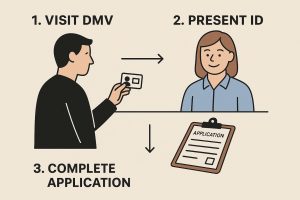
For drivers under 18, earning a full Class E driver license involves more than passing the written exam. Florida generally requires a teen driver to hold the learner’s license for the required period, comply with traffic-conviction rules, complete supervised driving experience, and pass the applicable driving skills examination.
The official handbook explains these requirements and should be checked along with the current FLHSMV licensing information before visiting a driver license service center.
Defensive Driving Concepts in the Florida Driver’s Handbook
The handbook is not only a test-preparation document. Its larger purpose is to help drivers recognize hazards and make safer decisions.
Important defensive-driving habits include:
- Maintaining enough space between your vehicle and the vehicle ahead.
- Scanning ahead rather than watching only the vehicle directly in front of you.
- Checking mirrors and blind spots before changing lanes.
- Reducing speed and increasing following distance during rain or poor visibility.
- Anticipating the actions of pedestrians, bicyclists, motorcycles, and other vehicles.
- Avoiding distractions while driving.
- Never driving while impaired by alcohol, drugs, medications, or severe fatigue.
- Staying calm and creating additional space around aggressive drivers.
Florida weather can also change quickly. See our guide to driving safely during severe weather in Florida for additional Florida-specific safety information.
Florida Traffic Tickets, Points, and Basic Driver Improvement
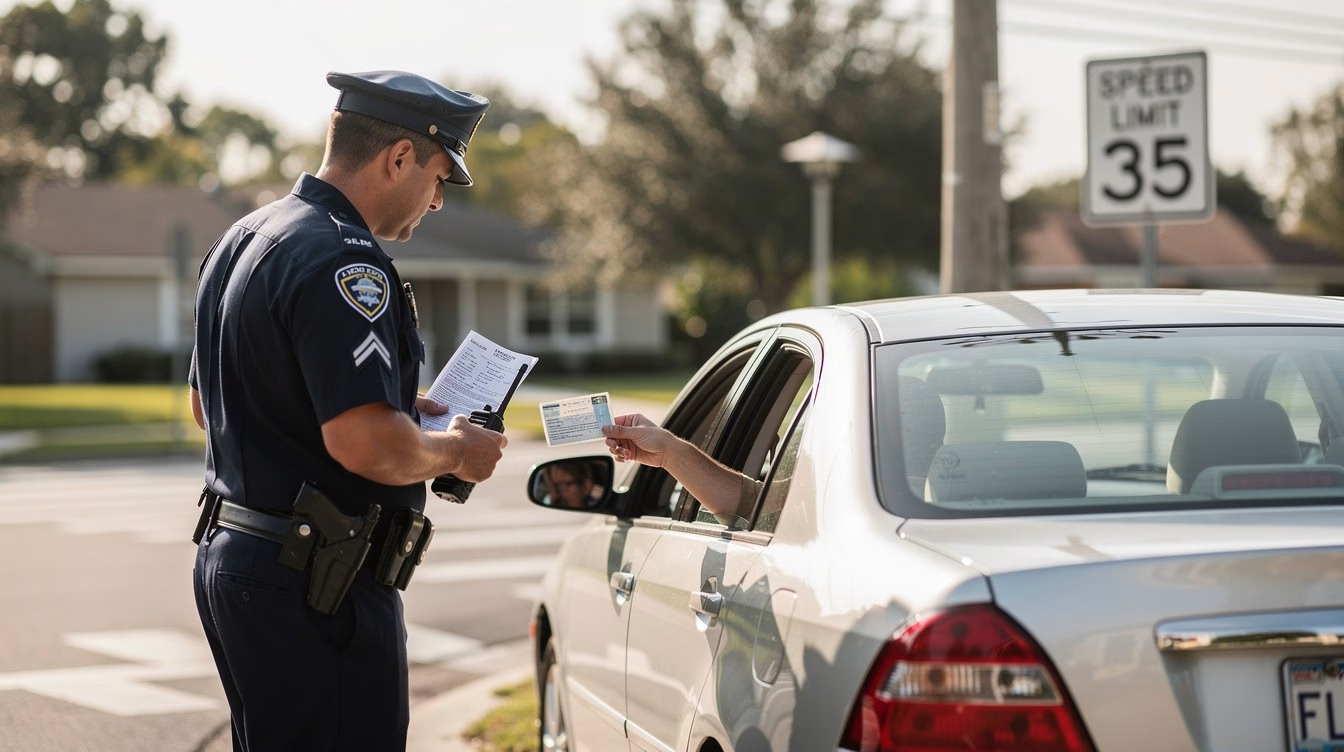
The Florida Driver’s Handbook also explains traffic violations and the driver-license point system. If you receive a moving citation, do not assume that simply taking traffic school automatically removes a ticket or erases existing points.
Under Florida Statute 318.14, an eligible driver may elect to attend an FLHSMV-approved Basic Driver Improvement (BDI) course for certain qualifying traffic infractions. When a valid election is made and the requirements are satisfied, adjudication is withheld and points for that qualifying citation are not assessed.
This is different from removing points that are already on a driving record.
Important BDI Election Rules
- Not every citation is eligible for a voluntary BDI election.
- The election must be made through the appropriate Clerk of Court within the applicable deadline.
- Florida limits how frequently a driver may make a voluntary BDI election.
- A driver generally may not make another election if one was made during the preceding 12 months.
- Florida currently limits voluntary elections under this provision to five during a driver’s lifetime.
- Court-ordered or FLHSMV-required courses may follow different rules.
If you received a Florida traffic citation, check your citation and contact the Clerk of Court for the county where the citation was issued before selecting an option.
For more information, see our Florida Basic Driver Improvement course guide.
Florida Driver Education Courses
The driver’s handbook is an official study resource. A driver education or driver improvement course serves a different purpose and may be required depending on your age or situation.
| Course | Typical Purpose |
|---|---|
| Driver Education Traffic Safety (DETS) | Qualifying Florida first-time drivers under age 18 who need to satisfy the current driver-education requirement. |
| Traffic Law and Substance Abuse Education (TLSAE) | Qualifying first-time Florida driver-license applicants age 18 or older. |
| 4-Hour Basic Driver Improvement (BDI) | Eligible drivers making a traffic-school election, drivers ordered to attend by a court, or drivers completing another qualifying BDI requirement. |
| 8-Hour Intermediate Driver Improvement (IDI) | Drivers specifically directed to complete an intermediate driver-improvement program by a court or other applicable authority. |
Course requirements vary based on the reason for attendance. Before registering, verify which course you are required to complete. You can view our Florida driver education and traffic school courses for more information.
Florida Driver’s Handbook Frequently Asked Questions
Where can I get the official Florida Driver’s Handbook?
You can download the official Florida Driver License Handbook free from the FLHSMV Handbooks and Manuals page. The official handbook is available electronically and FLHSMV provides versions in multiple languages.
Is the Florida Driver’s Handbook the same as the Florida DMV manual?
Yes, in common usage. Florida’s motor vehicle agency is officially the Florida Department of Highway Safety and Motor Vehicles (FLHSMV), but people frequently search for the handbook using terms such as “Florida DMV handbook,” “Florida driver’s manual,” and “Florida permit handbook.”
Is the Florida Driver’s Handbook free?
Yes. FLHSMV makes the official electronic handbook available online at no charge.
How many questions are on the Florida Class E Knowledge Exam?
The Florida Class E Knowledge Exam contains 50 multiple-choice questions covering Florida traffic laws, safe-driving practices, and traffic controls.
What should I study for the Florida permit test?
Study the current official handbook, especially traffic signs and signals, pavement markings, right-of-way rules, intersections, lane use, passing, speed and stopping rules, sharing the road, distracted and impaired driving, and Florida licensing requirements.
Do drivers under 18 take TLSAE in Florida?
Under current Florida law, applicants under age 18 seeking a learner’s license must satisfactorily complete an approved driver education course meeting the state’s required driver-education curriculum. DriverEducators.com offers the approved Driver Education Traffic Safety (DETS) course for this purpose.
Who takes TLSAE in Florida?
TLSAE generally applies to first-time Florida driver-license applicants who are 18 years of age or older, unless an applicable statutory exemption applies, such as having previously been licensed in another jurisdiction or completing qualifying driver education.
Can traffic school remove points already on my Florida license?
A voluntary BDI election does not simply erase points that are already on your record. For an eligible qualifying citation, a properly made BDI election can result in adjudication being withheld and the points associated with that citation not being assessed.
Does completing BDI guarantee that my insurance premium will not increase?
No course provider should make a blanket guarantee about an individual insurance premium. Florida law provides certain protections and rules related to traffic-school elections and insurance, but insurance treatment can depend on the citation, driving history, policy, and applicable law.
How often can I elect traffic school for a Florida citation?
Under current Florida law, a voluntary BDI election generally cannot be made if you made an election during the preceding 12 months, and the statute limits these elections to five during a driver’s lifetime. Other court-ordered or required attendance situations may be different.
Is the Florida Driver’s Handbook enough to pass the permit test?
The official handbook is the primary source for the material tested on the Class E Knowledge Exam. No study resource can guarantee that you will pass, but carefully studying the handbook and using legitimate practice questions to identify weak areas is a strong preparation strategy.
Study the Official Handbook and Prepare for the Next Step
The Florida Driver’s Handbook should be your starting point whether you are preparing for your first license, reviewing Florida traffic laws, or simply refreshing your driving knowledge.
For the most reliable information, use the official FLHSMV handbook and Florida Statutes as your primary sources. DriverEducators.com provides additional educational guides, practice resources, and state-approved online courses to help Florida drivers meet applicable education requirements and become safer, more informed road users.
Useful next steps: