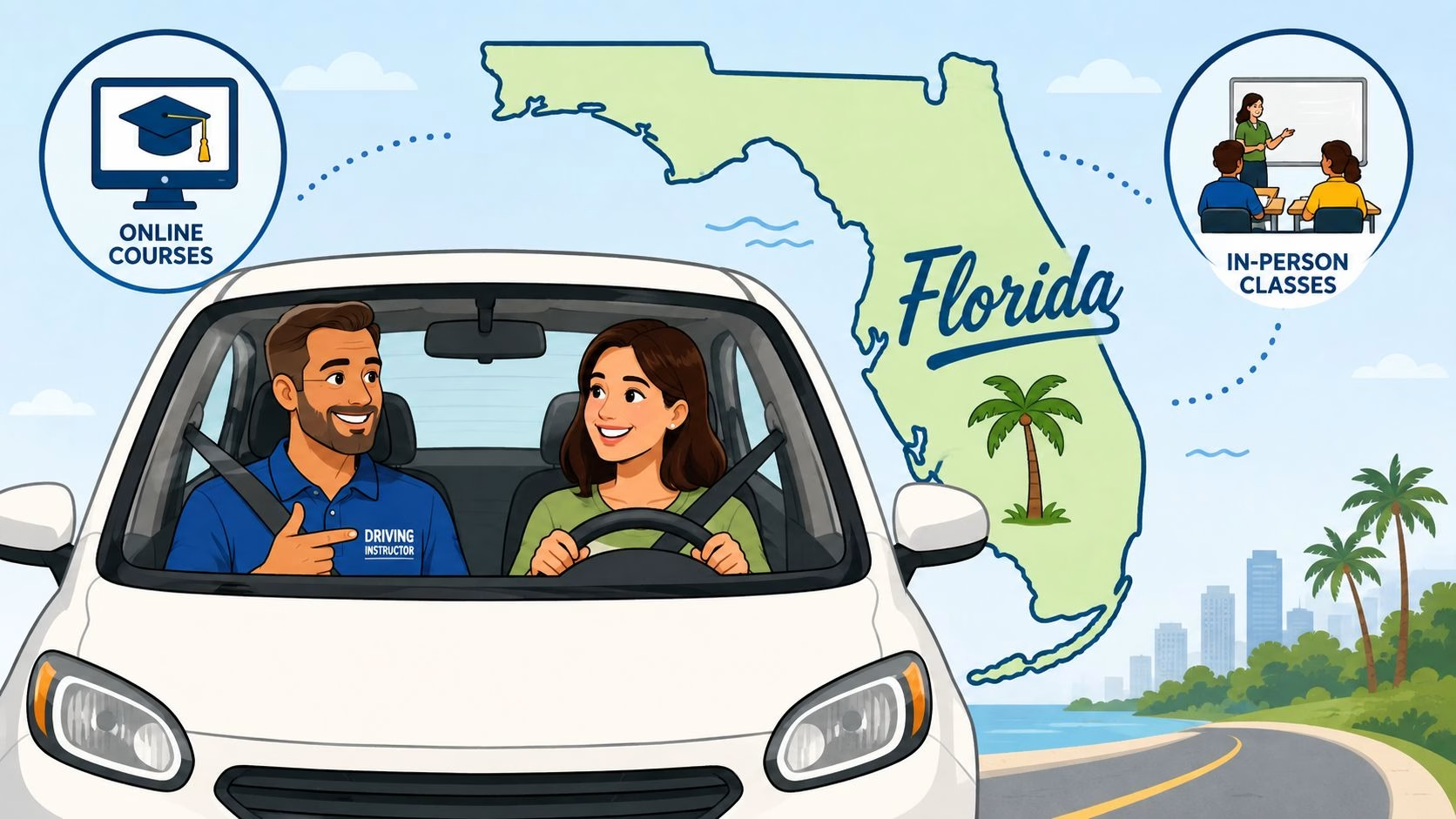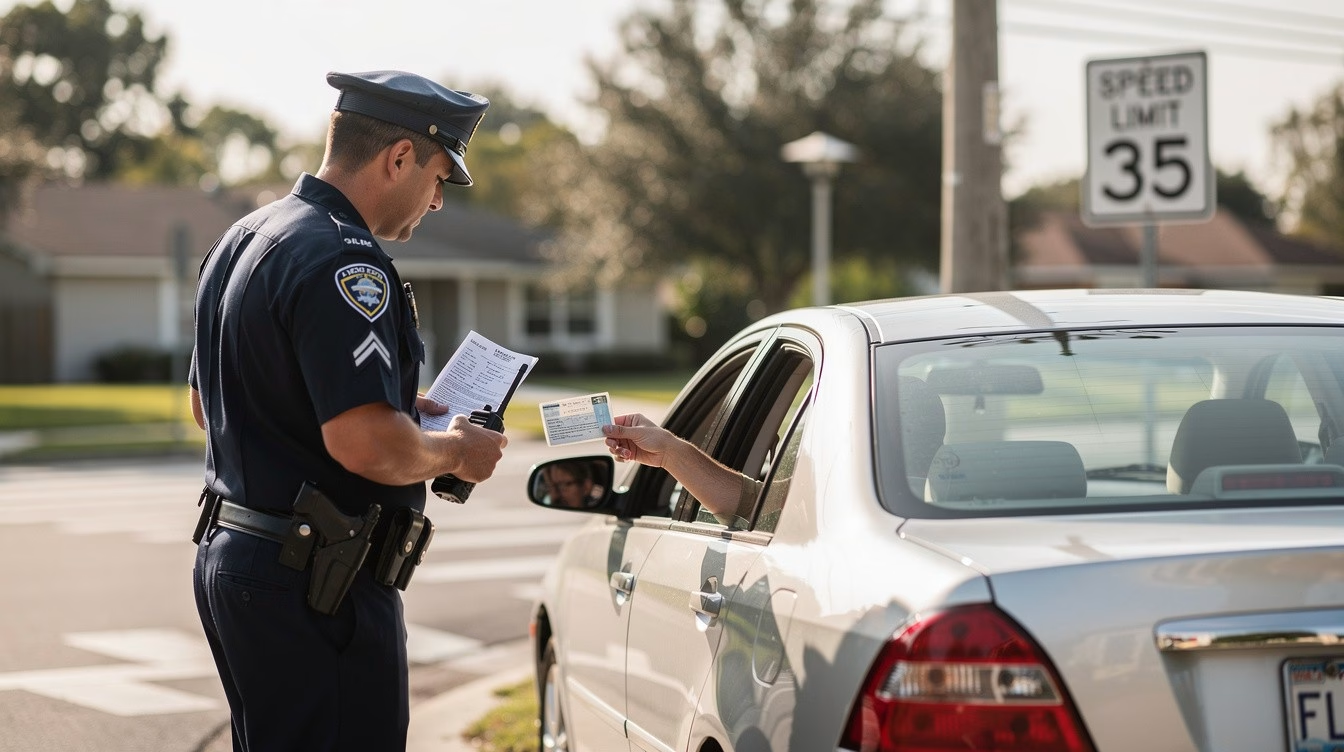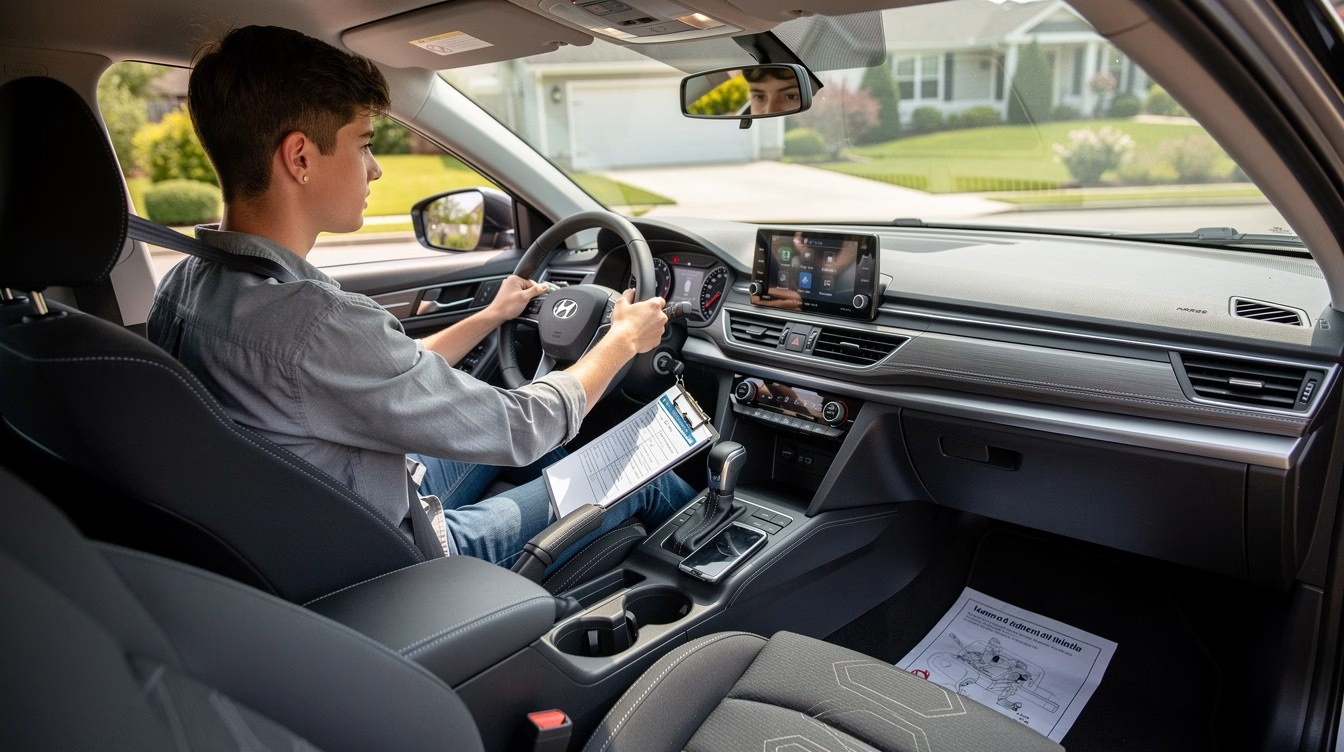
In Florida, the journey to driving begins at 15 with a learner’s permit, but that’s only the first step. Across the U.S., full licenses are generally granted between 16 and 18, while learner permits can start as young as 14 and provisional licenses at 14.5, which is why the drivers license age itself is always a process, not a single birthday.
That difference matters to almost every family I talk to. The teen usually wants freedom as soon as possible. The parent usually wants proof that freedom won’t come before judgment, practice, and safe habits.
Both sides are right.
A good licensing system is built to balance those goals. It gives teens a way to start early under supervision, then earn more independence as they show they can handle it. If you understand that path from the start, the whole process feels less confusing, less stressful, and much more manageable.
The Real Florida Drivers License Age Explained
When people ask about the drivers license age, they’re usually asking one of three different questions.
They might mean, “When can I start learning?” Or, “When can I drive without an adult in the car?” Or, “When do all the restrictions finally go away?” Those are not the same milestone.
Why one age answer never works
A useful national benchmark is that unrestricted driving usually lands in the 16 to 18 range, while restricted or provisional licensing can begin earlier, and learner stages can start even younger in some places, according to World Population Review’s driving age overview. That staged approach exists for a reason. Governments want beginners to practice before they drive fully on their own.
Florida follows that same basic logic.
A teen doesn’t jump from passenger seat to full independence overnight. The state uses a step-by-step path that gradually increases responsibility. First comes supervised learning. Then comes limited solo driving. After that comes full privilege.
Practical rule: Don’t ask only, “What age can my child get a license?” Ask, “What can they legally do at each stage?”
The path families actually need to understand
Think of Florida’s system as a path to independence.
- Stage one: You begin with a learner’s permit and supervised practice.
- Stage two: You move into a provisional period with more freedom, but still with restrictions.
- Final stage: You reach full, unrestricted driving privileges.
That structure helps teens build judgment in lower-risk conditions. It also gives parents a framework for coaching, rather than guessing when a child is “ready.”
For families, this changes the goal. The goal isn’t just to hit the minimum age. The goal is to move through each step cleanly, confidently, and without avoidable setbacks.
Your First Step The Florida Learners Permit
If your teen is eager to start, this is the first milestone that matters most. In Florida, the entry point is the learner’s permit at 15.
That sounds simple, but many families get tripped up at this point. They focus on the birthday and forget the checklist.
What you need before applying
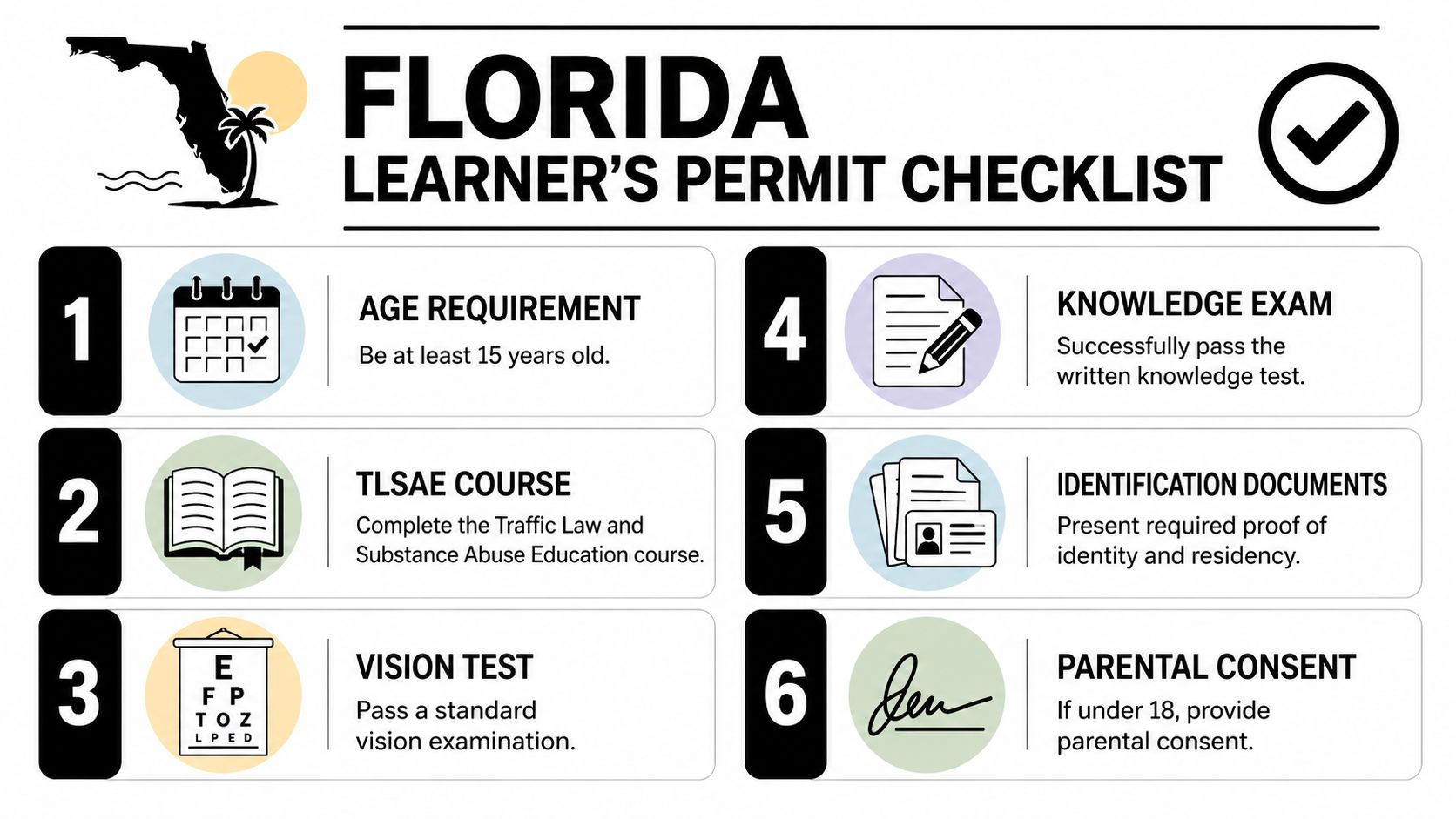
To get a Florida learner’s permit, the basics are straightforward:
- Minimum age: You must be at least 15.
- Required course: You must complete the Traffic Law and Substance Abuse Education course.
- Testing: You must pass the vision and knowledge requirements.
- Documents: You need acceptable proof of identity and residency.
- Consent: If you’re under 18, parental consent is part of the process.
A lot of new drivers treat the education course like paperwork. That’s a mistake. Through this course, students first learn how traffic laws, impaired driving risks, decision-making, and basic road behavior fit together.
Why this stage matters more than families expect
The biggest misunderstanding about drivers license age is thinking the first legal age is the same as the age of true independence.
That isn’t how graduated systems work. In Michigan, for example, the path to full independence includes multiple levels, supervised driving, and clean-record requirements, which shows how the minimum age can be much earlier than the age of true unrestricted driving, as outlined by the Michigan new drivers under 18 guidance.
Florida families should think the same way. The learner’s permit is permission to begin training, not proof that a new driver is road-ready.
The permit stage is where safe habits either get built correctly or get built badly.
Make the permit process less stressful
Most permit problems come from avoidable issues:
- Missing documents at the appointment.
- Rushing the knowledge prep instead of learning the rules well.
- Treating supervised driving casually once the permit is issued.
If you’re helping a teen start, use a clear checklist and begin with the required education step. A practical place to start is this Florida permit guide, which organizes the permit process in one place.
The Path to Independence The Provisional License
This is the stage teens care about most. It’s the first real taste of freedom.
It’s also the stage parents should take most seriously. A provisional license gives a young driver more independence, but it still assumes they are learning.
What changes after the permit stage
In Florida, the move from learner status to provisional driving depends on more than age alone. A teen has to spend time practicing, avoid convictions, and build enough supervised experience to show they can handle everyday driving situations.
The heart of this stage is simple. You are no longer just learning the controls of the car. You are learning judgment.
That means dealing with traffic flow, timing, speed choices, lane decisions, parking lots, poor weather, and nighttime conditions without panicking. The restrictions at this stage exist because beginners often overestimate readiness before experience catches up.
Florida GDL stages at a glance
| Feature | Learner’s Permit | Provisional License | Full License |
|---|---|---|---|
| Main purpose | Supervised practice | Limited independent driving | Unrestricted driving |
| Adult supervision | Required | Not required in normal lawful operation | Not required |
| Independence level | Low | Moderate | Full |
| Restrictions | Strong supervision limits | Age-based restrictions still apply | Restrictions lifted |
| Best focus | Basic control and rule knowledge | Decision-making and consistency | Long-term safe habits |
Why restrictions help instead of slow you down
Families sometimes see restrictions as punishment. They aren’t.
They’re guardrails.
A staged system delays full exposure until the new driver has practiced enough to make safer choices. New York’s model shows this clearly. A learner’s permit begins at 16, a junior or intermediate license can be reached at 16 to 17, and a full unrestricted license is typically at 18, or 17 after approved driver education and the qualifying junior-license period, according to this New York age and licensing explanation.
Florida families can apply the same lesson even without comparing every rule line by line. The age on the card matters less than the amount of guided practice behind it.
Restrictions don’t delay independence. They prepare a driver to keep it.
If you want a plain-language overview of how graduated systems work and why they matter, this graduated driver licensing resource is a helpful next read.
Unlocking Full Freedom Your Unrestricted License
For teen drivers, full freedom arrives when the restrictions end. For adults learning later, this stage works differently.
Both groups need the same thing, though. They need skill, not just eligibility.
For teens turning 18
Once a Florida teen reaches full unrestricted status, driving stops being a supervised privilege and becomes a personal responsibility. That change feels exciting, and it should.
But this is also when the family’s structure fades. Nobody is reminding the driver to scan intersections, leave more following distance, or avoid rushed nighttime decisions. The habits formed earlier now carry the full load.
For adults starting late
A lot of adults assume that being older makes the process easier. In one sense, it can. Adults often bring more patience and less impulsive behavior than younger beginners.
But adults still face the same basic challenge. Inexperience is inexperience.
A major safety review noted that 16-year-olds had crash-involvement rates four times those of drivers in their twenties, with risk tied to inexperience, immaturity, risk taking, passengers, nighttime driving, and distraction, as summarized in this novice-driver risk review. The same review also points to a newer policy shift in Ohio. Beginning September 30, 2025, 18-, 19-, and 20-year-olds will need approved driver training and 50 hours of driving, which shows that some states increasingly treat training and legal adulthood as separate questions.
That should catch every adult learner’s attention. Being legally old enough to drive doesn’t automatically mean you’re ready to drive well.
The smartest mindset for any new driver
If you’re over 18 and starting from scratch, don’t frame the process as, “How can I skip the teen steps?”
Frame it as, “How can I learn efficiently without developing bad habits?”
- Start with knowledge: Learn the rules before guessing on the road.
- Practice deliberately: Repeating the same easy route isn’t enough.
- Build confidence slowly: Calm, repeatable skill matters more than forced bravery.
Adults who need a Florida-specific overview can use this guide to getting a Florida driver’s license over 18 to understand the process clearly.
Why Formal Driver Education Is Your Best Shortcut
The fastest route isn’t the one with the fewest steps. It’s the one with the fewest mistakes.
That’s why formal driver education matters so much. It organizes the learning process before confusion, fear, and bad habits take over.
Why families are waiting longer
Recent licensing data shows a real shift in behavior. The share of 16-year-olds with a driver’s license fell from 46.2% in 1983 to 25.6% in 2018, according to Statista’s chart on U.S. licensing by age group.
That doesn’t just suggest a legal change. It suggests a readiness change.
Teens and families are taking the decision more seriously. Many are waiting until they feel more prepared, more supported, or less overwhelmed by the process.
What formal instruction fixes
A structured course helps in ways informal learning often doesn’t.
- It teaches the why behind rules. Students remember better when they understand the reason for a safe following distance, not just the phrase.
- It creates consistency. Parents may be excellent drivers but inconsistent teachers.
- It lowers stress. A clear sequence beats last-minute cramming and mixed advice.
- It supports confidence. New drivers do better when they know what to expect before they get into traffic.
Good driver education doesn’t just help someone pass a test. It helps them avoid preventable mistakes after the test.
Safety is also a legal and financial issue
Families also need to think beyond the licensing office. Crashes create medical, insurance, and legal consequences that can follow a family long after one bad decision.
If you want a closer look at course options designed for Florida learners, this Florida drivers education page gives a practical overview.
Your Florida Licensing Questions Answered
I’m 18. Do I still need to learn in stages?
If you’re starting fresh at 18 or older, you may not follow the same teen restriction timeline. But you still need to meet Florida’s licensing requirements and pass the required tests.
What changes is the legal pathway. What doesn’t change is the need for real preparation.
Is the learner’s permit the same thing as having a license?
Not in the way most families mean it.
A learner’s permit gives you the right to begin supervised driving. It does not mean you have full driving privileges or unrestricted independence.
What do parents usually misunderstand?
Most parents focus on the date their teen becomes eligible. The better question is whether the teen has built safe routines under supervision.
A young driver who has practiced carefully, handled different road conditions, and taken the training seriously is in a much stronger position than one who only reached the minimum age.
What do adult beginners usually misunderstand?
Adults often assume they can compress the learning curve because they’re older.
Age can help with maturity. It doesn’t replace repetition, observation, and good technique behind the wheel.
How can I make the process easier?
Use a checklist. Keep your documents together. Treat the written preparation seriously. Practice with intention, not just convenience.
Most licensing problems aren’t caused by the road test itself. They’re caused by confusion, poor preparation, or rushing through steps that were supposed to build confidence.
If you’re feeling overwhelmed, that’s normal. The licensing process gets much easier when you stop treating it like one big leap and start treating it like a series of manageable milestones.
If you’re ready to start the process the smart way, BDISchool offers Florida-approved courses for new drivers, traffic school students, and drivers who want flexible online learning in English, Spanish, or Portuguese. Whether you’re working toward your first permit or brushing up on safe driving habits, it’s a practical place to begin with clear instruction and a schedule that fits real life.