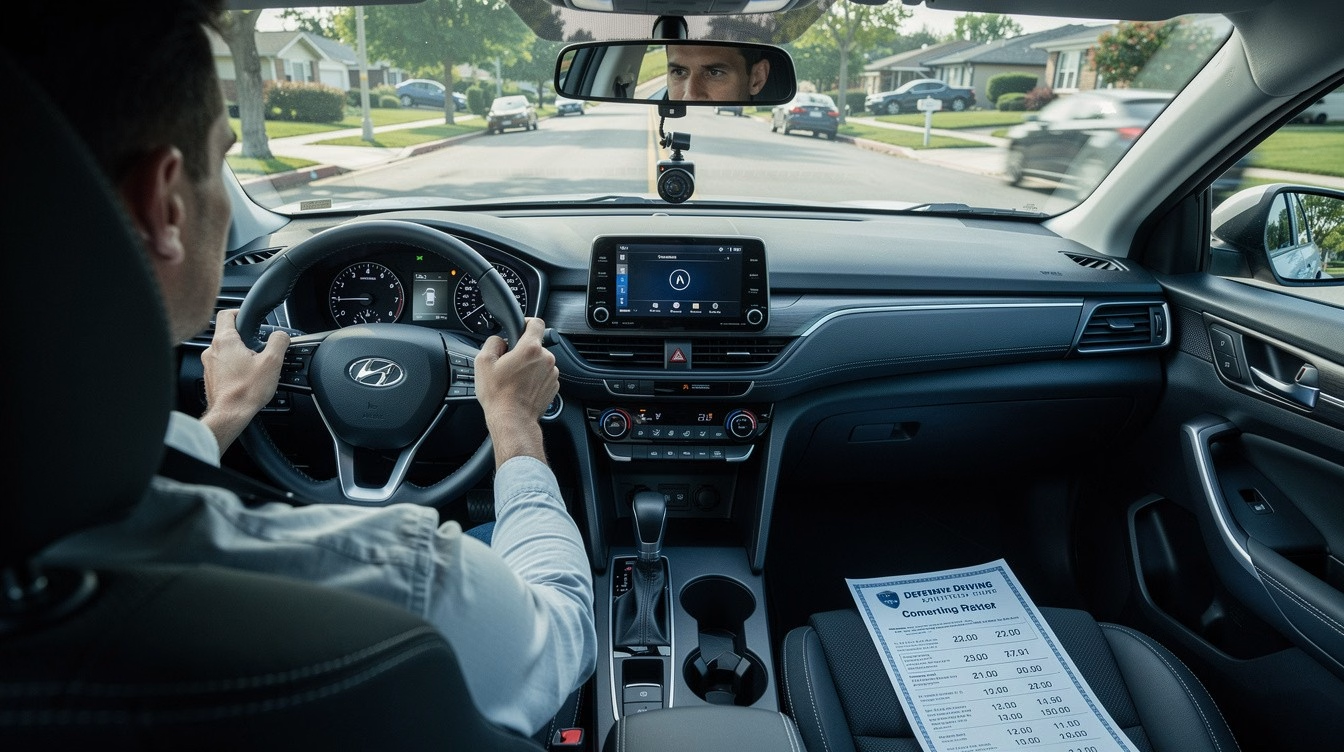
Your car insurance bill doesn’t have to stay the same year after year. A defensive driving insurance discount can cut your premiums significantly, and the path to getting one is straightforward.
At DriverEducators.com, we’ve seen firsthand how completing a defensive driving course opens the door to real savings. Most insurance companies reward safe drivers with discounts that add up fast.
How Much Can You Actually Save
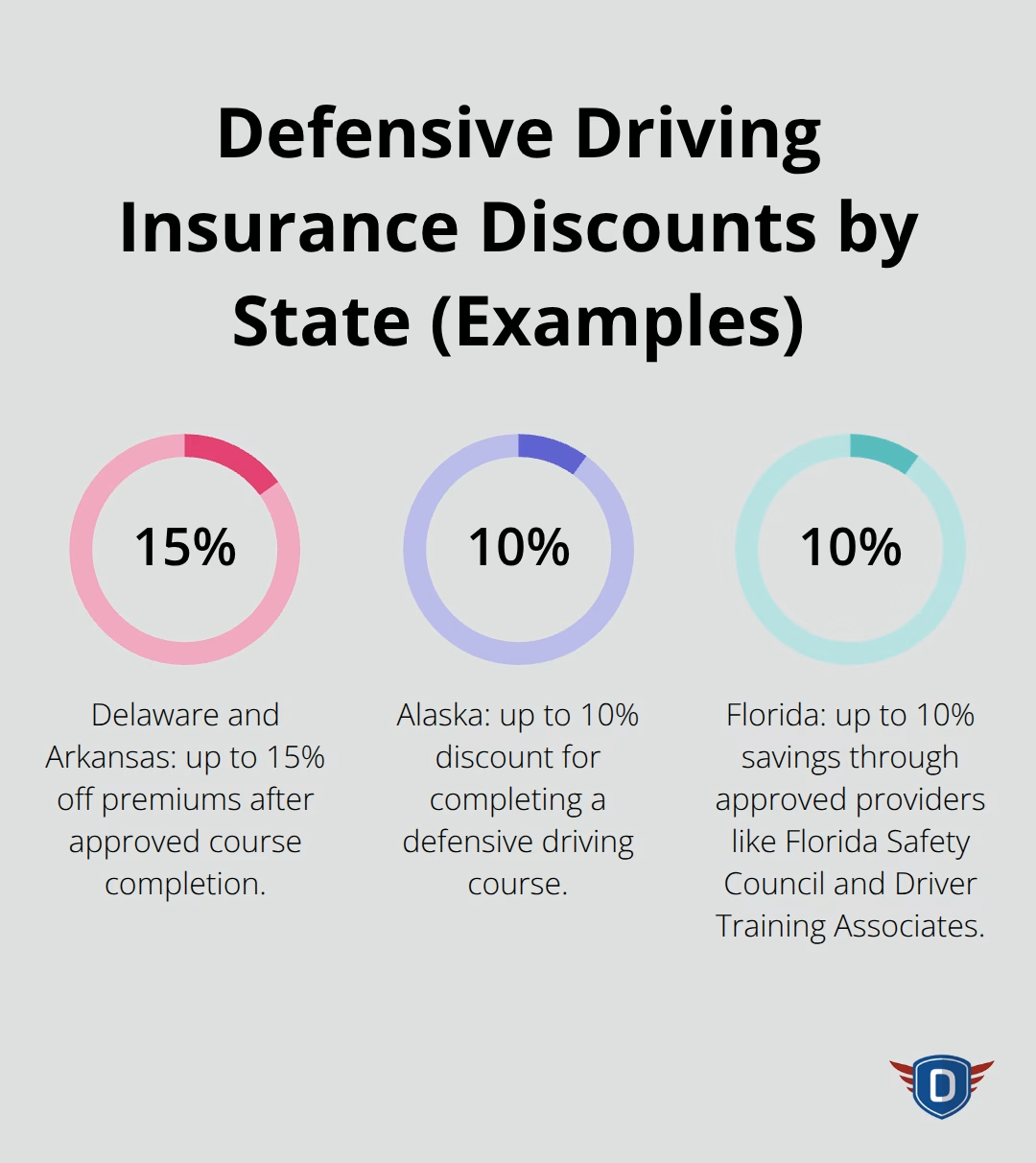
Insurance companies across the nation reward defensive driving completion with concrete discounts, and the numbers are substantial enough to justify the course time investment. GEICO, one of the largest insurers in the country, offers state-specific discounts that range from 5% to 15% depending on where you live. Alaska drivers receive up to 10% savings, while Delaware and Arkansas customers qualify for up to 15% reductions on their premiums. New York offers up to 10% off, and Florida drivers can save the same amount through approved providers like Florida Safety Council and Driver Training Associates. These aren’t theoretical numbers-they’re actual savings that hit your wallet when you renew your policy.
The discount applies to multiple coverage types including collision, comprehensive, and liability, meaning the savings compound across your entire policy rather than just one component.
Your State Determines Your Discount Range
The amount you save depends entirely on where you hold your driver’s license and which insurance company covers you. Some states cap defensive driving discounts at 5%, while others allow insurers to offer 15% or more. California caps savings at 5%, while neighboring Arizona allows up to 10%. Connecticut, Minnesota, and New York all offer up to 10% or 12%, creating meaningful differences if you’re comparing quotes. The discount period matters too-most insurers apply the reduction for three years, meaning a 10% discount on your premium saves you substantially over that period. Contact your specific insurance provider to confirm what discount they offer in your state, since GEICO and other major carriers adjust percentages based on state regulations and their own underwriting guidelines.
Qualifying for Your Discount Takes One Step
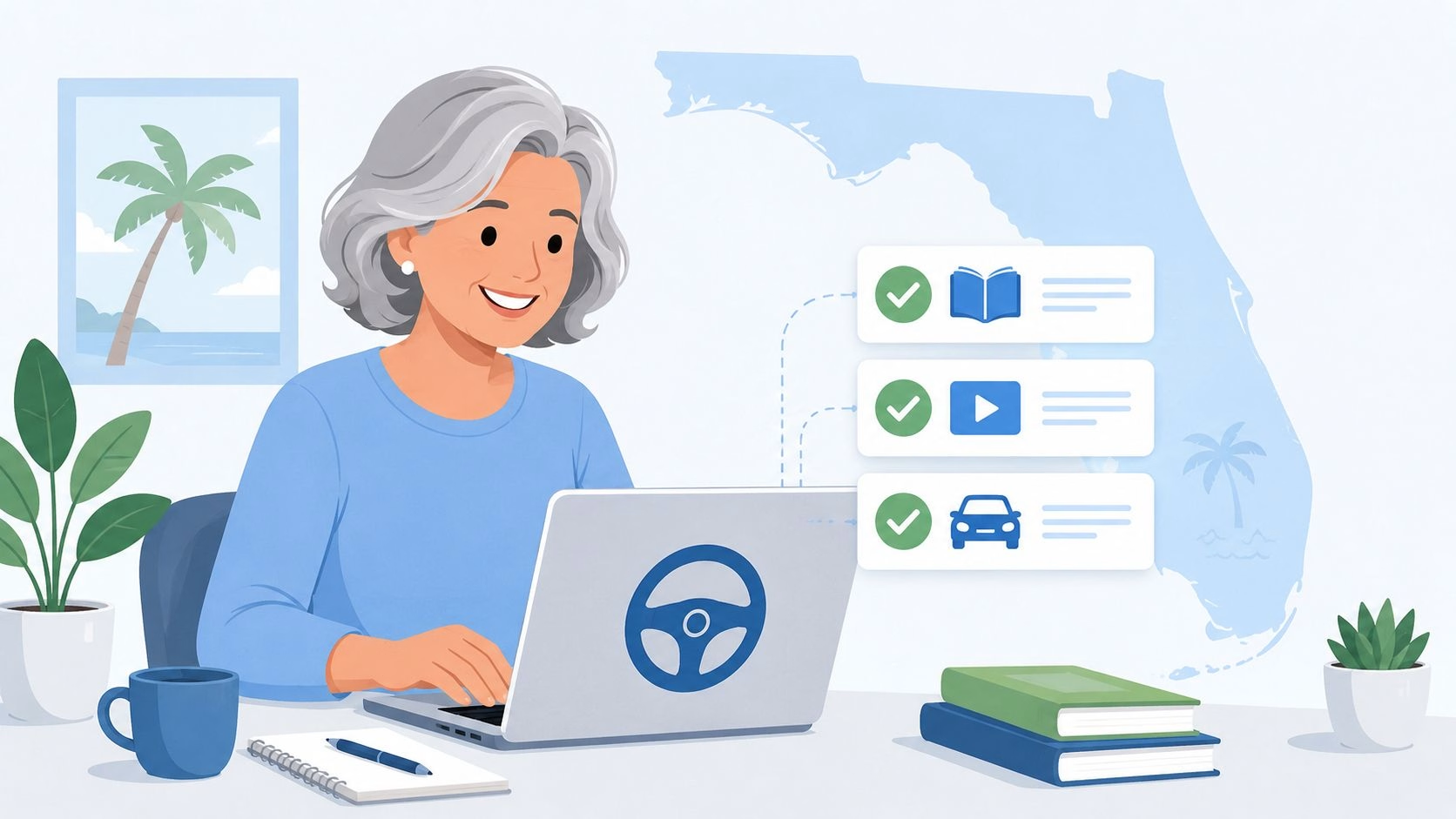
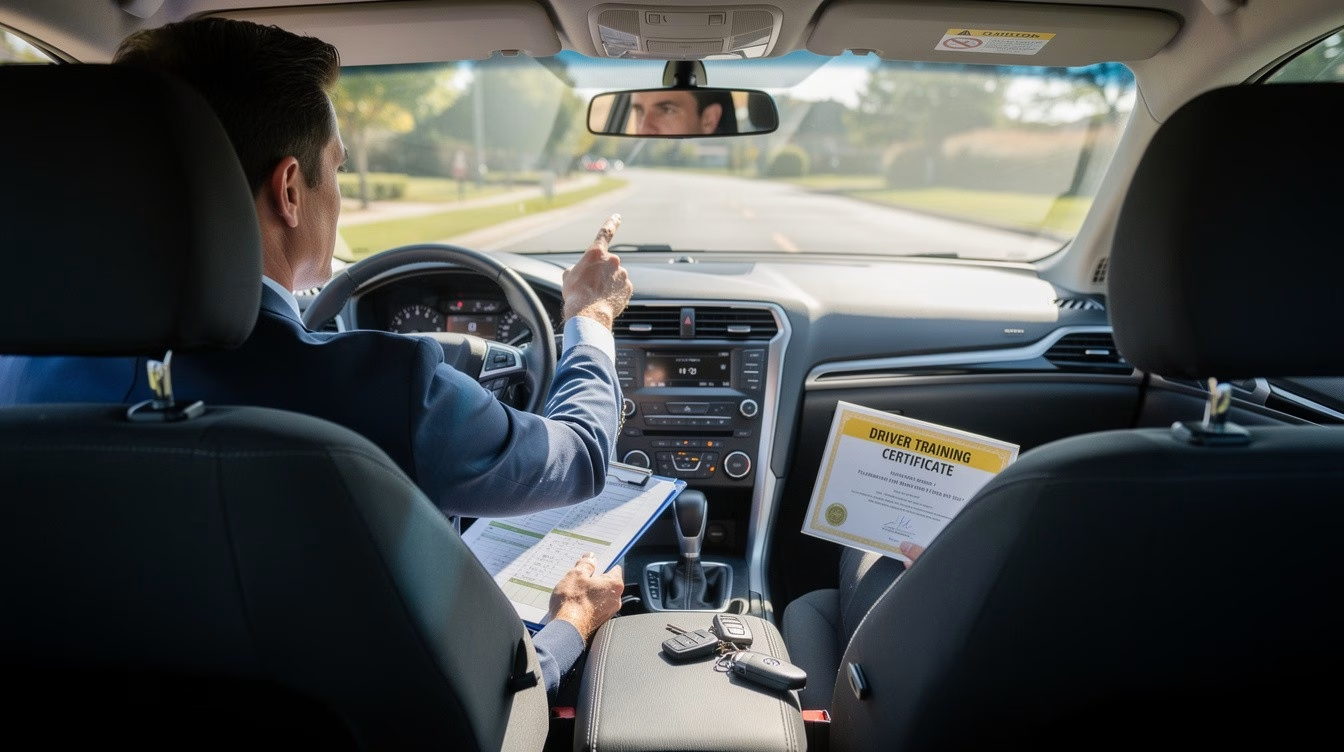
Completing an approved defensive driving course is the only requirement. Most states require the course to be voluntary rather than court-ordered, and some insurers require you to be at least 50 years old (though this varies significantly by location and provider). The course itself typically takes 5 to 8 hours depending on which program you choose, and many providers including the National Safety Council, American Safety Council, and AARP Smart Driver offer online options that fit your schedule. After completion, you submit your certificate to your insurance company-many now allow online submission directly through their policy portal. Your insurer then applies the discount to your next renewal or sometimes immediately, depending on their processing timeline.
What Happens Next With Your Insurance
Once your insurer receives your completion certificate, the discount activation process begins. Some insurance companies apply the savings at your next policy renewal date, while others process the discount within days of receiving your documentation. You’ll see the reduced premium reflected in your renewal notice or policy statement. The three-year discount window means you won’t need to repeat the course annually to maintain your savings-one completion covers multiple renewal periods. This makes the initial time investment even more valuable since you reap the financial rewards without additional effort.
What Defensive Driving Courses Actually Teach You
Defensive driving courses aren’t about learning theory that sounds good in a classroom. They’re built around actionable skills that directly reduce your crash risk and lower your insurance costs. Florida-approved curricula focus on the specific behaviors and knowledge that insurers reward and that genuinely protect you on the road. The National Safety Council and American Safety Council both structure their programs around three core areas: understanding traffic laws in your state, recognizing hazards before they become emergencies, and eliminating the dangerous behaviors that cause accidents.
Traffic Laws and Safe Driving Fundamentals
Every state has specific rules about right-of-way, speed limits in different zones, and how to handle intersections safely. Courses cover traffic laws in detail because what’s legal in one state isn’t always legal in another, and knowing these specifics prevents violations that cost you points and insurance increases. You’ll learn the exact following distance rules for different speeds-the National Safety Council recommends at least three seconds behind the vehicle ahead of you in normal conditions, extending to eight seconds in rain or snow-and how to approach blind intersections safely. You’ll also master the legal requirements for signaling and lane changes. These aren’t abstract rules; they’re the exact behaviors that prevent collisions. The course also covers how modern vehicles handle in different conditions, why certain maneuvers are risky, and how road conditions like wet pavement or glare change your stopping distance. Understanding that your braking distance doubles on wet roads isn’t just information-it’s the difference between stopping safely and sliding into another vehicle.
Hazard Recognition and Crash Avoidance Strategies
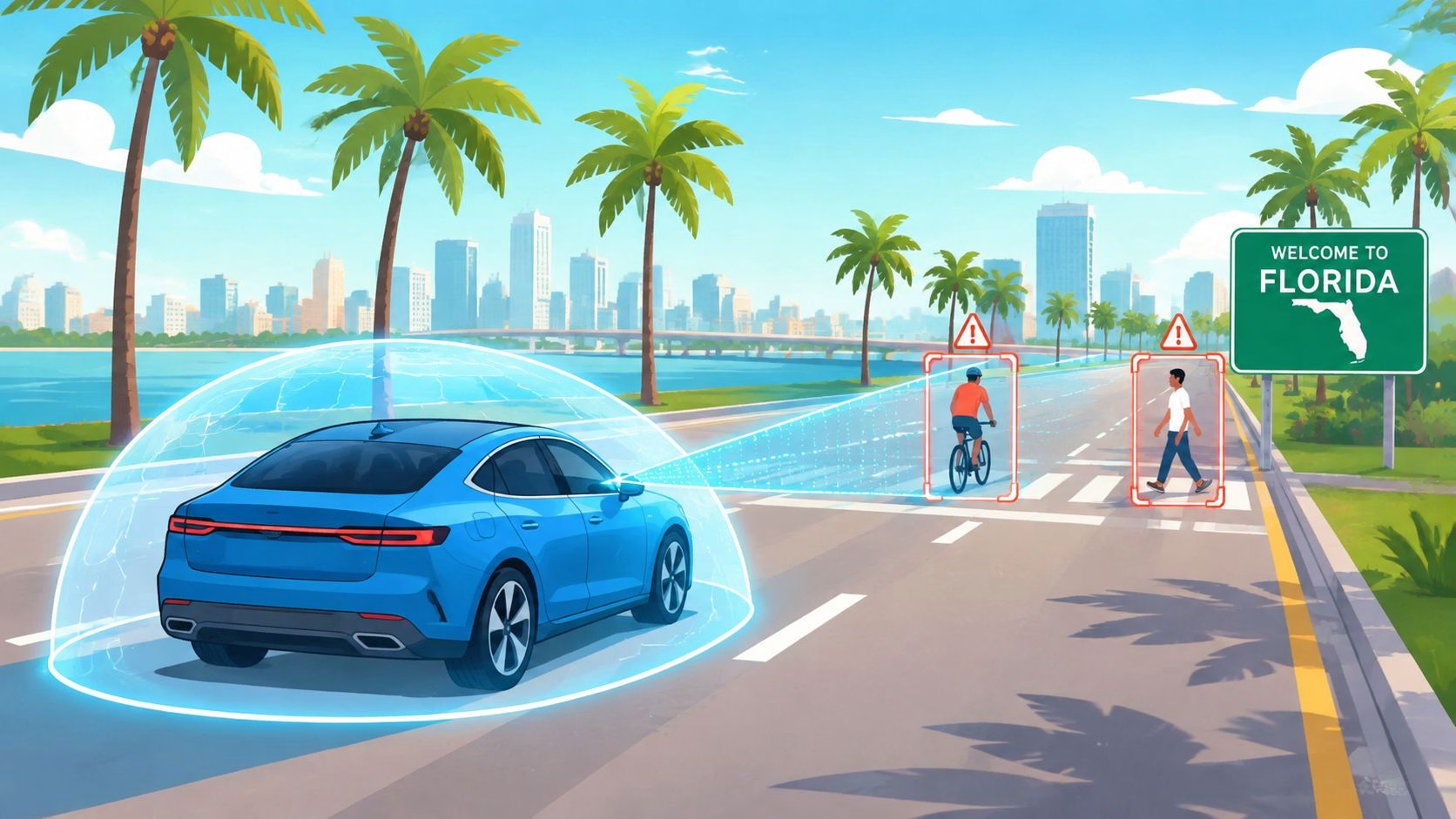
Most accidents happen because drivers don’t see the danger coming until it’s too late. Hazard recognition and crash avoidance teaches you to scan the road systematically, identify potential problems three to five seconds ahead, and adjust your position or speed before you’re in crisis mode. You’ll learn to spot the warning signs that another driver might hit you-a vehicle drifting between lanes, a driver checking their phone instead of watching traffic, or a car braking suddenly without brake lights. The course covers how to position yourself in your lane to avoid being hit by vehicles swerving into your space, how to handle aggressive drivers without escalating the situation, and what to do when you’re tired or your visibility is poor. Real scenarios teach you that the safest move isn’t always what traffic rules technically allow; sometimes slowing down or changing lanes even though you have the right-of-way prevents a collision that would have been technically the other driver’s fault.
Understanding Impaired Driving and Distraction Risks
The course addresses impaired driving and distraction risks directly because about 30% of all traffic crash fatalities in the United States involve drunk drivers. Understanding how alcohol and drugs affect reaction time and judgment gives you concrete reasons to avoid these behaviors beyond just following rules. Phone use while driving receives special attention since distracted driving creates the same crash risk as impaired driving in many scenarios. You’ll examine real accident data showing how these behaviors contribute to collisions, injuries, and fatalities. This knowledge transforms abstract safety advice into personal motivation to change dangerous habits. The curriculum also covers how fatigue affects your driving ability and when you should pull over instead of pushing through drowsiness.
How Attitude and Behavior Shape Your Driving Decisions
Your mindset behind the wheel determines whether you’ll apply what you learn or revert to old habits. Courses examine how aggressive attitudes, impatience, and overconfidence lead drivers to take unnecessary risks. You’ll explore the connection between your emotional state and your decision-making, learning why angry or stressed drivers make poor choices that increase crash risk. The material shows how taking responsibility for your safety-rather than blaming other drivers or road conditions-shifts your behavior toward more defensive driving choices. This psychological component separates effective defensive driving education from simple rule memorization. When you understand that your attitude directly affects your insurance costs and your safety, you’re more likely to maintain the habits that protect you long after course completion.
Finding the Right Course for Your Situation
Florida-approved courses must meet strict guidelines from the Florida Department of Highway Safety and Motor Vehicles, which means any course carrying that approval will satisfy insurance company requirements and court mandates if applicable. When evaluating any provider, verify they electronically report completion directly to FLHSMV rather than requiring you to handle the paperwork yourself, since this eliminates delays between finishing the course and your insurer processing your discount. The National Safety Council and American Safety Council both offer Florida-approved options, so you have multiple legitimate choices depending on your schedule and learning preference.
Online Courses Fit Modern Schedules
Online courses dominate the market because they eliminate travel time and inflexible classroom schedules. Most online defensive driving courses take between 5 and 8 hours to complete, though some providers compress the content into 4 hours without sacrificing the material insurers require for discount qualification. In-person classroom options still exist through local driving schools and safety councils, but they require you to attend scheduled sessions at specific times and locations, making them impractical for most working adults. The real differentiator isn’t the format but whether the course covers Florida traffic laws, hazard recognition, and the attitude shifts that insurers actually reward.
Verify Electronic Reporting and Certificates
Completion certificates should be issued electronically and automatically reported to FLHSMV, not sent to you via email where you might lose them or forget to submit them. This automatic reporting eliminates the extra step of manually submitting documentation to your insurance company and speeds up discount activation. Before enrolling, confirm the exact course length so you can block calendar time accurately, since underestimating completion time leads to rushed learning that defeats the safety purpose entirely. Ask the provider whether they handle all FLHSMV reporting or whether you’ll need to submit anything yourself after finishing the course.
Compare Course Lengths and Content Coverage
Different providers offer varying course durations (4 hours, 6 hours, or 8 hours), and the length you choose depends on your schedule and how deeply you want to explore defensive driving concepts. Shorter courses cover essential material for insurance discount qualification, while longer programs provide additional scenarios and behavioral training. Verify that whichever course you select includes Florida-specific traffic laws, hazard recognition techniques, and impaired driving prevention, since these topics directly influence insurance company decisions about discount eligibility. The provider’s course materials should address aggressive driving, distracted driving, and how attitude affects decision-making behind the wheel.
Final Thoughts
A defensive driving insurance discount delivers measurable financial returns that extend far beyond a single renewal period. The savings you earn cover three years of premium reductions, meaning a 10% discount compounds across multiple policy periods without requiring you to retake the course. That’s real money staying in your wallet while you maintain safer driving habits that protect you and everyone sharing the road.
You also protect your driving record from points that would otherwise accumulate and trigger license suspension or mandatory remedial programs. A single moving violation increases your insurance rates by 20% or more for years, making the preventive value of defensive driving education substantial. When you combine the insurance discount with avoided violations and the reduced crash risk that comes from applying what you learn, the total benefit far exceeds the course cost and time investment.
The next step is straightforward: enroll in a course that fits your schedule, complete it at your own pace, and notify your insurance company you’ve finished. Your discount application processes automatically, and your savings begin at your next renewal. Explore defensive driving courses to start protecting your record today.