
A traffic ticket can turn into a deadline fast. If a judge, clerk, or court notice says you must complete a court approved driver improvement course, the real question is not whether to take one – it is whether you are taking the right one for your case.
That distinction matters. Some drivers enroll in a general traffic class, finish it on time, and only then learn the court required a specific provider, a specific number of hours, or a course approved by a certain state agency. When that happens, the inconvenience is more than frustrating. It can delay compliance, affect fines, and create unnecessary back-and-forth with the court.
What a court approved driver improvement course means
A court approved driver improvement course is a traffic safety or driver behavior program that has been recognized by a court, state, or authorized agency for a legal or administrative purpose. In plain terms, it is not just any driving course. It is one that meets the approval standards tied to your violation, jurisdiction, or case outcome.
Approval can come from different places depending on the state. In some situations, the court directly accepts a provider list. In others, the state licenses or certifies course providers, and the court accepts those approved programs. That is why the word approved matters more than the word online.
The purpose of the course also varies. You may need it to satisfy a court order, reduce points, qualify for ticket dismissal, meet probation terms, or show completion before a deadline connected to your driving record. The course itself may focus on defensive driving, traffic law, substance abuse education, aggressive driving, or general driver improvement.
Why the right approval matters more than convenience
Online access is helpful, but compliance comes first. A self-paced course on your phone does not help if the court will not accept the completion certificate.
The safest approach is to verify three things before you register. First, confirm the exact course type ordered by the court. Second, confirm whether the provider must be approved by the state, the court, or both. Third, confirm whether there is a minimum course length, such as four, eight, or twelve hours.
This is where many drivers get tripped up. Courts often use broad language like driver improvement course, while state agencies may classify the same requirement under a more specific label. A basic driver improvement course may satisfy one case, while another requires a specialized program tied to reckless driving, aggressive driving, or substance-related violations.
How to tell which course your case requires
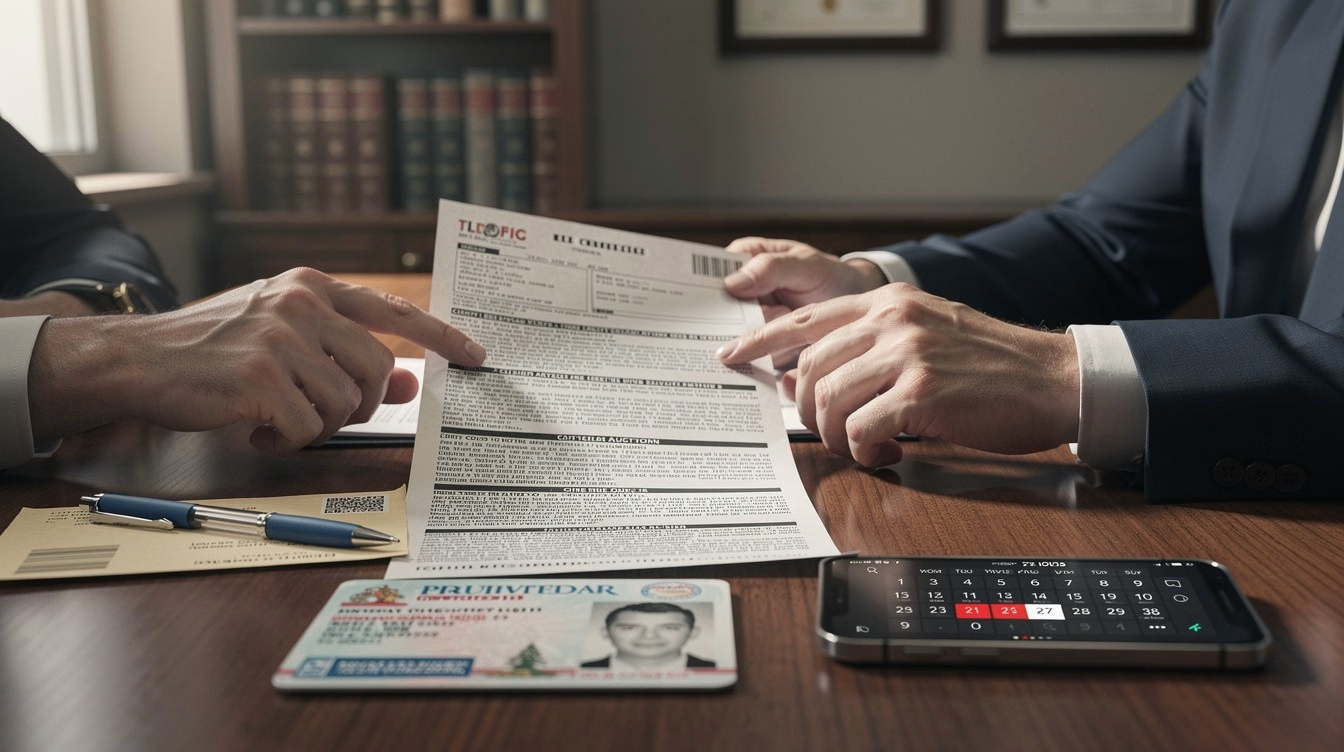
Start with the paperwork. Your citation, court order, plea agreement, or clerk instructions usually contain the first clue. Look for course name, required hours, due date, and any provider approval language.
If the order is vague, contact the court clerk before enrolling. Ask direct questions. Does the court require a specific school list? Will an online course be accepted? Does the certificate need to be filed by you or sent by the provider? Clear answers now can prevent a rejected certificate later.
You should also check whether your case is local or state-driven. In some states, judges have discretion to order a course from a broad pool of approved providers. In others, the requirement is tightly defined by statute or agency rule. If you recently moved or got the ticket while traveling, pay extra attention to the state where the violation occurred, not just the state where you live.
What to look for in a court approved driver improvement course
A legitimate provider should make the basics easy to confirm. You should be able to see what type of course is offered, who it is approved by, how long it takes, and whether completion reporting is available. If that information is hard to find, that is a warning sign.
Convenience features matter too, especially when you are working around court deadlines. A good online course should be available 24/7, mobile-friendly, and self-paced so you can complete it without rearranging your entire week. Transparent pricing also matters. If fees for certificates, processing, or reporting appear late in the checkout process, the course may end up costing more than expected.
Customer support is another practical factor. If you are unsure whether a course matches your court requirement, responsive support can save time and prevent enrollment mistakes. That is especially useful when your order uses legal language that is not immediately clear.
Online vs. in-person courses
For most drivers, online is the easier option. You can start quickly, work at your own pace, and avoid travel or classroom scheduling. That flexibility is a major benefit when you are trying to meet a court deadline while balancing work, school, or family obligations.
Still, online is not automatically the right format for every case. Some courts or states require in-person attendance for certain offenses, repeat violations, or higher-risk categories. Others allow online completion only through approved providers. The format depends on the rules tied to your case, not just personal preference.
If online is allowed, it usually gives you the fastest path to compliance. Providers like DriverEducators.com are built around that need, offering approved online courses designed to help drivers complete requirements efficiently without sacrificing legitimacy or support.
Common situations where drivers need one
A court approved driver improvement course is often required after a traffic citation, but not always for the same reason. One driver may be using it to keep points off a record. Another may need it because it was ordered as part of a plea. Someone else may be completing it to satisfy a licensing or reinstatement condition.
Young drivers, first-time offenders, and drivers with non-criminal moving violations are commonly directed into these courses. So are drivers who need a structured education program after repeated infractions. In some states, insurance-related or age-related courses exist too, but those should not be confused with a court requirement unless the court specifically says they qualify.
That is the trade-off to keep in mind: many driver education courses sound similar, but they are not interchangeable. The title of the course matters less than whether it matches the legal requirement attached to your case.
How completion and reporting usually work
Once you finish the course, you typically receive a certificate of completion. Depending on the jurisdiction, you may need to submit that certificate to the court yourself, or the provider may report completion directly.
Do not assume reporting is automatic. Some states allow electronic reporting, but some courts still expect the driver to file proof manually. Even when a provider submits completion records, it is smart to save your certificate and confirm the court received it before your deadline passes.
Timing matters here. Same-day completion may be possible, but certificate processing and reporting can still take time. If your due date is close, choose a provider that clearly explains reporting timelines and certificate delivery.
FAQ
What is a court approved driver improvement course?
It is a traffic safety course accepted for a court-related requirement. Approval usually comes from the court, the state, or an authorized agency.
How do I know if a course is court approved?
Check your court paperwork first. Then confirm the provider’s approval status and course type before enrolling.
Can I take the course online?
Usually, yes, if your court or state allows online completion. Some cases still require in-person attendance.
Will any defensive driving course work?
No. A general defensive driving course may not satisfy your specific order. The course must match the requirement attached to your case.
How long does a driver improvement course take?
It depends on the state and offense. Some courses are four hours, while others are longer.
Who sends proof of completion to the court?
It depends on the provider and jurisdiction. Sometimes the provider reports it, and sometimes you must submit the certificate yourself.
What happens if I take the wrong course?
The court may reject it. That can lead to delays, extra costs, or failure to meet your deadline.
Can a driver improvement course remove points from my record?
Sometimes. Point reduction rules depend on the state, the offense, and whether the court or DMV recognizes the course for that purpose.
Choosing a course should feel straightforward, not risky. If you verify approval, match the course to your exact requirement, and leave enough time for reporting, you give yourself the best chance of closing out the issue cleanly and moving on.