
You see flashing lights in the mirror, pull over, and a few minutes later you’re holding a Florida ticket and asking the same questions most drivers ask. Do I need traffic school? Which course counts? Will this help with points, insurance, or a court deadline?
That moment feels bigger than it is.
Most Florida driver education courses exist to solve one specific problem at a time. One course helps with a moving violation. Another is for a first-time driver. Another may matter if a judge ordered class completion. The confusion starts when people assume every “traffic school” course does the same thing. It doesn’t.
As an instructor, I can tell you the stress usually drops fast once you match your goal to the right class. If your goal is clear, the path gets simple too.
Your Guide to Florida Driver Education Courses
A lot of people come to driver education courses thinking they’re being punished.
Usually, they’re just trying to fix a problem efficiently. Maybe you got a ticket on the way to work. Maybe your teen needs the right class before applying for a permit. Maybe you moved to Florida and want to make sure you’re taking a course the state will recognize.
That confusion makes sense because driver education isn’t structured the same way everywhere. In the United States, 29% of drivers ages 15 to 20 had documented driver education participation in 2020, and state requirements vary sharply, including supervised driving rules that range from none in some places to as many as 100 hours in Oregon according to Education Week’s review of state driver education rules.
Florida is no different. The system is built around purpose.
What most drivers are actually trying to solve
Usually, the question isn’t “What is traffic school?”
It’s one of these:
- I got a ticket. Can I take a class that helps protect my driving record?
- I’m getting my first license. Which course do I need before I can move forward?
- The court told me to take a class. Which one will satisfy that order?
- I want an insurance discount. Is there a course that can help with that?
- I haven’t driven in a while. Is there a refresher that fits my situation?
Simple rule: In Florida, the right course depends on the reason you’re taking it. Start with your goal, not the course title.
Why the details matter
Two classes can sound similar and still serve completely different legal purposes.
That’s why people get stuck. They enroll in a course that sounds close enough, finish it, and then learn it doesn’t apply to their ticket, permit step, or court instruction. The good news is that this mistake is avoidable when you know what each course is really for.
The rest of this guide keeps the focus where it belongs. Not on jargon, but on what you need done.
Choosing the Right Florida Driving Course
Florida driver education courses make more sense when you sort them by outcome. If you know what you need fixed, the course choice gets easier.
The most important point is this. Florida segments driver education by objective. The 4-hour Basic Driver Improvement course is for point reduction, while the DATA/TLSAE and DETS course is required for new drivers. Choosing the wrong class means it won’t be accepted for legal or licensing credit, as explained by Florida’s driver education overview.
Match the course to the problem
Here’s the fast version.
If you received a standard moving violation and you’re eligible to elect traffic school, you’re usually looking at Basic Driver Improvement, often called BDI.
If a judge or court order requires a longer class, you’re more likely dealing with Intermediate Driver Improvement, often called IDI.
If the issue involves aggressive driving behavior or a court specifically ordered an aggressive driver course, that’s a separate class with a different purpose.
If you’re an older driver looking for a refresher and possible insurance savings, the Mature Driver Course is the one people usually mean.
If you’re a first-time driver starting the licensing process, you’re looking for TLSAE or DETS, depending on your age and situation.
Florida Driver Education Course Comparison
| Course Name | Length | Primary Purpose | Who It’s For |
|---|---|---|---|
| Basic Driver Improvement (BDI) | 4 hours | Help with an eligible moving violation and point-related concerns | Drivers who got a ticket and can elect traffic school |
| Intermediate Driver Improvement (IDI) | 8 hours | Satisfy a court order or higher-level requirement | Drivers ordered by a court or directed into a longer class |
| Aggressive Driver Course | 8 hours | Address aggressive driving behavior and compliance requirements | Drivers specifically ordered into this type of course |
| Mature Driver Course | 6 hours | Refresher training and possible insurance-related benefit | Drivers age 55 and older seeking skill review |
| TLSAE or DATA | Florida-approved course for new drivers | Meet first-time driver education requirement | New drivers beginning the licensing process |
| DETS | 6 hours | Meet learner permit education requirement for teens | Drivers ages 15 to 17 seeking a Florida learner’s permit |
Quick examples that clear up common mistakes
A driver gets a speeding ticket and wants to avoid points if eligible. That person should look at BDI, not TLSAE.
A parent signs up a teen for a ticket course because the teen wants a permit. That won’t solve the permit issue. A teen in that situation needs the first-time driver path, not a violation course.
A driver reads “defensive driving” and assumes any defensive driving class will satisfy a court order. That can be risky. Court language matters. If the order says IDI or aggressive driver, the course must match the requirement.
If you’re not sure what your notice means, read the exact wording on the citation, court document, or licensing instruction before you enroll.
One practical way to confirm before you register
Use the paperwork in front of you as your guide. Look for words like court ordered, point election, new driver, learner’s permit, or insurance discount.
Then compare that need with a list of Florida-approved online traffic school options. The point isn’t to pick the fastest-sounding class. It’s to pick the one that will count for your reason.
Benefits Beyond Ticket Dismissal
Many people start driver education courses because they have to.
A lot of them finish realizing the course helped with more than the immediate problem. That matters, especially if you drive daily, carry family in the car, or want to avoid another stressful traffic stop.
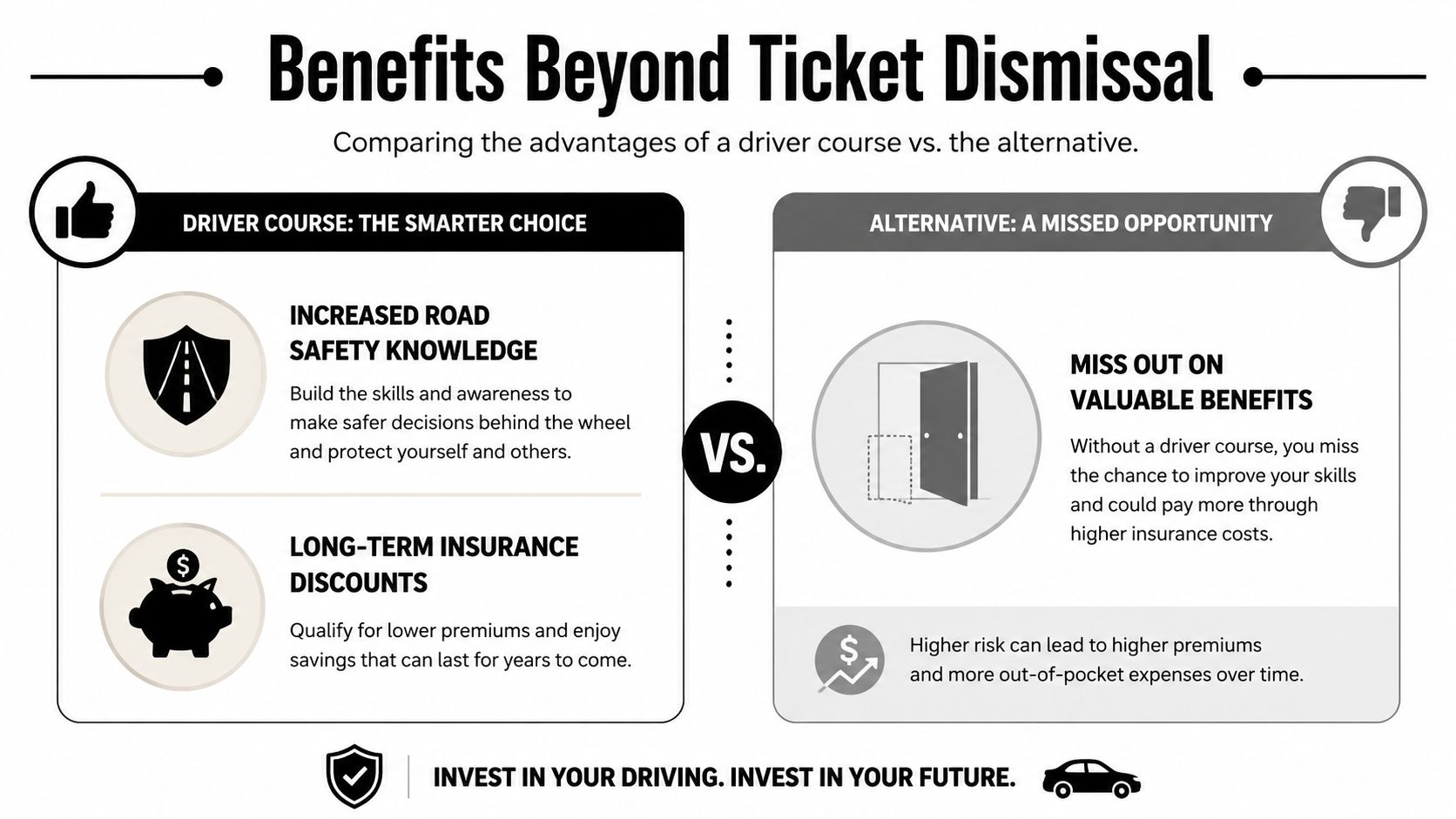
Safer habits are the real payoff
The strongest driver education programs do more than walk you through rules. They connect traffic laws to actual risk on the road.
The public safety guidance I pay attention to keeps coming back to the same point. The best driver education programs combine classroom learning with supervised practice and hazard-recognition training, and quality should be measured by safety outcomes, not just completion rates, as described in the National Teaching Driver Education and Assessment Standards overview.
That shows up in everyday driving in simple ways:
- Seeing trouble earlier helps you respond before a lane change, hard brake, or merge becomes a close call.
- Reviewing right-of-way rules cuts down on hesitation at intersections.
- Studying defensive driving choices gives drivers a calmer default response when traffic gets messy.
- Refreshing risk awareness helps drivers notice aggressive, distracted, or impaired behavior around them.
Insurance and financial value
Some drivers take a course because they want a cleaner record after a ticket. Others are thinking ahead about insurance.
If your goal includes possible premium savings, check whether your insurer recognizes a defensive driving insurance discount course. The key word is possible because insurance eligibility depends on your carrier and policy, not just the course title.
If you ever do end up in a crash, it also helps to know what happens next. A practical resource for that is this step-by-step auto claim guide, which walks through the documentation and reporting process in plain language.
Better driving education doesn’t guarantee a perfect record. It does help people make steadier decisions when a risk appears suddenly.
Why this matters for busy adults
Most adults don’t need more information. They need useful reminders at the right time.
A good course can do that. It can reset habits that drifted, clarify laws you only half remembered, and make you more deliberate in traffic. That’s a much better return than treating the class like a box to check and forget.
How to Enroll and Get Started Today
The enrollment process usually feels harder than it is.
Most drivers can get moving once they answer one question first. Why are you taking the course? Ticket, permit, insurance, court order, or general refresher. That answer shapes every step after it.
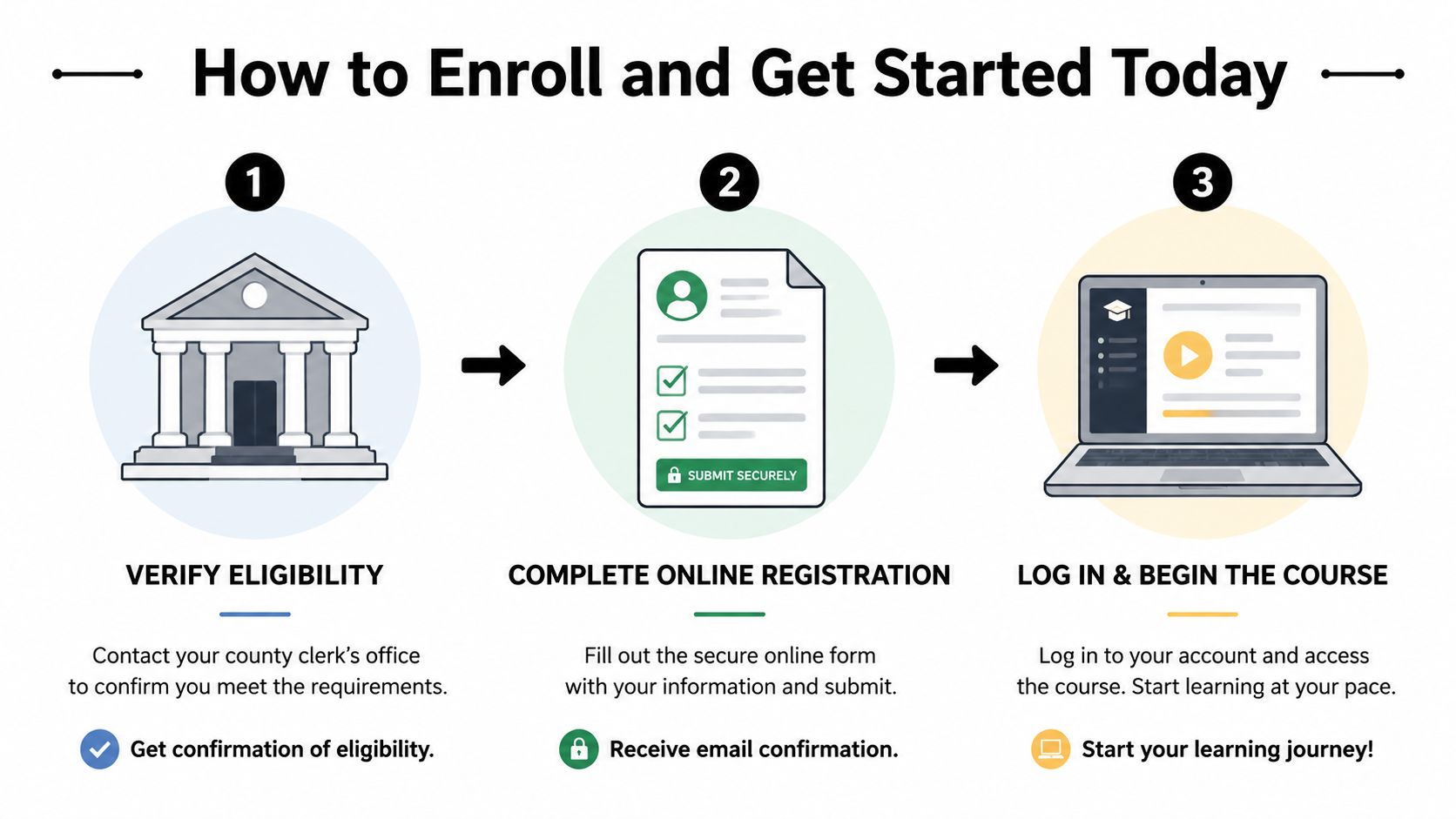
Start with verification
If your course is tied to a citation or court matter, confirm eligibility before you pay.
That can mean checking your citation instructions, reviewing your court notice, or contacting the county clerk if anything is unclear. A five-minute confirmation can save you from taking a class that won’t apply to your case.
For permit or first-license steps, confirm the exact requirement attached to your age and licensing stage. Florida uses different courses for different entry points, so this step matters.
Then choose format and language
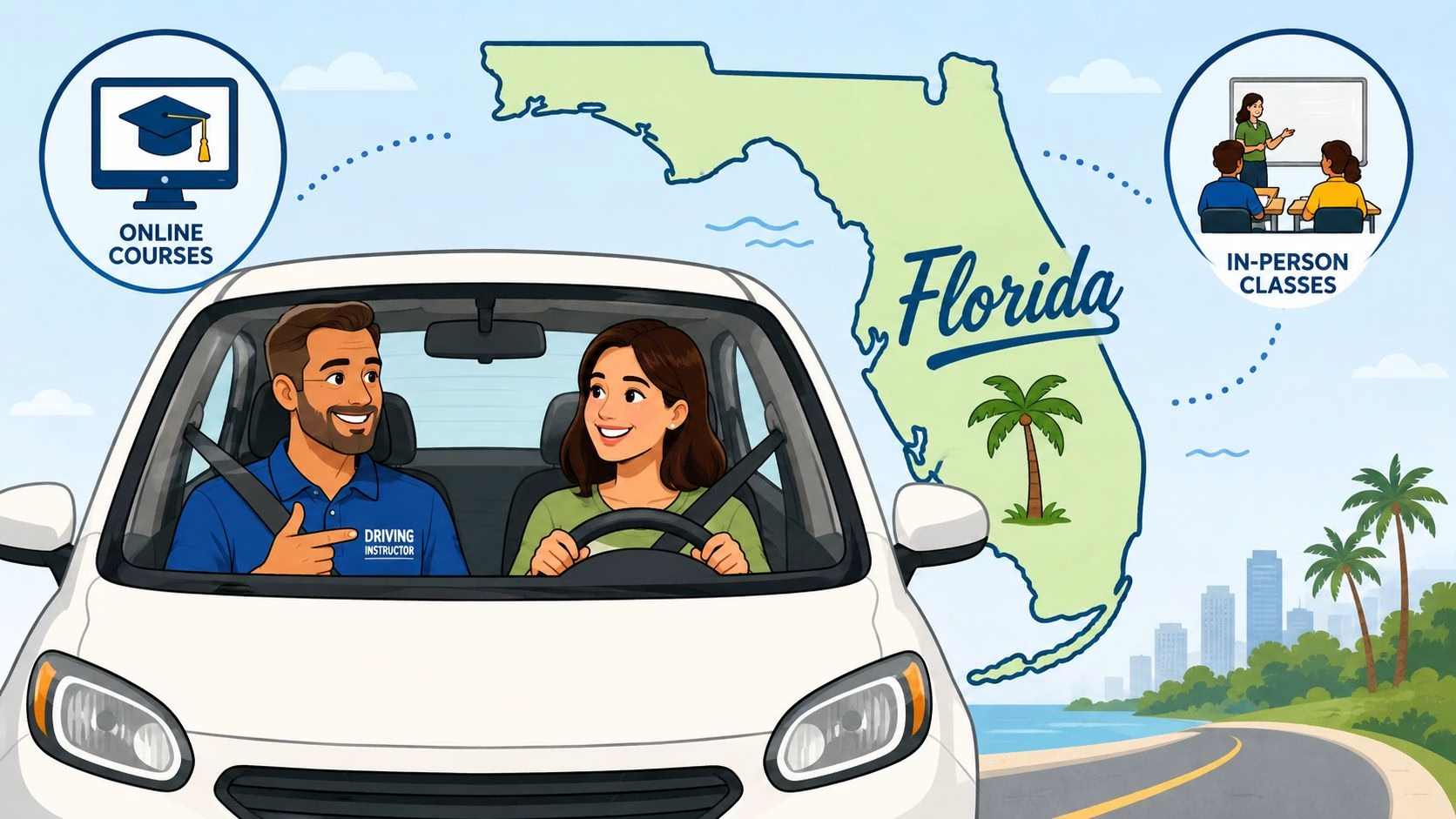
Florida has a wide range of online driver education courses, and that flexibility matters because many people taking them are juggling work, caregiving, or language barriers.
Public guidance on driver support often overlooks older adults, immigrants, and non-English speakers who need refresher instruction or local-law guidance. In a diverse state like Florida, clear, multilingual, and self-paced options are essential for navigating eligibility, license requirements, and state compliance, as discussed by Driver Rehabilitation Services.
That’s why many schools offer:
- English instruction for standard enrollment
- Spanish options for drivers who learn best in their first language
- Portuguese support for another major Florida language need
- Self-paced access for people who can’t sit through a class in one session
Basic enrollment steps
-
Confirm the reason
Read the notice, ticket, or permit requirement carefully. -
Select the matching course
Don’t choose by title alone. Choose by accepted purpose. -
Complete registration
You’ll usually enter your identifying information so the school can match your completion correctly. -
Log in when you’re ready
Most online programs let you begin from home and continue on your own schedule.
A quick walkthrough can help if you like seeing the process first.
Helpful reminder: If your name, license information, or case details are entered incorrectly at registration, certificate reporting can get delayed. Slow down on the form.
What to Expect in Your Online Class
Most online driver education courses are built for people with normal lives. Workdays, errands, kids, appointments, and not much spare time.
That means the class usually isn’t designed like a long lecture. It’s designed so you can log in, make progress, stop, and come back later without losing your place.
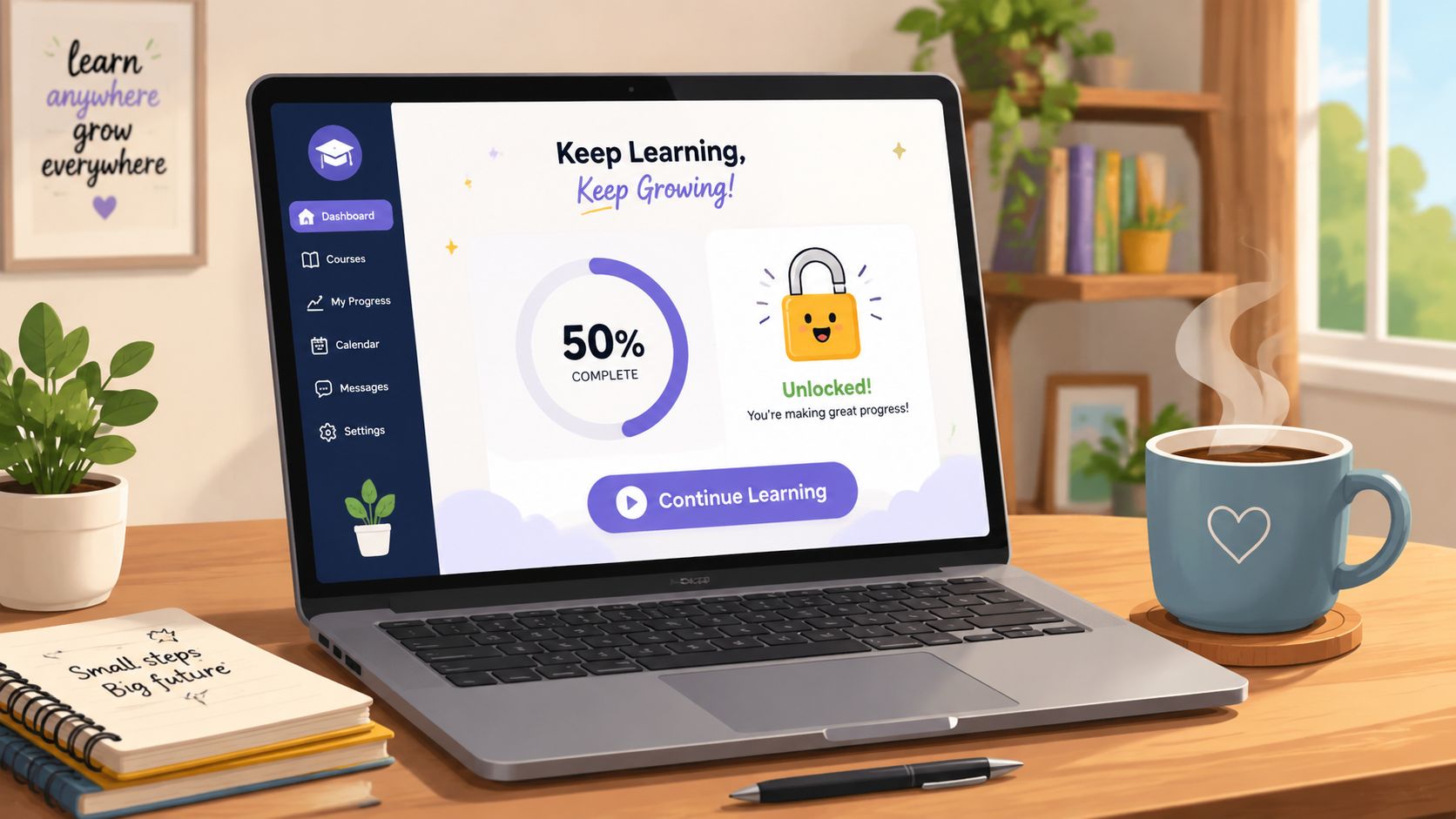
The format is usually simple
Most students use a laptop, tablet, or phone. The course opens in sections, and each section covers a focused topic such as signs, right-of-way, defensive driving choices, or common violation patterns.
What makes a course useful isn’t just that it’s online. It’s how the information is taught.
A national NHTSA review found that while many state programs require about 30 hours of classroom instruction, high-quality training is more closely associated with a combination of classroom learning, on-road or simulator practice, and standardized testing of skills, as outlined in the NHTSA driver education curriculum review. In plain English, that means book knowledge has to connect to real driving decisions.
What the learning experience often includes
Good online classes usually rely on more than text blocks. They may include:
- Scenario-based examples that show what a risky lane change or late stop looks like
- Short quizzes that help you check understanding before moving on
- Visual lessons that make signs, spacing, and scanning easier to remember
- Progress tracking so you know exactly where you left off
If you’re curious why video-based teaching tends to stick better for many learners, MEDIAL’s video learning strategies offer a useful explanation of on-demand learning and why people retain more when instruction is broken into manageable segments.
What first-time drivers should know
If you’re taking a first-license course, expect a stronger focus on fundamentals. That includes safe decision-making, traffic laws, and how Florida expects new drivers to build responsible habits before licensing steps move forward.
For that kind of requirement, a Florida 6-hour pre-licensing course is one example of the type of state-approved online format drivers often use when completing an early licensing requirement.
Online doesn’t mean watered down. It means the course is built to fit real schedules while still checking understanding as you go.
Completing Your Course and Reporting Your Certificate
Finishing the course is the part many look forward to. It’s also the point where they start worrying about paperwork.
That worry is understandable. If you’re taking driver education courses for a ticket, permit step, or court requirement, you want to know the state receives the result.
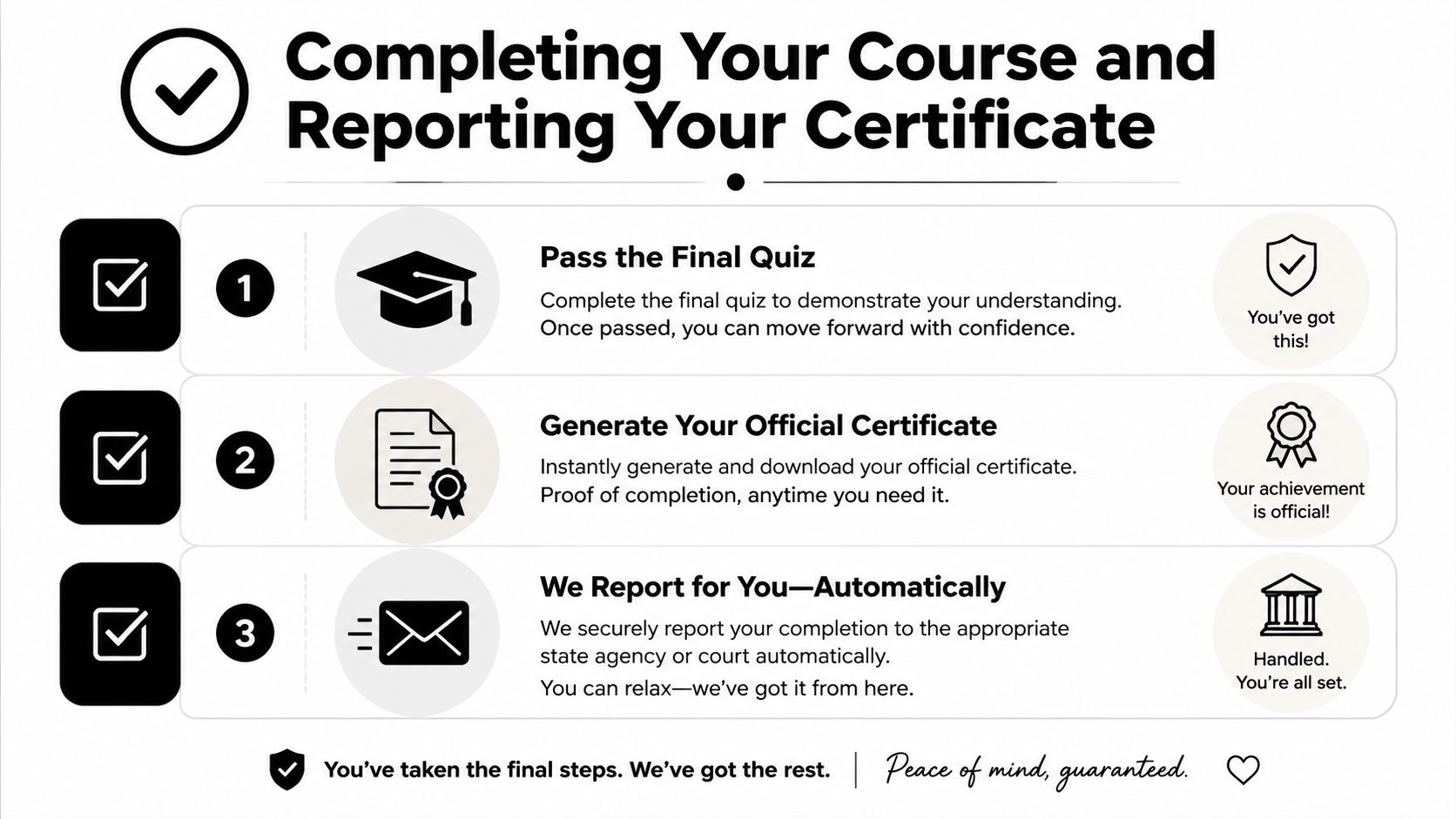
What usually happens at the end
After you complete the required lessons and pass the final quiz or exam, the school generates your completion record.
In many Florida online programs, that completion is handled electronically. Instead of printing forms and trying to deliver them yourself, the reporting process is built into the school’s system.
Why automated reporting matters
This is one of the biggest practical benefits of taking an approved online course.
You don’t want to finish a class and then wonder whether the certificate got to the right place. Electronic reporting reduces that burden, especially when the requirement is tied to state records or a court-related deadline.
If you want to understand how online reporting and access to proof of completion generally work, this overview of an online driving certificate process gives a plain-language example of what drivers typically look for after finishing.
A good final step is keeping your confirmation email or completion record until your case, license step, or insurance matter is fully closed.
Frequently Asked Questions about Florida Driver Courses
What if I missed my court deadline
Act quickly.
Don’t guess, and don’t enroll in a random course hoping it will fix the problem. Contact the clerk or court listed on your paperwork and ask what options are still available. In some cases, you may need updated instructions before taking a class.
Can I use a Florida course for an out-of-state ticket
Maybe, but you need direct confirmation from the state or court handling the ticket.
The mistake drivers make is assuming online means universal acceptance. It doesn’t. The deciding factor is whether the other jurisdiction accepts a Florida-approved course for that specific violation.
How do I know if I need BDI or IDI
Look at the reason behind the requirement.
If you’re electing traffic school for an eligible moving violation, BDI is often the course people need. If a judge or court order specifically directed you to a longer class, that usually points to IDI. The exact language on your notice matters more than the general phrase “traffic school.”
I’m a new Florida resident. Do I need a Florida driver education course
It depends on what you’re trying to do.
If you’re transferring a valid license from another state, your path may be different from a person getting licensed for the first time. If you’re starting as a brand-new driver, the first-time licensing requirements matter much more than residency status alone.
Will taking a course guarantee an insurance discount
No course can promise that on its own.
Insurance discounts depend on your carrier, your policy, and the type of course they accept. Ask your insurer before you enroll. The best question is simple: “If I complete this course, will you apply a discount, and what proof do you need from me?”
Are online driver education courses harder than in-person classes
Usually, people find them easier to fit into daily life.
The challenge isn’t the material. It’s staying consistent and reading carefully. If you can set aside focused time and avoid rushing through quiz questions, online learning is often more manageable than trying to attend a scheduled classroom session.
What if English isn’t my strongest language
Look for a school that offers the course in the language you’re most comfortable using.
For many Florida drivers, that means checking for Spanish or Portuguese options before registering. It’s much easier to complete the right course correctly when the instructions, examples, and quiz language are clear to you.
Can older drivers take a course even if they don’t have a ticket
Yes.
Some drivers want a refresher because they haven’t driven much recently, want to review Florida laws, or are checking on possible insurance-related benefits. In that case, the purpose isn’t citation relief. It’s skill refresh and confidence.
What should I have ready before enrolling
Keep these nearby:
- Your license or identifying information if the course asks for it
- Your ticket or court notice if the course is violation-related
- Your insurer’s requirements if you’re taking the class for a discount
- Your deadline dates so you don’t complete the class too late
What’s the most common mistake people make
They choose by course name instead of legal purpose.
That’s the big one. “Traffic school,” “defensive driving,” and “driver education” sound interchangeable, but in Florida they often are not. Match the course to the actual goal and you’ll avoid most problems.
If you need a Florida-approved online course and want a straightforward place to start, BDISchool offers driver education and traffic school options for common needs like ticket-related classes, first-time driver requirements, insurance-focused defensive driving, and certificate reporting. The easiest next step is to match your goal to the right course, confirm eligibility if a court or clerk is involved, and register with the same name and details that appear on your driving records or paperwork.