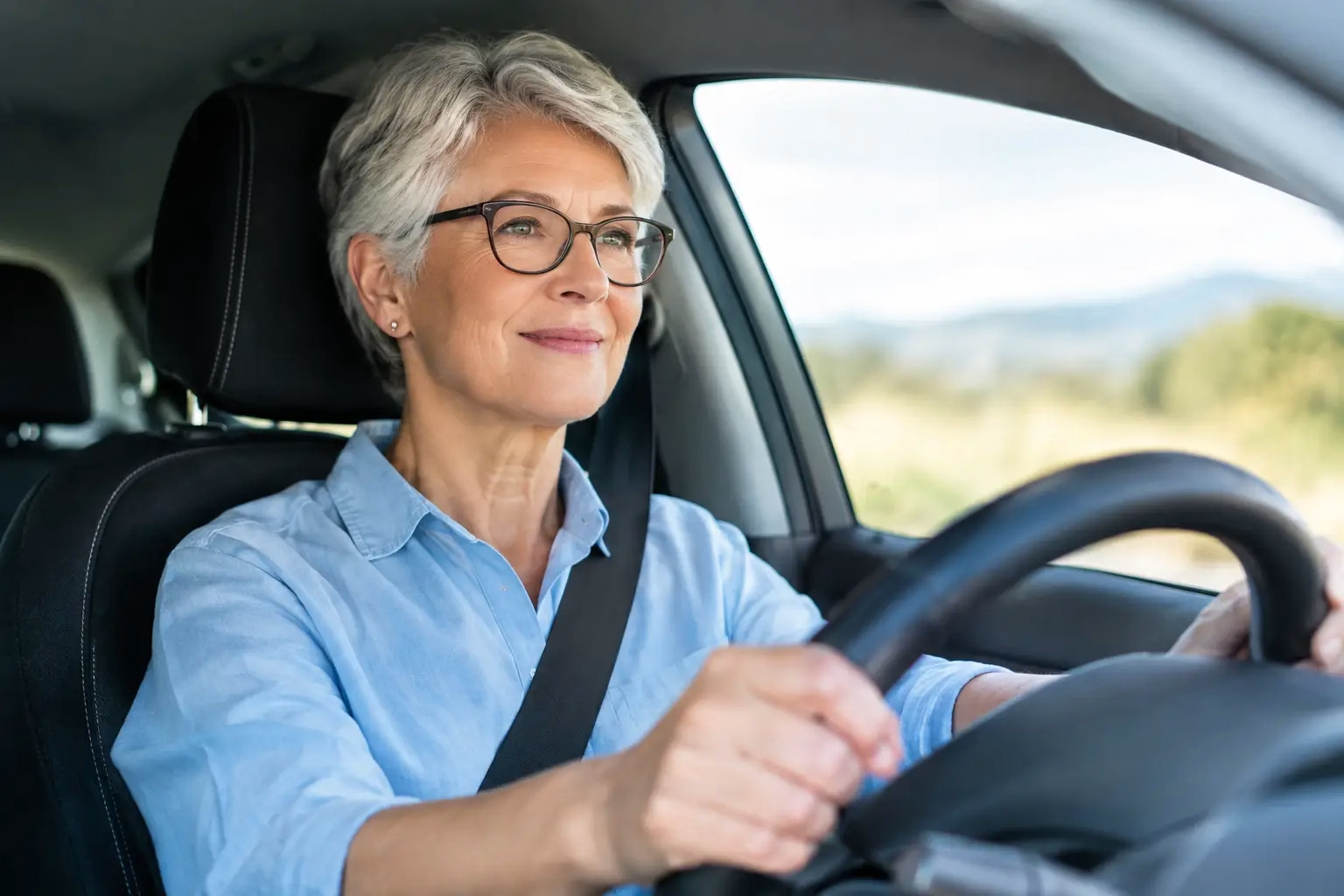
Aging brings real changes to your driving abilities, from vision decline to slower reaction times. These shifts don’t mean you have to stop driving, but they do require smarter strategies.
Defensive driving for seniors is about understanding your limitations and adjusting your habits on the road. We at DriverEducators.com help older drivers stay safe with practical techniques and certified training programs that qualify for insurance discounts.
How Age-Related Changes Affect Your Driving Ability
Vision Decline and Road Awareness
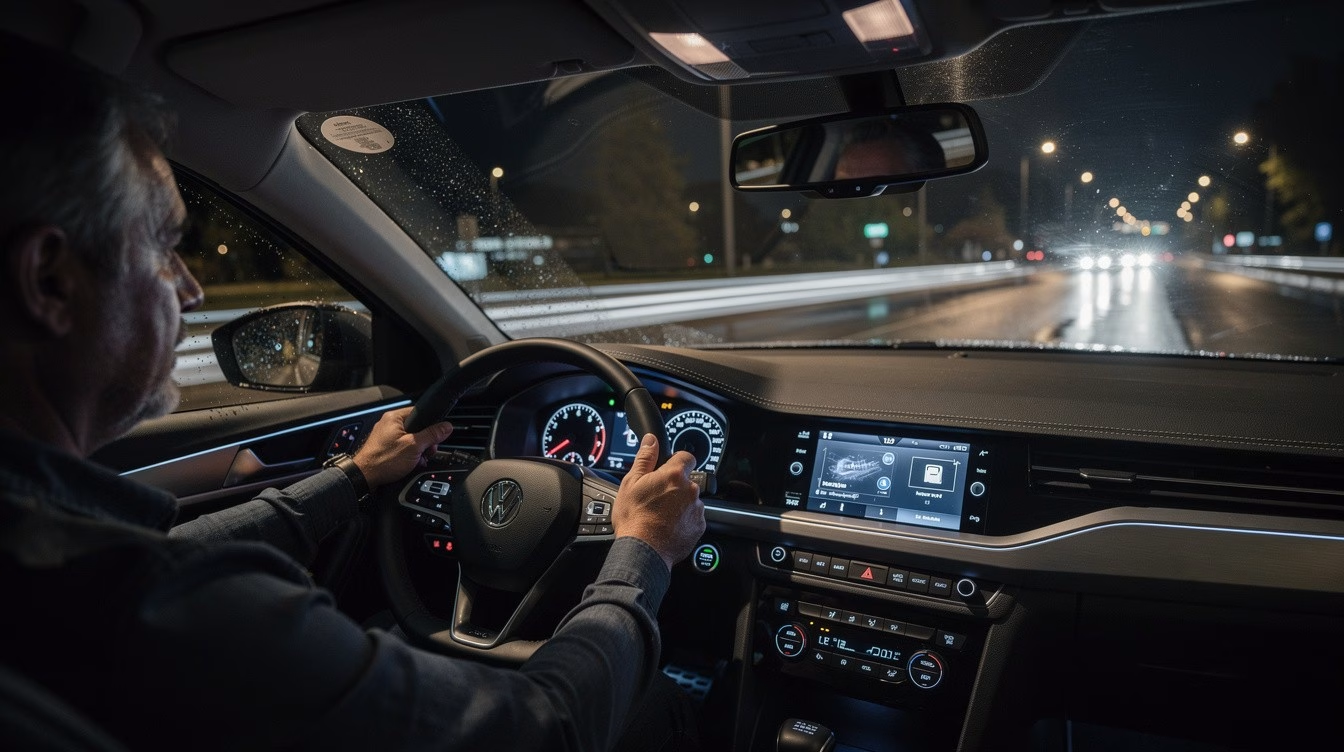
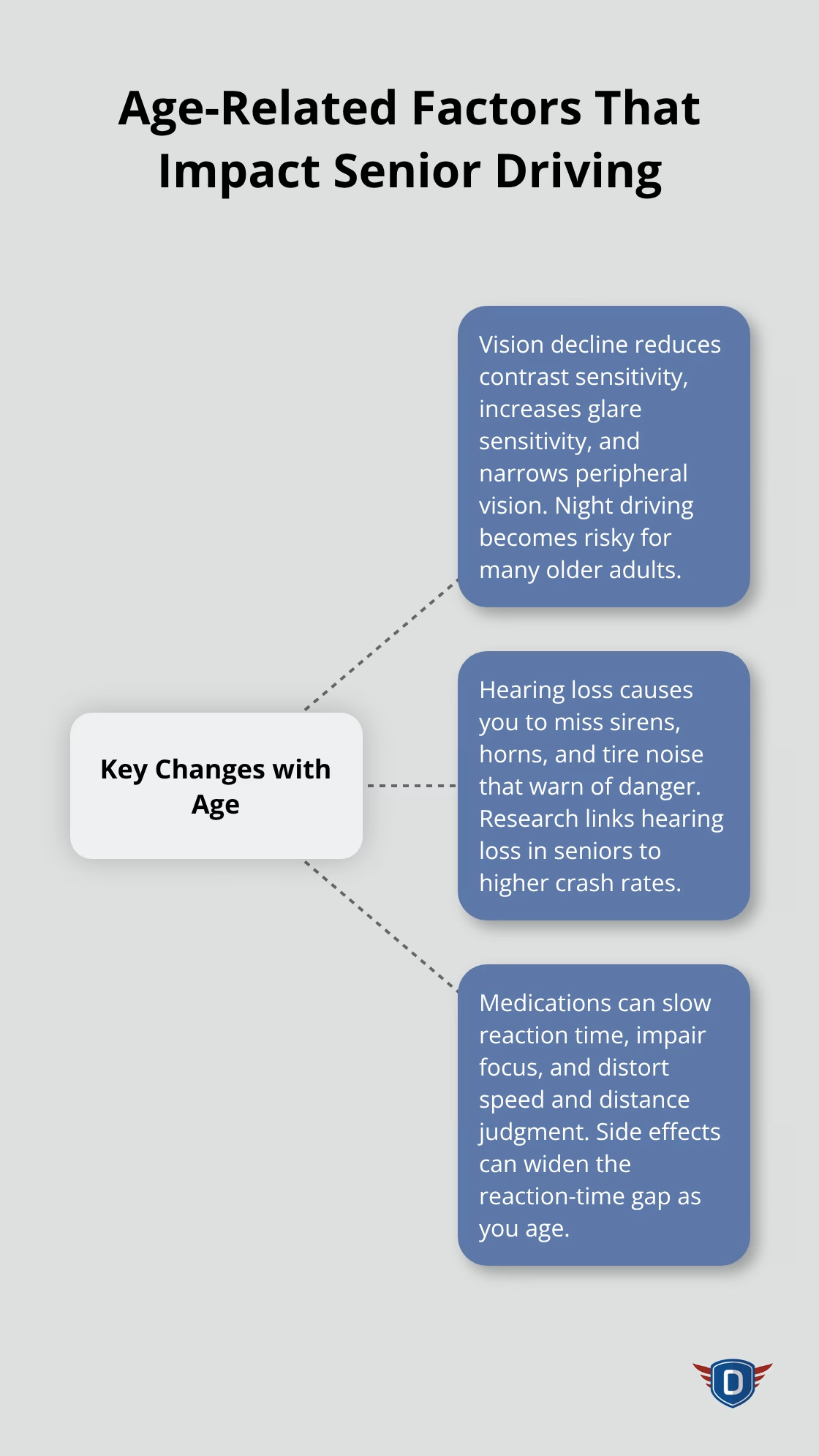
Your eyes are your primary tool for detecting hazards, and aging changes vision significantly. Vision decline starts around age 40 and accelerates after 60. Seniors need three times more light to see clearly than younger drivers, according to research from the American Academy of Ophthalmology. Night driving becomes genuinely dangerous for many older adults, not just uncomfortable.
Cataracts affect roughly one in six people over 65 and reduce contrast sensitivity while creating glare from oncoming headlights that can temporarily blind you. Peripheral vision also narrows with age, making it harder to spot vehicles in your blind spots or pedestrians crossing from the side. These changes directly reduce your ability to react to sudden obstacles.
Hearing Loss and Traffic Hazards
Hearing loss compounds the problem because you miss audio cues that warn of danger. A study from the Journal of the American Geriatrics Society found that older people with hearing loss have significantly higher accident rates than those with normal hearing. You might not hear sirens from emergency vehicles, horns from other drivers, or tire sounds that indicate skidding.
Medication Effects on Reaction Time
Medications add another layer of risk that most seniors underestimate. Common medications for blood pressure, diabetes, and arthritis slow reaction time, impair concentration, and cause dizziness. Some medications reduce your ability to judge distance and speed accurately. Medications that increase fall risk can similarly affect driving performance.
Your reaction time already increases with age-a 70-year-old takes roughly 1.5 seconds to react compared to 0.75 seconds for a 20-year-old. Add medication side effects, and that gap widens dangerously.
Practical Adjustments You Can Make Today
The solution isn’t to stop driving but to adjust your habits immediately. Avoid night driving unless absolutely necessary. Schedule eye and hearing tests annually, not just when you notice problems. Review all medications with your doctor, specifically asking about driving safety. Increase your following distance on every trip. These practical changes address the real changes happening in your body without surrendering your independence.
Understanding these age-related shifts is the first step toward safer driving. The next section covers specific defensive techniques that help you compensate for these changes and stay in control on the road.
How to Drive Slower and Smarter at Every Age
Slowing down isn’t about crawling along the highway-it’s about matching your speed to what you can actually control and react to. Most seniors fail to adjust their speed enough, and that’s a critical mistake. At 65, you need roughly double the stopping distance of a 25-year-old, according to research from the National Highway Traffic Safety Administration. If you travel at 55 mph instead of 70 mph, your stopping distance drops from 302 feet to 188 feet. That 114-foot difference could mean the difference between stopping before a red light and crashing through an intersection.
You must adjust your speed based on visibility, traffic density, and road conditions-not based on what younger drivers around you are doing. Night driving demands even lower speeds because your eyes need more light to process what’s ahead, and your reaction time to unexpected obstacles stretches even longer. Wet roads, construction zones, and unfamiliar routes all warrant speed reductions of 5 to 10 mph below posted limits. Speed isn’t just about following the law; it’s about creating a buffer between your slower reaction time and the moment you need to stop.
Following Distance Changes Everything
The three-second rule you learned decades ago no longer applies to you. At 60 or 70 years old, use a five-second following distance instead. Count the seconds between when the car ahead passes a landmark and when your car reaches that same point. If you count fewer than five seconds, you’re following too closely.
At 55 mph, a five-second gap equals roughly 400 feet of space-that’s more than a football field. This distance gives you time to see hazards developing ahead, time to process what’s happening, and time to brake without panic. On highways with heavy truck traffic, extend that gap to six or seven seconds. Trucks need more stopping distance than cars, and their drivers sit higher up, meaning they might not see you in their blind spots.
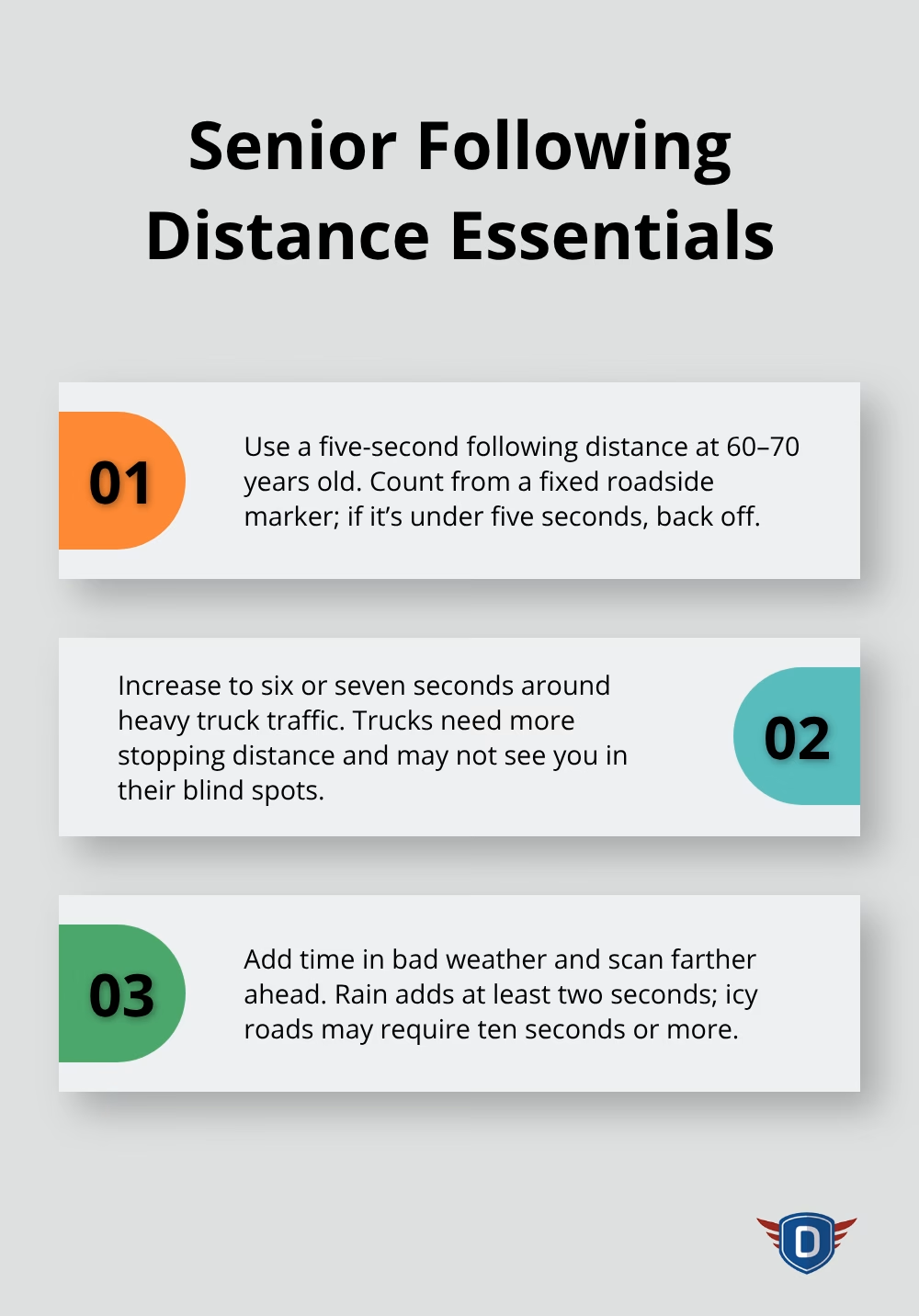
Rain and wet roads cut your tire grip significantly, so add two extra seconds to your following distance during bad weather. On icy roads, a five-second gap becomes dangerously inadequate; you need ten seconds or more. You must scan the road not just 50 feet ahead but 200 to 300 feet ahead, watching for brake lights, slowing traffic, and potential hazards. This longer view helps you ease off the accelerator before you need to brake hard, reducing the shock to your body and giving you smoother control.
Situations You Should Simply Avoid
Some driving situations expose your vulnerabilities too much, and the honest choice is to avoid them entirely. Left turns across traffic are statistically the most dangerous maneuver for older drivers because they require accurate distance judgment and quick decision-making under pressure. If you can turn right instead, take that route. If a left turn is unavoidable, wait for a clear gap that feels obviously safe-not the minimum gap that technically works.
Rush-hour driving on major highways puts you around aggressive drivers traveling at unsafe speeds, and the constant lane changes and merging demand reaction times you don’t have. Leave earlier or later to avoid those peak hours. Nighttime driving after sunset deserves serious consideration: seniors have difficulty seeing in low light, and oncoming headlights create glare that temporarily blinds you. If you can schedule appointments and errands during daylight, do it.
Driving in heavy rain or fog significantly reduces your visibility and tire grip, and many older drivers overestimate their ability to handle these conditions safely. Wait for weather to clear rather than pushing through. Unfamiliar roads in areas you’ve never driven before combine multiple hazards-you process new information while watching for traffic, which overloads your attention. Use GPS with voice guidance, take the route during daylight first if possible, and avoid attempting it during stressful times.
These speed and situation adjustments form the foundation of safer driving, but they work best when paired with defensive techniques that help you anticipate and respond to real road hazards.
How Florida’s Mature Driver Course Cuts Your Insurance Costs
Florida’s Mature Driver Course is a 6-hour refresher designed specifically for drivers aged 55 and older, and it delivers two concrete benefits: improved safety skills and insurance savings. This FLHSMV-approved program teaches defensive techniques you actually need, from adjusting to vehicle technology to handling reduced visibility and reaction times. The course covers practical topics like medication side effects, safe following distances, and how to compensate for age-related changes in vision and hearing. Most importantly, completing this course qualifies you for an insurance discount that lasts for three years in most cases. Many insurers offer discounts on your auto policy simply for finishing the certification, which means a single $39 course investment can save you hundreds over three years.
The Discount Structure and Real Savings
Insurance companies recognize that drivers who complete defensive driving training file fewer claims, so they reward that completion with measurable discounts. Florida’s mature driver programs are approved by the FLHSMV and accepted by virtually every major insurer operating in the state, including GEICO, State Farm, Progressive, and Allstate. A 10 percent discount on a $1,200 annual premium equals $120 per year, which recovers your course cost immediately and saves you $360 over three years. Some insurers stack this discount with other savings like bundling home and auto policies, so your actual savings could exceed those estimates.
The discount applies to liability and collision coverage on your vehicle, making it one of the highest-return investments you can make for road safety. You must complete the course through an FLHSMV-approved provider and submit your certificate of completion to your insurance agent to activate the discount.
How to Claim Your Discount
Upon finishing the 6-hour course, you receive your certificate electronically within minutes and can download and print it immediately or forward it directly to your insurance agent. The FLHSMV also receives notification of your completion, ensuring your record reflects the training. Most insurance companies process your discount application within 7 to 10 business days once they receive the certificate, and the savings appear on your next premium bill.
License Renewal and State Requirements
Florida law requires drivers aged 79 and older to renew their license every three years instead of eight, but completing a Mature Driver Course does not extend your license renewal period. However, the course still fulfills the insurance discount requirement and demonstrates to the state that you remain engaged in safe driving practices.
Final Thoughts
Defensive driving for older people comes down to three core actions: understanding your physical changes, adjusting your habits on the road, and obtaining certified training that insurers reward. You’ve learned how vision decline, hearing loss, and medication effects slow your reaction time, and you’ve seen exactly how to compensate through lower speeds, longer following distances, and smarter route choices. Florida’s Mature Driver Course gives you the skills to handle these changes confidently while earning a 10 percent insurance discount that pays for itself within months.
The real value isn’t just the discount, though saving $120 to $360 annually matters. The value lies in staying independent, keeping your license, and knowing you make safer choices every time you drive. Completing a certified course shows your insurance company and yourself that you take road safety seriously.
Our Mature Driver Course is FLHSMV-approved, fully online, and self-paced so you study when it fits your schedule. You’ll receive your certificate electronically within minutes of finishing, and you can forward it directly to your insurance agent to activate your discount. Enroll today and take the first step toward safer driving and lower insurance costs.