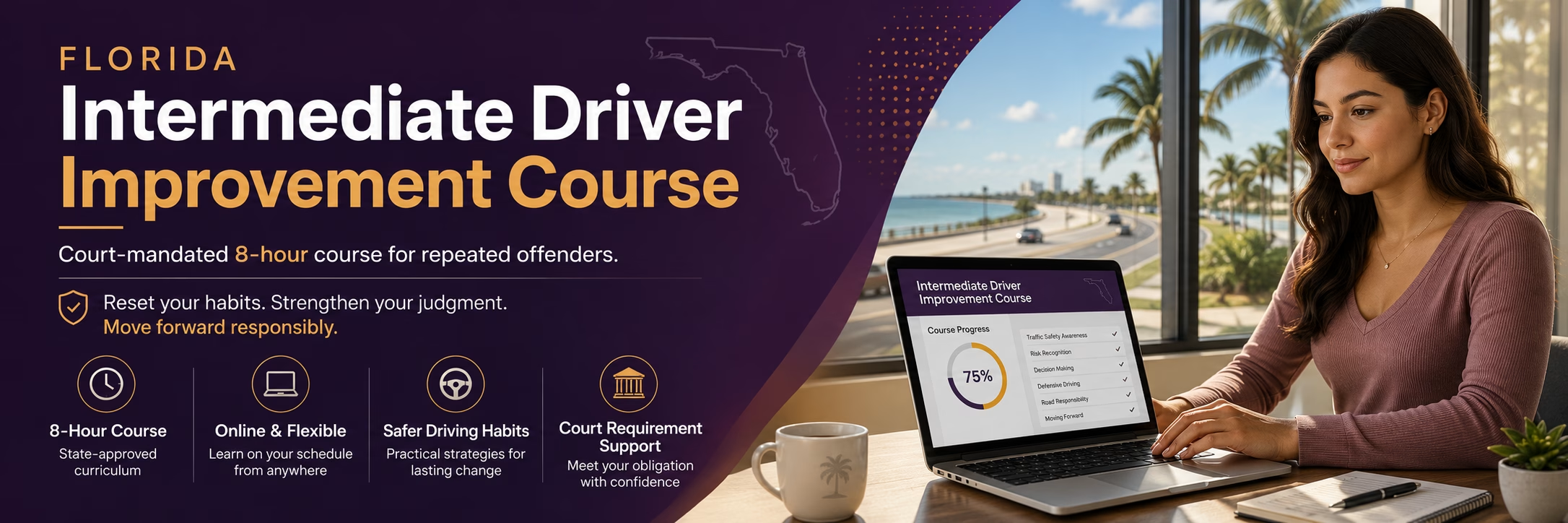

A court notice, DMV instruction, or traffic citation can make the search for an approved course feel urgent. Intermediate course reviews can help you compare real customer experiences, but the best review is only useful when it answers the question that matters most: Will this course satisfy your specific requirement?
For drivers completing an Intermediate Driver Improvement course, convenience matters. So do mobile access, clear pricing, and the ability to finish around work or family responsibilities. Approval status and completion reporting matter even more. A course may be easy to use, but it must be accepted by the agency, court, or insurer that sent you there.
Start With the Requirement, Not the Star Rating
A five-star rating does not confirm that a course is right for your case. Course requirements can differ by state, county, court, violation type, and driving history. Before relying on any review, read your citation, court order, DMV notice, or insurance instructions carefully.
Look for the required course name, required number of hours, due date, and any completion-submission instructions. If the notice says Intermediate Driver Improvement, do not assume that a basic traffic school or a mature driver course will count instead. These courses can cover related safety topics but serve different regulatory purposes.
A trustworthy provider should clearly explain what its course is designed to meet and where it is approved. If you cannot confirm that information before enrolling, contact the provider or the agency that issued your requirement. This extra step can prevent paying for the wrong course and missing a deadline.
What to Look for in Intermediate Course Reviews
The most useful reviews are specific. Comments such as “great course” or “easy” may be encouraging, but they do not tell you whether the provider delivered on the details that affect compliance. Read beyond the overall score and look for patterns in customer feedback.
Approval and acceptance
Pay attention when reviewers mention that the course was accepted by a court, DMV, or insurance company. Even then, confirm acceptance for your own location and situation. A reviewer may have had a different county, deadline, or violation than you do.
Reviews that mention clear approval information are generally more helpful than broad claims. You want to know whether customers understood the course purpose before they paid, not simply whether they enjoyed the online experience.
Completion reporting and certificates
Many drivers choose online education because they need a fast, reliable way to complete a requirement. Reviews should tell you whether customers received a completion certificate promptly and whether the provider explained how reporting works.
Reporting methods vary. Some providers submit completion directly to the appropriate agency when available, while other situations require the driver to download, print, or submit a certificate. A good course provider makes that process clear before and after completion.
Be cautious with reviews that promise instant reporting in every circumstance. Agency processing times are outside a provider’s control, and courts or DMV offices may take additional time to update a record. Clear expectations are more valuable than promises that sound too broad.
Course access on the devices you use
Online access is a major benefit only if the course works when and where you need it. Look for reviews from customers who completed coursework on a phone, tablet, laptop, or desktop computer similar to yours.
Useful feedback often mentions whether progress was saved, whether the course could be paused and resumed, and whether navigation was easy to follow. For busy drivers, the ability to complete sections in shorter sessions may be more practical than finishing everything at once.
Mobile-friendly access is especially helpful when your schedule changes. Still, use a stable internet connection for quizzes, final exams, and certificate downloads whenever possible. This reduces the chance of interrupted progress at a critical point.
Pricing that stays clear through checkout
Price comparisons can be misleading when required fees appear late in the enrollment process. Reviews can reveal whether customers saw the full price upfront and whether certificate, processing, or delivery options were explained clearly.
The lowest advertised price is not always the best value. Consider the total cost alongside support availability, refund terms, course access, and the provider’s ability to explain approval and reporting. A transparent provider should make it easy to understand what you are paying for before you enter payment information.
Customer support when a deadline is close
A course may be self-paced, but questions can still arise. You may need help locating your confirmation email, resetting a password, understanding a certificate, or checking your enrollment details.
When reading reviews, look for comments about response times and whether support representatives provided direct answers. Complaints happen with every service. What matters is whether the provider responds professionally, gives accurate information, and offers practical next steps.
How to Read Negative Reviews Fairly
Negative reviews can reveal genuine issues, but they need context. A customer may be frustrated because a court did not accept a course, yet the problem could be that they selected a course not listed on their paperwork. Another customer may expect a license reinstatement when the course only fulfills one part of a larger DMV process.
Look for repeated concerns rather than one isolated comment. If several customers report hidden fees, unavailable support, lost progress, or delayed certificates, treat that pattern seriously. If the same reviewers also say they enrolled without checking their state requirement, the issue may be less clear.
Provider responses can also be informative. A professional response should protect customer privacy while explaining the applicable process. Dismissive replies, vague answers, or pressure to remove a review are warning signs.
A Quick Verification Process Before You Enroll
Use reviews after you know what you need, not before. First, confirm the exact course requirement from your official notice. Next, verify that the provider offers the correct course for your state and purpose.
Then check the total price, refund policy, course access period, customer support options, and certificate or reporting process. Finally, save your enrollment confirmation and keep a copy of your completion certificate. These records can be useful if an agency asks for proof of completion.
For example, a driver who needs an Intermediate Driver Improvement course for a court deadline should verify the required hours and court acceptance first. A driver seeking an insurance discount may need a different course entirely, even if intermediate course reviews describe an easy online experience.
FAQ About Intermediate Course Reviews
Are intermediate course reviews enough to choose a course?
No. Reviews help you assess service quality, pricing clarity, and ease of use. Always verify course acceptance with your court, DMV, insurer, or issuing agency.
What is an Intermediate Driver Improvement course?
An Intermediate Driver Improvement course is driver safety education required in certain situations, often after traffic violations or as directed by a state or court. Requirements and approved providers vary by location.
Can I take an intermediate course on my phone?
Many online courses offer mobile access. Confirm device compatibility and make sure your progress can be saved before you begin.
Will the provider report my completion automatically?
It depends on the course and the agency. Some completions may be reported electronically, while others require you to submit a certificate yourself.
What should I do if my deadline is approaching?
Confirm the required course immediately and enroll only after verifying approval. Keep copies of your confirmation and certificate, then follow every submission instruction on your notice.
The right course should make a legal or licensing requirement easier to manage, not harder to understand. Choose the provider that gives you clear answers before enrollment, dependable access while you learn, and documented proof when you finish.