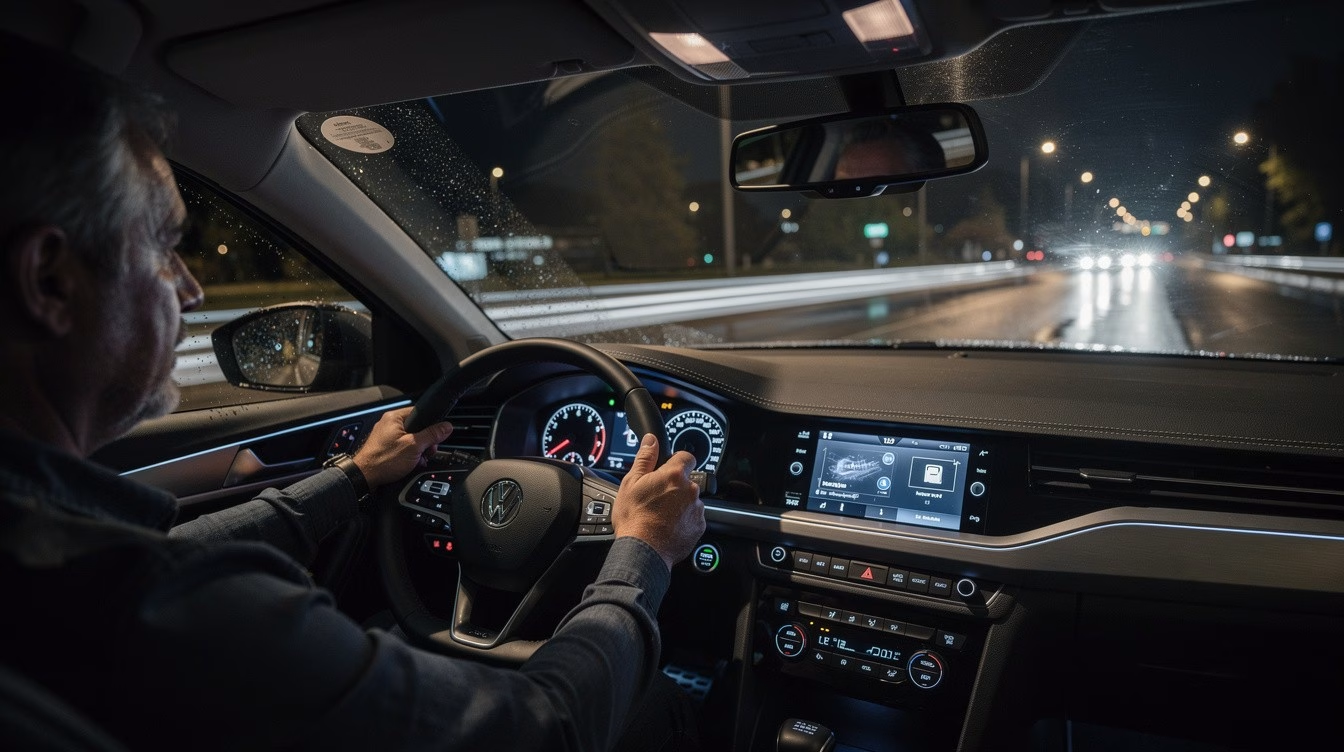
Aging brings real changes to how your eyes work at night. Reduced contrast sensitivity, slower light adaptation, and increased glare make mature night driving significantly more dangerous than daytime trips.
At DriverEducators.com, we’ve seen the data: drivers over 70 have accident rates three times higher during low-light conditions. The solution isn’t complicated-it’s about understanding your limits and adjusting your habits accordingly.
How Your Eyes Change at Night as You Age
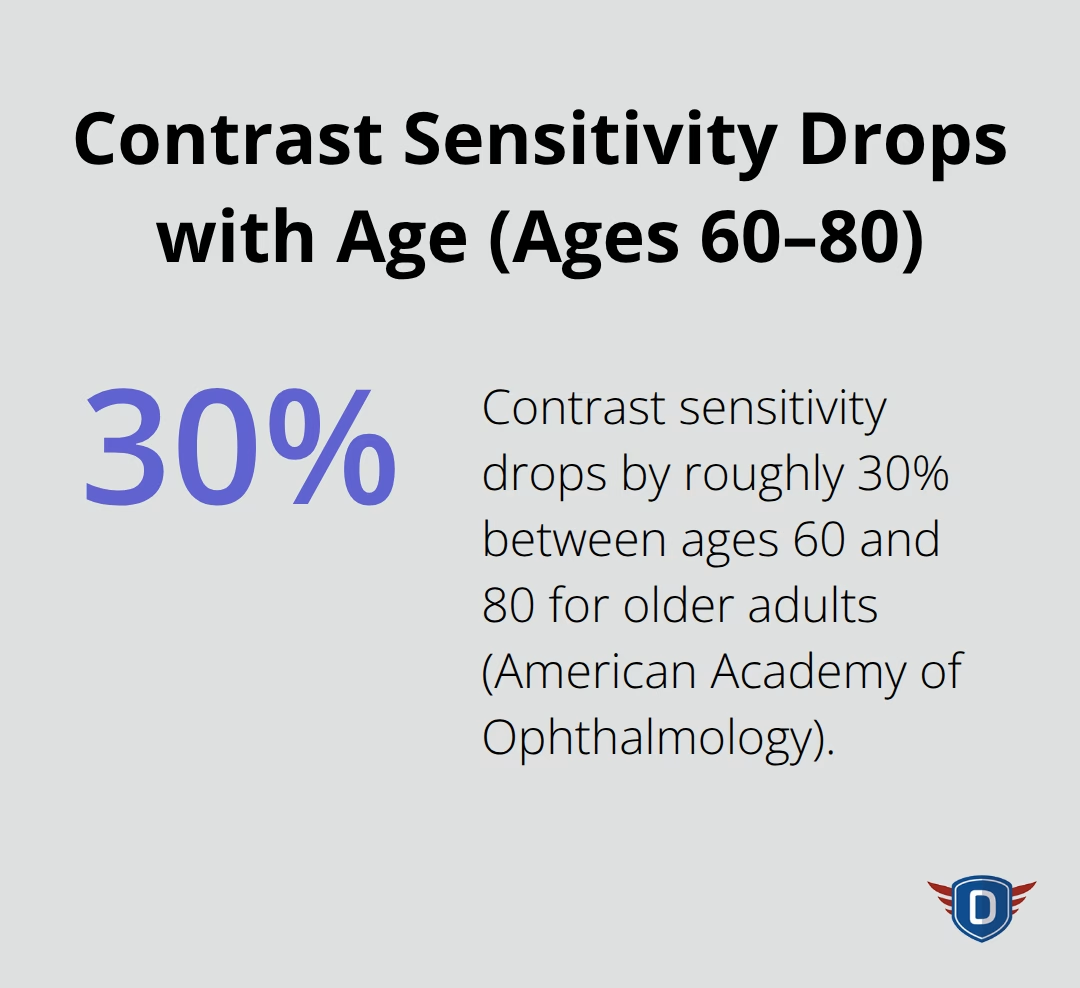
Your eyes lose their ability to adapt to darkness around age 50, and this decline accelerates significantly after 60. The American Academy of Ophthalmology reports that contrast sensitivity-your ability to distinguish objects from their background-drops by roughly 30 percent between ages 60 and 80. This matters enormously at night because road signs, lane markings, and pedestrians blend into the darkness faster for you than for younger drivers.
Glare recovery, the time it takes your eyes to readjust after oncoming headlights pass, increases from about 2 seconds at age 20 to 8 seconds or more at age 60. During those extra seconds, you’re essentially driving blind. Your pupils also dilate more slowly in low light, meaning less light reaches the retina when you need it most. The National Institute on Aging confirms that these changes make nighttime driving objectively harder, not just subjectively uncomfortable.
What This Means for Your Vision Needs
You need roughly three times more light to see clearly at night compared to a 30-year-old driver. This is why standard headlights that work fine for younger drivers leave you squinting at night. Anti-glare coatings on your eyeglasses genuinely help, but only if your prescription is current-outdated glasses compound every vision problem you already face.
Schedule comprehensive eye exams annually, not every few years, because vision changes accelerate with age. Ask your eye doctor specifically about contrast sensitivity and glare sensitivity during your visit; many older people don’t realize these can be partially corrected with specialized lens coatings or prescription adjustments.
The Route-Planning Reality
Choosing well-lit roads matters far more than you might think. Streets with consistent overhead lighting allow your slower-adapting eyes to maintain visibility throughout your drive. Highways with minimal lighting, rural roads, and routes through unfamiliar neighborhoods multiply your risk exponentially.
Plan your route during daylight hours to identify which roads have adequate lighting and give you a concrete safety advantage. Try avoiding complex intersections, high-speed corridors, and roads you don’t know well when driving after sunset. This preparation step directly reduces the cognitive load you face once darkness falls, allowing you to focus entirely on the road ahead rather than navigation decisions.
Safety Risks of Nighttime Driving for Older People
Crash Rates Triple After Dark
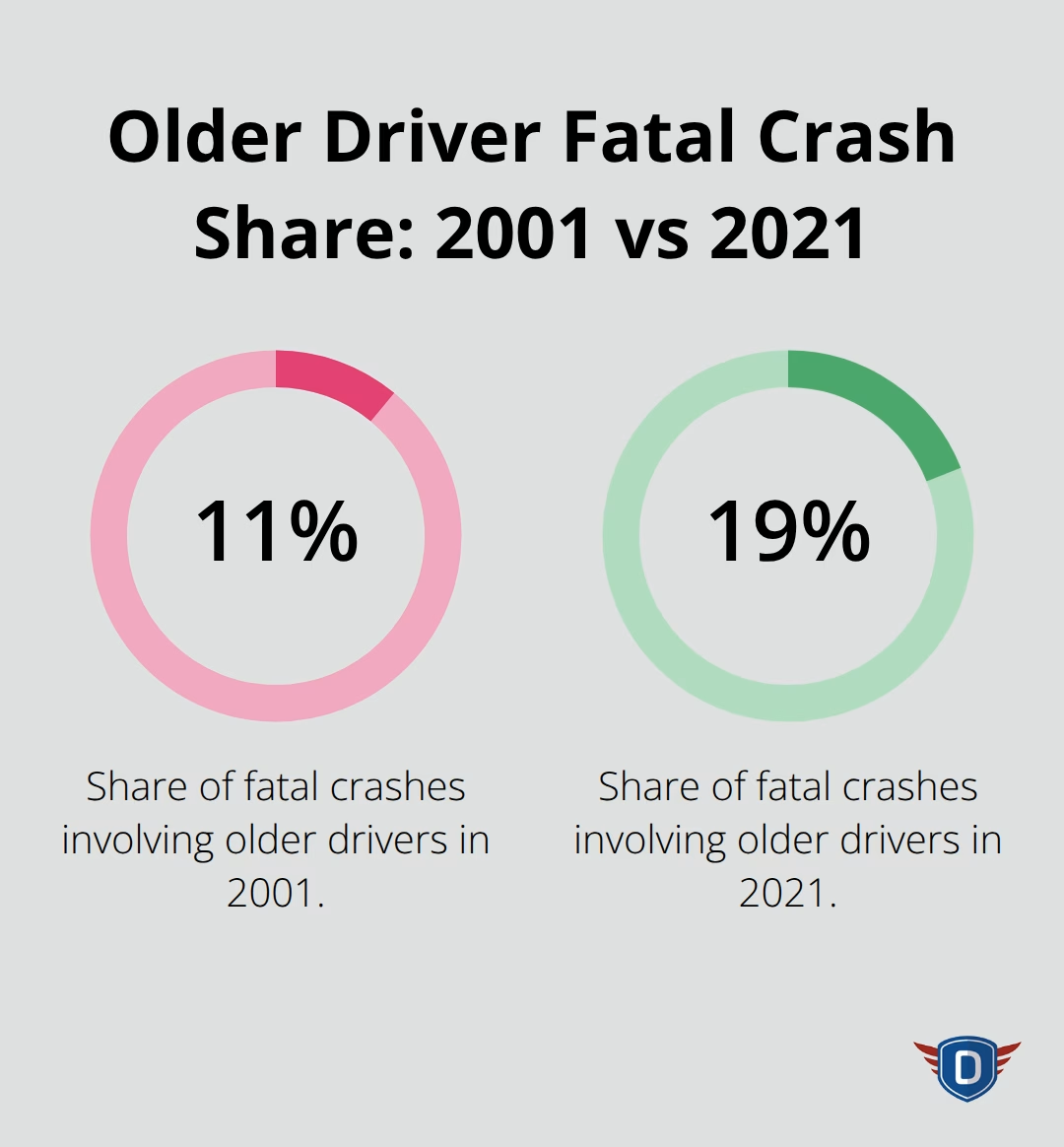
Drivers aged 65 and older face significantly higher crash risks during nighttime driving compared to daylight hours, according to the National Highway Traffic Safety Administration and AAA Foundation research. Crash rates triple after dark for older people, with fatal crashes involving older drivers rising from 11% in 2001 to 19% in 2021. The NHTSA data shows that fatal crashes per mile driven are significantly higher at night for older adults, meaning the risk per mile, not just total crashes, escalates dramatically.
When you factor in reduced visibility, slower reaction times from vision changes, and the cognitive demands of navigating darkness, nighttime driving becomes objectively more hazardous than daytime trips, regardless of your experience level.
Distance and Speed Judgment Fails in Low Light
Your ability to judge how far away an oncoming car actually is deteriorates sharply at night because depth perception depends heavily on contrast and lighting. A vehicle 200 feet away in daylight looks much closer than it actually is at night, and this misjudgment happens in milliseconds-faster than your conscious mind can correct it. Speed perception suffers equally; a car traveling 45 mph appears slower in darkness, causing you to underestimate closing distances and leave insufficient gaps between vehicles.
Contrast sensitivity loss affects depth perception and impairs spatial judgments, and no amount of experience compensates for the physiological reality of aging eyes. This explains why senior drivers often report feeling safer at night than they actually are-your brain fills gaps with assumptions that prove dangerously inaccurate when visibility disappears.
Fatigue Depletes Mental Energy Faster at Night
Driving at night depletes mental energy far faster than daylight driving because your brain works harder to process limited visual information and maintain focus through darkness. A two-hour nighttime drive exhausts you more than a three-hour daytime trip, yet many seniors don’t recognize this fatigue until it’s too late.
The National Institute on Aging notes that aging drivers experience drowsiness more quickly during evening and night hours, partly because circadian rhythms naturally shift toward sleep in darkness. Medications commonly taken by seniors (antihistamines, blood pressure drugs, sleep aids) amplify this effect, though many people don’t connect their prescription bottles to their behind-the-wheel performance. If you take any sedating medication, nighttime driving becomes exponentially more dangerous, and you should discuss this directly with your healthcare provider rather than assuming you’ll manage fine.
These vision and fatigue challenges mean that limiting nighttime trips isn’t about losing independence-it’s about making smart choices that protect you and everyone else on the road.
How to Adapt Your Vehicle and Habits for Night Safety
Maximize Your Headlight Performance
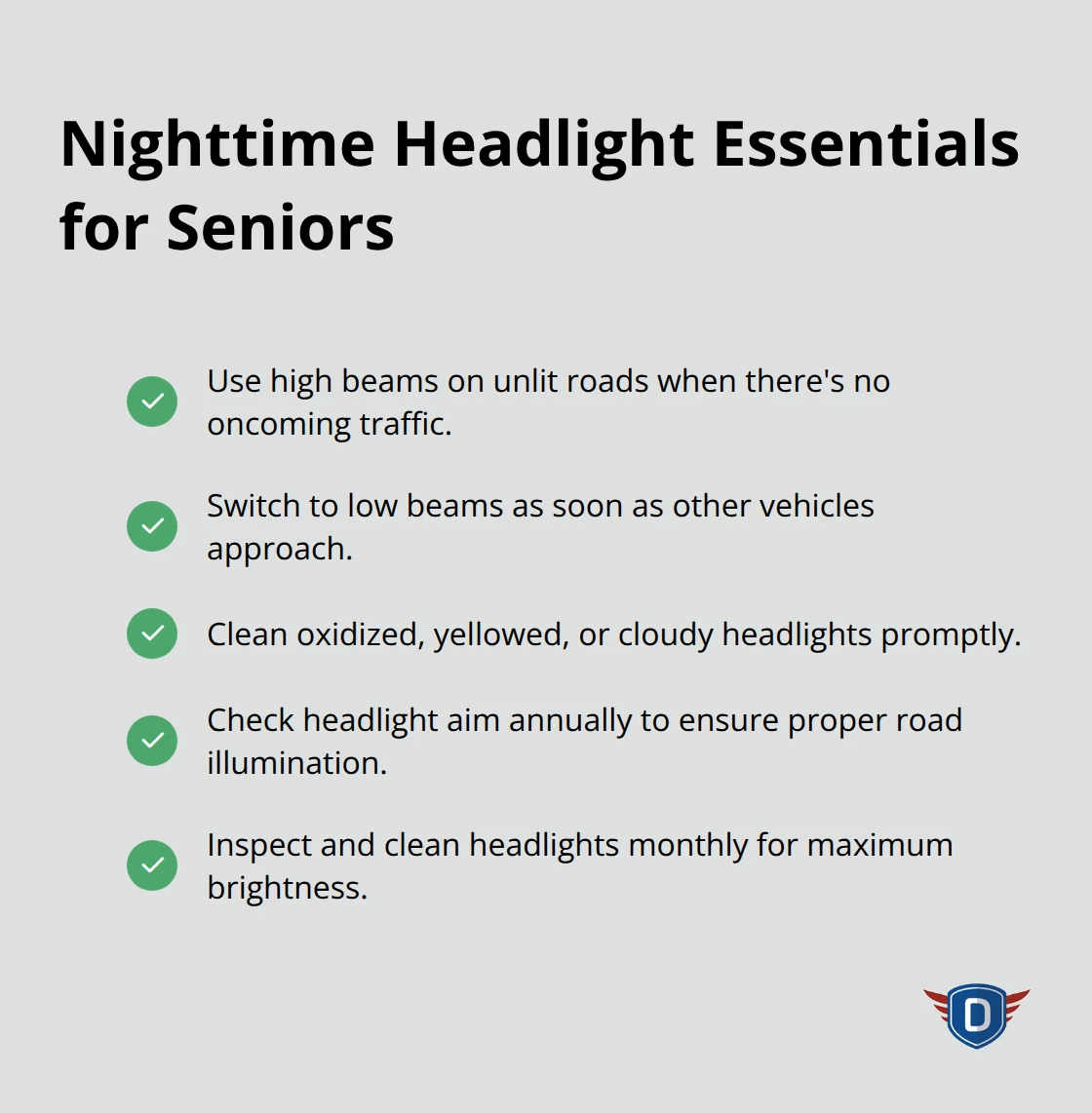
Your vehicle’s lighting system delivers your most immediate safety advantage, yet most seniors either underuse it or maintain it poorly. High-beam headlights illuminate roughly 350 feet ahead compared to 150 feet with low beams, yet many drivers avoid high beams due to oncoming glare concerns, missing the real safety advantage when roads are empty. The NHTSA recommends using high beams on unlit roads whenever no oncoming traffic appears, then switching immediately to low beams when other vehicles approach; this simple habit extends your visibility window significantly without creating hazard for others.
Clean headlights matter far more than you’d expect. Oxidized headlights can reduce nighttime visibility by up to 80%, essentially giving you a fraction of the visibility you think you have. Check your headlights monthly and clean them with appropriate headlight restoration products if they’ve yellowed or clouded. Have your headlight aim checked annually because misaligned beams waste illumination on the road surface instead of lighting the path ahead where you need visibility.
Correct Your Vision with Precision
Anti-glare coatings on your eyeglasses reduce the harsh starbursts and halos from oncoming headlights that slow your pupil recovery time, making the difference between comfortable and painful nighttime driving. The American Academy of Ophthalmology confirms these coatings measurably improve contrast and reduce glare sensitivity for older drivers, though they work only if your prescription matches your current vision needs.
Annual comprehensive eye exams aren’t optional-vision changes happen fast after age 65, and outdated prescriptions undermine everything else you do to stay safe. During your exam, specifically ask your eye doctor about contrast sensitivity testing and request specialized coatings designed for night driving; many older people don’t realize these options exist because they don’t ask.
Choose Daylight Driving as Your Primary Strategy
The most direct solution remains the simplest one: limit your driving to daylight hours whenever possible. This isn’t about losing independence-it’s about recognizing that nighttime driving demands capabilities your aging eyes no longer reliably provide. Rideshare services, family transportation, or scheduling appointments during business hours removes that demand entirely without sacrificing your quality of life.
Final Thoughts
Your eyes have changed, and that’s not a failure on your part-it’s biology. The vision challenges throughout this article aren’t theoretical concerns; they’re measurable, documented shifts that affect how safely you navigate darkness. Reduced contrast sensitivity, slower light adaptation, and increased glare recovery time mean that mature night driving demands capabilities your aging eyes simply don’t reliably provide anymore.
Adapting your driving habits starts with honest self-assessment. If nighttime trips leave you exhausted, if oncoming headlights cause genuine discomfort, or if you’ve noticed yourself hesitating in low-light situations, these are clear signals to shift your schedule toward daylight driving. The data supports this choice overwhelmingly-fatal crashes involving older drivers rise dramatically after sunset, and the risk per mile driven increases exponentially in darkness. Your experience behind the wheel doesn’t compensate for the physiological limitations that come with aging.
Annual eye exams with current prescriptions, anti-glare coatings on your glasses, and well-maintained headlights all contribute to safer nighttime driving when you must drive after dark (though the most effective strategy remains prioritizing daylight hours for your trips). We at DriverEducators.com offer a Mature Driver Course that helps drivers aged 55 and older refresh their skills and maintain awareness of how aging affects performance behind the wheel. Taking a refresher course reinforces defensive techniques and connects you with current safety information tailored to your stage of life.