Traffic signs are the language of the road, and misreading them costs lives. According to the National Highway Traffic Safety Administration, failure to obey traffic signs contributes to thousands of crashes annually.
At DriverEducators.com, we’ve created this traffic signs rules overview to help you understand every symbol you’ll encounter behind the wheel. Whether you’re a new driver or refreshing your knowledge, mastering these signs is non-negotiable for your safety and the safety of others.
The Three Core Sign Types That Control Your Driving
Regulatory Signs Impose Legal Obligations
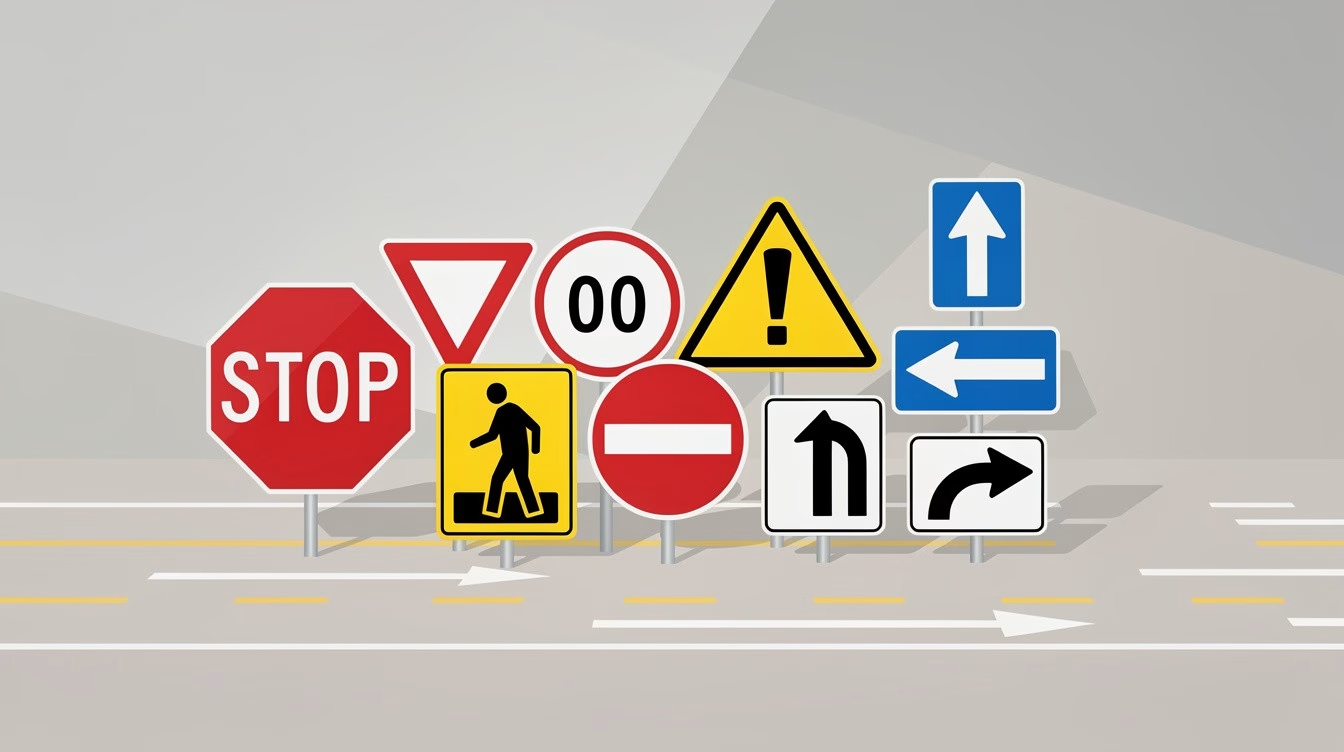
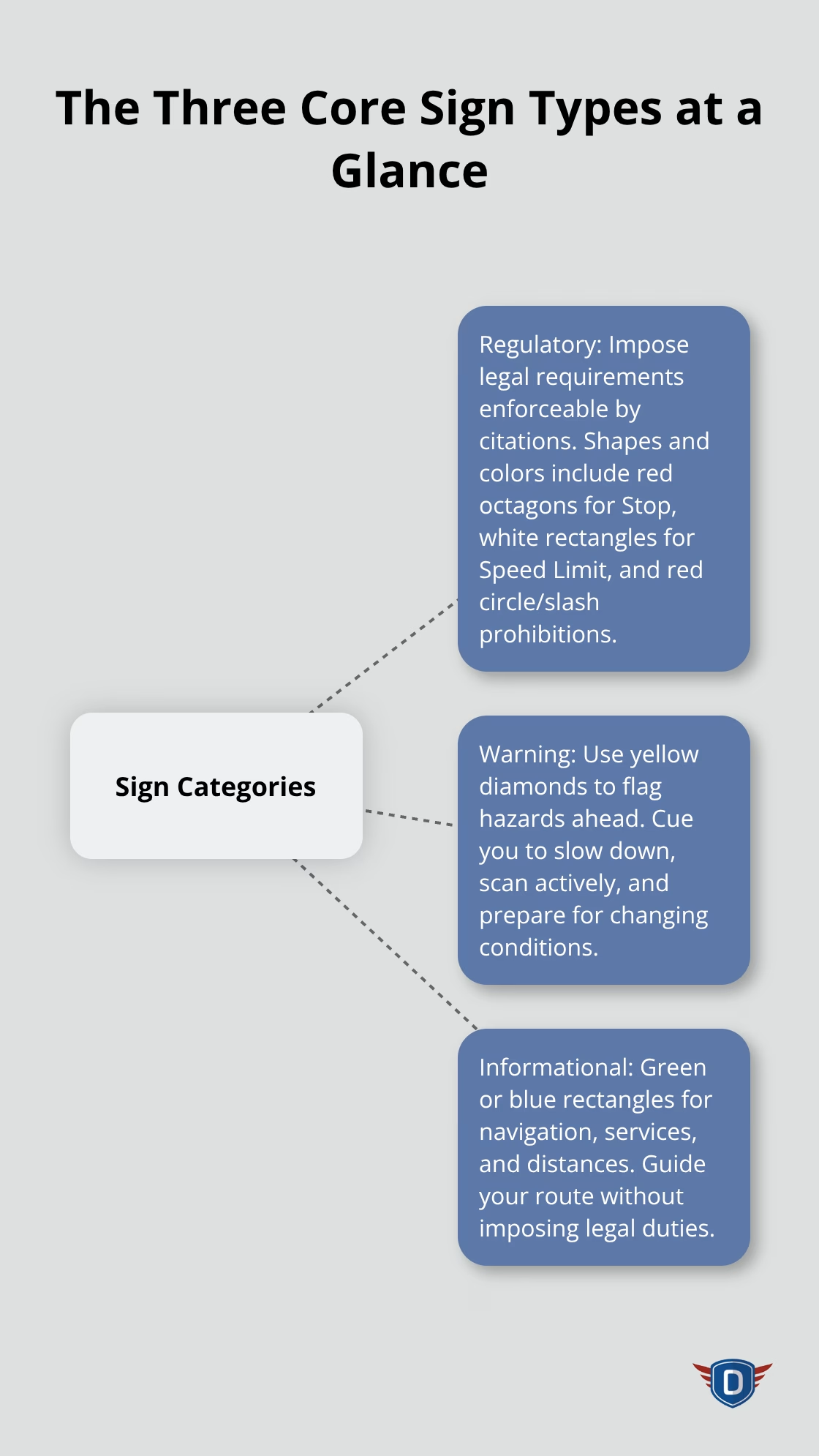
Traffic signs fall into three distinct categories, and understanding the difference between them matters because they demand different responses from you as a driver. Regulatory signs impose legal requirements with real consequences-ignoring a Stop sign or Speed Limit sign isn’t a suggestion, it’s a violation that can result in fines, points on your license, or worse. The Federal Highway Administration and MUTCD standards classify these signs with specific shapes and colors to make instant recognition possible: red octagons for Stop, white rectangles for speed limits, and red circles with slashes for prohibitions like No U-turn or No Parking. The MUTCD emphasizes that every sign must command attention, convey a clear meaning, and give you adequate time to respond, which is why shape and color matter far more than you might think.
Warning Signs Alert You to Hazards
Warning signs use yellow diamonds to alert you to hazards ahead, from Deer Crossing to Slippery When Wet to Sharp Curve. These signs don’t carry legal penalties if you ignore them, but they provide your advance notice to slow down, stay alert, and adjust your driving before danger appears. A Deer Crossing sign at dusk means you should reduce speed and scan the roadside actively, not just glance and drive on. The yellow diamond shape itself signals caution and trains your brain to shift into a more defensive posture.
Informational Signs Guide Navigation
Informational signs, typically green or blue rectangles, guide you to destinations, distances, hospitals, rest areas, and services. They help you navigate but don’t impose legal duties. Missing a Hospital sign when you need medical help obviously wastes critical time, yet these signs carry no enforcement mechanism like regulatory signs do.
How Drivers Respond to Each Category
Most crashes involving traffic signs happen because drivers either don’t see them in time or misunderstand what they mean. Regulatory signs demand immediate, precise obedience because the law backs them up. If you pass a Stop sign without fully stopping, you’ve committed a traffic violation regardless of whether you saw another vehicle or not-the sign itself creates the legal obligation. Warning signs require judgment and active attention from you. Guide signs require attention but not immediate action in the same way regulatory signs do.
Building Automatic Sign Recognition
The practical skill that separates safe drivers from those who treat signs as optional suggestions is the ability to process these categories automatically: see a shape and color, know the category, execute the correct response. This habit prevents violations, accidents, and the consequences that follow. Drivers who master this automatic recognition respond faster to hazards and obey legal requirements without hesitation. Your next step is learning the specific signs within each category and how to spot them from a safe distance-a skill that requires understanding both the visual design and the context in which these signs appear on the road.
Common Traffic Signs Every Driver Must Know
Stop Signs and Yield Requirements Demand Different Responses
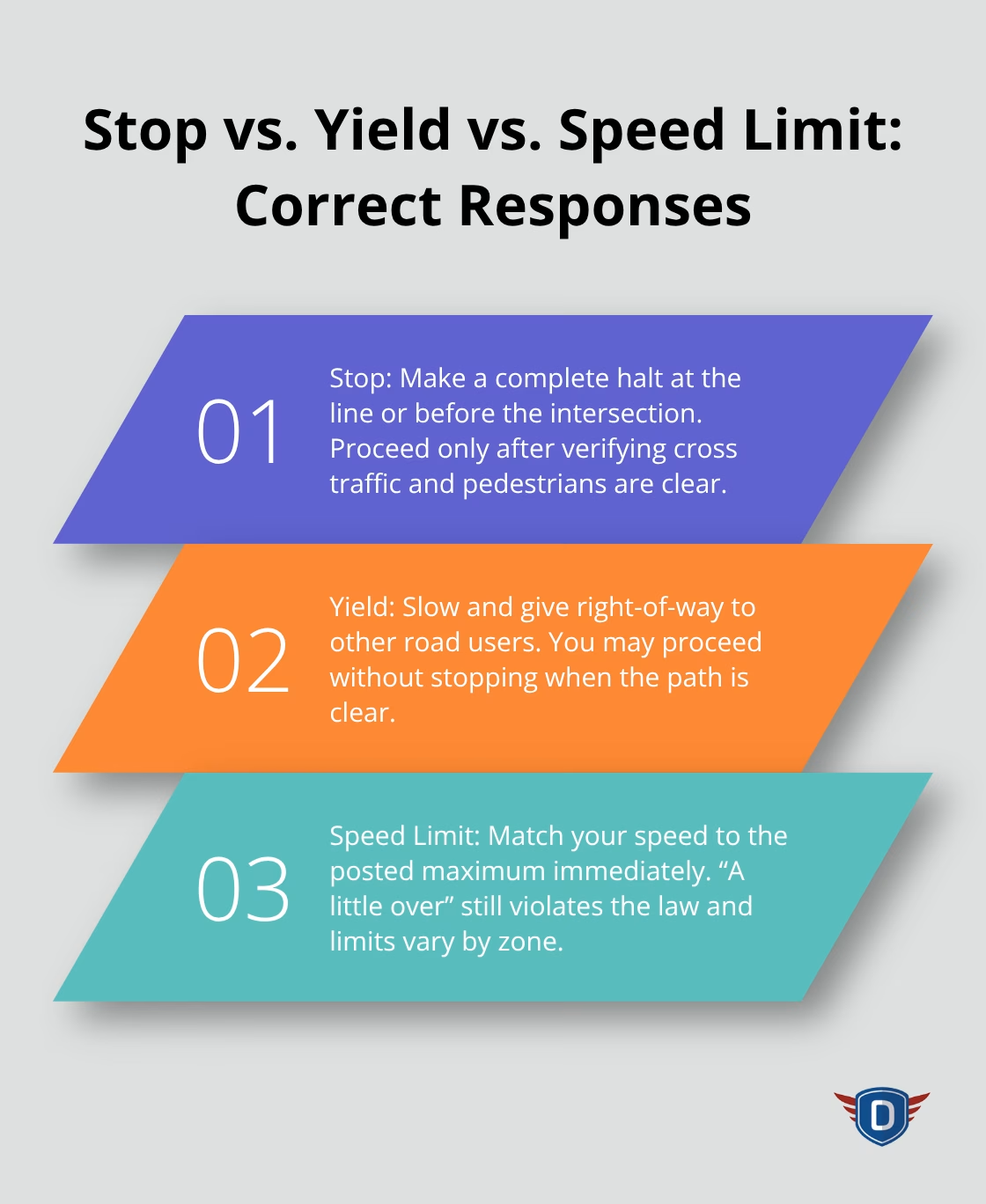
Stop signs and yield signs form the backbone of intersection control in the United States, and the difference between them determines whether you must come to a complete halt or simply assess before proceeding. A Stop sign, classified as MUTCD R1-1, requires a full stop at the marked line or before entering the intersection, with no exceptions for visibility or traffic volume. Yield signs, by contrast, require you to slow down and give right-of-way to other vehicles or pedestrians, but you can proceed without stopping if the path is clear. Drivers frequently confuse these two signs, and that confusion directly causes intersection crashes.
The Federal Highway Administration emphasizes that missing or damaged Stop signs need repair within hours because the absence of this single sign dramatically increases crash risk.
Speed Limit Signs Establish Legal Boundaries
Speed limit signs, classified as MUTCD R2-1, communicate the maximum allowable speed in a given area, and they appear as white rectangles with black numerals. These signs establish the legal speed boundary, meaning driving five miles per hour above the posted limit violates traffic law, not a margin of error. Different zones carry different limits: residential areas typically range from 20 to 25 mph, school zones often drop to 15 mph during designated hours, and highways may reach 70 mph. The MUTCD requires that speed limit signs appear at the beginning of each speed zone and repeat at intervals to ensure drivers know when limits change.
Right-of-Way Signs Control Intersection Priority
Right-of-way signs tell you when you must yield to approaching traffic, pedestrians, or cyclists. A Yield sign means oncoming traffic has priority, while a Do Not Enter sign means the roadway is one-way and you are approaching from the wrong direction. Left Turn Yield on Green signs appear at traffic lights and inform drivers that although the light is green, they must yield to oncoming traffic before turning left. These signs demand split-second interpretation because you must simultaneously process the sign, evaluate oncoming traffic, and make a decision about whether to proceed or wait.
Reading Signs at Safe Distances Prevents Violations
Stop signs should be visible from at least 100 feet away on a clear day, which gives you roughly three seconds at 30 mph to recognize the sign, plan your approach, and execute a complete stop. Speed limit signs must be read before you enter a zone, not after, which means scanning ahead rather than reacting to what is already past your vehicle. Right-of-way signs require you to understand priority rules before you reach an intersection, so if you are unsure whether you must yield or proceed, you must yield and let other traffic go first. The color coding reinforces the message: red on Stop and Yield signs signals mandatory action, white on speed limits signals legal requirements, and the combination of shape and color trains your brain to respond instantly.
Why These Three Signs Matter Most
Drivers who treat these three sign types as optional or interpret them loosely end up paying fines, accumulating license points, or causing collisions that harm themselves and others. The practical skill that separates drivers who avoid citations from those who accumulate them is reading these three sign categories at safe distances and responding with precision. Mastering these three foundational signs is the first step toward safe driving because they control the vast majority of everyday driving decisions you make on the road. Once you develop automatic recognition of Stop, Speed Limit, and Right-of-Way signs, you can focus your attention on the warning signs that alert you to hazards ahead-the subject we turn to next.
Spotting and Responding to Signs Before They Control You
Distance and Reaction Time Determine Your Control
A Stop sign becomes visible at roughly 100 feet on a clear day, which translates to approximately three seconds of reaction time at 30 mph. This window allows you to plan your approach and execute a smooth stop if you maintain attention on the road ahead. Speed limit signs must be read before you enter a zone, not after passing one, which means you scan the road ahead rather than react to what already sits behind you.
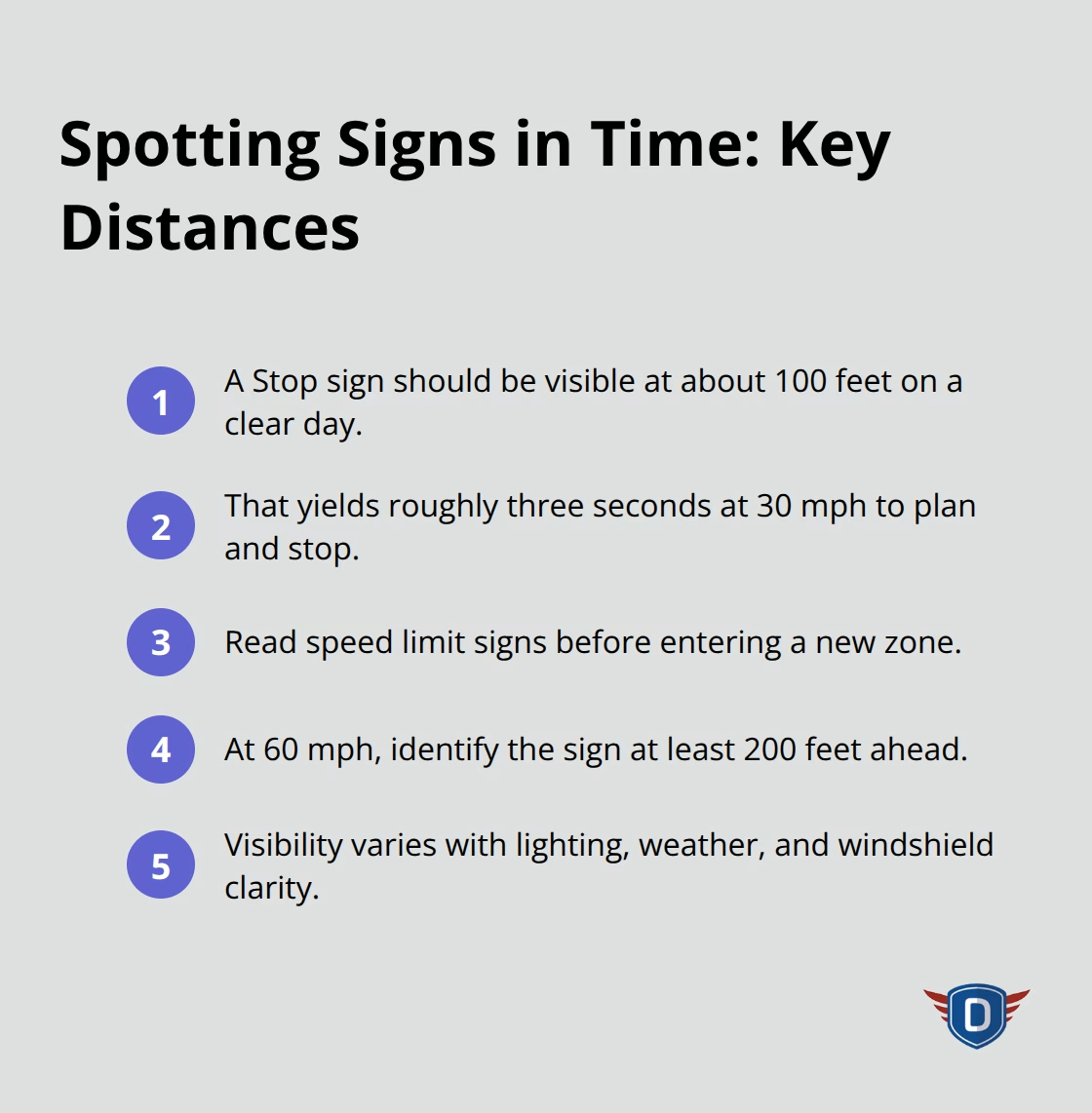
At 60 mph on a highway, you need to identify a speed limit sign at least 200 feet away to adjust your speed safely before crossing into a new zone. The Federal Highway Administration emphasizes that sign visibility depends on lighting conditions, weather, and whether your windshield remains clean and unobstructed. Drivers who treat signs as optional or wait until the last moment to read them essentially choose to violate traffic laws.
Shape and Color Trigger Automatic Responses
The shape and color of a sign demand your attention before you process the text. A red octagon triggers an immediate stop response, a yellow diamond primes your brain for caution, and a green rectangle signals navigation without urgency. This automatic recognition works only if you develop the habit of scanning ahead instead of focusing exclusively on the road directly in front of your vehicle. Your brain processes these visual cues faster than it reads words, which is why the MUTCD standards emphasize shape and color over text alone.
Matching Your Response to Sign Category
Your response to a sign must match its category with precision because mismatched responses produce either citations or crashes. Regulatory signs like Stop and Speed Limit demand immediate, exact compliance-a full stop at the line, not five feet past it, and a speed that matches the posted limit, not five miles per hour above it. Warning signs require judgment and active adjustment: a Deer Crossing sign at dusk means you reduce speed and actively scan the roadside, not simply acknowledge the sign and continue driving. Right-of-way signs demand that you yield first and proceed only after confirming the path is clear, a sequence that many drivers reverse by proceeding and then checking for traffic.
Why Different Signs Require Different Mental Processes
The MUTCD standards classify signs by function specifically because different sign types require different mental processes and physical responses. A driver who treats a Speed Limit sign as a suggestion rather than a legal boundary accumulates violations continuously. A driver who treats a Yield sign as requiring a full stop creates unnecessary congestion and confuses other drivers who expect you to assess and proceed. The practical skill that separates drivers who receive citations from those who don’t is the ability to categorize a sign instantly, understand what it demands, and execute that response smoothly without hesitation or overcorrection.
Building Precision Into Your Driving Habits
Developing automatic sign recognition takes practice, but the payoff appears immediately in reduced violations and safer intersections. You train your brain to process the visual information (shape, color, symbol) before you read any text on the sign. This sequence allows you to respond faster and more accurately than drivers who rely on reading words at highway speeds. Your windshield condition, attention level, and scanning habits all affect whether you spot signs at safe distances or react too late to respond appropriately.
Final Thoughts
Traffic signs rules overview boils down to one principle: shape, color, and symbol determine whether you stay safe or accumulate violations. Regulatory signs demand precision-a Stop sign requires a complete halt, a Speed Limit sign sets a legal boundary, and a Yield sign requires you to assess before proceeding. Warning signs demand attention and judgment, while guide signs point you in the right direction, and drivers who master automatic recognition of these categories respond faster to hazards and avoid citations.
Most crashes involving traffic signs occur because drivers fail to spot them at safe distances or misinterpret what they demand. Your windshield condition, scanning habits, and attention level directly affect whether you read signs early enough to respond appropriately-a Stop sign visible at 100 feet gives you three seconds at 30 mph to plan and execute a smooth stop, but only if you scan ahead instead of focusing exclusively on the road directly in front of your vehicle. Speed limit signs require you to read them before you enter a zone, not after, which means your eyes must track the road ahead continuously.
Following traffic signs is not optional compliance but the foundation of safe driving, and every sign exists because traffic engineers and safety experts identified a specific hazard or legal requirement that protects you and everyone sharing the road. If you want to master safe driving habits and understand traffic laws in depth, DriverEducators.com offers comprehensive driver education programs designed to help you become a safer, more confident driver. Whether you need to reduce points, meet court requirements, or refresh your knowledge, their Florida-approved courses cover traffic laws, defensive driving techniques, and real-life scenarios that prepare you for every situation you face behind the wheel.