
A teen driver course review should answer one practical question first: will this course meet your teen’s licensing requirement in your state? A polished website and convenient online lessons are helpful, but they do not replace state approval, required instructional hours, or the documents your teen may need before taking the permit or road test.
For parents, choosing a course is often one task among many. You may be balancing school schedules, sports, work, transportation, and a teen who is eager to start driving. The right program makes the process clearer without treating driver education as a box to check. It should help new drivers understand the responsibility that comes with sharing the road.
A Teen Driver Course Review Starts With Approval
Approval is the first standard to verify. Driver education rules are set by individual states, and requirements can vary by a student’s age, location, license type, and whether instruction is completed online, in a classroom, or through a school program.
Before enrolling, confirm that the specific course is approved for your state and that it applies to your teen’s situation. Some states require a set number of classroom or online instruction hours. Others require behind-the-wheel lessons from an approved provider, supervised practice hours with a parent or guardian, or a separate traffic law and substance abuse course.
Do not assume that an online course approved in one state will satisfy requirements in another. Also check what proof of completion the provider issues and how it is delivered. A completion certificate, electronic reporting process, or parent affidavit may be needed before the next licensing step.
A dependable provider states its approval information clearly and explains what the course does and does not include. If behind-the-wheel training is not part of the enrollment, that should be easy to see before payment.
What a Strong Teen Driver Course Should Teach
A course can satisfy an administrative requirement and still fall short as preparation for real driving. For a first-time driver, the goal is not simply passing a knowledge test. It is developing judgment before that judgment is needed at 45 miles per hour in traffic.
Traffic laws need real-world context
Teens need clear instruction on signs, signals, right-of-way rules, speed limits, lane changes, school zones, railroad crossings, and sharing the road with pedestrians, cyclists, motorcycles, and large trucks. The strongest lessons connect each rule to a driving decision a new motorist is likely to face.
For example, knowing that a yellow light is a warning is different from recognizing when stopping is the safer choice. A useful course helps teens think ahead rather than react at the last second.
Risk management should be central
New drivers have less experience spotting hazards, judging space, and managing distractions. A quality teen course should address impaired driving, seat belt use, speeding, tailgating, aggressive driving, nighttime conditions, bad weather, and the risks of phone use behind the wheel.
This material matters because teen crashes often involve a chain of small choices. A late departure can lead to speeding. A notification can lead to a glance away from the road. A car full of friends can make it harder to stay focused. Driver education should make those patterns easy to recognize before they become habits.
Parent involvement still matters
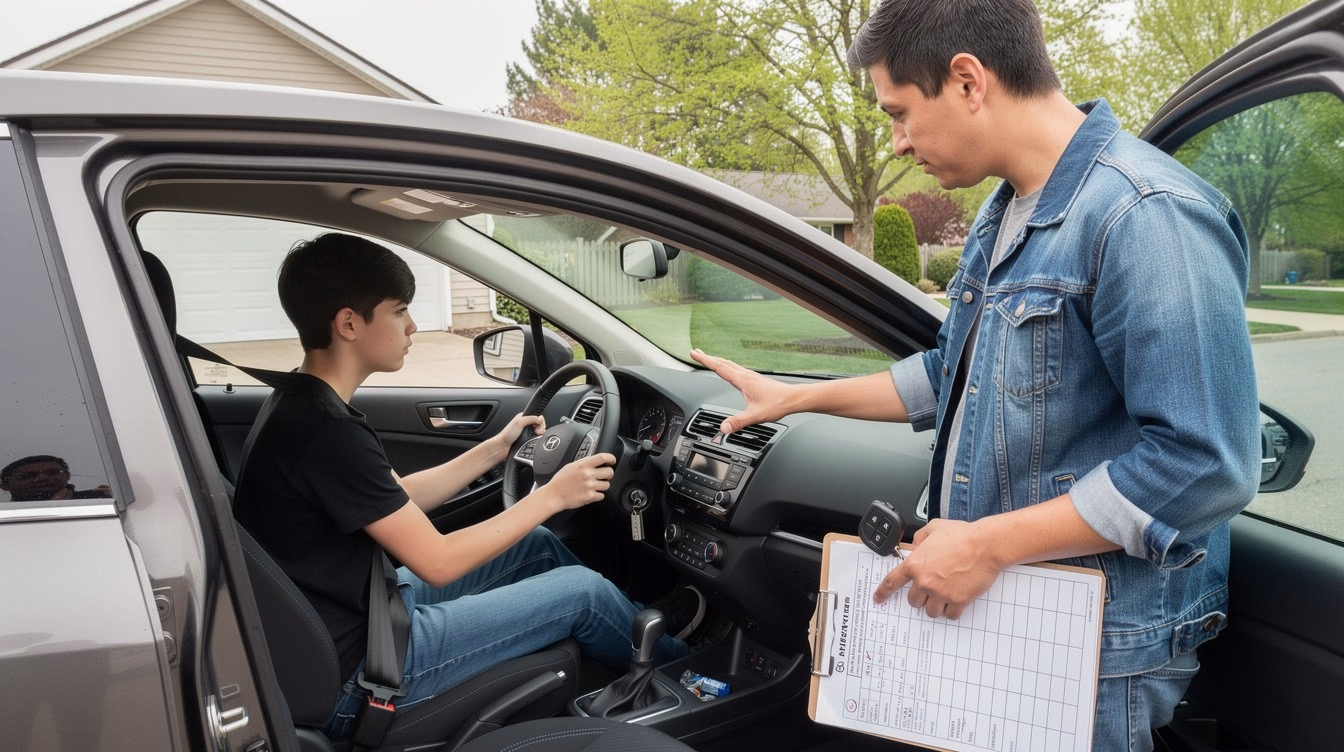
An online course provides structured instruction, but supervised practice turns that information into skill. Parents and guardians should know their state’s practice-hour requirements and use those hours intentionally.
Practice should include more than quiet neighborhood streets. When your teen is ready, work through parking lots, intersections, highway entrances, lane changes, rain, darkness, and routes with moderate traffic. Start with low-pressure conditions and add complexity gradually.
Online Course Convenience Has Limits
Online driver education can be a practical option for families who need flexibility. Self-paced access lets a student complete lessons around school and activities, and mobile-friendly coursework can reduce the scheduling pressure of a traditional classroom.
Convenience should not mean rushing. A teen who clicks through material only to reach the final quiz may complete the course but miss the safety value. Parents can help by setting a reasonable schedule, asking what was covered, and reviewing unfamiliar rules together.
Course format also affects the learning experience. Look for lessons that break material into manageable sections and use knowledge checks to reinforce key points. Clear progress tracking is useful because it shows both the student and parent what has been completed and what remains.
Online instruction is not always the complete answer. If your state requires in-car training, a road skills evaluation, or in-person identity verification, plan for those steps separately. The best choice depends on your state’s rules and your teen’s learning needs, not only on which option appears fastest.
How to Compare Teen Driver Course Options
When comparing providers, avoid making price the only deciding factor. Low advertised pricing may not tell you whether a certificate fee, processing charge, support fee, or optional upgrade will appear later. A transparent course explains the total cost before enrollment.
Use these five questions to compare programs:
- Is the course approved for your teen’s state and licensing requirement?
- Does the provider clearly explain course length, completion steps, and certificate delivery?
- Can your teen access lessons on the devices your family uses?
- Is customer support available if there is a login, payment, or completion-record issue?
- Are pricing, refund terms, and any separate behind-the-wheel requirements stated upfront?
Customer support deserves more attention than it usually gets. A teen may be working near a licensing deadline, and a missing record or unclear completion instruction can create unnecessary delays. Reliable support helps families resolve administrative issues without losing track of the actual goal: safe, prepared driving.
DriverEducators.com offers online driver education and traffic safety courses designed around convenience, clear requirements, and practical safety instruction. As with any provider, families should confirm the course approval and eligibility details that apply to their state before enrolling.
Signs a Course May Not Be the Right Fit
Be cautious when approval claims are vague, the required completion time is unclear, or pricing information is difficult to find. These are not automatic signs that a provider is unsuitable, but they are reasons to ask direct questions before registration.
Another concern is an unrealistic promise. No legitimate course can make a new driver fully prepared without practice, or guarantee a license regardless of state testing requirements. Driver education supports licensing readiness, but the student must still meet applicable rules, pass required exams, and demonstrate safe driving skills.
It also helps to consider your teen’s learning style. Some students do well independently with short digital lessons. Others may need a parent nearby to discuss scenarios, set deadlines, or review missed quiz questions. A course should support progress, not create another source of stress.
Teen Driver Course Review FAQs
Is an online teen driver course accepted by the DMV?
It depends on your state and the course. Confirm that the specific online program is approved for your teen’s licensing requirement before enrollment.
Does online driver education include behind-the-wheel training?
Usually, no. Online courses typically cover classroom instruction, while behind-the-wheel lessons and supervised practice may be separate requirements.
How long does a teen driver course take?
Course length depends on state-required hours and your teen’s pace. State rules may also limit how much coursework a student can complete in one day.
Can a parent teach a teen to drive after an online course?
Yes, if your state allows parent-supervised practice. Parents should follow required practice-hour, permit, and passenger restriction rules.
What should parents keep after course completion?
Keep the completion certificate, confirmation emails, payment record, and any state reporting details. These documents can help if a licensing record needs to be verified.
The best course gives your teen more than a completion record. It gives your family a clear starting point for the conversations and practice that help a new driver make safer choices long after the license is issued.