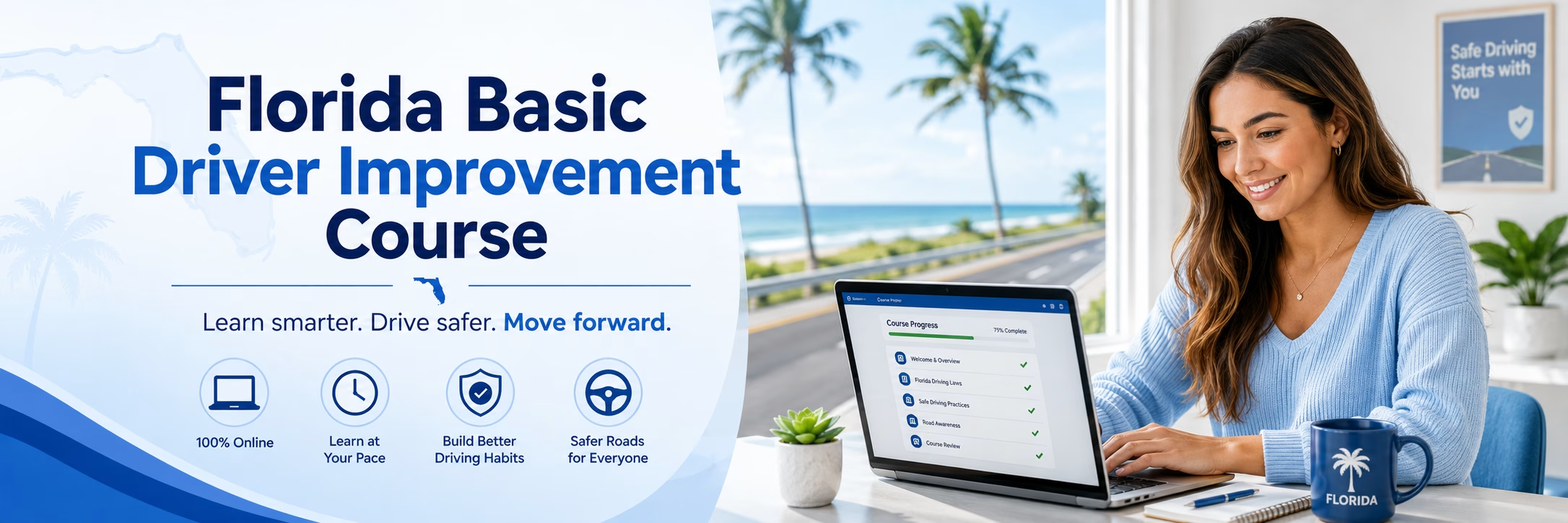

When a deadline is tied to your license, a ticket, or a court order, sitting in a classroom at a fixed hour is usually the last thing you need. A self paced driver education course gives you a practical alternative: complete required training on your own schedule while still meeting state, court, or insurance expectations.
That flexibility is the main reason online driver education has become a preferred option for so many drivers. But convenience alone is not enough. The course also needs to be approved where required, easy to use on the device you already have, and clear about what it will help you accomplish. For first-time drivers, that may mean satisfying a pre-licensing requirement. For other adults, it may mean finishing a court-ordered program or qualifying for an insurance discount. The right course makes the process simpler without making the requirement feel confusing.
What Is a Self Paced Driver Education Course?
A self paced driver education course is an online driving course that lets you complete lessons when it works for you, rather than at a scheduled class time. You move through the material at your own speed, stop when needed, and return later from the same account.
That matters because most drivers taking these courses are balancing work, school, childcare, or legal deadlines. A rigid schedule can turn a simple requirement into a logistical problem. A self-paced format reduces that friction. You can study during a lunch break, finish a section in the evening, or work through modules on weekends without rearranging your entire week.
This format is especially useful for people who do not all learn at the same pace. Some students want extra time on topics like right-of-way, stopping distance, or impaired driving laws. Others already understand the basics and simply want to move steadily through the required content. Self-paced learning gives both groups room to work efficiently.
Why Drivers Choose This Format
The biggest advantage is schedule control, but it is not the only one. A good online course also removes travel time, eliminates the need to sit through in-person sessions, and allows you to use a phone, tablet, or computer. That can make a real difference when you need to complete a course quickly or fit it around other obligations.
There is also a compliance benefit. For many drivers, the goal is not just to learn general safety concepts. The goal is to complete a requirement correctly the first time. Whether the need comes from a licensing step, a traffic violation, or an insurance policy, drivers usually want a course that is recognized, straightforward, and transparent about what it covers.
That is where details matter. Some courses are built for teen driver education. Others are designed for traffic law, substance abuse education, mature driver discounts, or driver improvement after a citation. A self-paced option can be a strong fit in all of those cases, but only if the course matches the actual requirement. Convenience does not replace approval status.
How to Tell if an Online Course Is the Right Fit
Before you enroll, start with the reason you need the course. That sounds obvious, but it prevents the most common mistake: choosing a course based on price or speed without confirming it satisfies your state, court, DMV, or insurer requirement.
If you are a first-time driver, make sure the course is accepted for your licensing path. If your requirement came from a court or traffic citation, confirm the course type and approval details. If your goal is an insurance discount, check whether your insurer accepts the program and whether there are age or policy conditions.
The next factor is usability. A self paced driver education course should be easy to access, simple to resume, and clear about your progress. If the platform is hard to navigate, the flexibility loses value quickly. The best experience is one where you can log in anytime, pick up where you left off, and complete the material without technical frustration.
Pricing should also be clear from the start. Hidden fees create stress, especially when you are already dealing with compliance timelines. A dependable provider is transparent about course cost, certificate delivery, and refund policies. That clarity matters almost as much as the course content itself.
What You Can Expect From the Course Experience
Most self-paced driver education courses are organized into short lessons or modules. These usually cover traffic laws, defensive driving habits, signs and signals, sharing the road, substance impairment, distracted driving, and other safety fundamentals tied to the specific course purpose.
Some programs include quizzes after sections to confirm understanding. Others may have a final assessment, depending on state or program rules. This is not there to make the process harder. It is there because approved driver education is meant to improve real-world knowledge, not just check a box.
The strongest online programs keep the material readable and practical. Drivers do not need dense theory. They need explanations they can use – how following distance changes in rain, why scanning intersections matters, what legal consequences can follow a distracted driving violation, and how substance use affects reaction time. Clear instruction supports both compliance and safer decisions on the road.
For many people, mobile access is another major advantage. If the platform works well across devices, you are not tied to one computer in one location. That kind of access is especially helpful for busy adults and students managing limited time.
Trade-Offs to Keep in Mind
A self-paced format is convenient, but it is not automatically the best choice for every learner. Some people do better with a live instructor and fixed schedule because it creates accountability. If you tend to postpone online tasks, self-paced learning can stretch longer than planned unless you set a completion schedule for yourself.
There is also a difference between flexibility and speed. Being able to move at your own pace does not always mean you can finish instantly. Approved courses may have timing rules, identity checks, or completion requirements based on state standards. If you are on a deadline, review those details before enrolling.
It also helps to be realistic about your needs. If your main priority is court acceptance, focus there first. If your priority is helping a teen build safe habits before licensing, the best course may not be the shortest one. The right fit depends on the outcome you need.
Choosing a Provider With Confidence
A reliable provider makes the process feel manageable from the beginning. Look for straightforward course descriptions, support availability, device compatibility, and approval information that is easy to verify. Drivers generally do not want to compare educational philosophies. They want to know whether the course is accepted, accessible, and worth the cost.
That is why established online providers such as DriverEducators.com focus on approved programs, flexible access, transparent pricing, and customer support. Those are not small extras. They are the features that reduce uncertainty when the course is tied to a legal or licensing requirement.
The best choice is usually the one that combines convenience with credibility. You should not have to sacrifice one to get the other.
Self Paced Driver Education Course FAQ
What does self paced mean in driver education?
Self paced means you complete the course on your own schedule. You can log in, study, pause, and return later.
Is a self paced driver education course accepted by states or courts?
Sometimes, yes. Acceptance depends on the specific course and the agency requiring it, so always confirm approval before enrolling.
Can I take the course on my phone?
Usually, yes. Many online courses are mobile-friendly and work on phones, tablets, and computers.
How fast can I finish?
It depends. Some students move quickly, but approved courses may have minimum timing rules or required checkpoints.
Is online driver education easier than classroom training?
It is usually more convenient, not necessarily easier. You still need to complete the required material and meet the program standards.
Who should take this kind of course?
It is a good fit for teens, adults with court or DMV requirements, and drivers seeking insurance or improvement courses. The key is choosing the right approved program for your situation.
A driver education course should not add more stress to an already time-sensitive requirement. When the course is approved, easy to access, and built around real driver needs, self-paced learning gives you room to finish the job properly and get back on the road with more confidence.