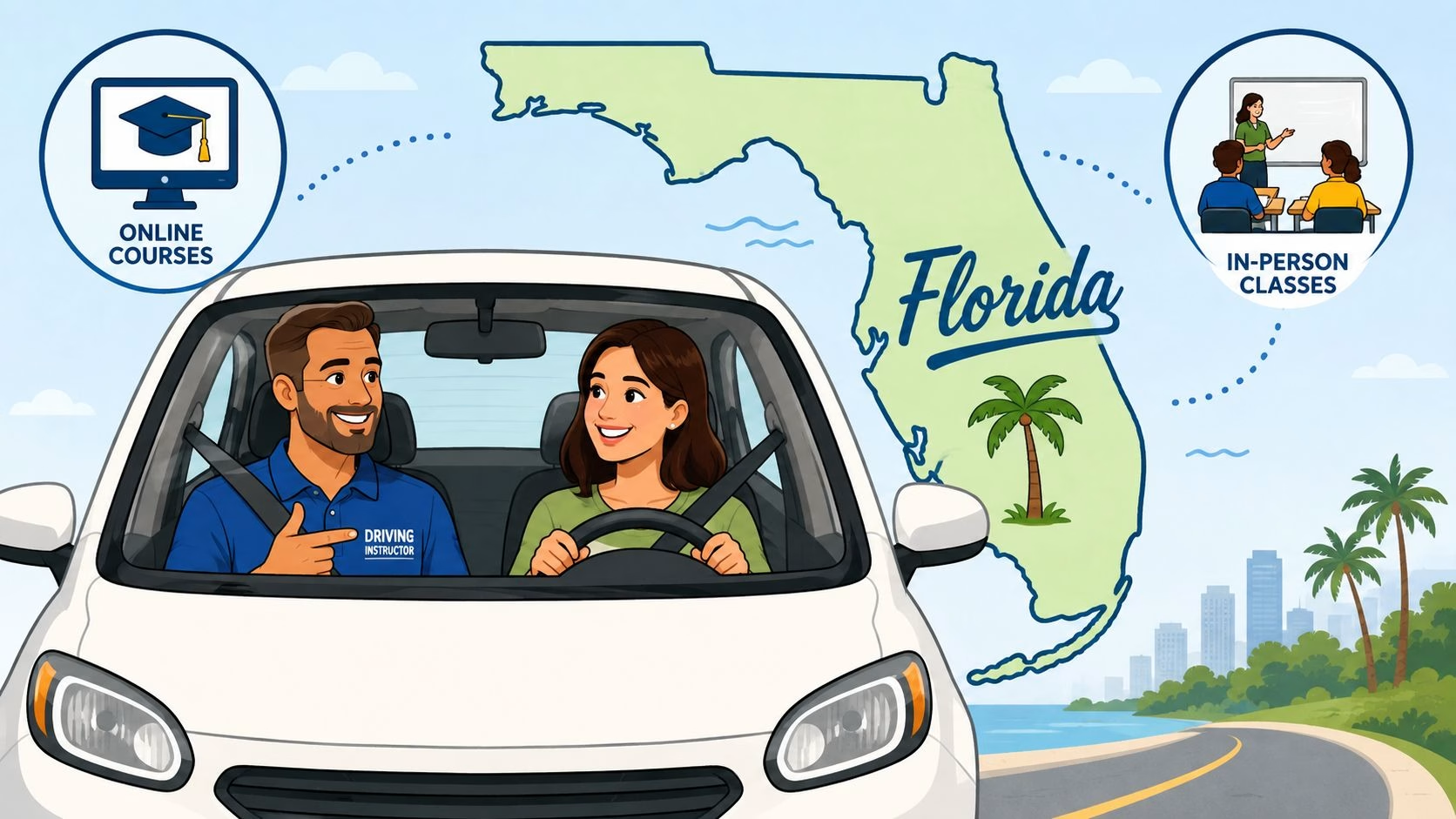

A driver education course used to mean a fixed schedule, a classroom, and time carved out of an already busy week. That is exactly why online driver education trends matter right now. People taking courses for licensing, court requirements, insurance discounts, or driver improvement are not looking for novelty. They want an approved, reliable option that is easy to complete, easy to understand, and recognized where it counts.
What is changing is not just where courses happen. It is how they are built, how students move through them, and what drivers now expect from the experience. For providers and students alike, the shift is toward education that is more flexible, more transparent, and more focused on practical outcomes.
Why online driver education trends matter
For most drivers, the course itself is only part of the issue. The bigger concern is meeting a deadline, satisfying a state or court requirement, or qualifying for a license or discount without unnecessary delays. That makes convenience important, but convenience alone is not enough.
The strongest online programs now balance flexibility with compliance. A course has to be accessible on a phone or laptop, but it also has to meet approval standards, track progress correctly, and present material in a way that supports real learning. This is one of the most important shifts in online driver education trends – students expect digital access, but regulators and customers still expect accountability.
Mobile-first course design is no longer optional
A few years ago, mobile compatibility felt like a useful extra. Now it is a baseline expectation. Many students start a course on a phone during a lunch break, continue on a tablet at home, and finish on a laptop later in the week.
That behavior has changed course design. Text has to be easier to read on smaller screens. Navigation has to be simple. Videos, quizzes, and progress tracking have to load cleanly without forcing the student to restart or guess what comes next.
This matters especially for adults completing court-ordered or DMV-related education. They may be fitting the course around work, family, and other obligations. If a program works well only on a desktop computer, it creates friction that many students will not tolerate.
State approval and legitimacy are more visible decision factors
As the market for online education has grown, so has customer caution. People are quicker to ask whether a course is approved, accepted, or recognized before they enroll. That is a healthy trend.
For a teen completing pre-licensing education, approval affects whether the course counts. For someone handling a ticket or court requirement, it can affect whether the obligation is actually satisfied. For a mature driver seeking an insurance discount, the issue is whether the insurer or state accepts the training.
That is why course providers are placing more emphasis on clear approval information, transparent pricing, and customer support. The trend is not flashy, but it is significant. Trust signals now play a larger role in enrollment decisions because students want certainty, not guesswork.
Shorter learning segments improve completion rates
Long, dense lessons can make even useful material harder to finish. One of the more practical online driver education trends is the move toward shorter modules with clearer stopping points.
This approach helps students absorb information in manageable pieces. It also fits the reality of self-paced learning. A parent, student, or working adult may only have 15 to 20 minutes at a time. Courses designed around shorter segments respect that reality without lowering standards.
There is a trade-off, though. Breaking content into smaller parts only helps if the material still feels coherent. If modules become too fragmented, students may complete the course without connecting the safety concepts behind it. The better programs simplify the path without oversimplifying the content.
More practical safety content, less passive reading
Another shift is away from purely text-heavy instruction and toward applied learning. Drivers still need legal information, rules of the road, and risk awareness, but they also benefit from examples that reflect real driving decisions.
That can include scenario-based questions, hazard recognition exercises, and explanations tied to everyday situations such as distracted driving, following distance, impaired driving, or sharing the road with cyclists and pedestrians. The goal is not entertainment. The goal is retention.
This trend is especially relevant in traffic safety and driver improvement courses. Students are more likely to stay engaged when the material connects directly to decisions they make behind the wheel, rather than reading page after page of abstract guidance.
Personalization is growing, but within compliance limits
Personalized learning is a major trend across online education, and driver education is beginning to reflect that. A teen first learning roadway fundamentals does not need the same emphasis as an experienced adult taking a course after a citation. A mature driver looking for an insurance discount may benefit from different examples than someone completing a substance abuse education requirement.
Still, regulated courses cannot simply become fully customized from one user to the next. Many states and courts have rules about timing, content order, quiz structure, and instructional coverage. So the real trend is moderated personalization.
That usually means adapting examples, improving usability, and presenting content in a more relevant way while keeping the approved framework intact. In this space, too much personalization can create compliance problems. Too little can make the course feel generic and harder to finish.
Better support is becoming part of the product
Online learning is often sold as self-service, but driver education customers still need help. They may have questions about deadlines, certificates, reporting, device compatibility, or whether they enrolled in the right course.
That is why support is increasingly part of the overall course experience. Clear instructions, prompt responses, visible policies, and refund transparency all reduce stress for students who may already be dealing with legal or administrative requirements.
This is one area where practical providers stand out. A course may meet all technical requirements, but if the student cannot get a straightforward answer when something goes wrong, the experience breaks down fast. Strong support is not separate from online education quality. It is part of it.
Multilingual access is expanding the reach of online driver education trends
Language access is another meaningful shift. In many parts of the United States, drivers need approved education in a format they can understand comfortably and accurately. That affects safety outcomes as much as customer experience.
Multilingual availability helps more students complete required education with confidence. It can also reduce misunderstandings around legal obligations, deadlines, and course instructions. For providers serving broad state audiences, this is becoming less of a niche feature and more of a practical expectation.
Data is being used to improve course design
Providers now have better visibility into where students pause, where they drop off, and which sections create confusion. Used responsibly, that data can improve course clarity, pacing, and completion rates.
The key is not to treat students like metrics. A high-exit lesson may signal poor navigation, unclear wording, or content that needs to be explained more directly. In regulated education, small design changes can make a large difference in whether students complete the course successfully and on time.
For a provider like DriverEducators.com, that means the digital learning experience can keep getting better without losing the compliance structure customers rely on.
What these trends mean for drivers choosing a course
The practical takeaway is simple. When evaluating an online course, drivers should look beyond the promise of convenience. Approval status, mobile usability, clear progress tracking, straightforward support, and transparent pricing matter just as much.
The best course for one person may not be the best course for another. A first-time driver may need a stronger educational foundation. Someone handling a court requirement may care most about speed, acceptance, and certificate processing. A mature driver may prioritize clarity, ease of use, and insurer recognition. The right choice depends on the requirement, the state, and the student’s schedule.
FAQ
What are online driver education trends?
Online driver education trends are the changes shaping how digital driving courses are delivered and completed. Common examples include mobile access, shorter lessons, stronger compliance features, and more practical safety content.
Are online driver education courses accepted by states and courts?
Sometimes. Acceptance depends on the specific course, state, court, or insurance requirement.
Always verify that the course is approved for your need before enrolling.
Why is mobile access such a big trend?
Because many students complete coursework in short sessions throughout the day. A mobile-friendly course makes it easier to stay on track without being tied to one device.
Do shorter course modules mean easier standards?
No. Shorter modules usually improve readability and completion, not reduce requirements.
Approved courses still have to meet state or court rules.
Is personalized learning common in driver education?
Partly. Personalization is growing, but regulated courses still need to follow approved content structures.
Most personalization happens through better examples, clearer design, and more relevant lesson flow.
The direction of online driver education is not complicated. Drivers want approved courses that respect their time, explain requirements clearly, and help them finish with confidence. The providers that keep improving those basics are the ones that will keep earning trust.