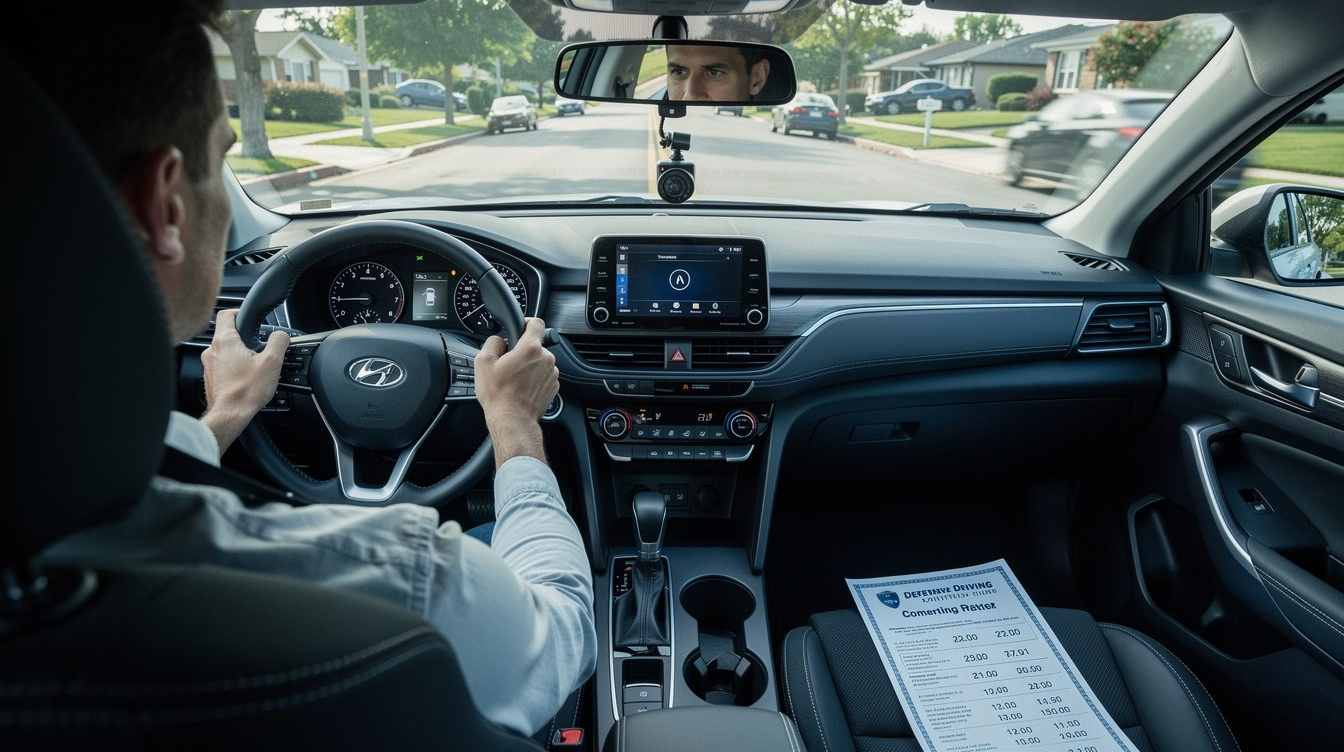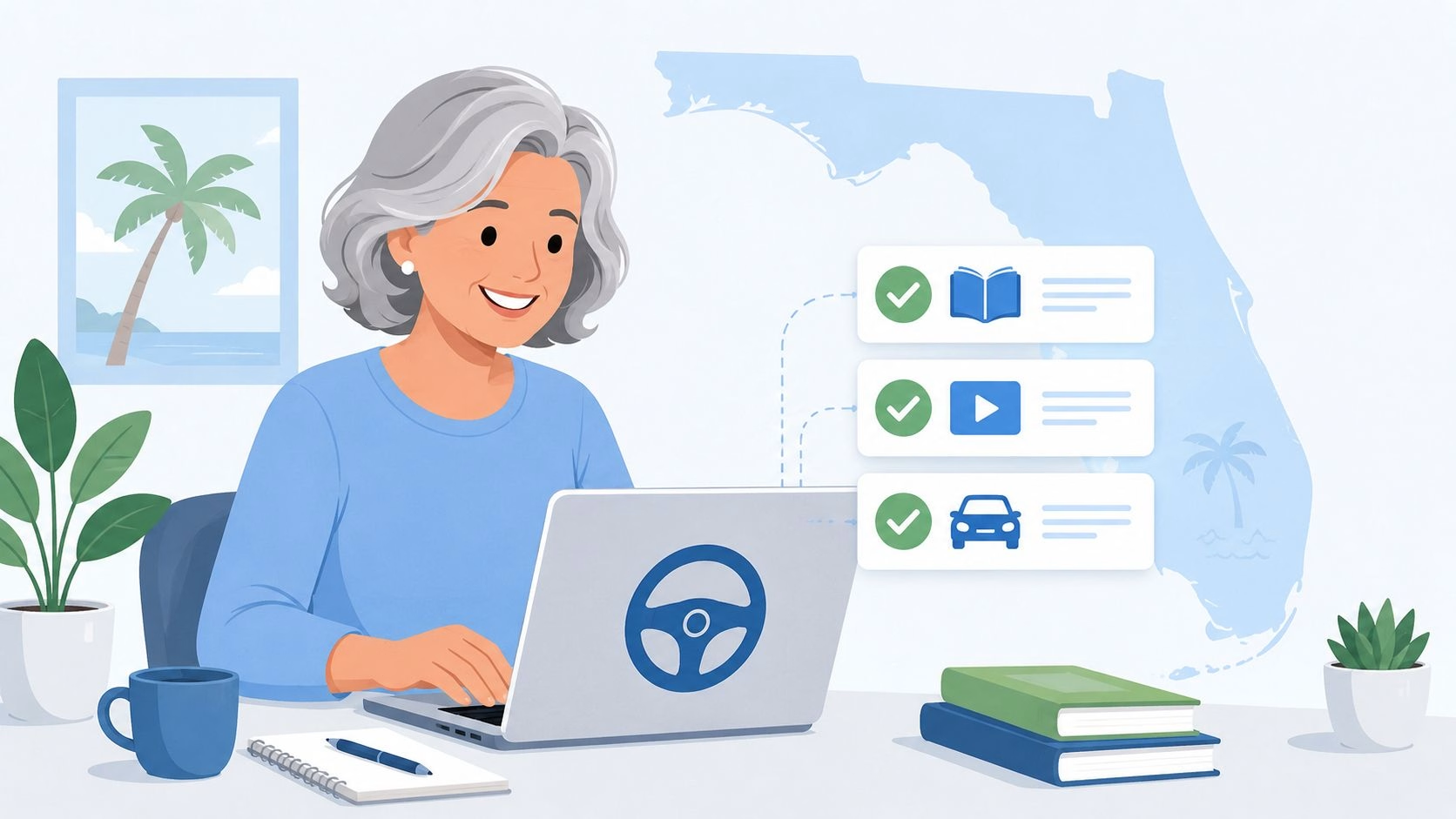

If your insurer offers a rate reduction for completing a mature driver or accident-prevention class, waiting to handle it usually costs more than the course itself. An insurance discount driving course online gives eligible drivers a practical way to meet that requirement without rearranging work, family, or medical appointments.
For many drivers, the real question is not whether the course is worth taking. It is whether the course will be accepted by the insurance company, how long the discount may last, and whether online completion counts the same as a classroom session. Those details matter because insurance savings depend on approval, eligibility, and proper documentation – not just finishing any driver safety program.
How an insurance discount driving course online works
An insurance discount course is a defensive driving or mature driver education program designed to refresh safe driving habits and reduce crash risk. In many states, drivers age 55 and older may qualify for an insurance premium discount after completing an approved course, although age rules and discount rules vary by state and insurer.
The online format is straightforward. You register, complete the course at your own pace, pass any required assessments, and receive a certificate of completion. That certificate is what you typically submit to your insurance provider as proof that you met the course requirement.
The online option matters because convenience is often the difference between completing the course on time and putting it off. A self-paced course lets you log in from home, use a phone, tablet, or computer, and stop and restart when needed. For older adults, caregivers, and busy households, that flexibility is often the main benefit.
Who should take this course
This type of course is usually a fit for mature drivers who want to lower insurance costs while staying current on traffic laws, hazard awareness, and age-related driving changes. It can also make sense for family members helping an older driver maintain independence safely.
That said, eligibility is not universal. Some states set a minimum age. Some insurers only recognize state-approved providers. Some policies apply the discount only to certain coverages, not the full premium. Before enrolling, it is smart to confirm three things with your insurer: whether a discount is available, what course type they accept, and how often the course must be retaken.
What you learn in an insurance discount driving course online
The material is less about memorizing rules and more about reducing preventable risk. Most approved programs cover current traffic laws, defensive driving strategies, common crash causes, visibility issues, safe following distance, intersections, and the effects of aging on driving performance.
A good course also addresses practical situations drivers actually face. That includes night driving, weather conditions, medication awareness, reaction time, and avoiding distractions. The goal is not to make driving feel complicated. It is to help drivers make better decisions earlier, with less stress.
This is also why insurers support these programs. Refresher education can improve awareness and judgment, which may lower claim risk over time. The discount is not just a promotion. It reflects the insurer’s view that trained, attentive drivers may present less risk.
Approval matters more than price
The cheapest course is not always the best value. If the provider is not approved where required, or if your insurer does not accept the completion certificate, you may end up paying for a course that does not help your premium at all.
Look for clear statements about state approval, insurer acceptance, course purpose, and certificate delivery. If a provider makes those details hard to find, that is a concern. A dependable course provider should explain exactly what the course is for, who it is intended for, and what documentation you receive after completion.
Transparent pricing also matters. Drivers taking a course to save money do not want surprise fees at checkout or extra charges for basic certificate access. The process should feel clear from the start.
How much can you save
Savings vary. Some drivers may receive a modest percentage discount, while others may see a more noticeable reduction depending on the state, policy, vehicle, and insurer.
It depends on the insurance company and how the discount is applied. In some cases, the reduction may affect only certain parts of the premium. In others, the savings may continue for multiple years before a refresher course is required. That is why it helps to ask your insurer for specifics before you enroll.
Even when the discount is relatively small, the math can still work in your favor. If the course is affordable and the savings continue for a set period, many drivers recover the course cost quickly. The added benefit is updated safety knowledge, which has value beyond the premium itself.
What to check before you enroll
Start with acceptance. Ask your insurer whether an online course is allowed and whether they require a specific state approval or provider type. Then confirm your eligibility based on age, state, and policy.
Next, review the course format. Some drivers prefer a very simple interface with large text and clear navigation. Others care most about mobile access so they can complete lessons in shorter sessions. A self-paced design is usually the most practical choice.
Finally, check certificate timing. If your renewal date is close, you need to know when proof of completion will be available. Immediate or prompt certificate delivery can make a real difference when you are trying to apply a discount before your next billing cycle.
Why online courses are often the better fit
The biggest advantage is control over your schedule. There is no commute, no classroom deadline, and no need to sit through a session at a fixed time. You complete the work when you are alert and comfortable, which is especially useful for drivers balancing appointments, caregiving, or part-time work.
Online delivery can also reduce stress. Many adults are more comfortable learning at home than in a classroom. You can reread sections, take breaks, and move at a steady pace. That tends to make the course more manageable and, for many people, more useful.
For drivers who want a straightforward, approved option, providers such as DriverEducators.com focus on flexible online access, clear course pathways, and practical compliance support. That combination is often what people need most – not extra complexity, just a recognized course that fits real life.
FAQ
What is an insurance discount driving course online?
It is an online driver safety or mature driver course that may qualify eligible drivers for an auto insurance discount. The exact discount depends on state rules and the insurance company.
Does every insurance company accept these courses?
No. Acceptance varies by insurer and state. Always confirm eligibility and course acceptance before enrolling.
Who usually qualifies for the discount?
Many programs are designed for drivers age 55 and older. Some states or insurers may use different age or policy requirements.
Is an online course accepted the same as an in-person course?
Often yes, if the course is approved and your insurer allows online completion. Approval and insurer policy are what matter.
How long does the insurance discount last?
It varies. Some discounts last multiple years before a refresher course is needed.
Will I get proof after finishing the course?
Yes. Approved providers issue a certificate of completion. You usually submit that certificate to your insurance company.
Is the lowest-priced course the best option?
Not always. A lower price does not help if the course is not accepted. Approval, transparency, and certificate delivery matter more.
Can the course still be worth it if the discount is small?
Yes, in many cases. Even modest savings can offset the course cost over time, and the safety refresher adds value on its own.
Taking the time to verify approval and insurer acceptance before you enroll can save frustration later. The best course is the one that is recognized, easy to complete, and simple to document when it is time to claim your discount.