
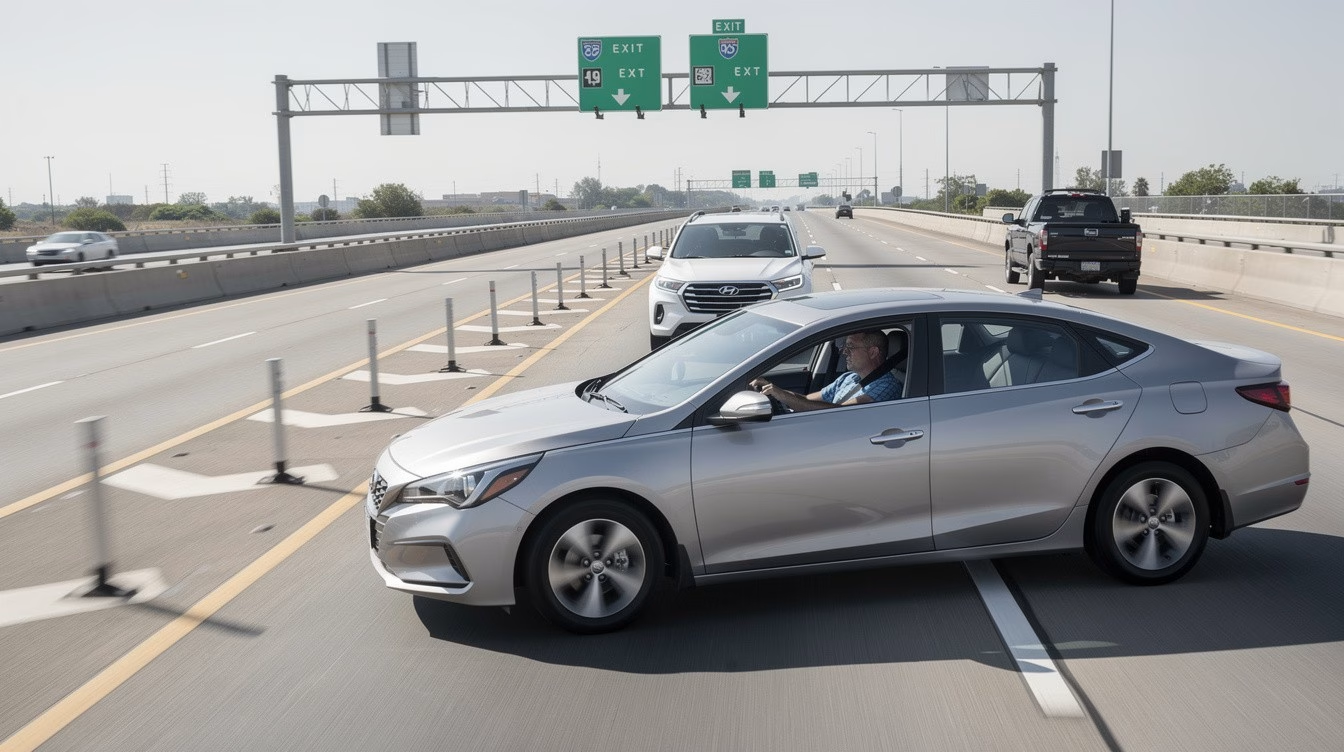
Highway merges intimidate many drivers, but they don’t have to. The anxiety comes from juggling speed, positioning, and other vehicles all at once.
We at DriverEducators.com know that defensive merging techniques transform hesitation into competence. This guide walks you through the exact skills that make merging smooth and safe.
Why Highway Merges Demand Different Skills Than Lane Changes
The Three-Zone Challenge
Merging onto a highway forces you to manage three zones simultaneously: the traffic ahead, the traffic behind, and the gap you’re targeting. Lane changes on regular roads involve only two zones because speeds are lower and traffic moves predictably. Highway merging compresses all these decisions into seconds while you accelerate from a standstill to 60+ mph.
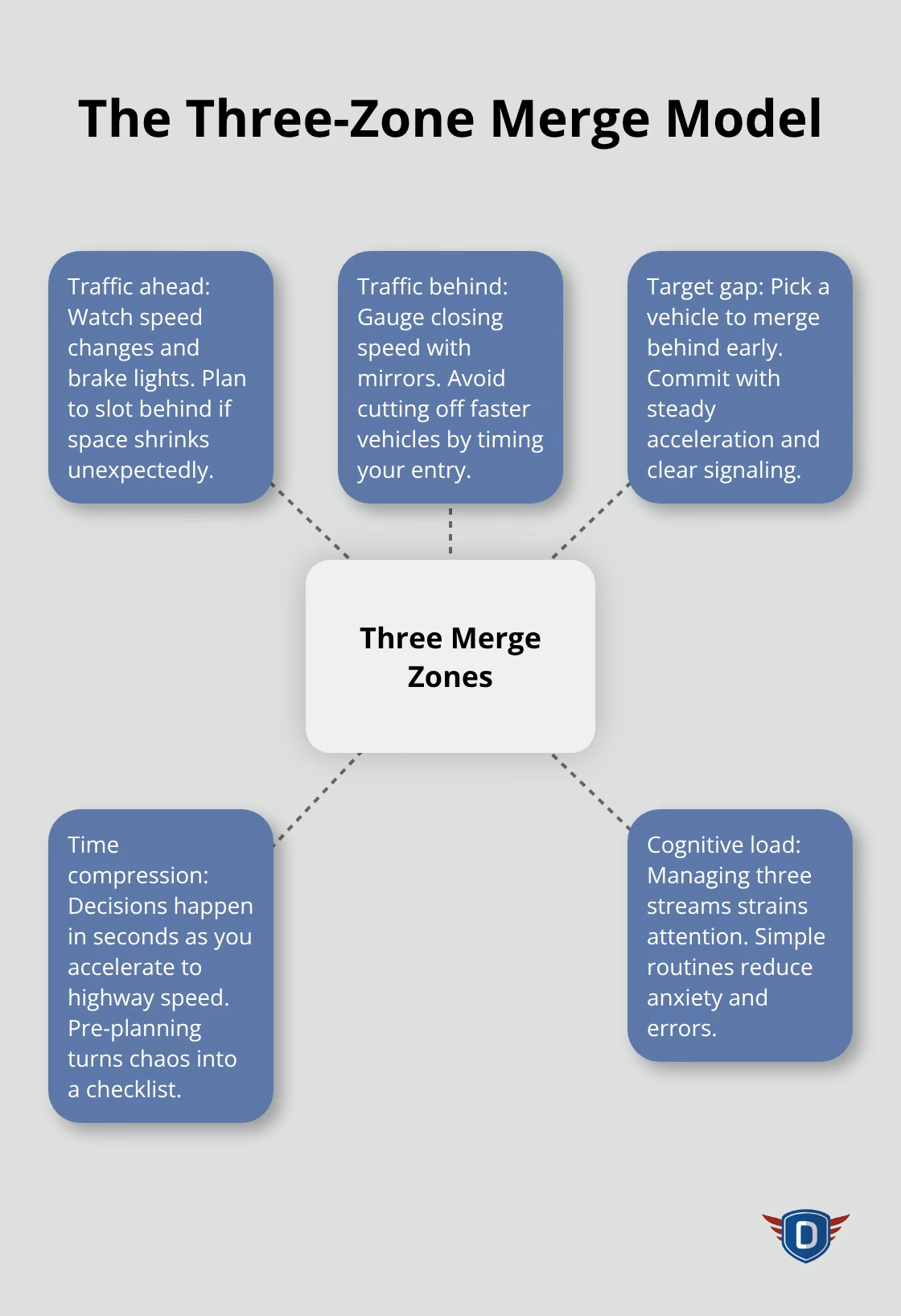
The cognitive load is substantially higher because you cannot afford hesitation.
Why Crashes Happen During Merges
Research on highway safety shows that crashes occur more frequently during merging than during passing, making this maneuver one of the highest-risk driving actions you perform. The pressure stems from knowing that other drivers will not wait for you. Slowing down to merge actually increases crash risk because it disrupts traffic flow and forces vehicles behind you to react suddenly.
Successful merging requires you to scan in front, behind, and two lanes to the left or right before you commit. Most drivers freeze at merge points because they focus on only one zone instead of all three, which creates the hesitation that makes merging feel chaotic.
Recognizing Your Merge Scenario
Different scenarios demand different strategies, and recognizing which type of merge you face helps you plan ahead. An on-ramp merge during light traffic is straightforward because gaps appear naturally and other drivers expect you. Rush-hour merging on congested freeways requires aggressive acceleration and early gap identification because spaces close quickly.
Merging where an on-ramp ends abruptly forces you to merge within seconds rather than minutes, demanding precision and speed. Merging around semi-trucks or larger vehicles requires extra caution because these drivers have limited visibility and may not see your vehicle.
Why Hesitation Happens
The hesitation most drivers experience stems from uncertainty about driver behavior and misjudging gap size. When you cannot predict whether the car ahead will yield, your instinct is to brake and wait, but this creates a dangerous vacuum. Drivers who master merging accept that some vehicles will not yield and maintain a plan to merge behind the next car instead of forcing entry.
Early planning eliminates hesitation because you identify your target gap and commit to a merge point before you reach highway speed. This preparation transforms the merge from a reactive scramble into a controlled maneuver. The next section shows you exactly how to position your vehicle and time your acceleration to execute this plan flawlessly.
How to Execute a Merge Without Second-Guessing Yourself
Accelerate to Highway Speed Before the Merge Line
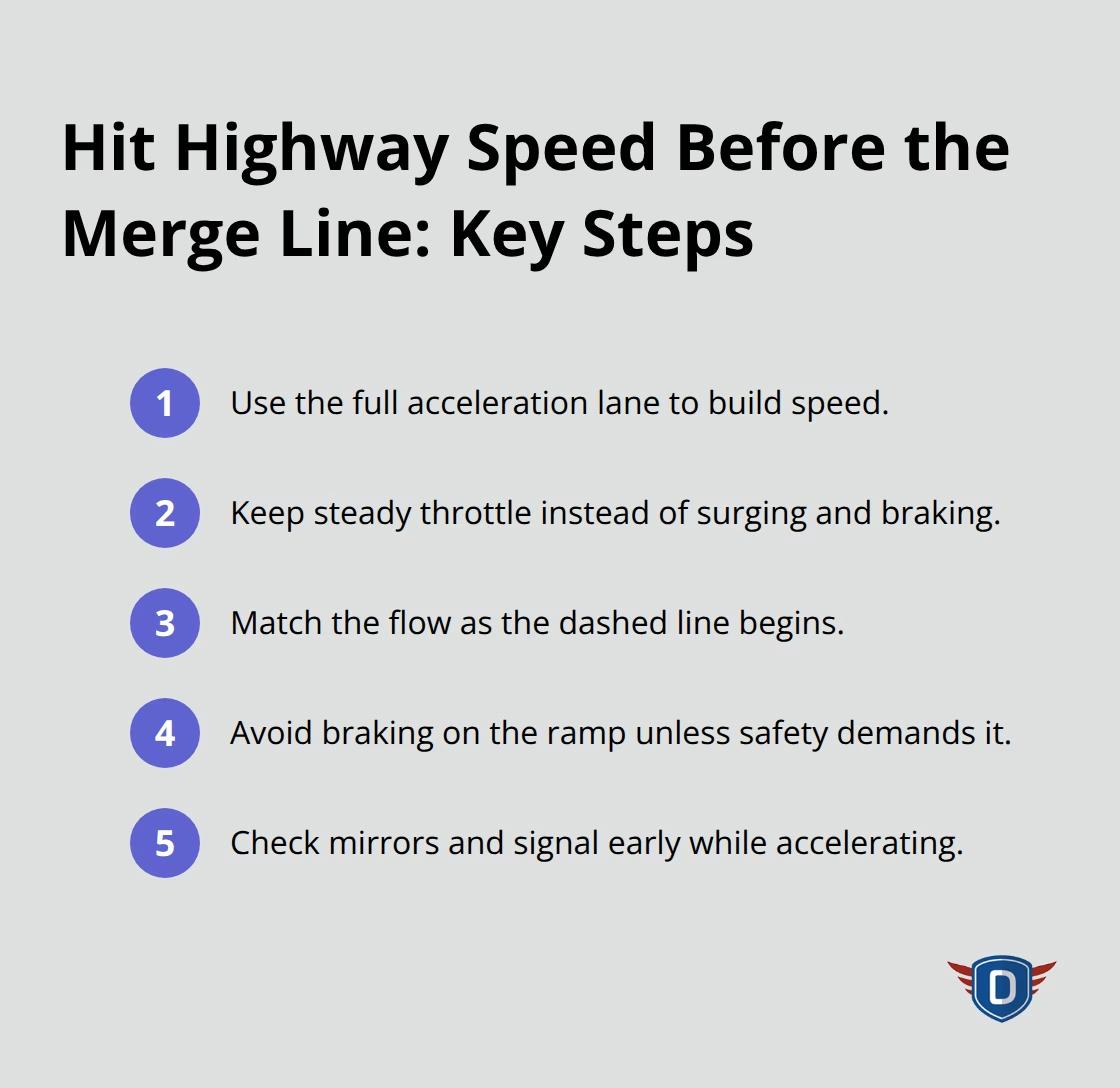
Position yourself in the acceleration lane and reach highway speed before the merge line appears. Most drivers maintain their entry ramp speed until they spot a gap, which forces them to decelerate into traffic or brake suddenly. Instead, accelerate consistently so you hit highway speed by the time the dashed line begins. This speed matches highway flow and eliminates the dangerous vacuum that hesitant merging creates.
Scout Your Target Gap Early
Scout for your target gap as soon as you see the on-ramp, not when you’re already committed to merging. The moment you identify a car you can merge behind, signal immediately and commit to that position. Signaling early alerts highway drivers that you’re entering, which paradoxically increases your chances of being seen and given space.
If the lead vehicle doesn’t yield or pulls away, monitor their acceleration rate. If they’re not gaining distance quickly, ease off the gas slightly and retry behind them rather than forcing entry. Some drivers find it easier to merge behind larger vehicles like SUVs because the following distance feels more predictable, though this depends entirely on the individual driver ahead.
Never stay side-by-side with another car for more than a second. Position yourself so you can slip either ahead or behind if needed, maintaining control over your entry point instead of leaving your merge fate to another driver’s decisions.
Master Your Mirror Setup and Blind Spot Checks
Your mirrors and shoulder checks work together, not separately. Adjust your side mirrors so you can just see the rear quarter panel of your own vehicle when you press your head against the window, then repeat on the passenger side. A following vehicle should appear in your rearview mirror first, then move into your side mirror, and finally disappear into your peripheral vision as it passes. If any part of your own car is visible in the side mirror, rotate it outward slightly.
Before you initiate the merge, perform a quick shoulder check by turning your head to confirm no vehicle occupies the blind spot. This three-step verification takes less than two seconds but catches vehicles that hide in your peripheral zones.
Some drivers add small blind-spot mirrors to their side mirrors, positioning them at the top outer corner to avoid blocking the blind-spot monitoring light. These supplemental mirrors work best when frameless or fan-shaped to align with your mirror’s curve, though they don’t replace proper mirror adjustment or shoulder checks.
Accept Missed Opportunities and Stay Patient
You’ll occasionally miss a merge opportunity because the gap closes or another driver cuts in. When this happens, adjust your speed and merge behind the next vehicle rather than forcing entry. This patience prevents crashes and keeps you proactive instead of reactive to surrounding traffic. Once you master these positioning and mirror techniques, handling aggressive drivers becomes your next challenge-and it requires a completely different mindset than the smooth merges you’ve just learned.
How Other Drivers Think and React
Understanding Highway Driver Patterns
Predicting driver behavior on highways separates confident mergers from anxious ones. Most drivers merge reactively, assuming they’ll face rejection, which causes them to hesitate and create the very dangers they fear. Highway drivers operate on predictable patterns: they maintain speed, scan mirrors intermittently, and yield space when they see a clear signal and smooth acceleration. The moment you understand these patterns, merging becomes calculable instead of chaotic.
Signaling Confidence Through Your Actions
Aggressive acceleration signals confidence and tells other drivers you belong in that lane. Hesitation signals uncertainty and invites other drivers to ignore you or cut in front. When you reach highway speed before the merge line and signal early with a steady approach, most drivers unconsciously ease off slightly to accommodate you because your behavior matches their expectations.
Some drivers will not yield-this is inevitable. Semi-truck operators have significant blind spots and may not see you at all. Aggressive drivers deliberately close gaps to prevent merging. Rather than viewing these as personal rejections, treat them as traffic conditions to navigate around. If a driver won’t yield, simply adjust your speed and merge behind the next vehicle. This approach keeps you proactive and eliminates the reactive panic that causes collisions.
Maintaining Control After You Merge
Maintaining separation after you merge is where most drivers fail catastrophically. The gap you establish immediately after entering the highway determines whether you remain in control or become a passenger reacting to surrounding traffic. If you merge too closely to the car ahead, you’ll brake when they brake, accelerate when they accelerate, and lose all independent control.
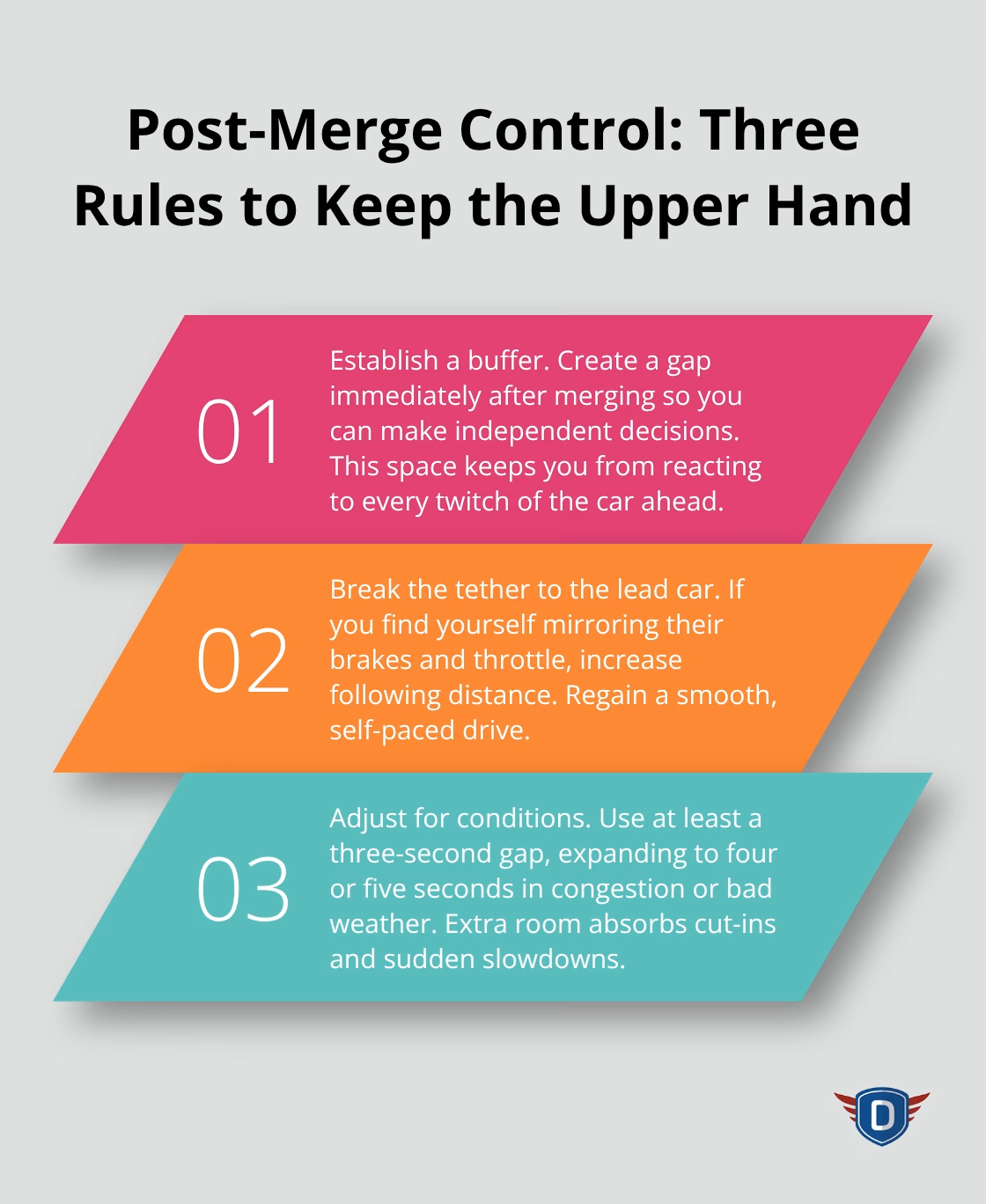
This reactive pattern increases crash risk because you’re always one step behind traffic flow. The three-second rule applies here: maintain enough distance so you have three full seconds to react if the car ahead stops suddenly. In heavy traffic, increase this to four or five seconds because congestion creates unpredictable braking patterns. This cushion protects you from aggressive drivers who cut in front or from sudden slowdowns ahead.
Drivers who merge smoothly and then immediately tighten their following distance create a false sense of security-they feel they’ve successfully merged when actually they’ve entered a collision trap.
Handling Aggressive and Uncooperative Drivers
Uncooperative drivers test your resolve constantly. Some will speed up to close a gap you’re targeting, others will brake suddenly after you’ve committed to merging, and aggressive drivers may honk or flash lights. Your response must remain mechanical and unemotional. Do not match their aggression with faster acceleration or risky maneuvers.
Instead, ease off the gas, create more space, and let them pass. Their behavior reflects their anxiety or hostility, not your driving ability. Drivers who maintain composure and refuse to engage in speed competitions reduce their crash risk substantially compared to those who respond emotionally to provocation.
Final Thoughts
Merging confidently requires three core skills: positioning your vehicle early, reading other drivers accurately, and maintaining composure when they don’t cooperate. Smooth acceleration and early signaling communicate control to surrounding traffic, while hesitation creates the danger you fear. Defensive merging techniques work because they eliminate the reactive panic that causes collisions-crashes happen when drivers freeze, brake unexpectedly, or force entry into unsafe gaps.
Confidence builds through repetition in low-traffic conditions first. Start practicing merges during lighter traffic periods when gaps appear naturally and other drivers expect you. Each successful merge reinforces the muscle memory and decision-making patterns that make future merges feel automatic, and over time you’ll recognize driver behavior patterns and adjust your speed without conscious effort.
We at DriverEducators.com understand that highway anxiety stems from uncertainty about technique and driver behavior. Our driver education programs teach defensive driving strategies that apply far beyond merging, helping you build the situational awareness and decision-making skills that keep you safe on every road.