You drove in Florida weeks ago. Maybe it was a vacation, a work trip, or a quick drive in a borrowed car. Now there’s an envelope in the mail, and inside is a toll bill you weren’t expecting.
That’s where a lot of drivers get stuck.
They don’t know what florida toll by plate is, why the bill showed up late, why the amount looks higher than expected, or what to do if the car was a rental, had an out-of-state plate, or wasn’t even theirs anymore. If that sounds familiar, you’re not alone.
This guide is built for that exact moment. It’s written the way a calm driving instructor would explain a confusing rule at the curb. Slow, clear, and practical. If you’re also sorting out other Florida driving paperwork, this guide to a Florida traffic ticket may help with the broader picture.
That Surprise Bill in Your Mailbox
The usual story goes like this.
You drove through a toll area without stopping. There was no gate. No booth. No person taking cash. So you assumed the road would somehow sort itself out later, or maybe that the charge was tiny enough not to matter. Then the invoice arrived, and now you’re wondering if you missed something important.
That reaction makes sense.
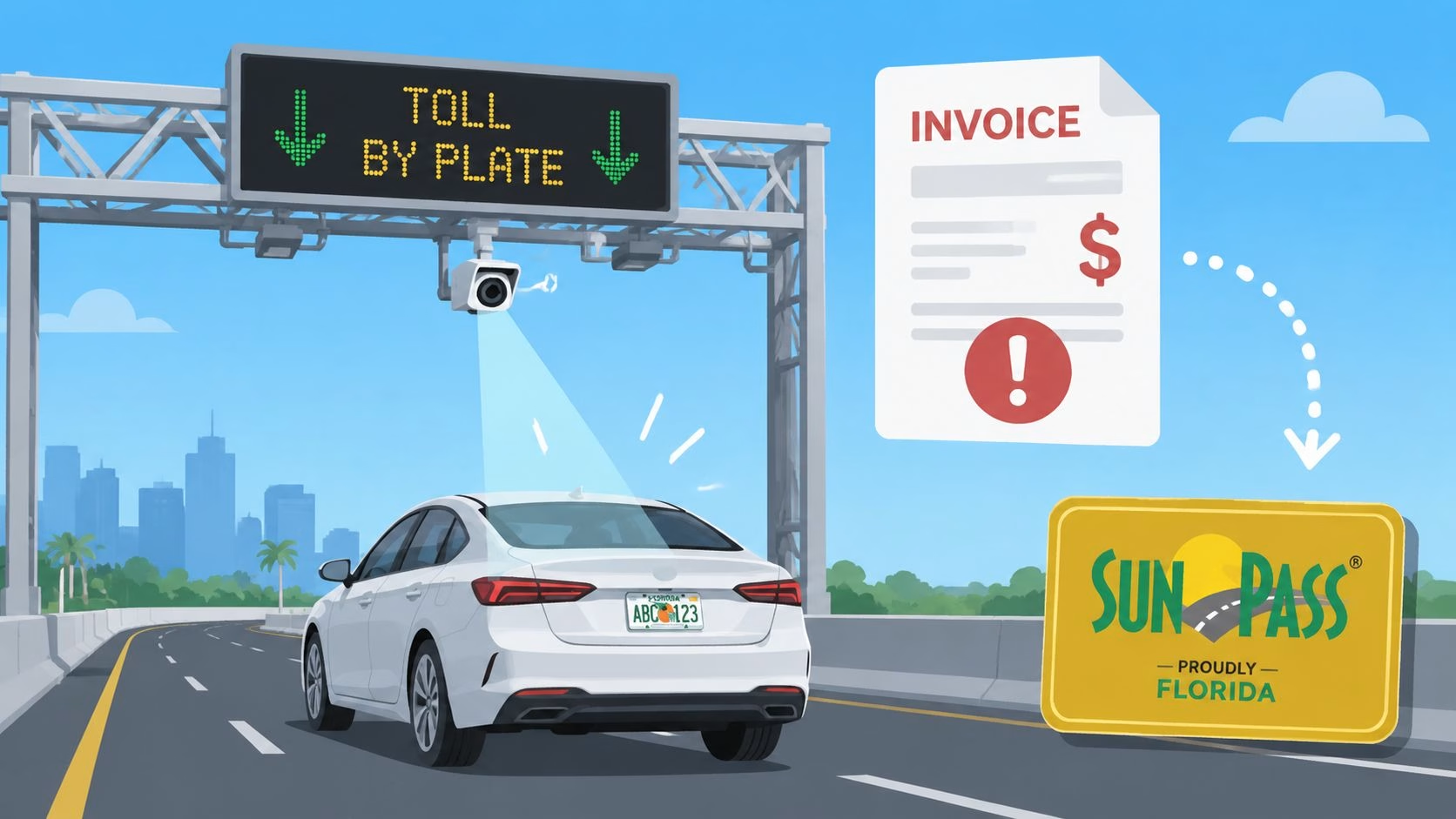
Florida uses Toll-By-Plate as the normal backup billing method for drivers who use certain all-electronic toll roads without a compatible transponder. In plain language, if the road doesn’t detect something like SunPass, the system falls back to your license plate and mails a bill to the registered owner.
Many drivers don’t make a mistake on purpose. They just don’t realize a cashless toll road still creates a bill.
The confusing part is timing. The trip happened earlier. The letter shows up later. By then, maybe you’ve forgotten the route, returned the rental car, moved, or sold the vehicle.
That delay is why people feel blindsided. The bill looks sudden, but the toll event already happened. The question is whether the invoice is correct, who owes it, and what you should do next.
What Is Toll-by-Plate and How It Works
Florida’s Toll-By-Plate system uses roadside equipment, a plate lookup, and a mailed bill to charge drivers after the trip.
That sounds simple until real life gets in the way. Maybe the car was a rental. Maybe you sold it last month. Maybe your plate is from another state. Those are the cases that cause the most confusion, because the toll happened on the road, but the paperwork follows the registered plate information later.
What happens on the road
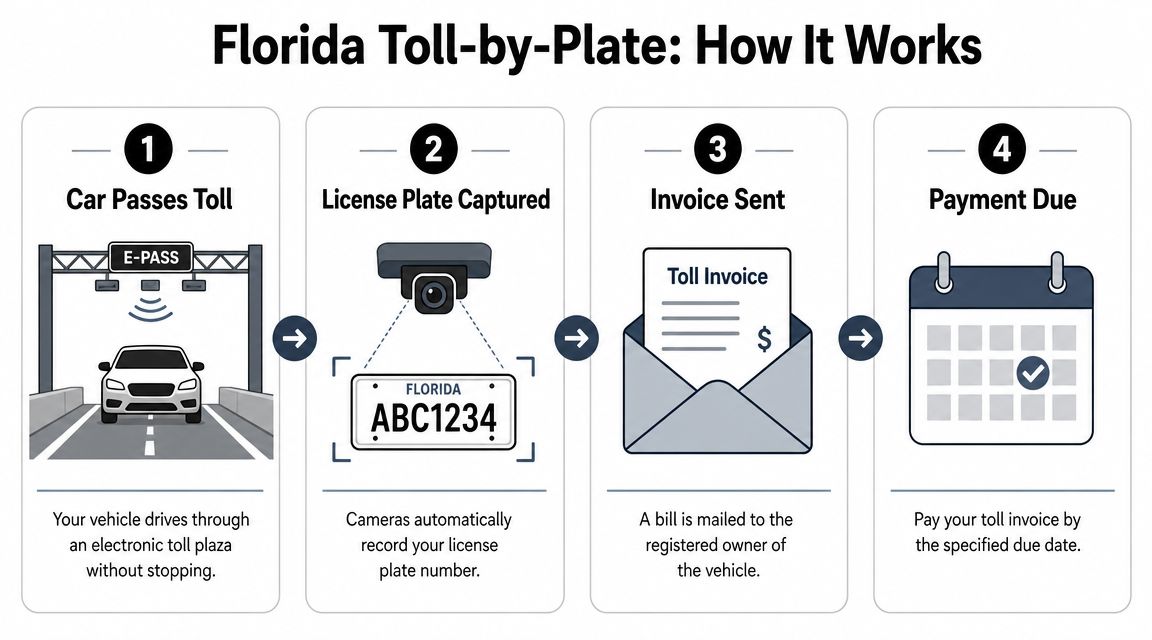
When your vehicle passes a cashless toll point, the system first checks for a working transponder such as SunPass or another accepted device.
If no valid transponder is detected, the system photographs the license plate and uses that plate to identify who should be billed. The plate becomes the fallback payment method.
A good way to picture the process is like a parking garage that reads your tag when you enter, then matches it to an owner record later. No one stops you at the lane. The charge still exists.
What happens after the drive
After the plate image is captured, the toll agency matches the plate to the registration record tied to that vehicle.
Then a Toll Enforcement Invoice is mailed to the registered owner or business listed in those records. That delay is what catches people off guard. You drive first, and the paper notice comes later, sometimes after the trip is no longer fresh in your mind.
If you are trying to sort out related paperwork, especially when the notice feels unclear, it can also help to understand how a Florida citation number lookup works so you do not mix up different types of driving notices.
Why this creates so many mistakes
The main misunderstanding is easy to see. Drivers hear “cashless” and assume the road will somehow bill the right person automatically with no loose ends.
Sometimes that happens. If your transponder is active and linked to the correct account, the charge usually posts there.
Problems start when the plate record and the actual driver situation do not line up cleanly.
For example:
- Rental cars: The plate belongs to the rental company, not you. The rental company may get the bill first, then charge you under the rental agreement.
- Sold vehicles: If the toll happened before the sale, the charge may still be yours. If it happened after, you may need sale records to show you no longer owned the car.
- Out-of-state plates: The invoice can still be sent using the registration tied to that plate, but delays and address issues are more common.
- Old registration addresses: The bill may go to a previous address, which means you do not see it until fees or follow-up notices appear.
This is why drivers get frustrated. The system is built around the plate and the registration record, not around who remembers driving that day.
One rule that prevents a lot of confusion
If there was no accepted transponder in the car, assume the toll road will try to bill the plate.
That one rule helps with nearly every confusing case. It also explains why renters, visitors, and people who recently moved or sold a car run into trouble more often than local drivers with active toll accounts.
Florida also says Toll-By-Plate does not work in Florida Managed Lanes, where an accepted transponder is required. So plate billing is a backup on many toll roads, but not everywhere.
Viewing and Paying Your Toll Invoice
You open the envelope expecting a small toll charge. Instead, you see a total that feels higher than the trip in your memory.
That is the moment many drivers make a mistake. They rush to pay before checking whether the bill matches the car, the date, and the person who had the vehicle.
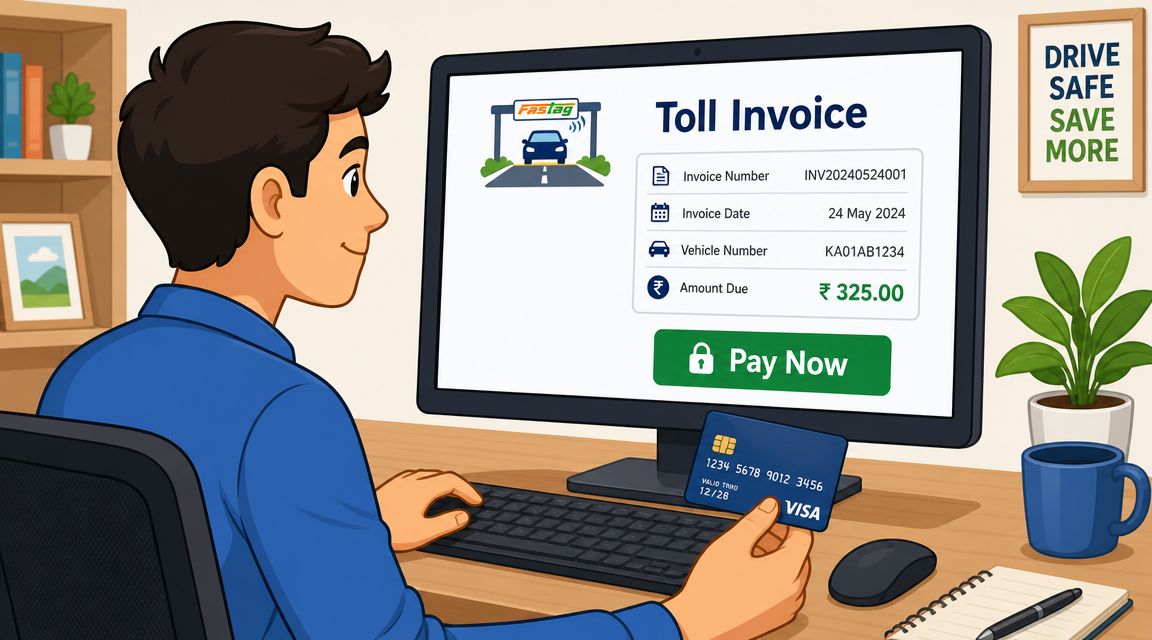
A toll invoice works a lot like a receipt printed from a camera system. It is useful, but only if the details line up. That matters even more in the failure points that confuse people most: rental cars, cars you recently sold, and out-of-state plates that may be tied to an old address.
What to check before you pay
Start with the basic match test.
Look at the plate number, vehicle description, travel dates, and toll locations. Ask one simple question: does this line up with the car and time period I was responsible for?
Pause here if any of these situations apply:
- Rental car: Check whether the dates match your rental period, not just your vacation dates.
- Sold vehicle: Check whether the toll happened before or after the sale date.
- Out-of-state plate: Check whether the notice reached your current mailing address and whether the plate characters look right.
That one-minute review can save a much longer cleanup later.
As noted earlier, Toll-By-Plate invoices can include added fees along with the toll charges. So if the amount looks larger than expected, do not assume the bill is wrong. First separate the tolls from the fee line and confirm the trip details.
Common ways to pay
Once the invoice looks correct, choose the payment method that fits how you want to handle it.
-
Online payment
Usually the fastest option. Keep the invoice next to you so you can enter the number and plate exactly as shown. -
Mobile app
Helpful if you want to pay from your phone as soon as you open the notice. -
Phone payment
Useful if you want an agent to confirm you are using the right invoice and account details. -
In-person payment
A good choice if you are already dealing with a confusing case and want help face to face.
If you are sorting through multiple driving records at the same time, a Florida citation number lookup can help you separate a toll invoice from a traffic ticket so you do not pay the wrong notice.
A simple step-by-step way to review the bill
If toll paperwork tends to blur together for you, use this order.
- Step 1: Match the plate. Make sure the plate on the invoice matches the vehicle involved.
- Step 2: Match the timing. Confirm that you, your renter, or the rental agreement covered that date.
- Step 3: Match the route. Check whether the toll points make sense for the drive you took.
- Step 4: Separate charges from fees. Read each line so the total does not mislead you.
- Step 5: Pay using the invoice details. Use the notice in front of you instead of guessing which account to log into.
This order helps because it starts with the easiest question first. Wrong plate. Wrong car. Wrong bill.
Why drivers get tripped up here
The payment part is usually simple. The matching part is where people get stuck.
A renter may think, “I already paid the rental company.” Someone who sold a car may wonder whether the toll happened during the handoff. An out-of-state visitor may not even be sure the notice arrived in order. Official payment pages often explain how to submit money, but not how to slow down and confirm that the charge belongs to you in the first place.
That is why the review step matters more than the checkout step.
This short video may also help if you prefer seeing the process in action.
How to Dispute Incorrect Charges
A toll invoice isn’t automatically correct just because it arrived by mail.
If the plate was misread, the vehicle had already been sold, or the rental period doesn’t match the travel date, you have a real reason to question the charge. In such cases, drivers often freeze. They assume disputing a toll bill will be slow and impossible. Usually, it’s more manageable when you gather the right details first.
The most common dispute situations
A few patterns show up again and again.
One driver sold the car, but the toll happened during the handoff period. Another used a rental, but the rental company and toll agency timing didn’t line up. An out-of-state driver gets a notice long after returning home and can’t tell whether the trip details match the route they drove.
CFX notes that Pay By Plate can cost double the electronic rate on its roads in its toll FAQs. That price gap, along with the added administrative fee discussed earlier, is one reason people scrutinize these bills closely when something seems wrong.
If the bill is wrong, don’t pay first and figure it out later. Start by proving whether the vehicle, date, and plate actually match your trip.
A simple dispute checklist
Use a calm, step-by-step approach.
- Check ownership timing: If you sold the car, find your bill of sale, transfer paperwork, or any record showing when control of the vehicle changed.
- Match the date and place: Compare the invoice dates with where you were driving.
- Look for plate-read mistakes: Similar characters can create confusion.
- Pull rental records: If it was a rental, keep the agreement, return receipt, and the dates you had the vehicle.
- Save contact notes: If you call, write down who you spoke with and what they told you.
How to approach the agency
Start with the information on the invoice itself. That’s usually the clearest route because it ties directly to the charge record.
Be brief and factual. Explain what’s wrong. Then attach or reference supporting documents. If you no longer owned the car, say that plainly and provide the transfer record. If it was a rental, explain the rental period and ask them to verify the timestamp against the registration owner on file.
If you’re also dealing with escalating toll-related consequences, this guide to Florida toll enforcement can help you understand the larger process.
What helps your dispute most
Agencies can review a complaint more easily when you give them a clear paper trail.
A short package usually works better than a long emotional explanation. Include only what proves your point. Ownership records, rental agreements, registration details, and date-specific receipts tend to matter more than a general statement that you “don’t remember using the road.”
Smart Ways to Avoid Toll-by-Plate Bills
The easiest toll problem to solve is the one you prevent before driving.
If you use toll roads often, plate billing is usually the least convenient option. It arrives later, can be harder to track, and often costs more than using a transponder account from the start.
Why SunPass is usually the cheaper path
Florida sources say SunPass customers save an average of 25% compared with Toll-By-Plate, and a Florida toll calculator estimate places Turnpike travel at about 6.7 cents per mile for SunPass users versus roughly 8.7 cents per mile for Toll-By-Plate users, or about 29.9% higher for Toll-By-Plate, according to this Florida toll cost summary.
That’s the core tradeoff.
Toll-By-Plate works when you need a fallback. SunPass works better when you want lower cost and less hassle.
SunPass vs Toll-by-Plate Cost Comparison
| Feature | SunPass | Toll-by-Plate |
|---|---|---|
| Basic setup | Requires a compatible transponder/account | No transponder needed |
| Billing timing | Handled through the toll account | Invoice mailed after travel |
| Cost level | Lower-cost option | Higher-cost option |
| Price difference | Florida says users save an average of 25% | Florida says it costs more than SunPass |
| Example mileage estimate | About 6.7 cents per mile | About 8.7 cents per mile |
| Added fee on invoice | Not described this way in the cited source | Toll Enforcement Invoice includes a $2.50 administrative fee |
Habits that reduce surprise bills
You don’t need a perfect system. You need a reliable one.
- Set up a transponder before regular toll use: This is the cleanest fix for commuters and frequent Florida drivers.
- Keep your plate linked correctly: If your toll account lets you register vehicle information, accurate plate details help prevent mix-ups.
- Update registration address promptly: A mailed invoice is only useful if it reaches you.
- Review route settings in navigation apps: If you want to limit toll road use, check the route before you start driving.
The cheapest toll road lesson is often learned at home, before the trip starts, not after the invoice arrives.
Who benefits most from switching
Frequent toll users usually benefit first.
But even occasional drivers may prefer a transponder if they want cleaner records, simpler billing, and fewer surprises in the mailbox. That matters a lot if you share cars in a household, commute across toll facilities, or don’t want to sort through delayed invoices later.
Special Scenarios for Renters and Visitors
Rental cars and out-of-state plates cause the most confusion because the person driving often isn’t the registered owner on the vehicle record.
That changes who gets the first bill.
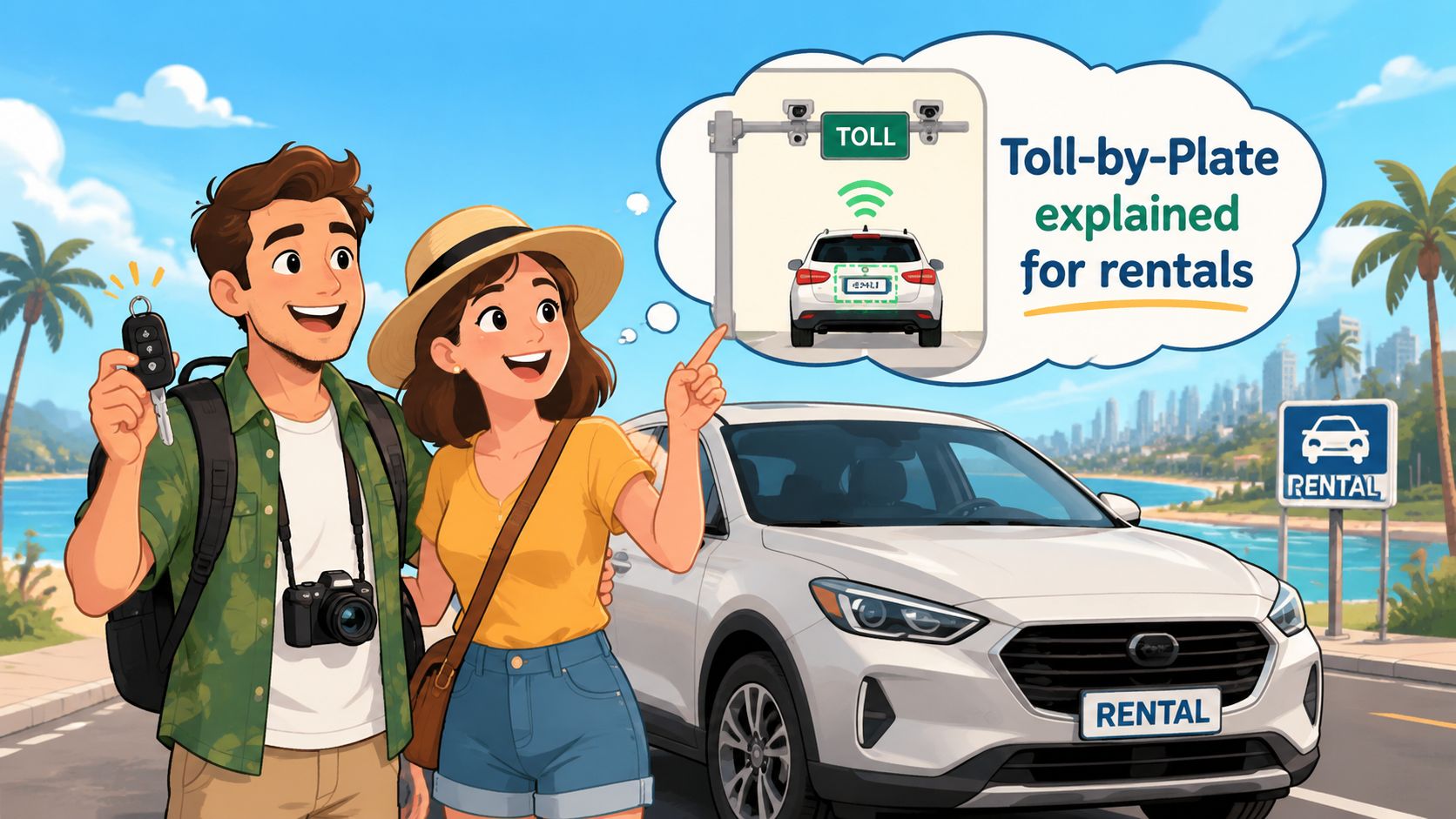
If you drove a rental car
In a rental situation, the toll agency usually sees the rental company as the registered owner.
That means the first toll record often goes to the rental company, not to you directly. Then the rental company may pass the charge through under your rental agreement. This is why renters often see toll charges after the trip is over and on a different timeline than expected.
Before you leave the lot, ask how that company handles toll roads. If you want a broader overview of Florida toll systems before renting or visiting, this guide to Florida toll roads can help.
If your plate is from another state
Out-of-state drivers sometimes assume Florida won’t be able to bill them by mail.
That’s a risky assumption. If the plate is tied to your registration and mailing address, the invoice process can still follow you home. The fact that the car isn’t registered in Florida doesn’t automatically block the billing process.
If you sold the car right before or after the trip
This is one of the messiest situations.
If the timing is close, save every document showing when ownership changed. A delayed invoice can land after the sale, even if the toll event happened before or after the transfer. Your paperwork is what separates “I don’t think this is mine” from “here is the exact date I stopped owning this vehicle.”
Florida Toll-by-Plate FAQ
What if I never receive the invoice in the mail?
That can happen if the registration address is outdated or mail is delayed. Don’t assume no letter means no charge. If you know you used a toll road without a transponder, it’s smart to follow up rather than wait.
Can I use Toll-By-Plate in Florida Managed Lanes?
No. Florida says managed lanes require a SunPass or another accepted transponder.
What if someone else was driving my car?
The invoice is generally mailed to the registered owner, not necessarily the person behind the wheel. If someone else used your car, you may still be the one who receives the notice first.
Why did the bill arrive so long after the trip?
Because Toll-By-Plate is a post-transaction process. The system captures the plate, matches it to ownership records, groups toll activity, and then mails the invoice later.
If you’re dealing with toll confusion, traffic citations, or Florida driving requirements, BDISchool offers Florida-approved online courses built to make complicated rules easier to understand. Their programs are self-paced, practical, and designed for real drivers who want clear guidance without wasting time.