Florida roads see thousands of crashes annually, and most are preventable. The difference between drivers who avoid accidents and those who don’t comes down to one thing: crash avoidance techniques grounded in defensive driving.
At DriverEducators.com, we’ve seen firsthand how proper training transforms drivers into safer, more confident operators. This guide walks you through the specific skills and habits that keep you and others safe.
Why Most Florida Crashes Happen
Texting and phone use remain the most dangerous habits on Florida roads. Drivers take their eyes off the road for approximately five seconds when texting at 55 mph-equivalent to traveling the length of a football field blind. The National Highway Traffic Safety Administration reports that driver error accounts for a significant portion of crashes, and distraction sits at the center of this problem. Florida sees thousands of preventable crashes annually, with distracted driving consistently ranking as a leading cause.
Beyond phones, eating, adjusting the radio, and passenger conversations pull attention away from the road. The solution isn’t complicated: silence notifications, secure your phone, and program your GPS before driving. Plan your route ahead of time to minimize sudden lane changes and last-minute turns that distraction causes.
Speed Kills in Changing Conditions
Speeding and driving too fast for road conditions account for a significant portion of Florida crashes. Drivers who exceed the speed limit or fail to adjust their speed during rain, heavy traffic, or construction zones lose critical reaction time. A driver traveling at 55 mph needs roughly 300 feet to stop completely, but at 70 mph that distance extends to over 450 feet.
Florida’s wet conditions from afternoon storms demand slower speeds, yet many drivers maintain highway speeds on wet pavement. Brake early to give yourself time to stop and to let the vehicle behind you see your brake lights. Leave at least 10–15 minutes earlier than you think necessary to avoid the temptation to speed when running late. Running late triggers aggressive driving and poor decisions that crash statistics prove are deadly.
The Tailgating Trap
Failure to maintain safe following distance causes rear-end collisions that injure thousands annually. Drivers often follow too closely, believing they control the situation, when in reality they’ve eliminated their ability to react. The three to four second rule provides a baseline for maintaining safe distance behind the vehicle ahead.
In poor road conditions or at higher speeds, increase this distance substantially. Dense traffic and bad weather demand even more space between vehicles. Never tailgate a slower driver; it’s aggressive and dangerous, and it reduces your options when that driver brakes suddenly. Increase your following distance in rain, fog, or heavy traffic where visibility and traction are compromised.
These three crash causes-distraction, inappropriate speed, and inadequate following distance-are entirely within your control. Understanding what triggers these behaviors puts you in position to master the specific crash avoidance techniques that separate safe drivers from those who end up in accident reports.
How to Scan, Position, and React on Florida Roads
Scan Ahead to Spot Hazards Before They Strike
Effective crash avoidance starts with what you see and how you respond. Scanning the road means looking beyond the vehicle directly ahead of you to identify hazards before they become emergencies. Professional drivers and defensive driving instructors teach the principle of looking ahead, which at 55 mph allows about 6 seconds to stop your vehicle. This forward focus lets you spot slowing traffic, debris, stopped vehicles, or erratic drivers long before you need to brake hard.
When you scan continuously, you also notice patterns: the aggressive driver weaving through lanes, the distracted driver drifting between lines, or the commercial vehicle that needs extra stopping distance. These observations give you time to adjust your speed and position rather than react in panic.
Position Your Vehicle for Maximum Escape Routes
Position your vehicle in the lane that gives you the most escape routes. On multi-lane roads, the middle lanes offer more options than the right lane (where merging traffic and slower vehicles trap you) or the left lane (where oncoming hazards appear during passes). When you approach an intersection, move slightly away from parked cars to avoid being hit by opening doors or vehicles pulling out suddenly.
After you pass another vehicle, never cut back in front of them; give them room to re-enter and pass. This positioning strategy takes seconds to execute but creates critical reaction time when something goes wrong.
Master Emergency Braking and Steering Responses
Emergency braking and steering demand practice, not instinct. Most drivers brake too hard or too late, locking wheels and losing steering control on wet Florida pavement. Brake early and smoothly, applying steady pressure rather than slamming the pedal, which transfers weight forward and reduces your tires’ grip on the road.
If you must steer around an obstacle, do so first, then brake once you’ve moved away from the hazard. Steering while braking hard on wet roads causes skids that send vehicles into barriers or other cars. Speeding was a contributing factor in 29% of all traffic fatalities, and poor emergency responses rank high among those errors.
Understand Your Vehicle’s Limits in Florida Conditions
Defensive driving courses teach vehicle dynamics: heavier vehicles need more stopping distance, tires lose traction in rain and on curves, and sudden inputs at high speeds destabilize control. Know your vehicle’s limits. Test your brakes in empty parking lots during dry conditions to feel how hard you can press without locking up.
Understand that rain reduces traction by up to 50%, meaning your stopping distance grows dramatically. On Florida highways during afternoon thunderstorms, this difference between control and a collision can be seconds. Practice these responses mentally during normal drives so your body executes them correctly when an actual emergency occurs.
These scanning, positioning, and emergency response skills form the foundation of crash avoidance, but they only work when you’ve developed the situational awareness that separates safe drivers from those who react too late. The next section shows you how defensive driving training builds this awareness into lasting habits that protect your driving record and your life.
How Defensive Driving Training Reshapes Driver Behavior
Defensive driving training works because it targets the exact moments when crashes happen. The National Highway Traffic Safety Administration found that 94% of serious motor vehicle accidents stem from human error, and defensive driving addresses this directly by teaching drivers to recognize their own mistakes before they become collisions. When you complete formal defensive driving training, your crash risk drops by approximately 4.3% compared to drivers without this instruction. For teen drivers, the impact is even sharper: those who complete defensive driving courses are 62% less likely to receive traffic violations and 43% less likely to be involved in an accident than untrained peers. Commercial drivers who take these programs experience 29% fewer collisions.
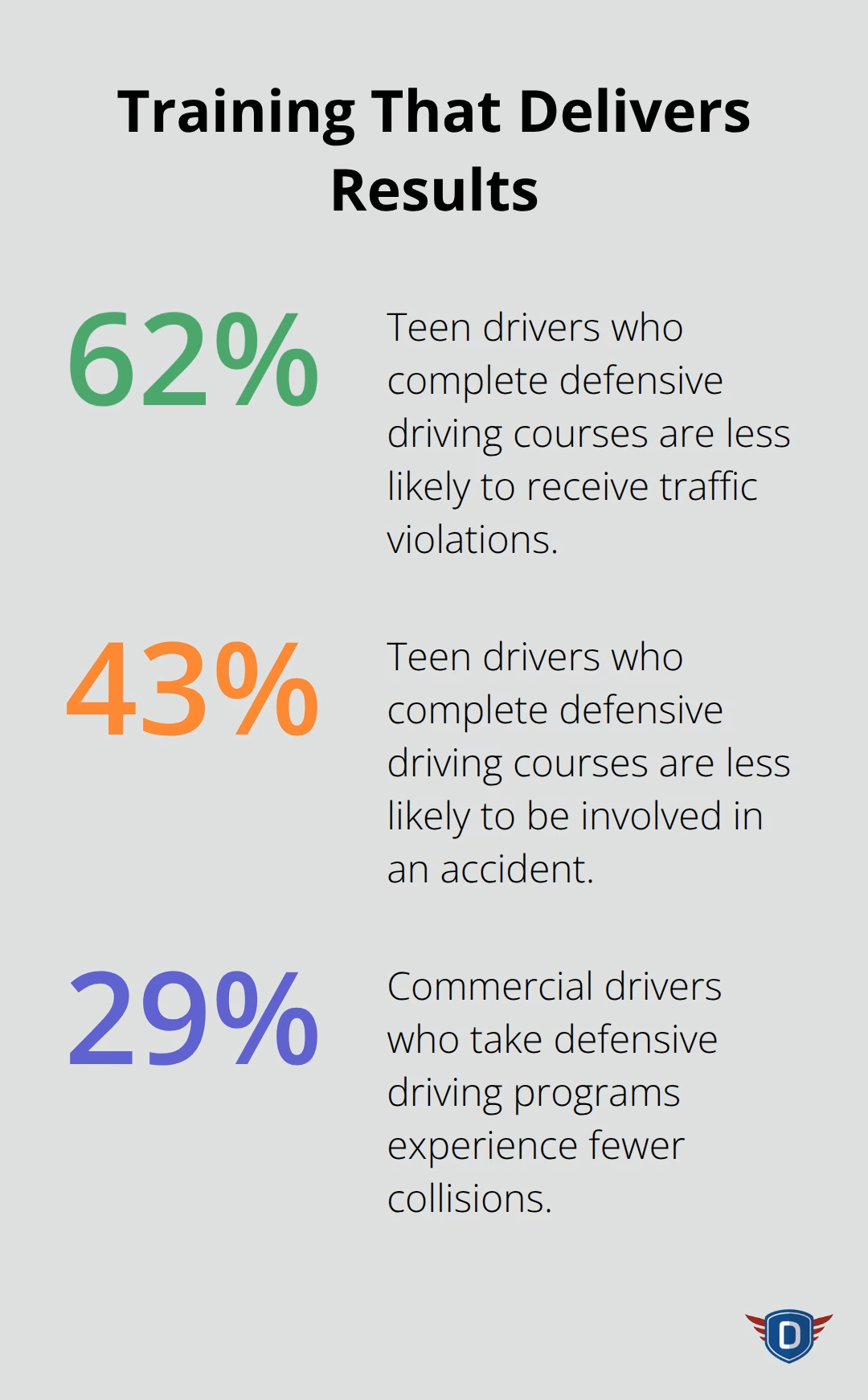
These numbers matter because they show that the techniques work in real conditions, not just in theory.
Why Awareness Stops Crashes Before They Start
Situational awareness separates drivers who react from drivers who anticipate. When you train yourself to scan ahead consistently, notice patterns in traffic flow, and identify which drivers behave erratically, you gain the ability to adjust your speed and position before danger materializes. Defensive driving training forces you to practice this awareness repeatedly until it becomes automatic.
You learn to notice the aggressive driver weaving lanes three vehicles ahead, the commercial truck that needs extra stopping distance, or the distracted driver drifting between lines. This forward thinking gives you seconds of reaction time instead of fractions of a second. The training also teaches you to expect the unexpected: to verify clearance at intersections rather than assume other drivers will follow the rules, to anticipate that a parked car door might open suddenly, and to recognize that your assumptions about other drivers’ behavior are often wrong.
Vehicle Dynamics Training Prevents Emergency Panic
Most drivers have never tested their vehicle’s actual stopping distance, braking response, or how traction changes in rain. Defensive driving training fills this gap by teaching you how heavier vehicles need more space and how sudden steering inputs at high speeds destabilize control.
You learn that braking too hard locks wheels and causes skids on wet Florida pavement, while smooth, steady pressure maintains steering control. You understand that steering and braking simultaneously on wet roads creates the exact conditions that send vehicles into barriers. This knowledge removes panic from emergency situations because you’ve mentally practiced the correct response.
Training teaches you to steer around an obstacle first, then brake once you’ve moved away from the hazard. When an actual emergency occurs, your body executes these responses correctly because defensive driving has built them into muscle memory.
Habit Formation Protects Your Record Long Term
The real power of defensive driving training lies in habit formation. Drivers who complete formal courses develop lasting routines that protect their driving records and insurance rates. You start leaving 10–15 minutes earlier, which eliminates the rushing and aggressive driving that trigger violations.
You program your GPS before driving instead of adjusting it while moving. Or you silence phone notifications automatically. These small habits compound over months and years, keeping you out of the crash statistics entirely. The training makes you aware of what triggers poor decisions (stress, rushing, anger at other drivers) and gives you concrete strategies to manage these emotions.
Studies show that drivers who adopt these habits maintain safer driving patterns years after completing their courses, which is why defensive driving training delivers measurable long-term benefits rather than temporary compliance.
Final Thoughts
Crash avoidance techniques work because they address the exact moments when drivers make fatal mistakes. Defensive driving training transforms these techniques from concepts into automatic responses that protect your driving record and your life. When you complete a formal course, you practice until your body executes the correct response under pressure, which is why drivers who take these courses experience measurable reductions in accidents and violations.
At DriverEducators.com, we offer Florida-approved traffic school courses that build these skills through real-life scenarios and clear instruction. Our Basic Driver Improvement course covers four hours of defensive driving fundamentals, while our Intermediate Driver Improvement program offers eight hours for drivers seeking deeper mastery. Each course follows strict FLHSMV guidelines and includes crash avoidance strategies, safe following distances, and behavioral techniques that protect you long term.
Enroll in a course that matches your needs today. Whether you’re recovering from a violation, meeting a court requirement, or simply committed to becoming a safer driver, DriverEducators.com traffic school courses provide the structured training that turns crash avoidance techniques into lasting habits. Certificates issue electronically and report directly to the state, so you meet all requirements while building the skills that keep you and others safe on Florida roads.