
A court order to complete driver improvement training can feel overwhelming, but it’s a straightforward path back to legal driving status. The good news is that you have options, and understanding them makes the process manageable.
At DriverEducators.com, we help drivers navigate court-ordered requirements with clarity and confidence. This guide walks you through your choices and shows you exactly what to expect.
What Court-Ordered Driver Improvement Actually Means
Understanding the Legal Mandate
Court-ordered driver improvement is a legal requirement imposed by a judge when you receive a traffic violation that accumulates demerit points on your driving record. It’s not optional, it’s not a suggestion, and it’s not something you can ignore without serious consequences. The court mandates this training specifically because your driving behavior triggered a safety concern that the judicial system decided needed intervention.
What the Eight-Hour Course Covers
The eight-hour defensive driving course teaches concrete skills like recognizing hazardous road conditions, managing aggressive impulses behind the wheel, and understanding how your decisions affect crash risk. This is practical instruction designed to address the specific behaviors that led to your violation, not theoretical content disconnected from real driving situations.
How State Laws Create Different Requirements
The legal requirements vary dramatically depending on where you were cited. In Virginia, you have 90 days from the court order to complete the full eight-hour course-failing to finish within that window triggers an automatic license suspension until you complete it. Maryland uses a point accumulation system where 5–7 points on your driving record triggers a mandatory Driver Improvement Program requirement, while 8–11 points results in automatic license suspension.
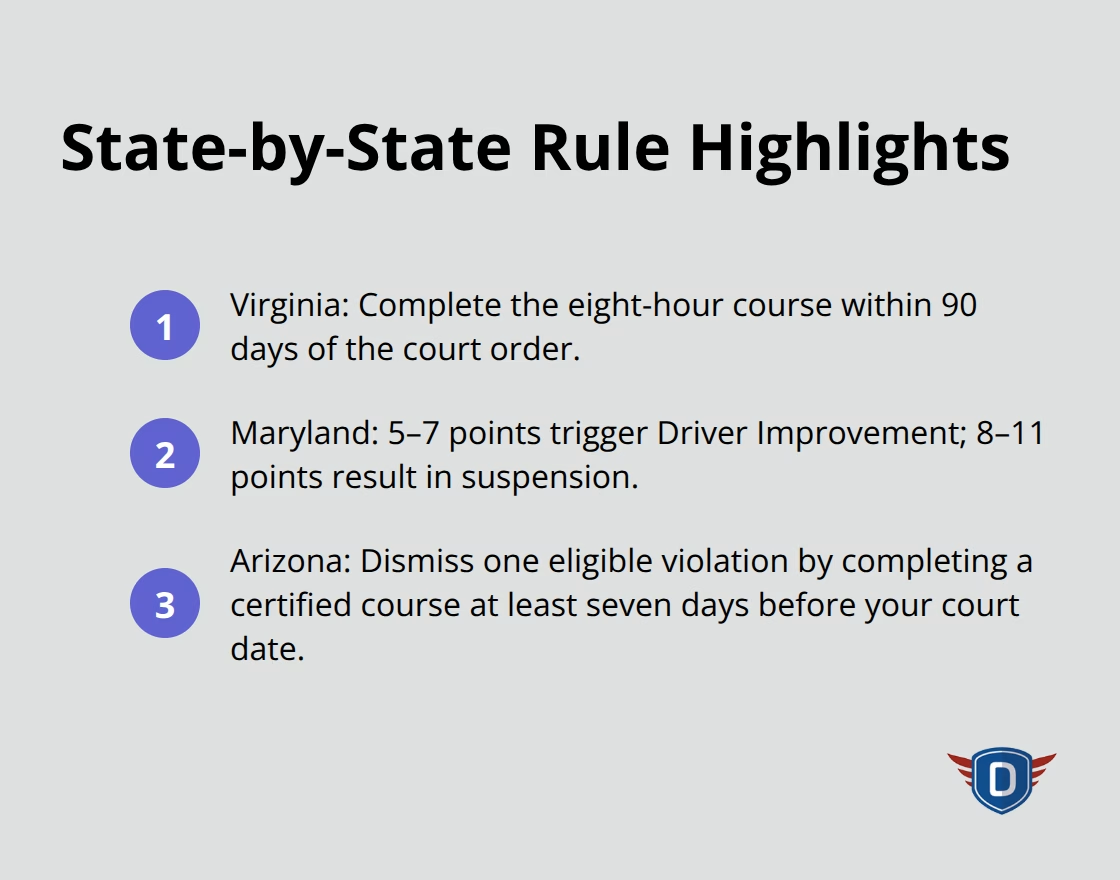
Arizona offers a different approach entirely. If you meet eligibility requirements and weren’t involved in a serious injury or fatal accident, you can dismiss one eligible violation by completing a certified defensive driving course no later than seven days before your court date. Some states require in-person classroom attendance, while others accept online completion through DMV-licensed providers.
Verifying Your Court’s Specific Rules
The critical mistake most drivers make is assuming one state’s rules apply everywhere, then discovering their completion certificate isn’t accepted by their court. Always verify your specific court’s acceptance of online versus in-person formats before enrolling in any program. Cost varies by location-Virginia caps fees at $100, but Greg’s Driving School in Maryland charges $85 for live or self-paced options.
Your location determines your deadline, your course format options, and whether you can earn safe driving points back on your record after completion. Understanding these state-specific rules before you enroll prevents costly delays and ensures your completion actually satisfies your court order. With these requirements clear, you’re ready to explore the specific course types available to you.
Your Course Options
Standard Eight-Hour Defensive Driving Courses
Court-ordered driver improvement comes in distinct formats, each designed for different violation types and driver histories. The standard eight-hour defensive driving course applies to most traffic violations and forms the baseline requirement across Virginia, Maryland, and Arizona. Your specific violation and driving record determine whether you qualify for alternatives that may better fit your situation.
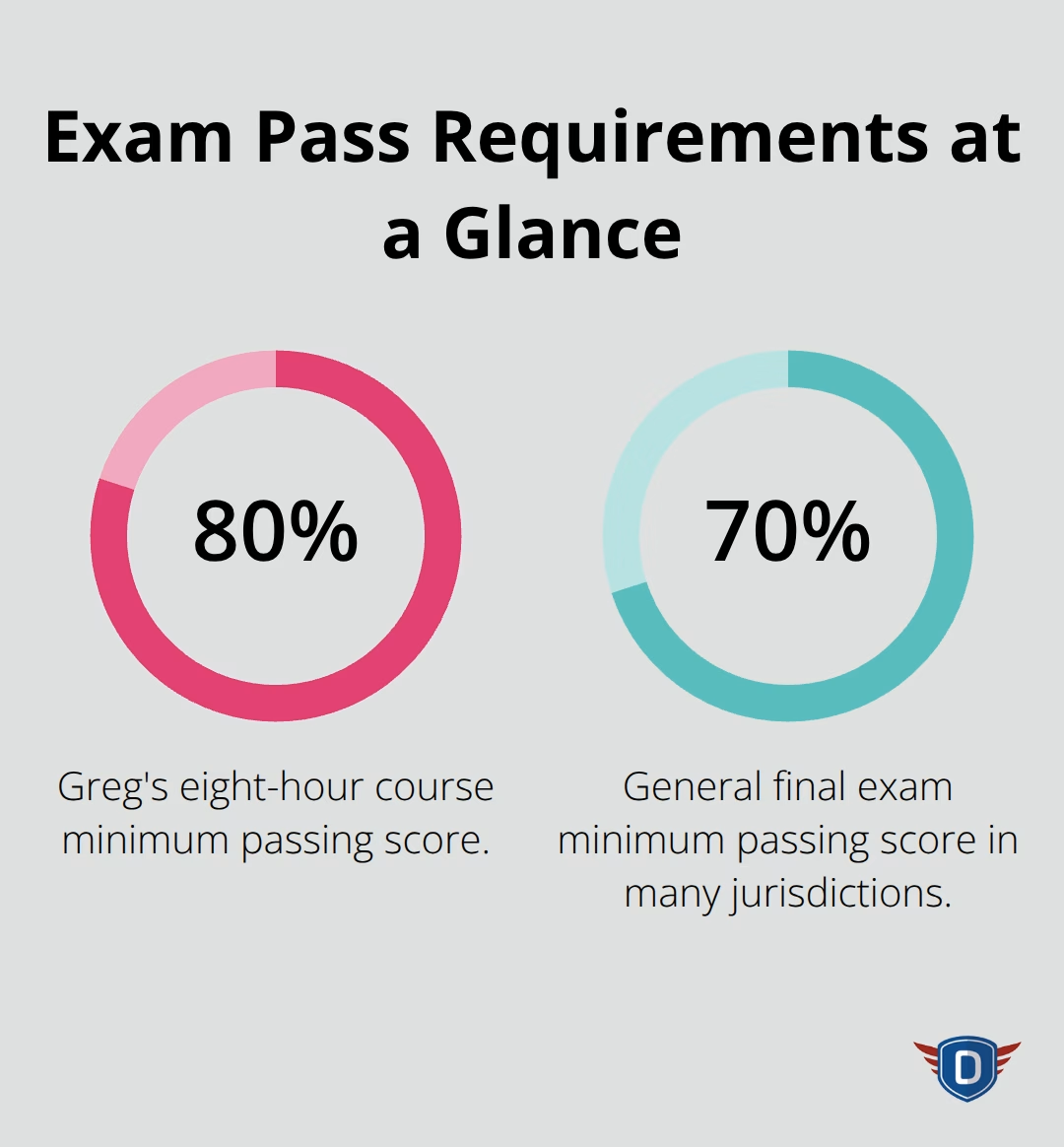
Greg’s Driving School in Maryland offers this eight-hour requirement in three formats: a three-hour live class available in-person or via Zoom at $85, a self-paced option for drivers 18 and older at the same price, and a specialized young driver program at $225 for drivers under 18 who received an MVA referral. Live classes lock you into a specific date and time, while self-paced lets you complete coursework at home before taking your final exam in person. You must score at least 80 percent on the final exam to pass.
Aggressive Driver Courses for Habitual Offenders
Drivers with habitual offense patterns or serious behavioral violations face stricter requirements. If you’ve accumulated multiple violations or engaged in road rage incidents, courts mandate an aggressive driver course specifically designed to address reckless behavior and impulse control. This program focuses on responsibility and behavioral change rather than basic defensive techniques.
Maryland’s point system illustrates this escalation clearly: accumulating 5–7 points triggers standard driver improvement, but 8 to 11 points results in automatic license suspension, and 12 or more points leads to license revocation. The court determines which course type fits your violation severity.
Specialized Programs for Specific Violations
Specialized programs exist for violations like driving under the influence or commercial driver violations. In Virginia, commercial drivers holding a CDL must complete a CDL-specific driver improvement clinic rather than the standard course. Arizona takes a different approach by offering eligible drivers the chance to dismiss one violation entirely through a certified defensive driving course completed at least seven days before their court date (this option disappears if you were involved in a serious injury or fatal accident).
Confirming Your Court’s Specific Course Requirement
The critical mistake most drivers make is enrolling in the wrong program type. Taking the wrong course wastes your $85 to $100 fee and doesn’t satisfy your legal requirement. Confirm which course type your court actually ordered before you enroll-this single step prevents costly delays and ensures your completion satisfies your legal obligation. With your course type identified, you’re ready to navigate the enrollment process and understand what happens after you complete your training.
How to Complete Your Court Order Successfully
Selecting an Approved Traffic School
Selecting an approved traffic school requires verifying three specific criteria before you enroll. First, confirm your court accepts the format you’re choosing-online or in-person-by calling the court clerk directly rather than assuming based on your state’s general rules. Second, check that the provider holds DMV licensing or court approval for your jurisdiction; Greg’s Driving School in Maryland maintains current certifications, but unlicensed vendors won’t satisfy your court order. Third, verify the exact course type your court mandated, since taking a Basic Driver Improvement when your court ordered an Intermediate Driver Improvement wastes your enrollment fee and forces you to retake the correct program.
To find an approved traffic school, use official state resources like the Virginia DMV website, Maryland MVA registry, and Arizona’s Supreme Court searchable database instead of Google, which returns outdated or non-compliant providers. Cost caps at $100 in Virginia and runs $85 for standard courses at Greg’s Driving School in Maryland, so budget accordingly and confirm the exact fee before registering.
Understanding Your State’s Deadline
Your deadline is non-negotiable and state-specific, making it your single most critical deadline to track. Virginia gives you 90 days from the court order to complete the full eight-hour course; missing this deadline automatically suspends your license until completion. Maryland requires completion within a timeframe set by your court order-missing it likely triggers suspension, so contact the Maryland MVA Driver Improvement Division immediately if you’re approaching your deadline.
Arizona requires completion at least seven days before your court date, which means if your court date is two weeks away, you’ve already missed the window for that court date and need to request a continuance. Each state’s rules differ dramatically, so verify your specific deadline with your court clerk rather than relying on general state information.
Passing Your Final Exam and Documenting Completion
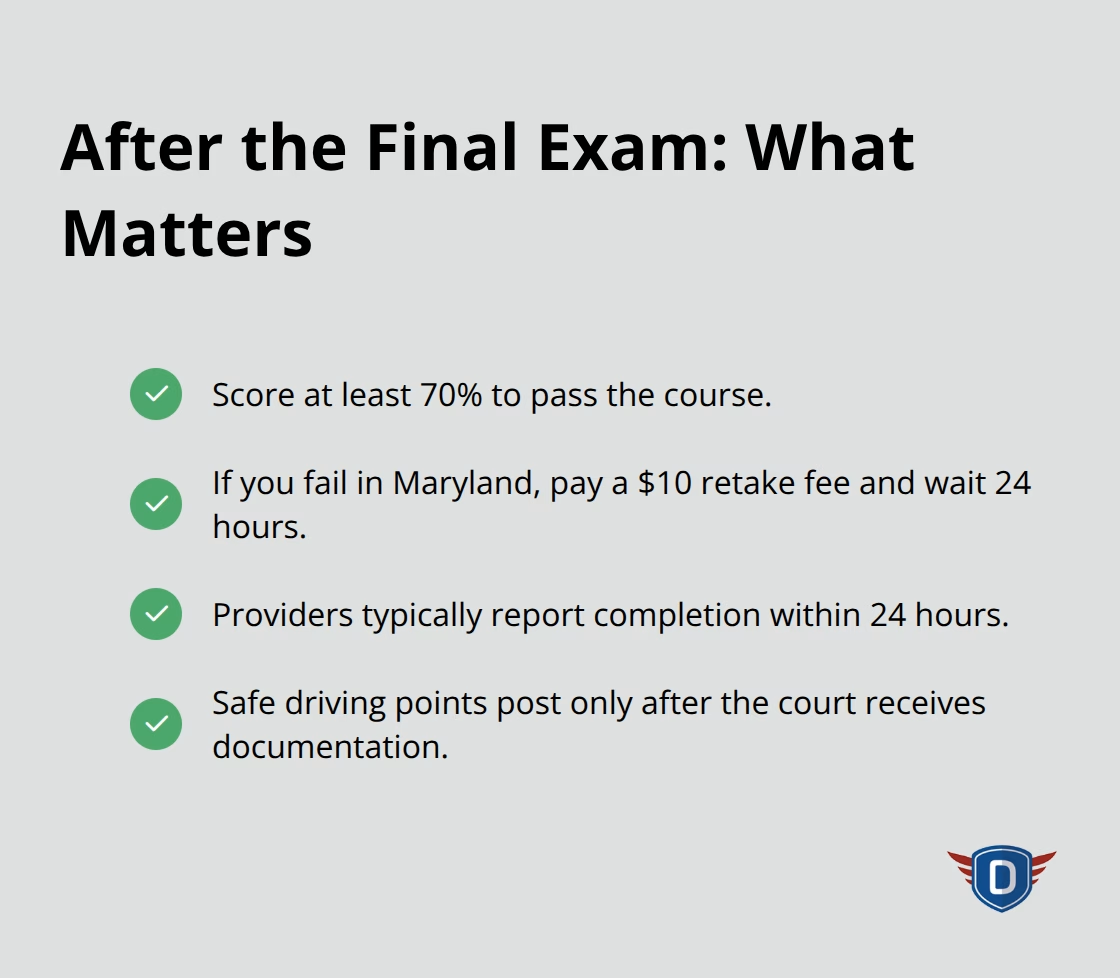
You must score at least 70 percent on the final exam to pass your course. If you fail, Maryland charges a $10 retake fee with a mandatory 24-hour waiting period before you can attempt the exam again. The provider transmits your completion to the DMV or court within 24 hours in most jurisdictions, but the court must receive documentation before DMV awards any safe driving points-without that court documentation, points won’t post to your record even though you completed the course.
Document your completion immediately after passing your final exam. Request a completion certificate from your provider and confirm they have your court’s information on file. If you took an online course, verify the provider submitted your results to the correct court, since online providers sometimes require you to furnish court documentation to them before they can report your completion.
Verifying License Reinstatement
If your license is suspended, call your state’s DMV directly to confirm the exact date it will be lifted after your completion processes, since suspension lifting isn’t automatic and requires verification that documentation reached the court. Ask the DMV representative for a specific date rather than accepting a general timeframe. If you received a ticket outside your home state, forward your completion certificate to that state’s court to meet its requirements (this applies especially if you were cited in a different jurisdiction than where you hold your license).
Final Thoughts
Court-ordered driver improvement transforms from an overwhelming process into a manageable sequence of steps when you verify your court’s specific requirements, enroll in an approved program matching your violation type, and complete your course before your deadline. Your state’s rules determine everything: Virginia’s 90-day window differs from Arizona’s seven-day pre-court-date requirement, and Maryland’s point escalation system triggers different course types at different thresholds. Calling your court clerk directly takes ten minutes and prevents enrolling in the wrong program, while confirming your provider holds current DMV licensing ensures your completion actually satisfies your legal obligation.
Safe driving points won’t post to your record unless your court receives documentation from your provider, so verify this critical handoff happened rather than assuming it occurred automatically. If your license is suspended, contact your state’s DMV directly for the exact reinstatement date instead of accepting general timeframes. These specific actions prevent costly mistakes that delay your license reinstatement and waste your enrollment fees.
At DriverEducators.com, we understand that court-ordered requirements feel stressful, which is why we’ve designed our programs to make completion straightforward and accessible. Our Florida-approved traffic school courses provide clear instruction and flexible online access so you can complete your requirement without disrupting your schedule. Visit DriverEducators.com to explore how our certified instructors support your path back to safe, confident driving.