Passing another vehicle might seem straightforward, but it’s one of the most dangerous maneuvers on the road. According to the National Highway Traffic Safety Administration, improper passing contributes to thousands of crashes annually.
Safe passing techniques require more than just checking your mirror and hitting the gas. At DriverEducators.com, we break down the legal requirements, proven methods, and critical mistakes that put drivers at risk.
What Laws Actually Govern Passing
State and Local Passing Restrictions
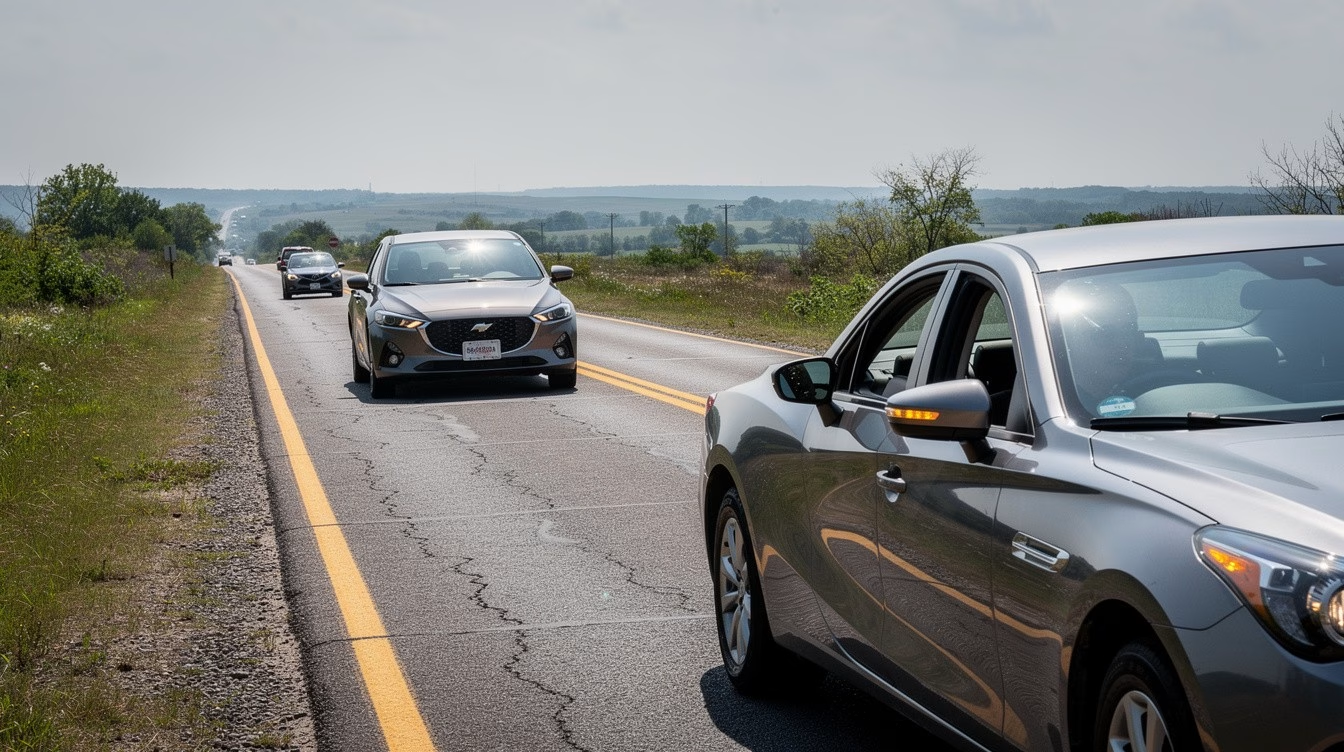
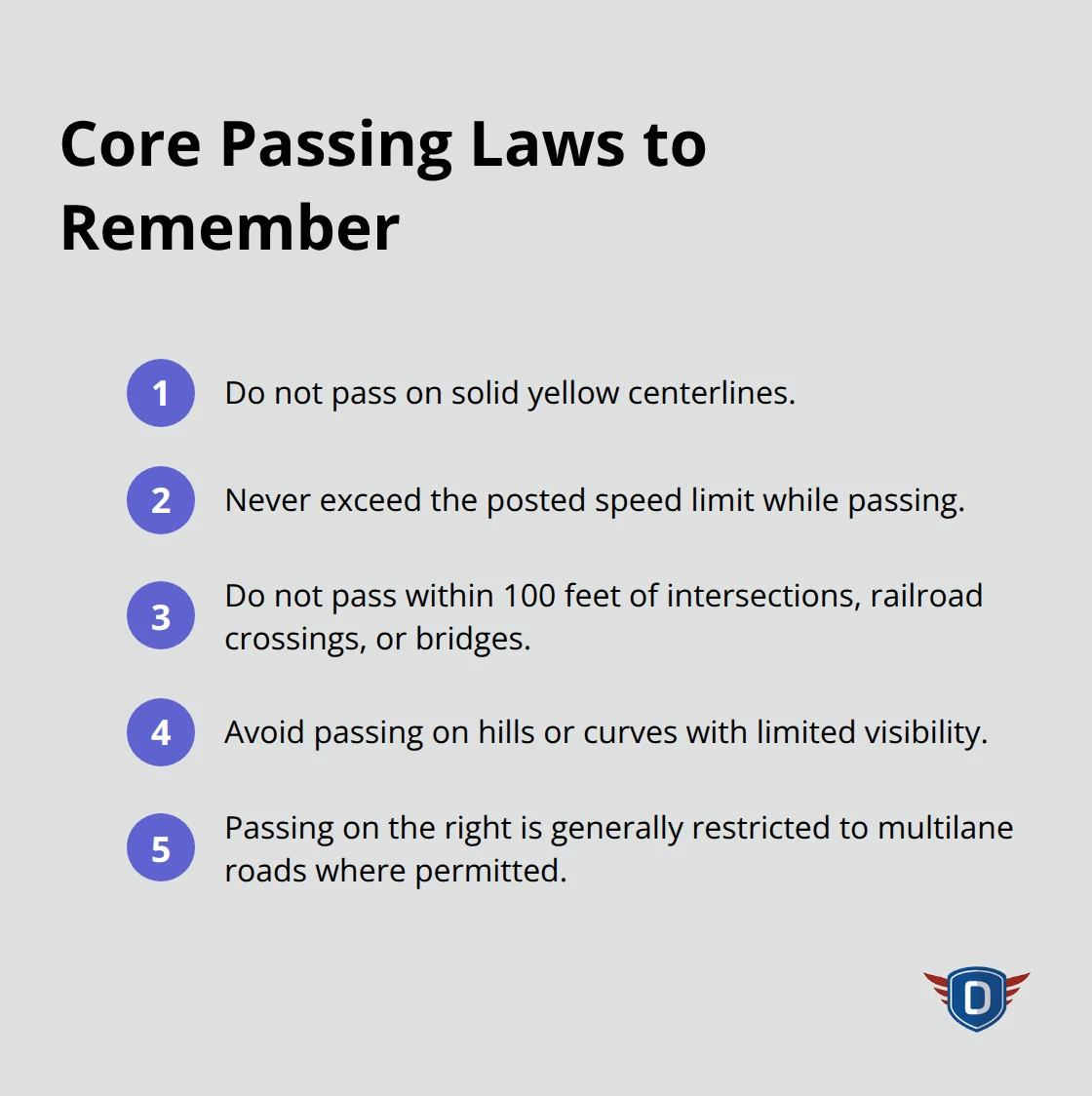
Passing laws vary significantly across states, and many drivers operate under outdated assumptions about what’s legal. Florida law, for example, prohibits passing on the right side of another vehicle except on multilane highways, yet drivers routinely ignore this restriction. The state also explicitly forbids passing within 100 feet of any intersection, railroad crossing, or bridge, but enforcement remains inconsistent. Most states follow similar patterns: passing on solid yellow lines is illegal, passing on hills or curves is prohibited, and you cannot exceed the speed limit while passing, even if the vehicle ahead travels below the limit. This last point surprises many drivers who believe they can temporarily exceed speed limits to complete a pass. They cannot.
Speed Limits Apply During Passes
The speed limit restriction during passing trips up countless drivers. You must maintain the posted speed limit throughout your entire pass, regardless of how slowly the vehicle ahead moves. If a car travels at 35 mph in a 45 mph zone and you attempt to pass, you still cannot exceed 45 mph to complete the maneuver. This rule exists because speed amplifies the consequences of any mistake during a pass. A collision at higher speeds produces catastrophic results, so regulators prohibit the very behavior that might seem necessary to pass safely.
Financial and Legal Consequences
Penalties for illegal passing range from fines of $150 to $500 in most states, but consequences extend far beyond the immediate ticket. Moving violations from improper passing add points to your driving record (typically 3 to 4 points depending on your state), which directly impacts insurance premiums and can trigger license suspension if you accumulate too many violations within a specific timeframe. Some states impose license suspensions for aggressive passing violations, particularly when passing on the right or in school zones.
If your illegal pass causes an accident, charges escalate dramatically to reckless driving or even vehicular assault in severe cases. Insurance companies treat passing violations seriously because data shows drivers who pass illegally have significantly higher accident rates. Courts also consider illegal passing a factor in determining fault during accident litigation, meaning your insurance may deny coverage if you initiated an illegal pass that resulted in a collision.
Why State Laws Matter for Your Record
Understanding your specific state’s traffic laws isn’t optional-it’s the foundation of avoiding costly violations and protecting yourself legally on the road. Each state maintains its own regulations, and what’s legal in one jurisdiction may carry serious penalties in another. Your driving record follows you across state lines, affecting insurance rates and employment opportunities for years. The next section examines the specific techniques that keep you safe when you do pass legally.
How to Execute a Safe Pass
Prepare Before You Move
Scan your mirrors continuously for at least five seconds before signaling, checking both side mirrors and your rearview mirror repeatedly. Your blind spots require special attention because they represent the zone where oncoming vehicles hide from your peripheral vision. Glance over your shoulder toward the passing lane just before you move, not after.
Use your turn signal for at least three seconds before changing lanes, giving drivers behind you time to react. Maintain a safe following distance of one second per 10 feet of vehicle length before initiating your pass. Only pass when you can see clearly ahead for several hundred feet with no oncoming traffic visible.
Accelerate and Complete the Maneuver
Once you commit to passing, accelerate smoothly but decisively. Hesitation during a pass creates dangerous situations where you occupy the oncoming lane without sufficient speed to clear the vehicle ahead. The National Highway Traffic Safety Administration reports that drivers who pass with inadequate speed margins face collision risks that increase exponentially.

Return to the original lane only when you see the vehicle you passed in your rearview mirror and have re-established safe spacing. Rushing this step causes rear-end collisions that courts classify as your fault. This systematic approach separates safe drivers from those who abandon proper technique halfway through.
Adjust Your Strategy for Road Type
Two-lane rural highways present tight windows for passing-gaps between oncoming vehicles may span only 10 to 15 seconds, requiring you to complete your entire pass within that window. Urban roads with multiple lanes offer safer passing opportunities because you can change lanes without crossing oncoming traffic, though congestion often makes passing unnecessary.
Residential streets and roads with speed limits below 35 mph present minimal passing opportunities and should be avoided entirely for passing maneuvers. Hills and curves eliminate forward visibility entirely, making passes illegal and genuinely hazardous regardless of current traffic.
Account for Road Conditions
Road conditions affect your judgment significantly. Wet pavement reduces tire grip, increasing stopping distances and making acceleration less predictable during passes. Gravel shoulders or poor road maintenance can destabilize your vehicle when you drift toward the edge during lane changes.
The safest pass occurs on straight, level, dry roads with clear visibility extending at least 1,000 feet ahead and minimal traffic approaching from either direction. If conditions don’t meet these standards, accept that you’ll follow the vehicle ahead-this costs you seconds but protects you from crashes that cost far more than time. When you understand these execution techniques, you’re ready to recognize the mistakes that even experienced drivers make during passing maneuvers.
Why Drivers Fail at Passing
Passing on Hills and Curves Eliminates Visibility
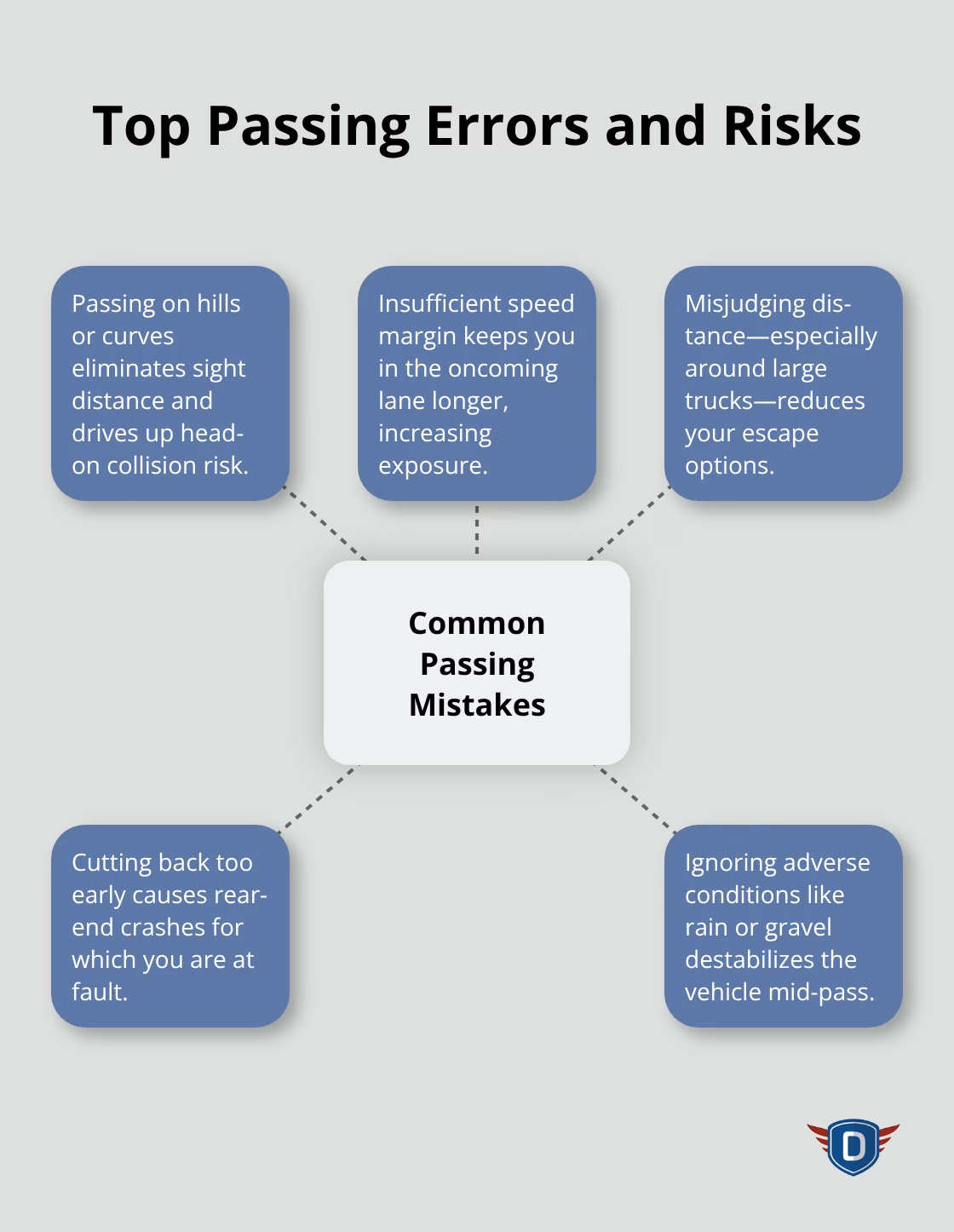
The most dangerous passing mistake occurs when drivers attempt passes on hills or curves where forward visibility drops to near zero. Florida law explicitly prohibits passing within 100 feet of any curve, yet drivers routinely ignore this restriction because they underestimate how quickly a vehicle can appear around a bend. On a hill, a car cresting the ridge can emerge into your passing lane with only seconds of warning, leaving zero time to abort your maneuver and return to your lane safely.
The National Highway Traffic Safety Administration found that passes completed on hills or curves account for a disproportionate share of head-on collisions, and these crashes carry fatality rates far exceeding other passing-related accidents. A vehicle traveling at 55 mph covers 81 feet per second, meaning an oncoming car appears and closes the distance faster than most drivers can react. If you’re mid-pass when this happens, you’re committed to a collision.
Insufficient Speed and Distance Calculations Extend Exposure
The second critical error involves underestimating the speed and distance required to complete a pass safely. Many drivers accelerate only slightly above the vehicle they’re passing, extending the time spent in the opposing lane and increasing exposure to oncoming traffic. Completing a pass requires substantial acceleration, not gradual creeping ahead-you should pass at least 10 mph faster than the vehicle ahead.
If a car travels at 40 mph in a 50 mph zone, you need to reach 50 mph to pass safely within a reasonable timeframe. Drivers who pass at only 5 mph faster spend twice as long in the opposing lane, doubling their collision risk. Distance calculations also trip up drivers constantly-most drivers dramatically underestimate the distance required to pass a large truck or SUV. A full-size truck occupies roughly 30 feet of road, and you need at least 100 feet of clear space ahead of that vehicle before you commit to passing, plus another 100 feet behind it to establish safe return to your lane (roughly 230 feet total of clear road ahead). At 55 mph, that’s only about three seconds of visibility, which explains why passing windows close so quickly on two-lane roads.
Rushing Back Into Your Lane Creates Rear-End Collisions
The third error involves cutting back into the original lane before establishing adequate separation. Drivers who pass often feel pressure from oncoming traffic or impatient drivers behind them, causing them to return to the original lane too quickly. You need to see the entire vehicle you just passed clearly in your rearview mirror before returning to your lane, and you should maintain at least a three-second gap before settling back.
Cutting this short causes rear-end collisions where you’re legally and financially responsible. Insurance companies and courts treat these crashes as your fault because you initiated the unsafe maneuver. Together, these three mistakes create conditions where a pass transforms from a calculated maneuver into a genuine hazard that threatens multiple vehicles.
Final Thoughts
Safe passing techniques separate responsible drivers from those who risk their safety and the safety of others on the road. Visibility, speed, and distance determine whether a pass succeeds or creates a collision, and illegal passes cost money through fines and insurance increases while failed passes cost lives. Accepting that you’ll follow a slower vehicle for a few extra minutes protects you far more effectively than any aggressive maneuver.
Defensive driving means recognizing when passing isn’t worth the risk, and this mindset shift separates experienced drivers from those who treat every slower vehicle as a personal challenge. The three critical mistakes we covered-passing on hills or curves, underestimating speed and distance, and cutting back into your lane too quickly-account for the majority of passing-related crashes on American roads. Mastering safe passing techniques requires more than reading an article; it demands real-world practice and clear instruction.
We at DriverEducators.com offer comprehensive driver education programs that cover safe passing, defensive driving techniques, and Florida traffic laws through practical scenarios and straightforward instruction. Our Basic and Intermediate Driver Improvement courses are fully online, self-paced, and available whenever you’re ready to learn, whether you’re working to reduce points on your record or simply becoming a safer driver.