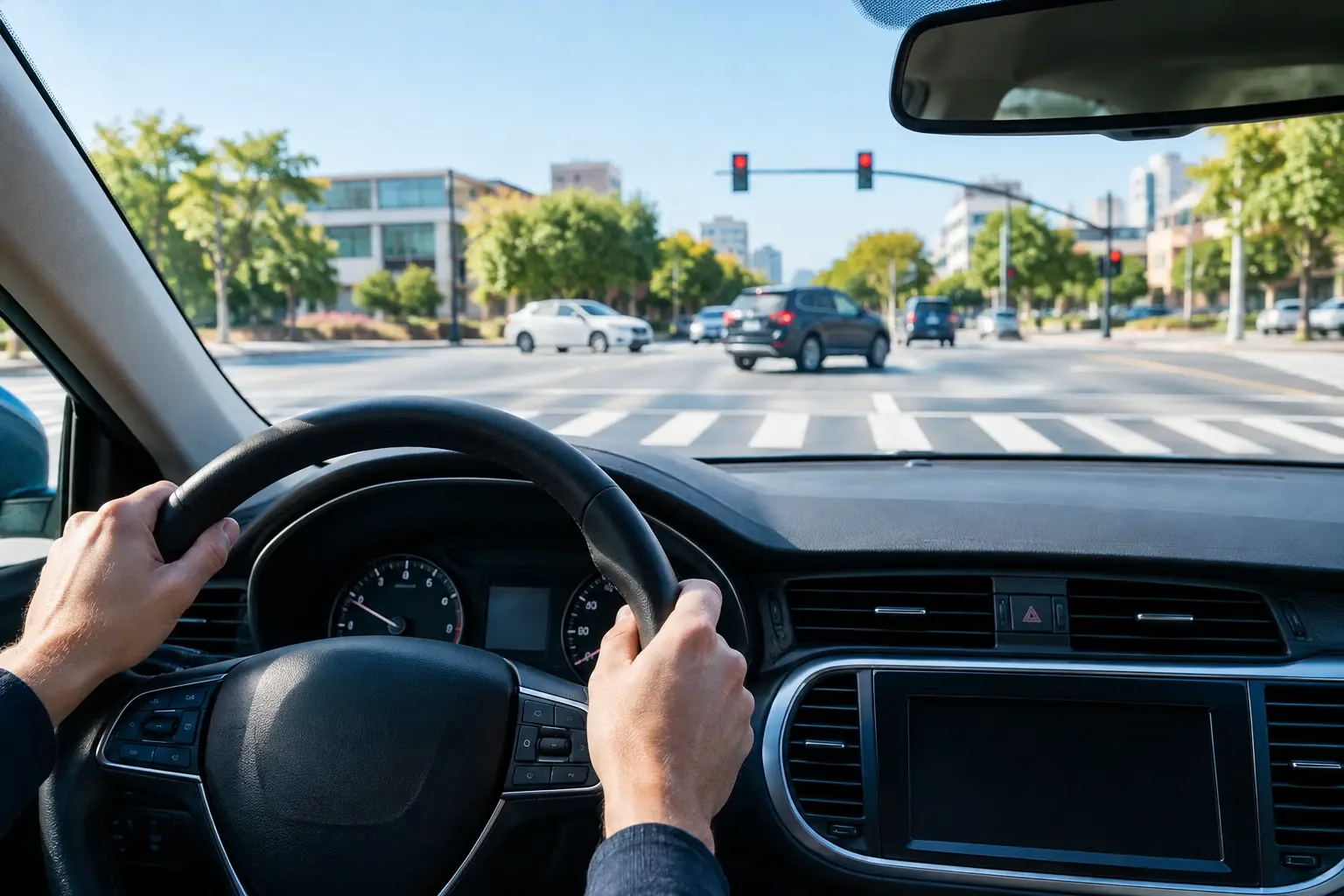
An intersection can look routine right up to the second another driver turns across your path, a pedestrian steps off the curb, or a light changes faster than expected. The best intersection safety strategies give drivers a repeatable process for handling those moments calmly. Whether you are a new driver, completing a traffic course, or improving habits after a citation, intersection awareness is one of the most practical skills you can build.
Most intersection crashes are not caused by one dramatic mistake. They come from smaller decisions: looking only forward, assuming another driver will yield, entering on a stale yellow light, or rolling through a stop sign without checking for people walking or cycling. Safer driving starts before you reach the crosswalk.
Best Intersection Safety Strategies Start Before the Stop Line
1. Scan early and reduce speed before you arrive
Begin evaluating an intersection well before you reach it. Look for the signal color, stopped vehicles, turn lanes, crosswalks, pedestrians, bicycles, and traffic waiting to enter from side streets. Slowing early gives you more time to see developing hazards and reduces the need for abrupt braking.
At a green light, do not treat the signal as a guarantee that the path is clear. Watch for drivers who may run a red light, make a late left turn, or enter from a driveway. At a stop-controlled intersection, approach slowly enough that you can stop completely behind the limit line or crosswalk.
A useful habit is to keep your eyes moving. Check ahead, then left, then right, and return your attention forward. This scanning pattern is especially valuable when your view is blocked by larger vehicles, parked cars, landscaping, or poor weather.
2. Make a complete stop and verify the right-of-way
A complete stop means your vehicle is fully motionless. Rolling through a stop sign may save only a moment, but it removes the time needed to assess traffic, pedestrians, and cyclists.
After stopping, look left, right, and left again before entering. The final left check matters because vehicles approaching from the left will usually reach you first. Continue looking as you enter the intersection rather than assuming conditions will remain unchanged.
Right-of-way rules help organize traffic, but they do not eliminate risk. If another driver appears confused, aggressive, or unwilling to yield, let them go. Giving up your legal right-of-way can be the safer choice when it prevents a collision.
3. Treat yellow lights as a decision point, not a signal to accelerate
A yellow signal warns that the light is changing to red. If you can stop safely before the intersection, stop. Do not speed up simply to avoid waiting through the next signal cycle.
There are times when braking hard would create a greater risk, particularly if you are already close to the intersection or a vehicle is following too closely. In that situation, continue through carefully and do not stop in the intersection. The key is to decide early by maintaining a safe approach speed and looking ahead.
Never enter an intersection after the signal has turned red. A few seconds of impatience can place your vehicle directly in the path of cross traffic that has just received a green light.
4. Yield deliberately when turning left
Left turns require careful judgment because you are crossing one or more lanes of oncoming traffic. Unless you have a green arrow, yield to oncoming vehicles, pedestrians in the crosswalk, and cyclists moving through the intersection.
Wait for a safe gap instead of relying on an approaching driver’s turn signal. Signals can be forgotten, activated too early, or canceled. Judge the vehicle’s actual movement and speed.
If you enter the intersection while waiting to turn, keep your wheels pointed straight ahead. If you are struck from behind with your wheels turned left, your vehicle could be pushed into oncoming traffic. Turn your wheels only when you are ready to complete the turn.
5. Check crosswalks twice before making any turn
Drivers often focus so closely on vehicle traffic that they overlook people crossing the street. Before turning right or left, check the crosswalk in the direction you plan to travel. Then check again just before your vehicle begins moving.
This second look is critical at right turns on red. A right turn on red may be permitted unless a sign prohibits it, but it is never automatic. You must first make a complete stop and yield to vehicles, pedestrians, and bicyclists with the right-of-way.
Be particularly cautious near schools, transit stops, shopping areas, and neighborhoods with frequent foot traffic. Children may move unpredictably, and a pedestrian can be hidden by your windshield pillar or another vehicle until the last moment.
Intersection Safety Strategies for Limited Visibility
Rain, darkness, glare, and heavy traffic all reduce the margin for error. When visibility is limited, increase your following distance as you approach an intersection. This gives you more room to stop if traffic suddenly backs up or a light changes.
At night, slow down enough to identify lane markings, signal heads, and people near the roadway. Wet pavement can reflect headlights and traffic signals, making it harder to judge distance and movement. Keep your windshield clean inside and out, and use defrosters when needed to prevent fogging.
Large trucks, buses, and SUVs can block your view of cross traffic. Avoid pulling into an intersection until you can clearly see enough of the roadway to judge whether it is safe. Creeping forward may improve visibility, but do it slowly and only after yielding to anyone in the crosswalk.
Do not block the box
Do not enter an intersection unless you can clear it completely. This rule applies even when your signal is green. If traffic is backed up beyond the intersection, wait behind the crosswalk or stop line until there is space on the other side.
Blocking the box delays cross traffic, traps pedestrians, and can create confusion when signals change. It may also lead to a citation in areas with active intersection enforcement.
Keep distractions out of the decision
Intersections demand full attention. Put the phone away before approaching, pause conversations if necessary, and avoid adjusting navigation, music, or climate controls while deciding whether to proceed.
Navigation apps can be useful, but they should guide your route, not replace your judgment. If an instruction arrives too late for a safe lane change or turn, continue ahead and reroute when it is safe.
Match Your Strategy to the Intersection Type
Not every intersection works the same way. A four-way stop requires drivers to determine arrival order and yield when another vehicle arrived first. If two vehicles stop at the same time, the driver on the left generally yields to the driver on the right.
Roundabouts require a different approach. Slow down, yield to traffic already circulating, and watch for pedestrians at the entry and exit crosswalks. Once inside, keep moving until you reach your exit rather than stopping unexpectedly.
At an uncontrolled intersection, where no signs or signals direct traffic, reduce speed and be prepared to yield. These locations can be especially hazardous because each driver may have a different expectation about who should proceed first.
For flashing signals, remember the basic distinction: a flashing red light means stop, then proceed when safe; a flashing yellow light means slow down and proceed with caution. Treat both as active warnings, not as permission to ignore potential conflicts.
Build Safer Habits on Every Trip
The best intersection safety strategies are not complicated, but they require consistency. Scan early, control your speed, stop fully when required, verify the right-of-way, and look for vulnerable road users before turning. These steps work because they create time – time to see, think, and respond.
If a traffic violation, court requirement, or insurance goal has prompted you to improve your driving knowledge, an approved online driver safety course can reinforce these skills on your schedule. The goal is not simply to meet a requirement. It is to make safer choices feel automatic every time you approach an intersection.
Frequently Asked Questions
What is the safest way to approach an intersection?
Slow down early and scan for signals, vehicles, pedestrians, cyclists, and blocked lanes. Be ready to stop even when you have a green light.
Who has the right-of-way at a four-way stop?
The first vehicle to arrive and stop generally goes first. When two vehicles arrive at the same time, the driver on the left yields to the driver on the right.
Should I turn right on red?
Only turn right on red after a complete stop and only when no sign prohibits it. You must yield to cross traffic, pedestrians, and cyclists before turning.
What does “do not block the box” mean?
It means do not enter an intersection unless there is enough open space to drive all the way through. A green light does not permit you to stop in the middle of the intersection.
Why are left turns so risky?
Left turns cross the path of oncoming traffic and often involve pedestrians and cyclists. Wait for a clear gap or a protected green arrow, and do not rely only on another driver’s turn signal.
The next time a light turns green or a stop sign comes into view, give yourself one extra second to scan. That small pause can be the decision that keeps everyone moving safely.